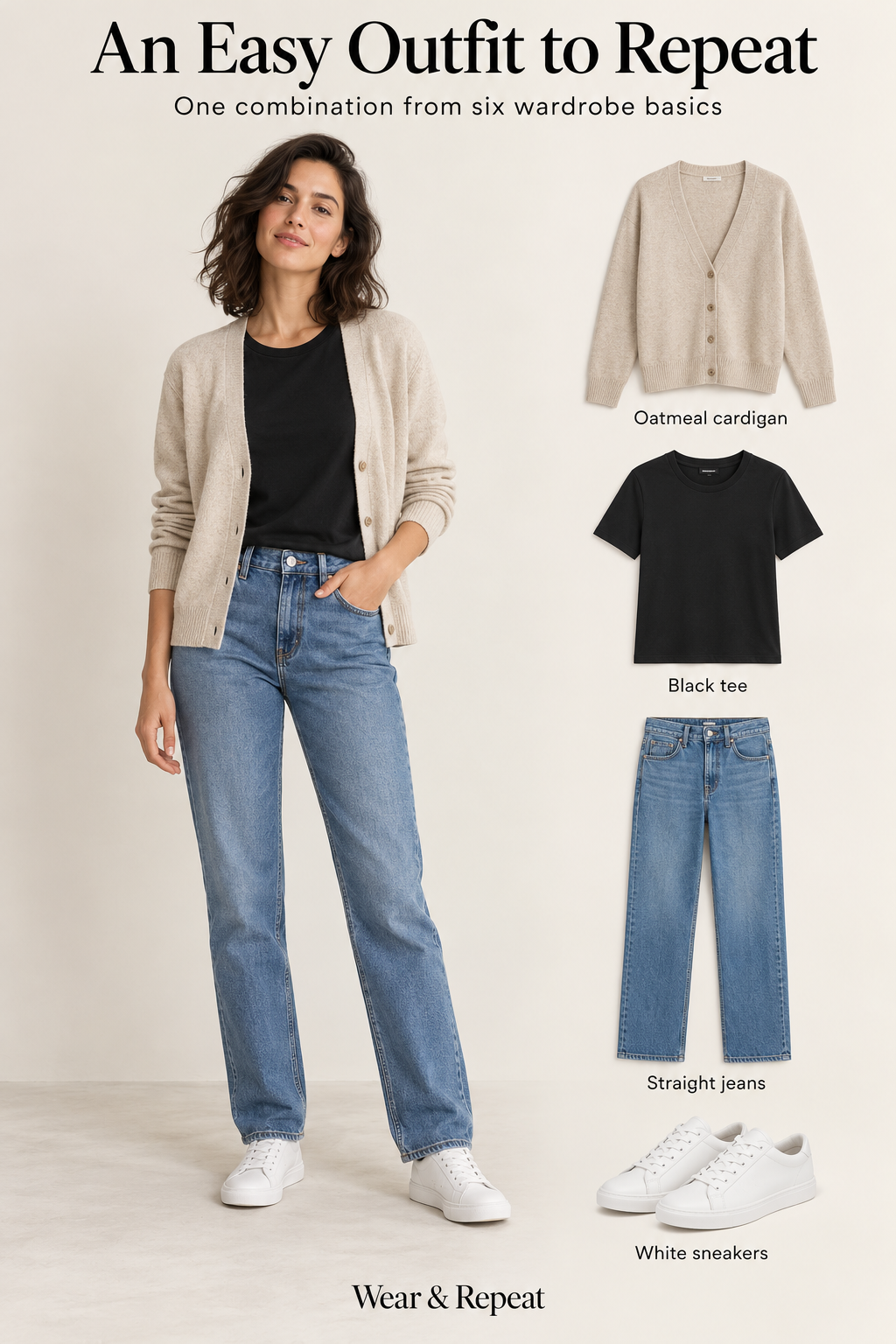
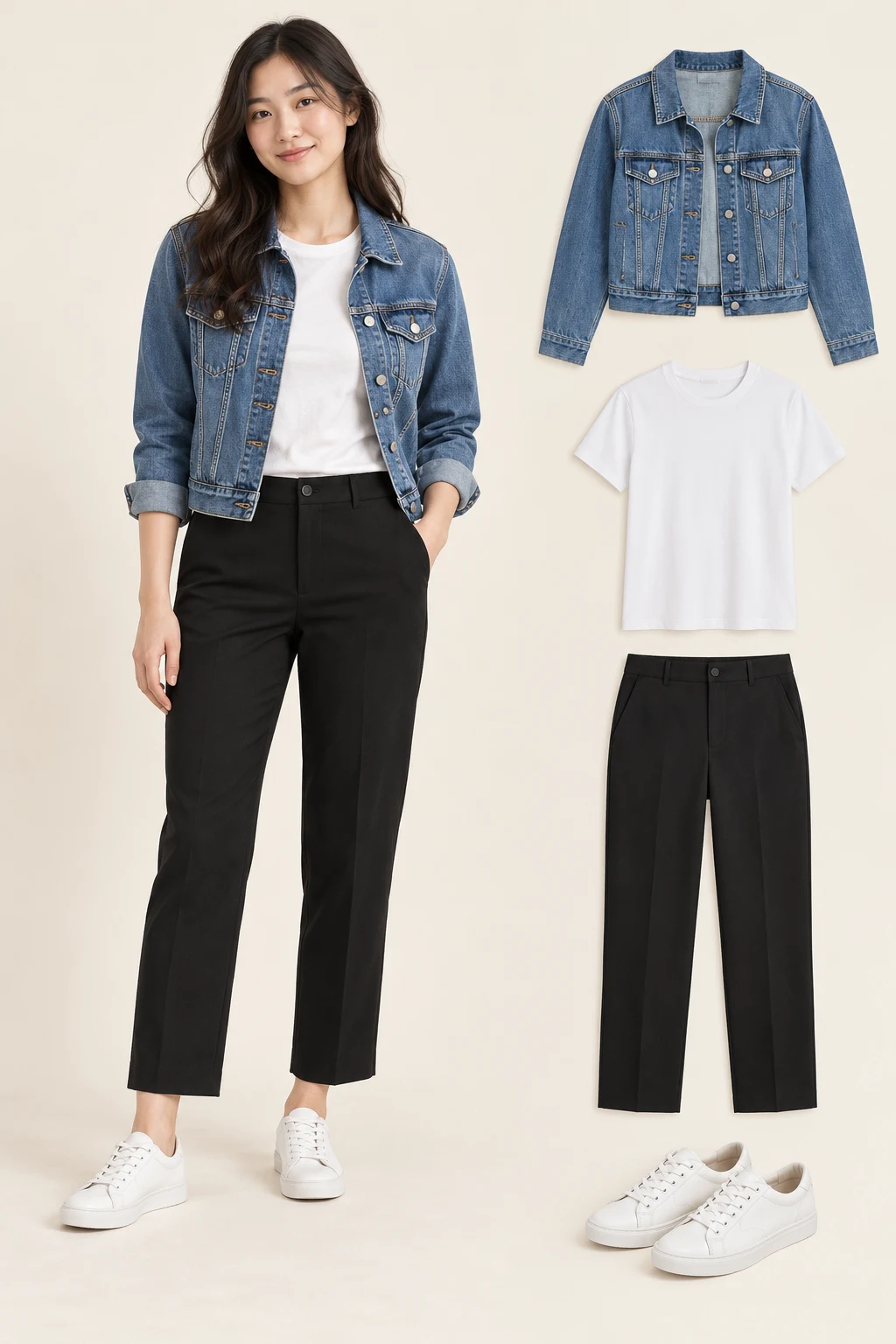
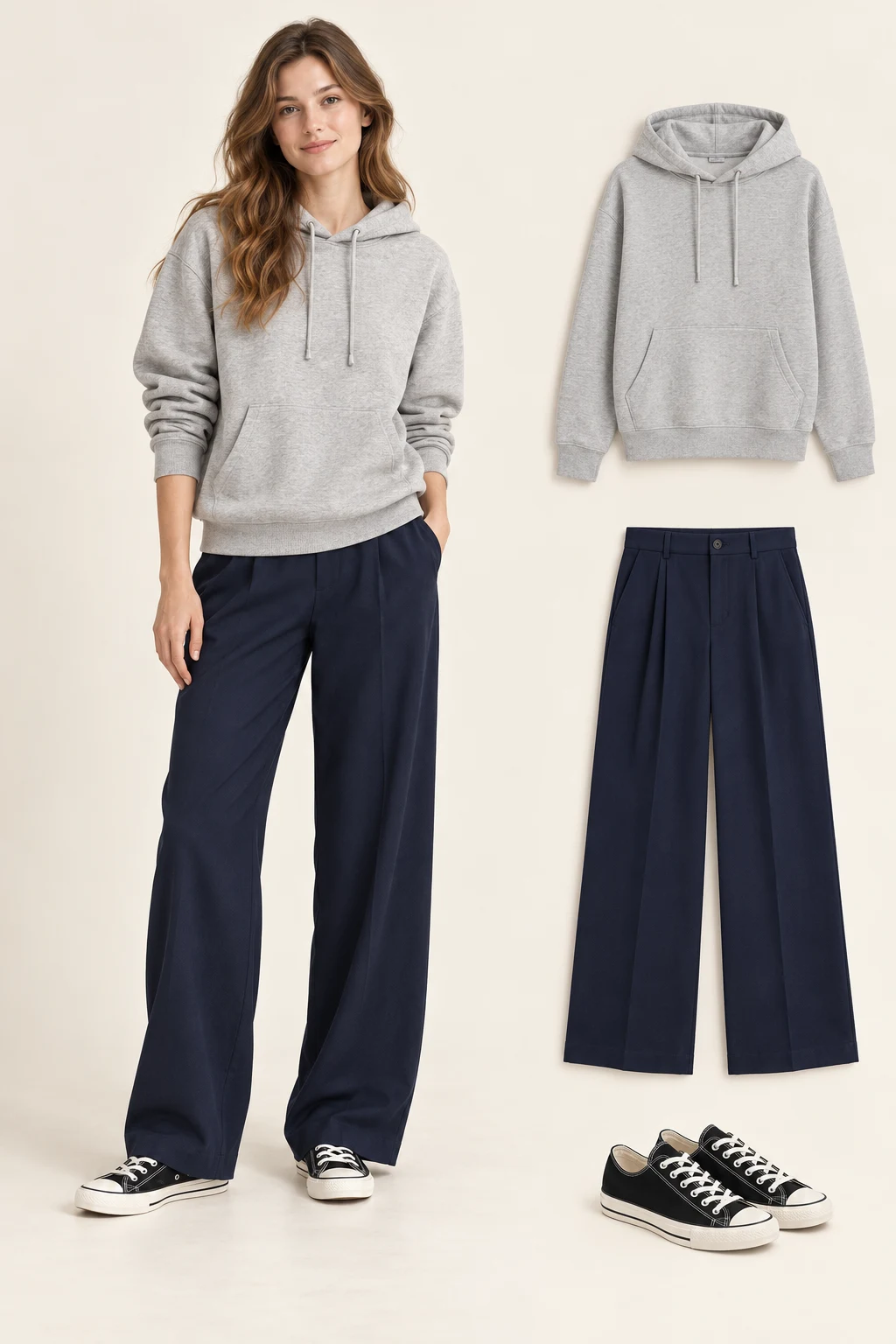
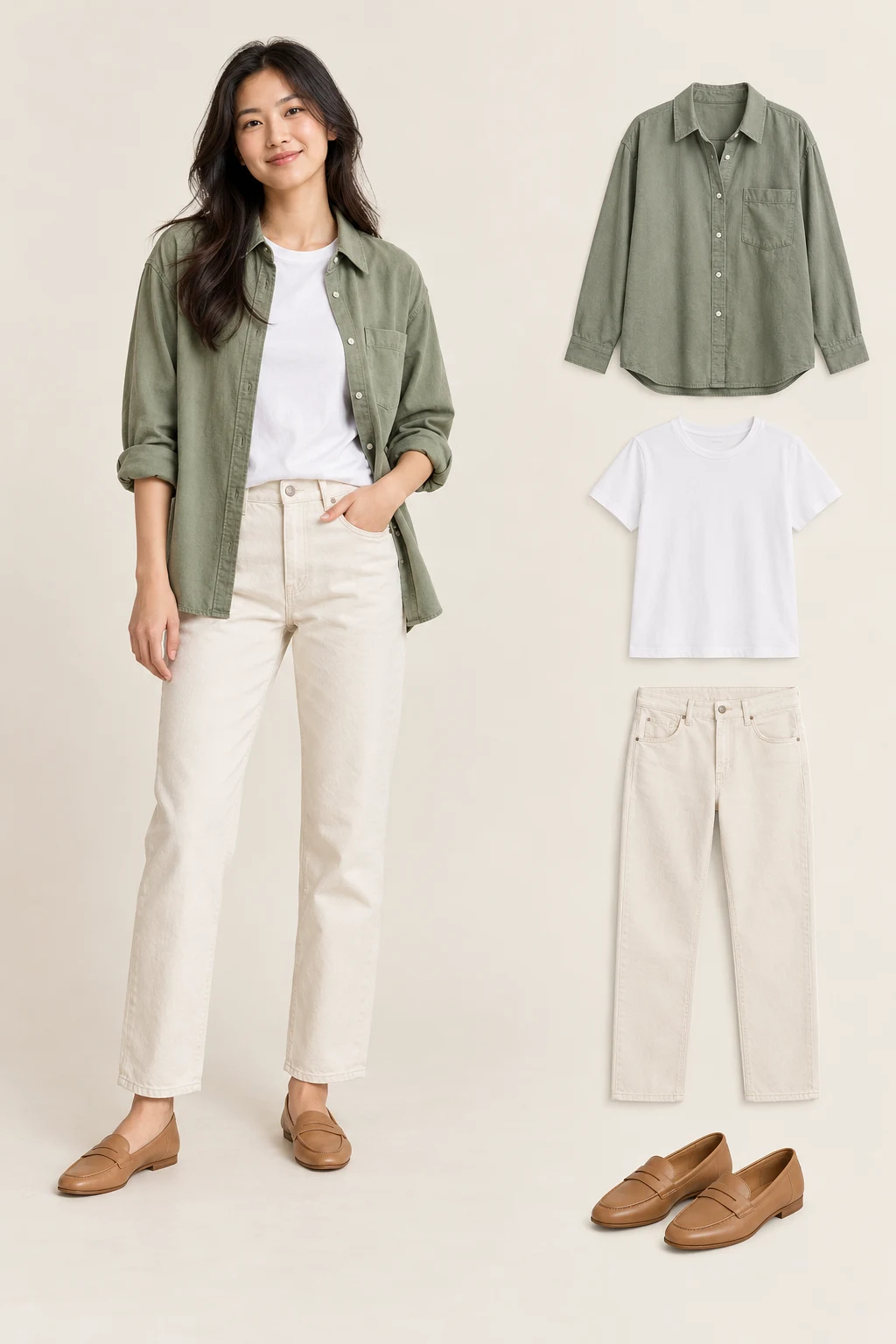
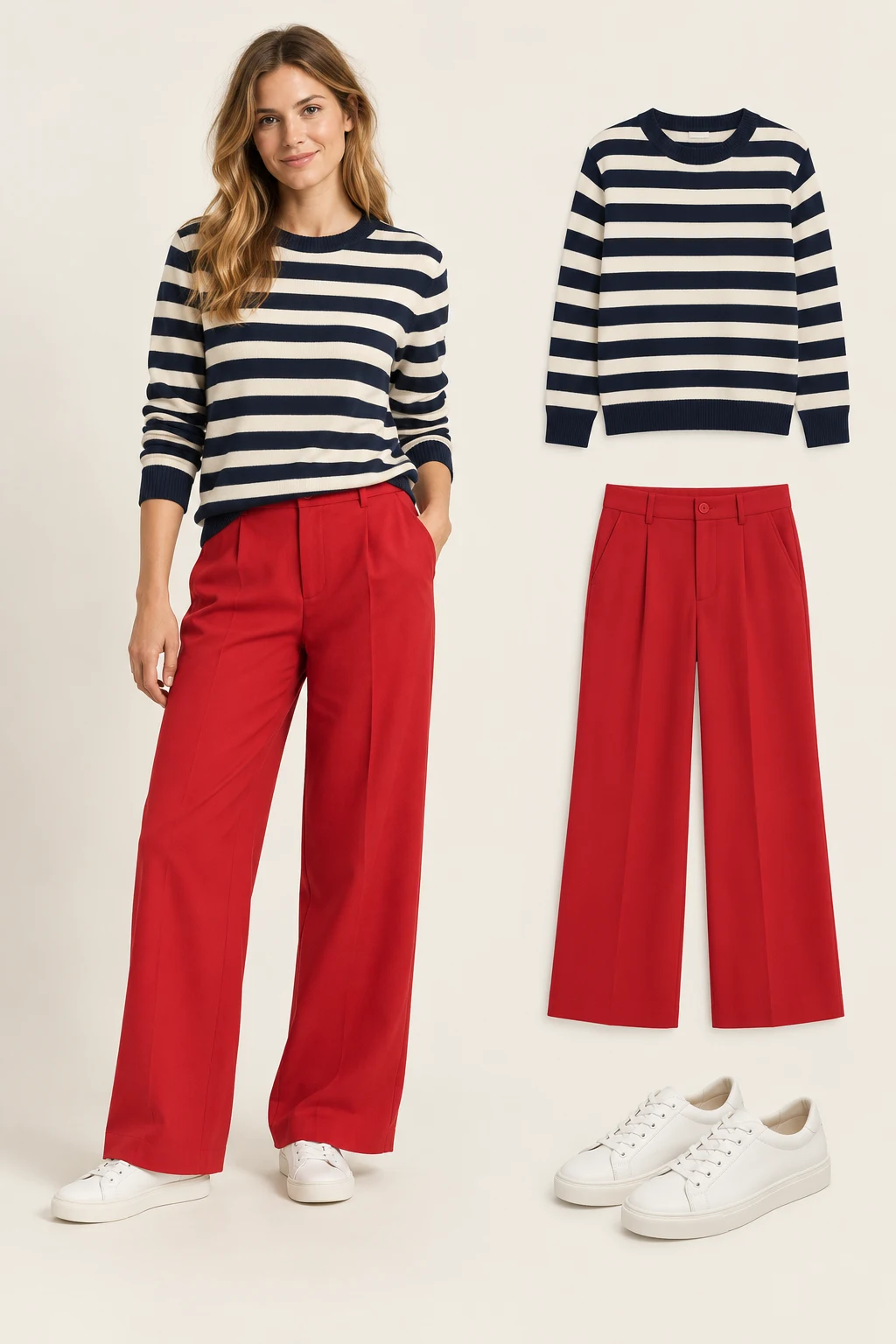
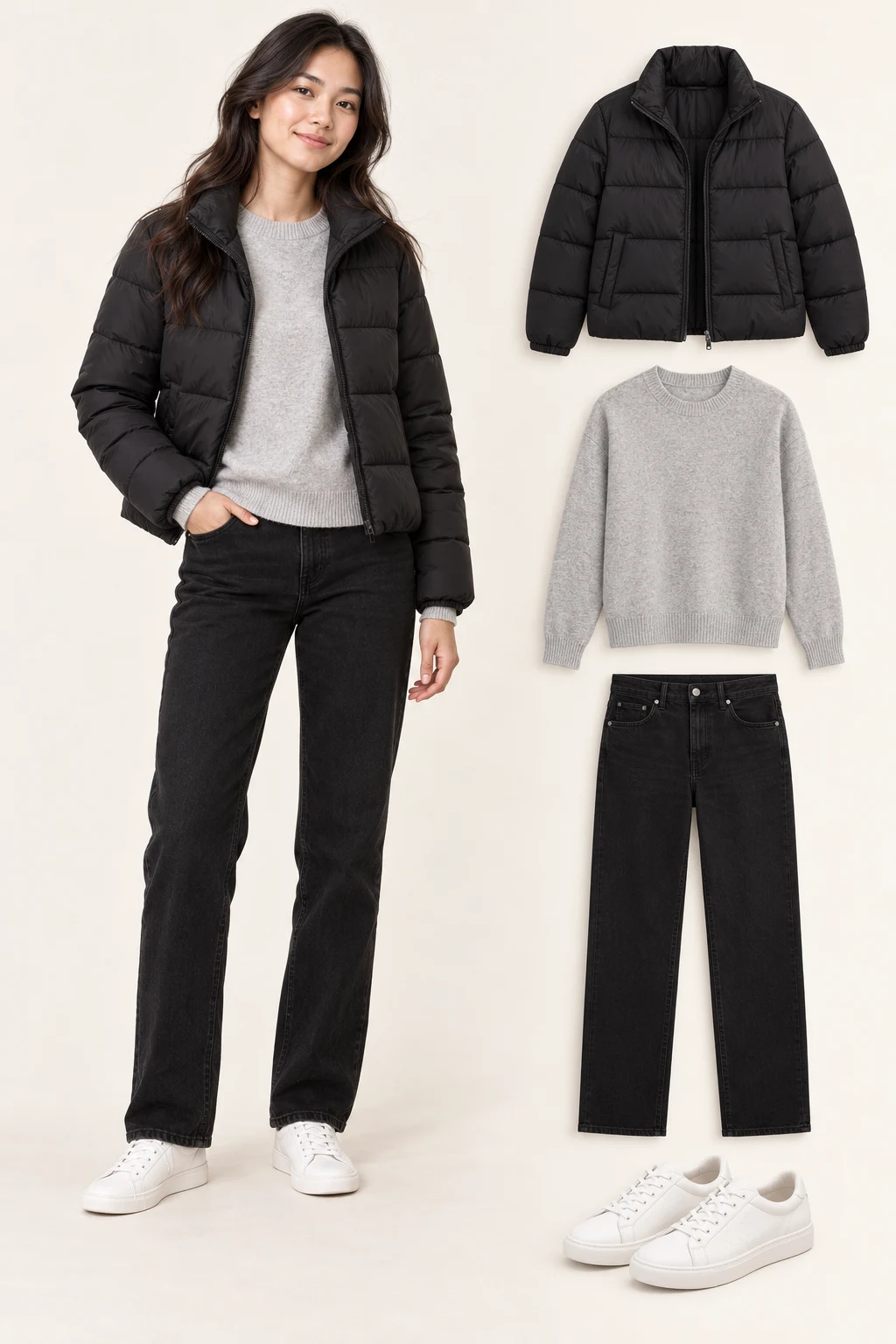
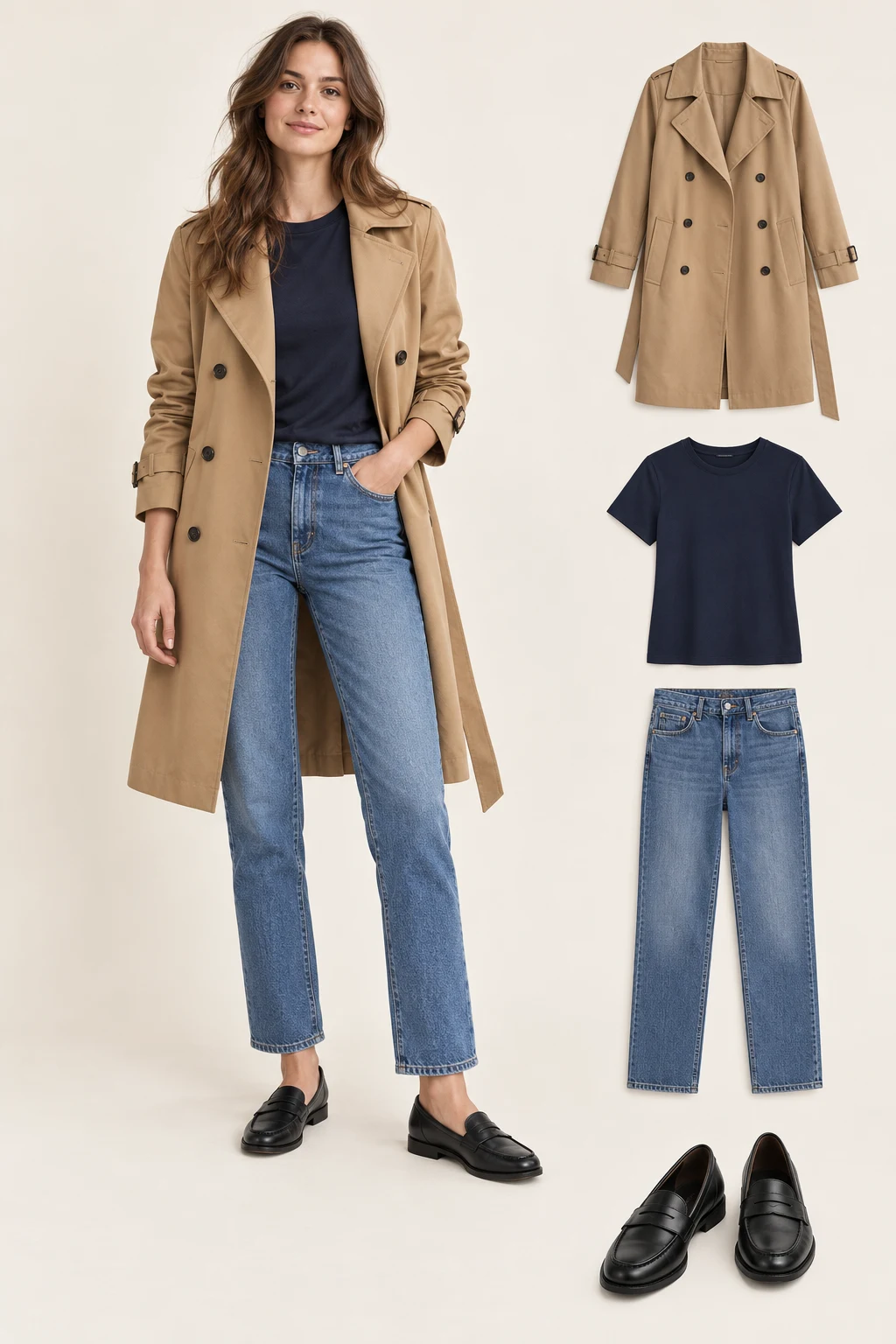
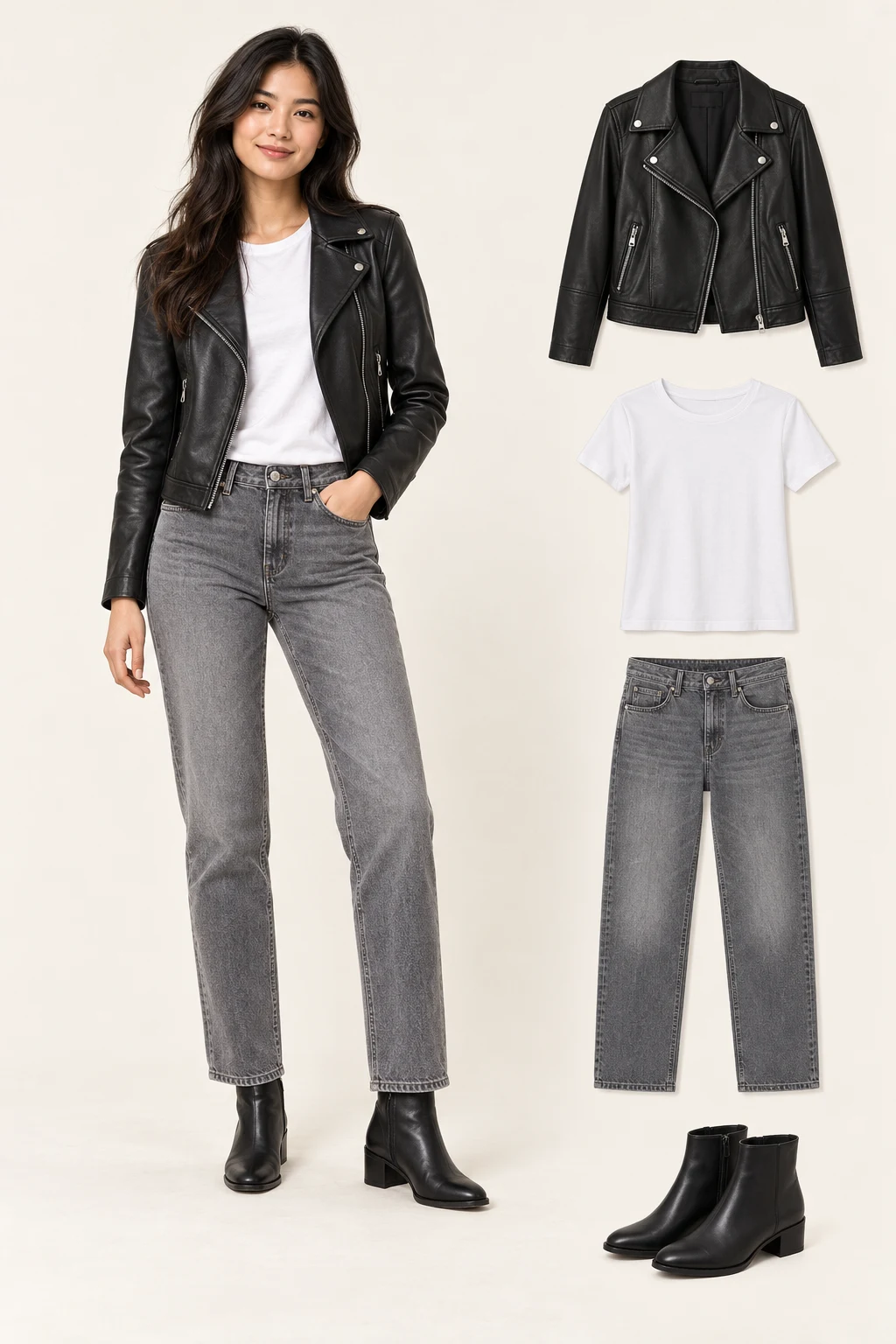
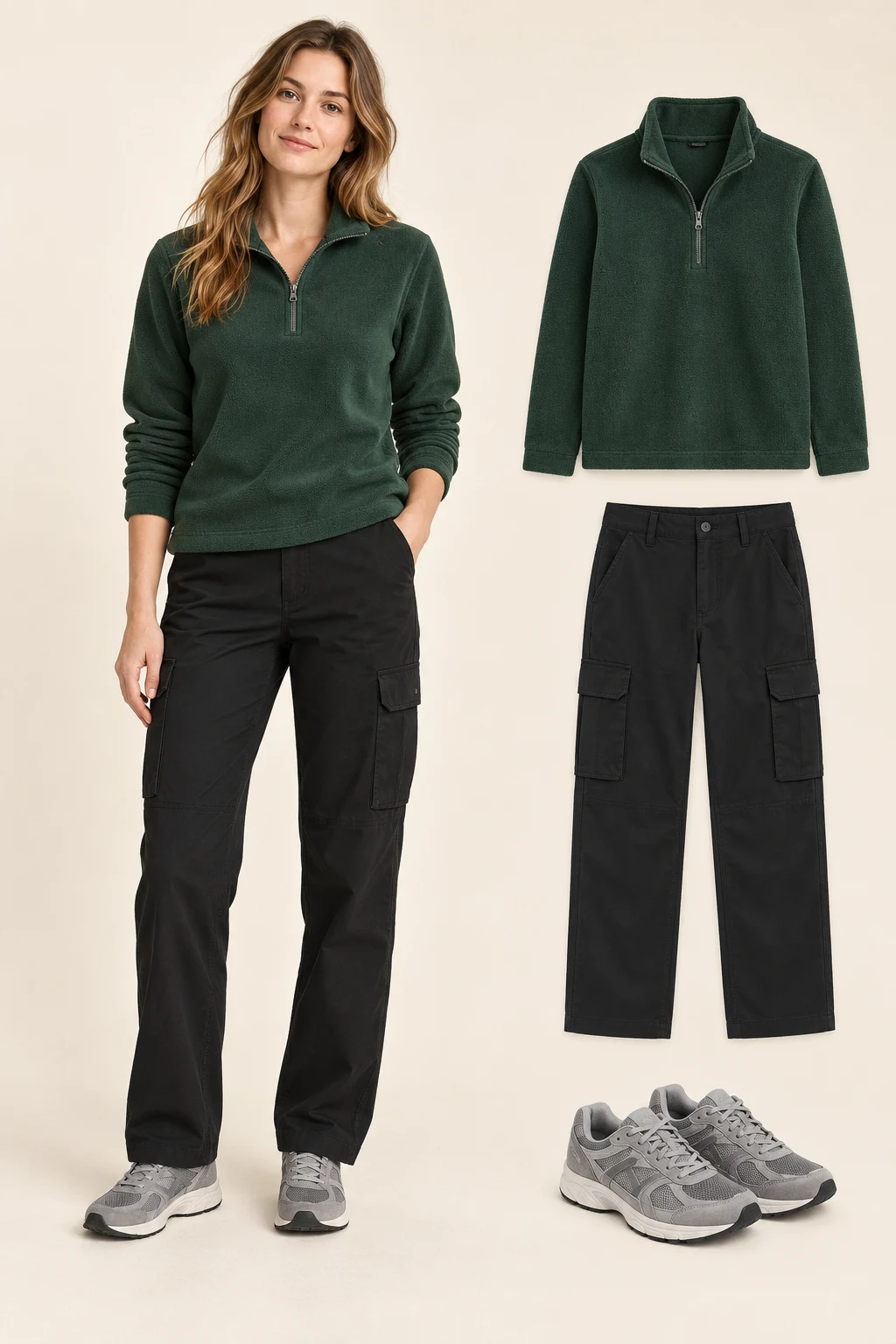
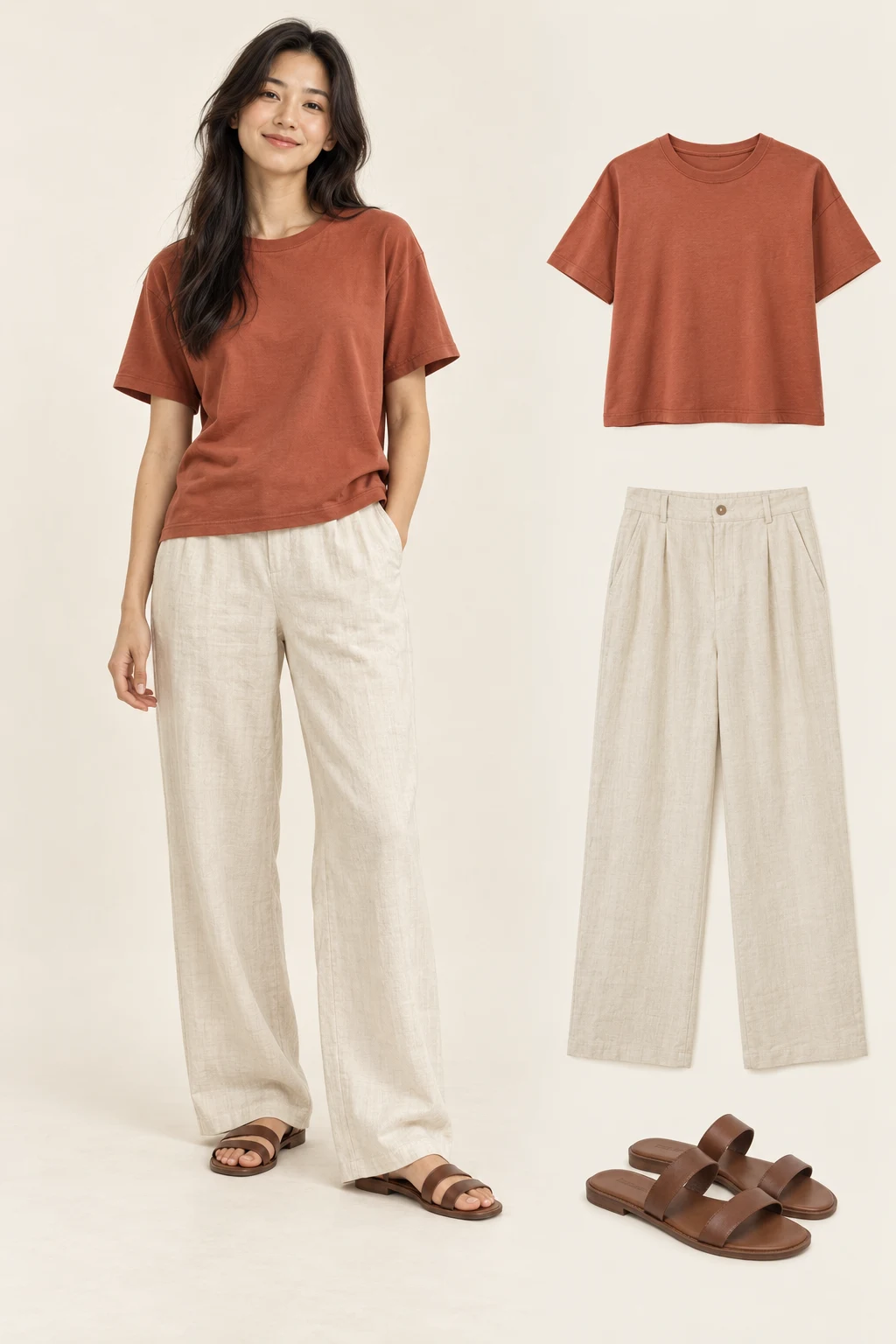
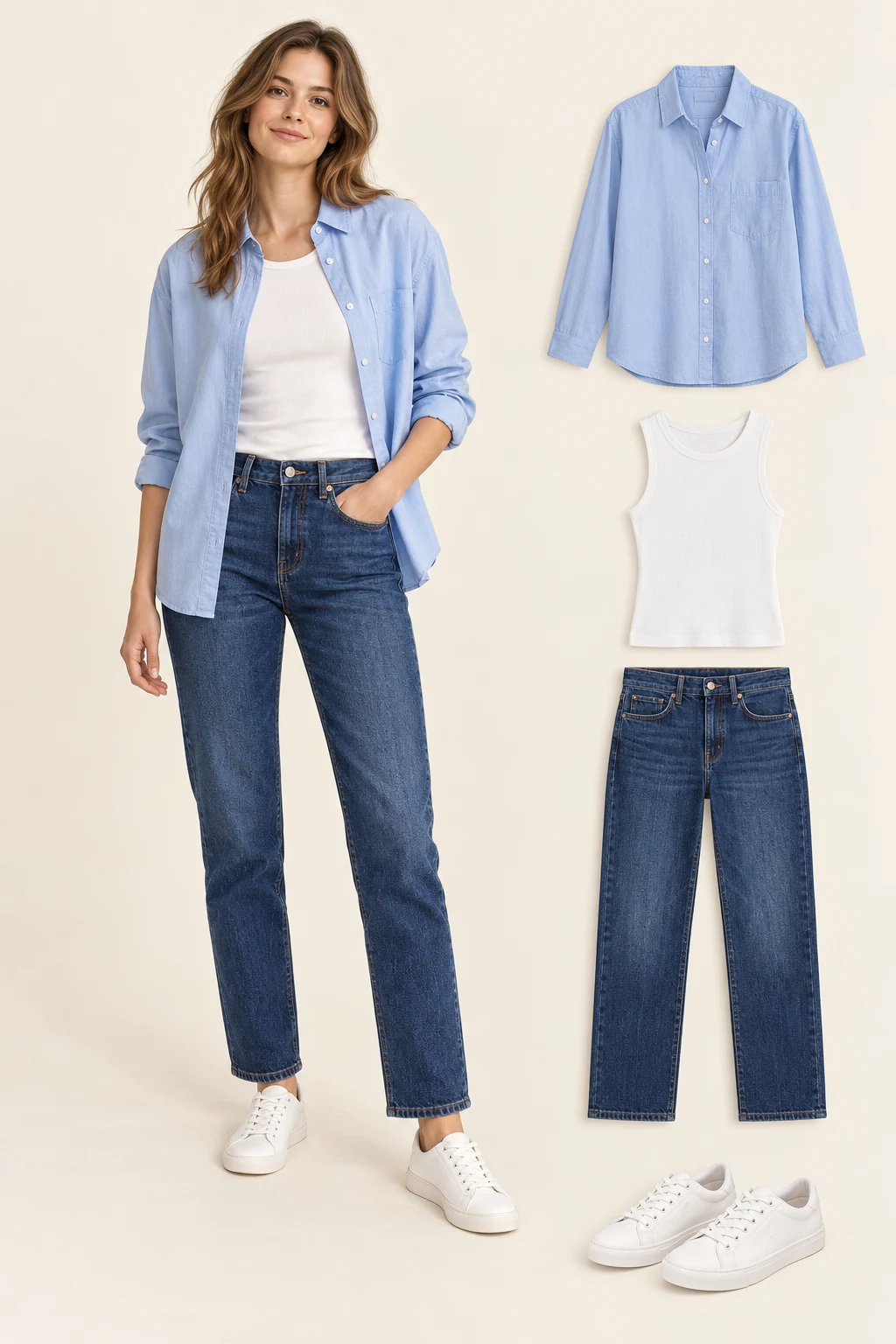
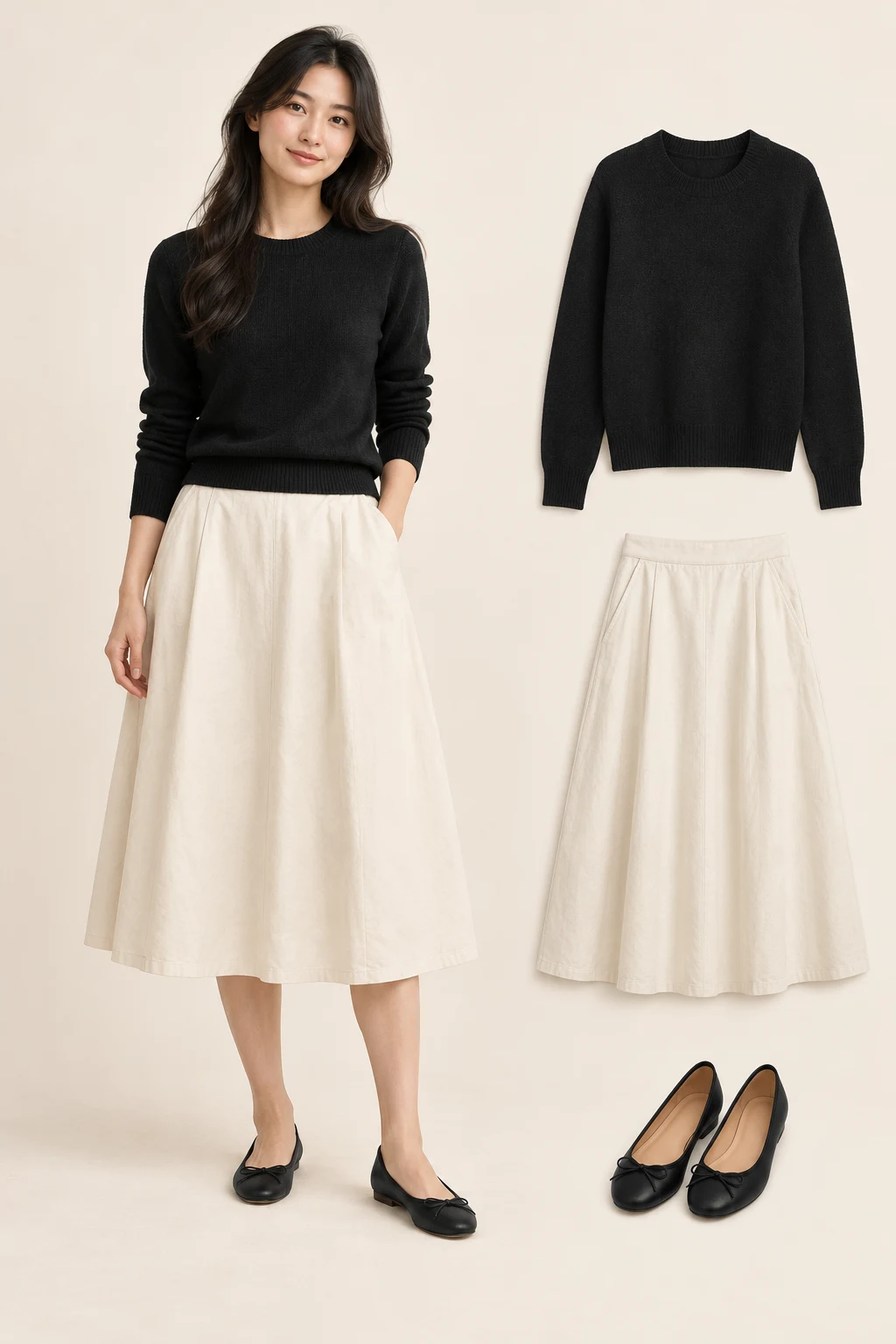
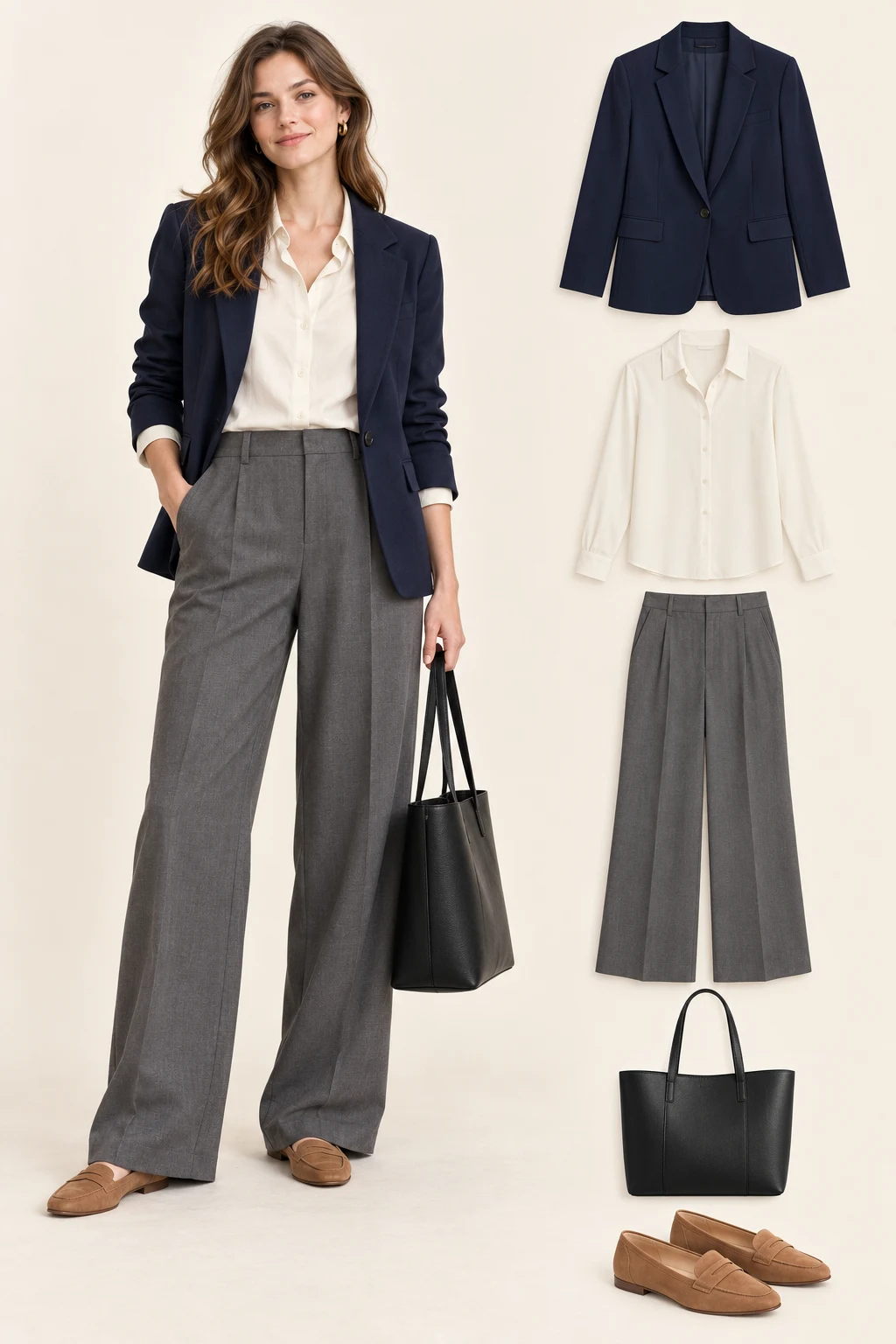
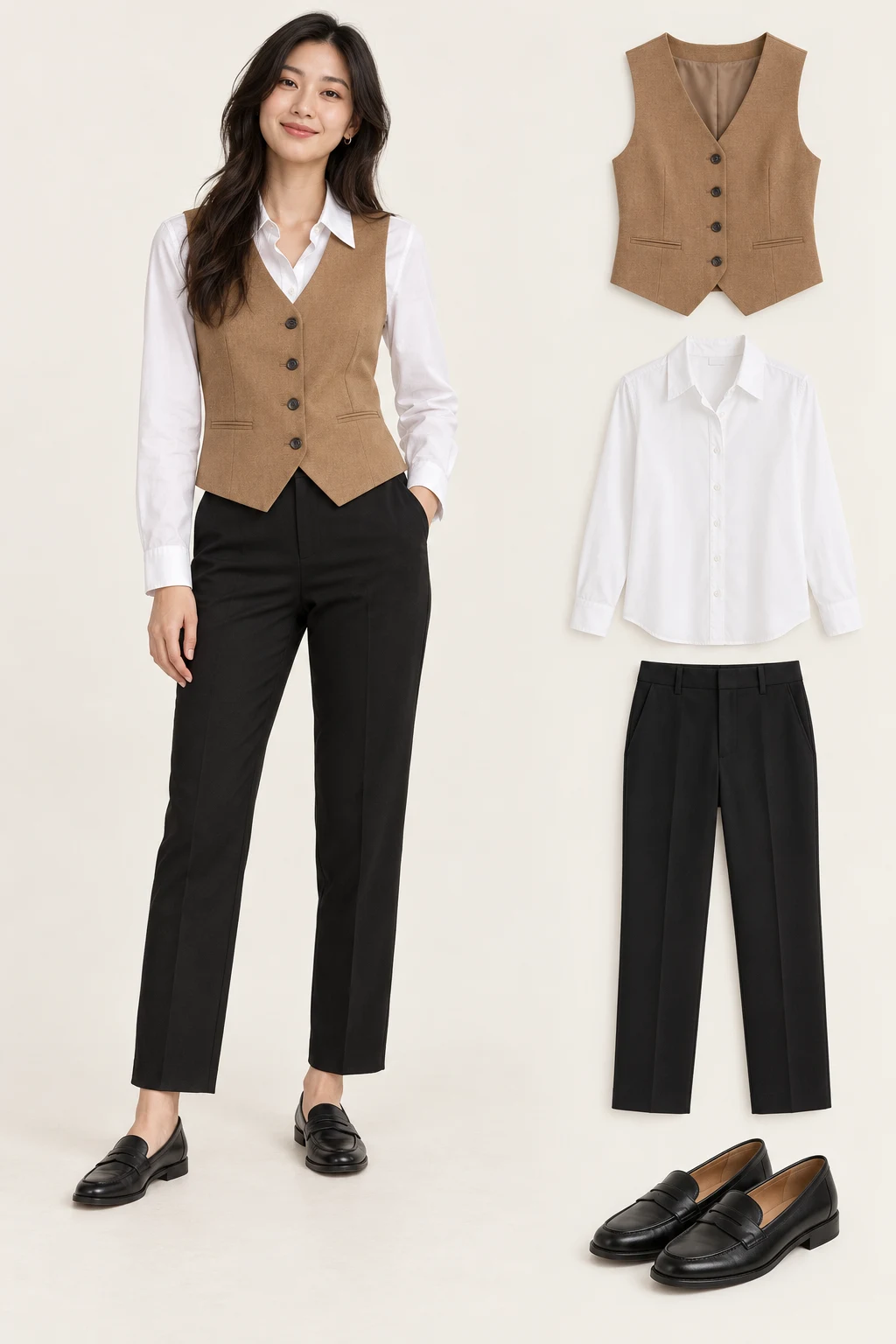
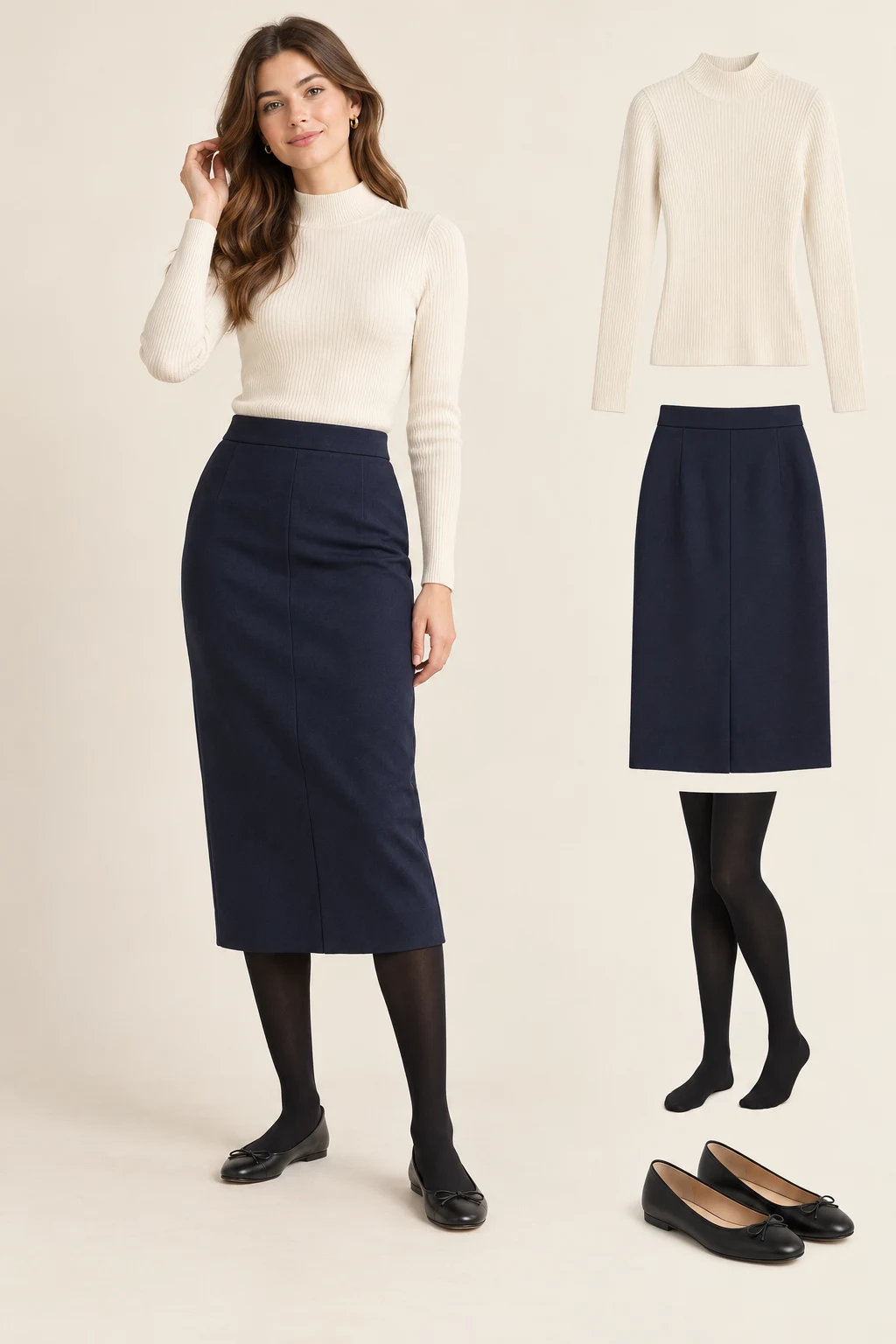
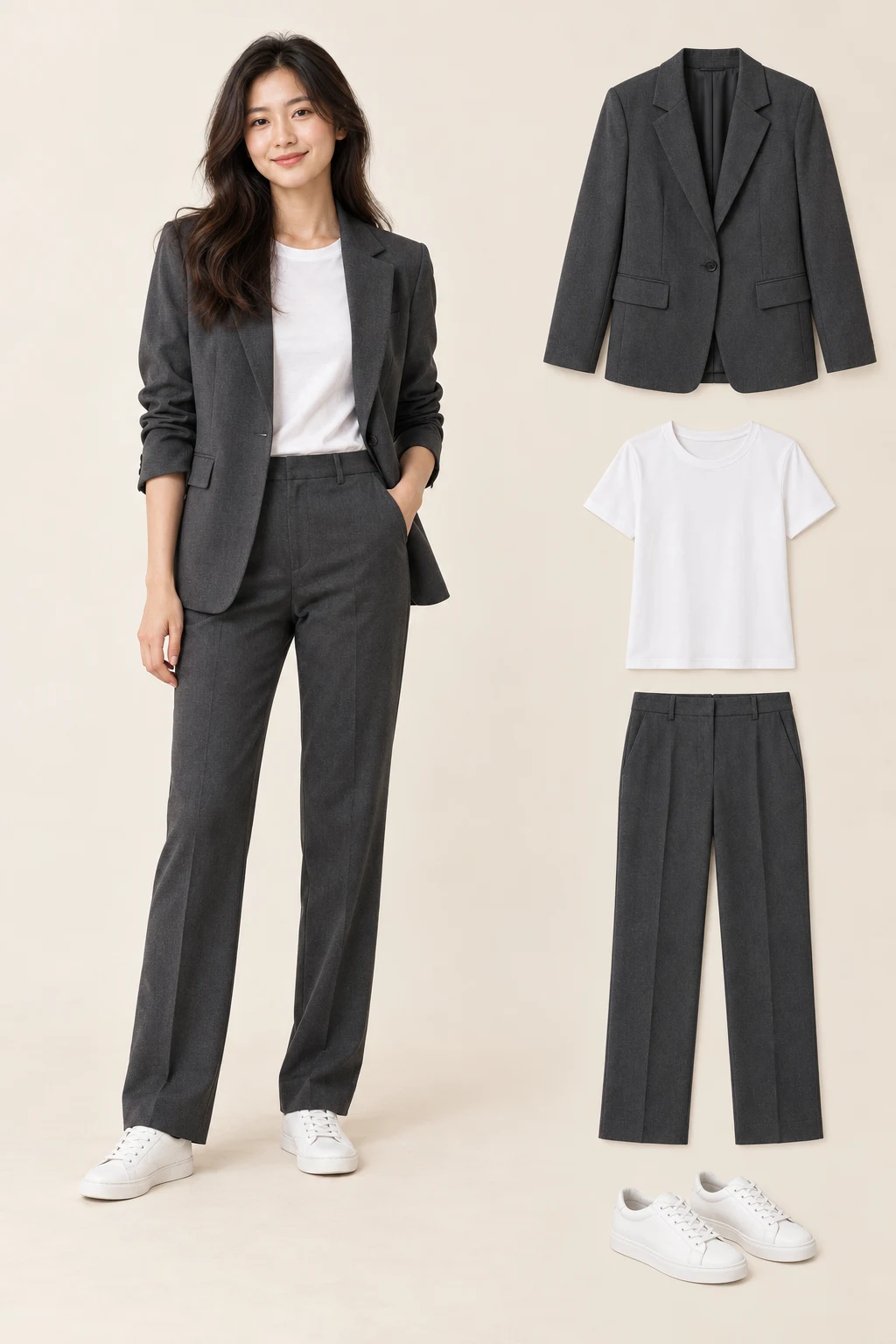
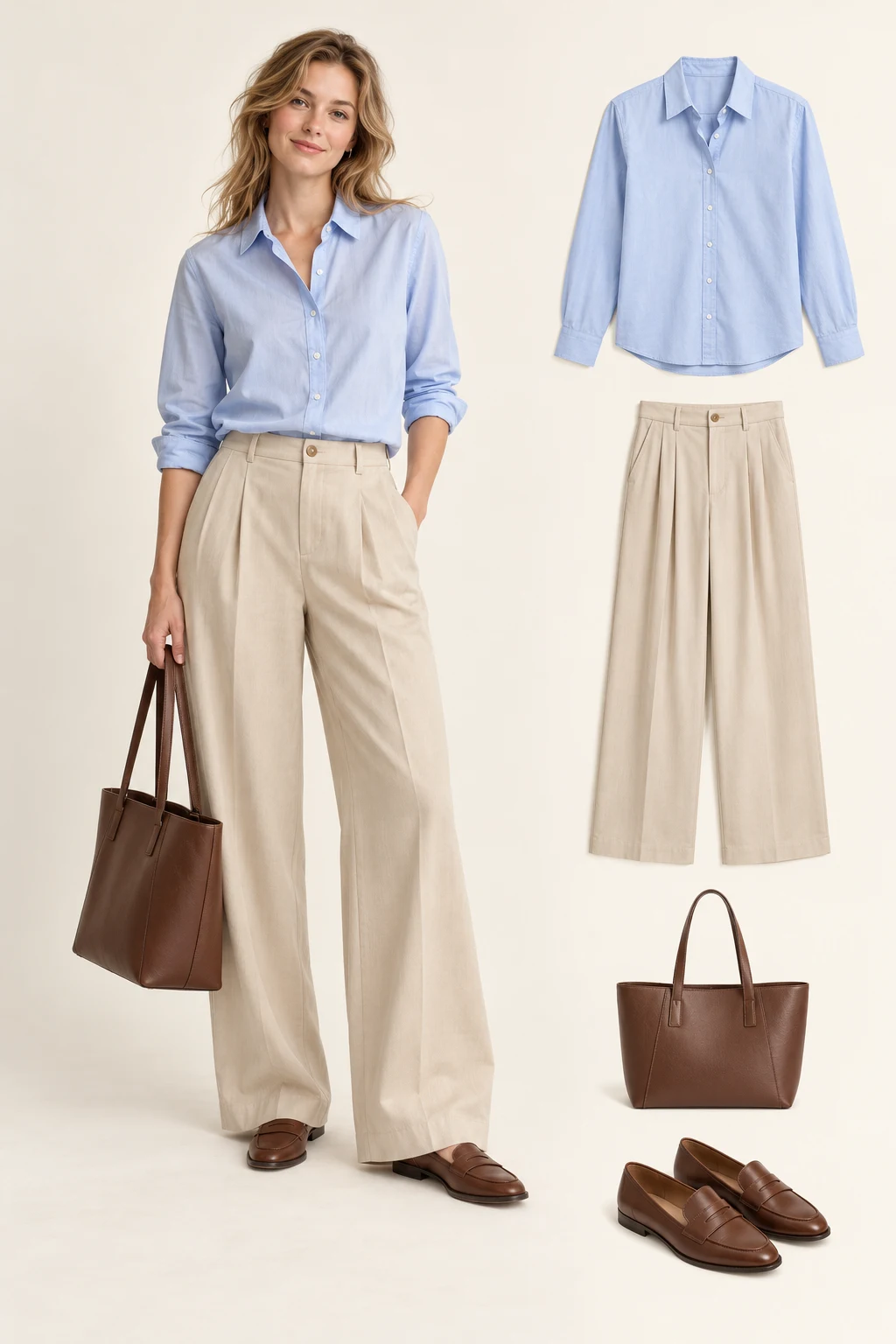
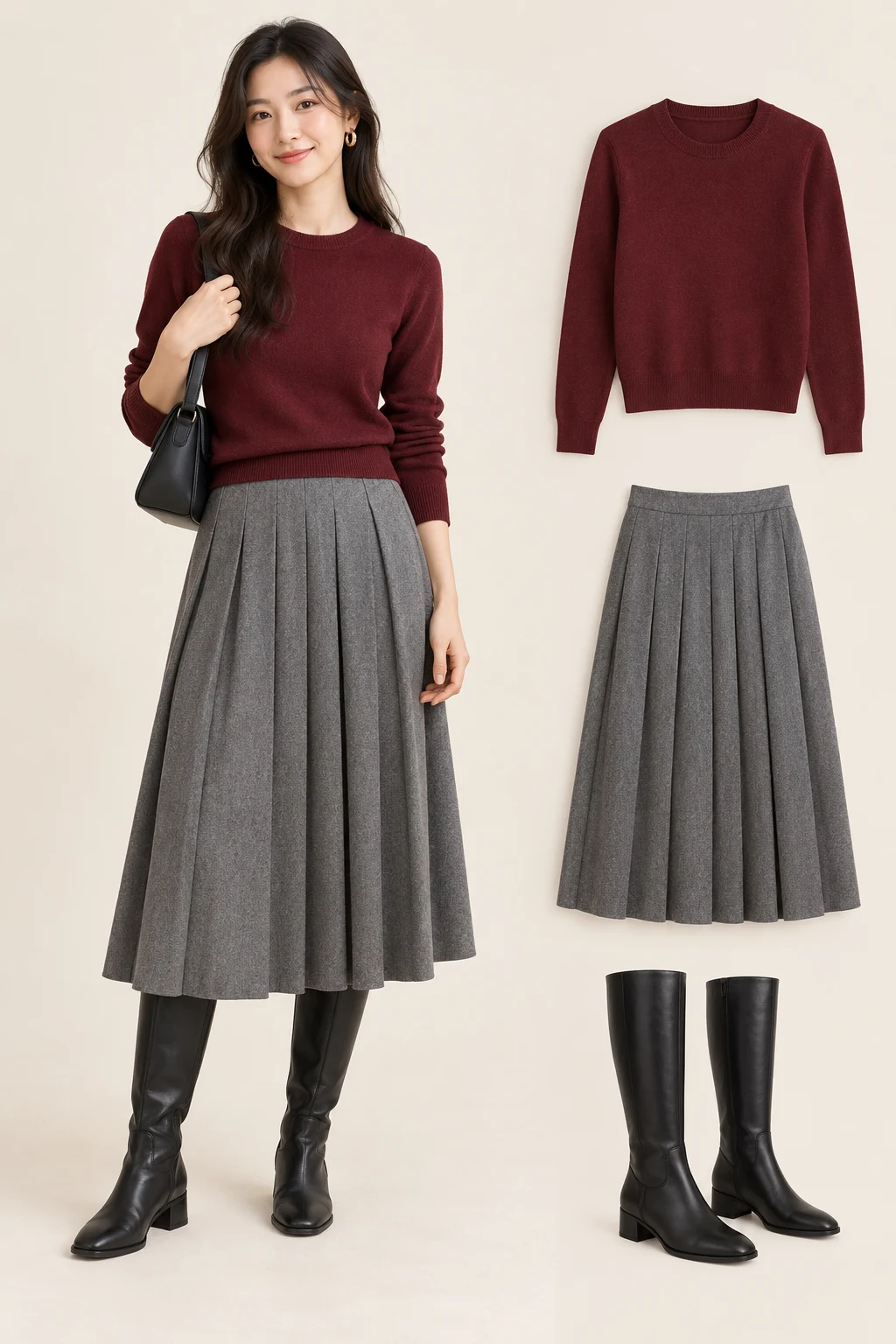
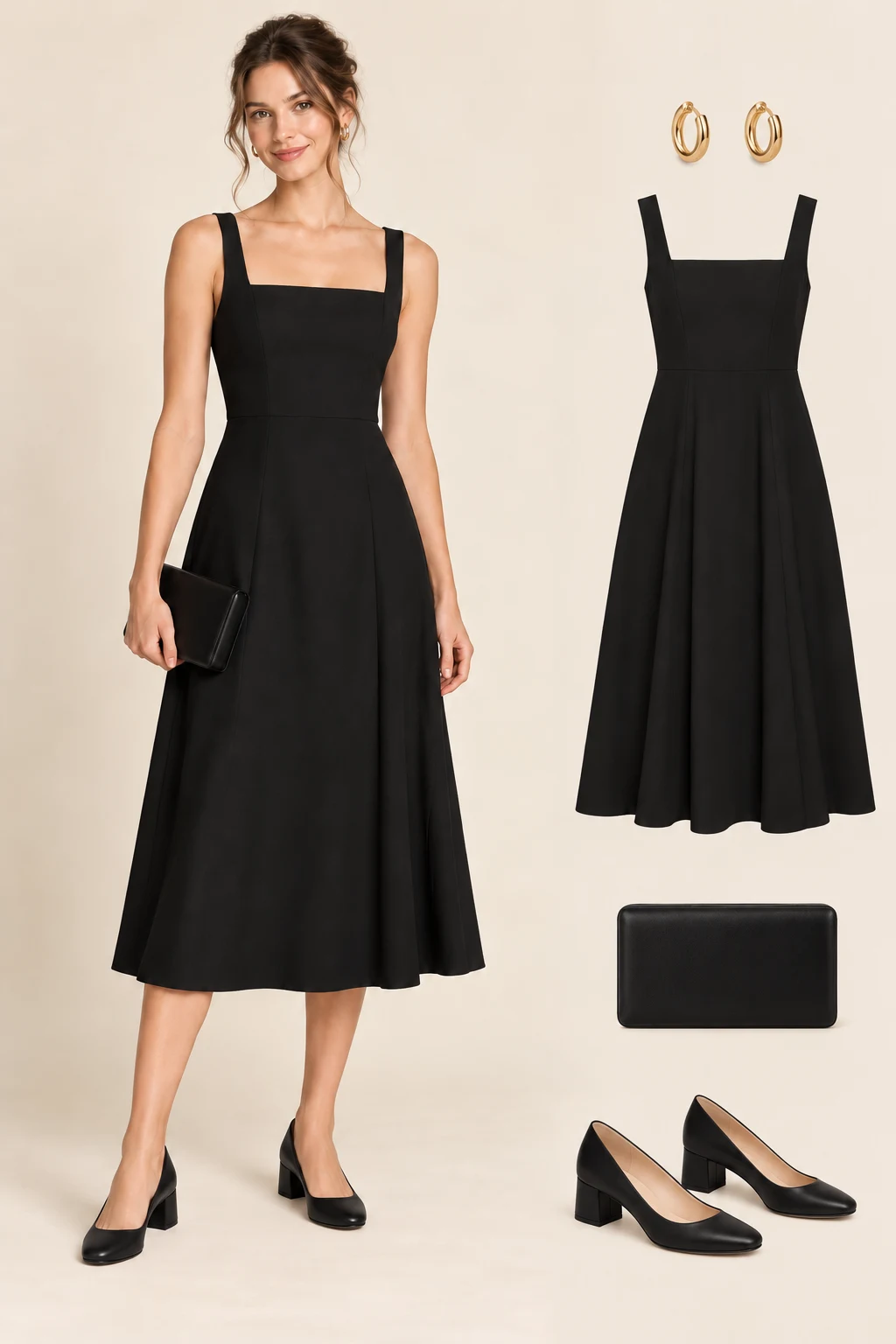
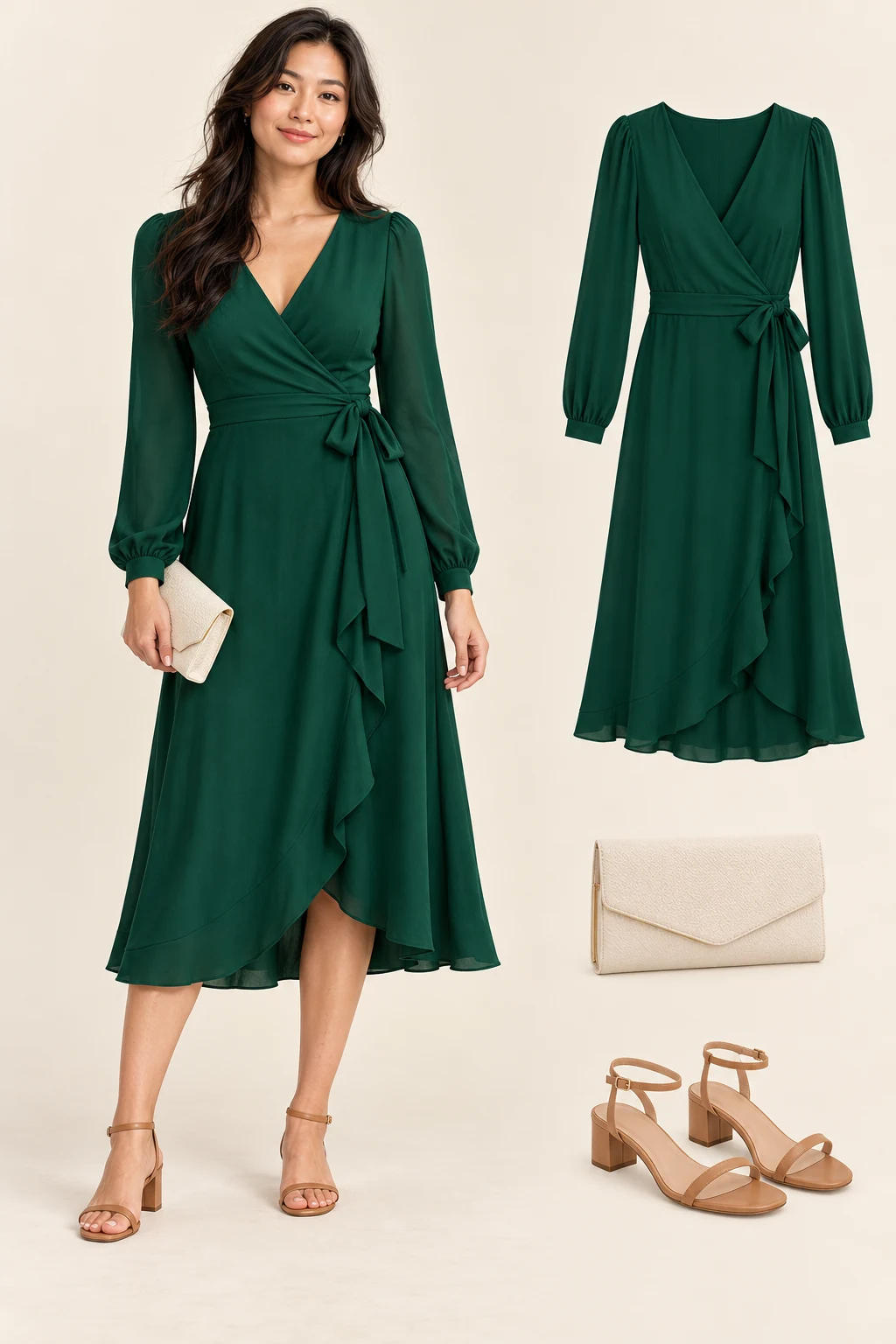
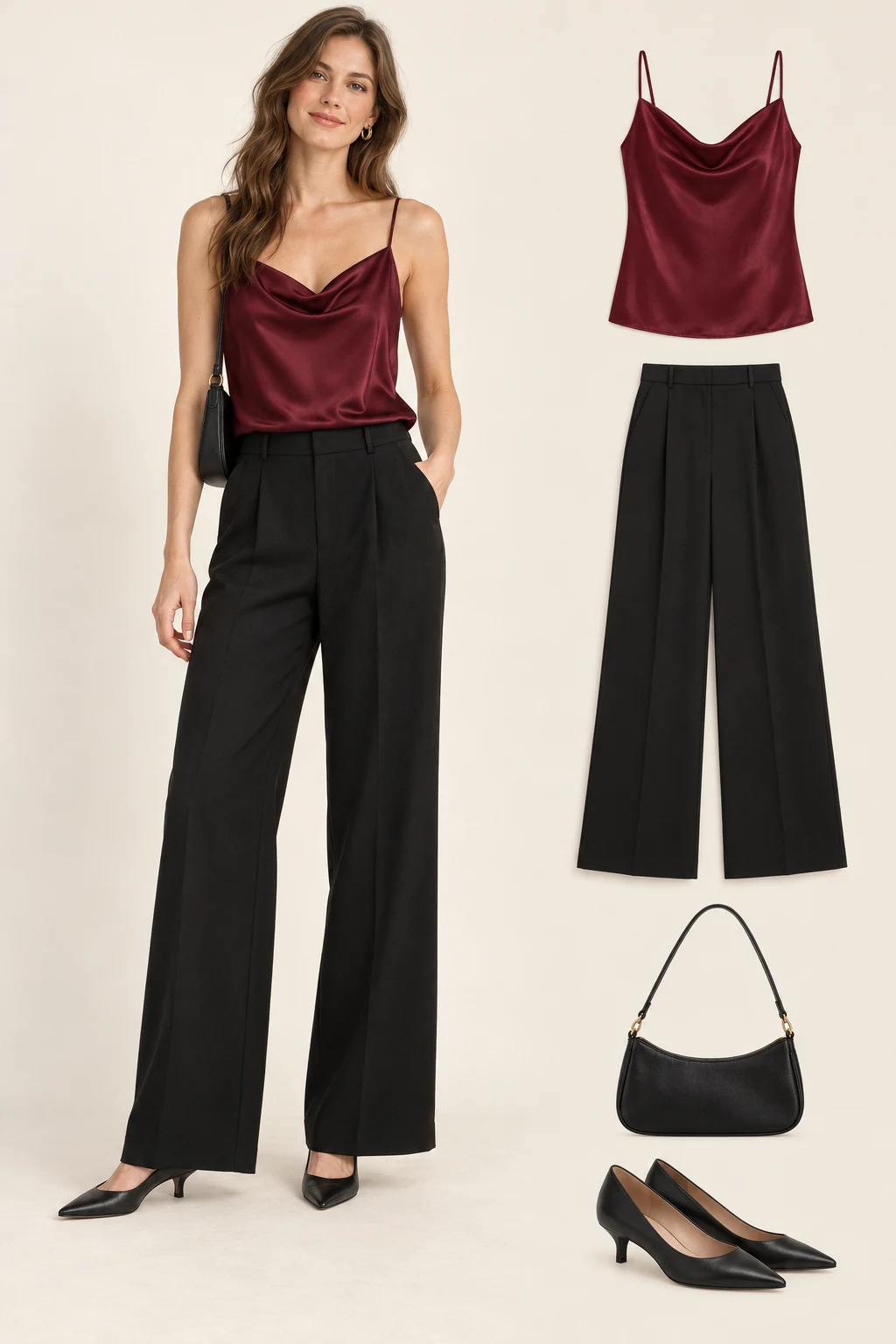
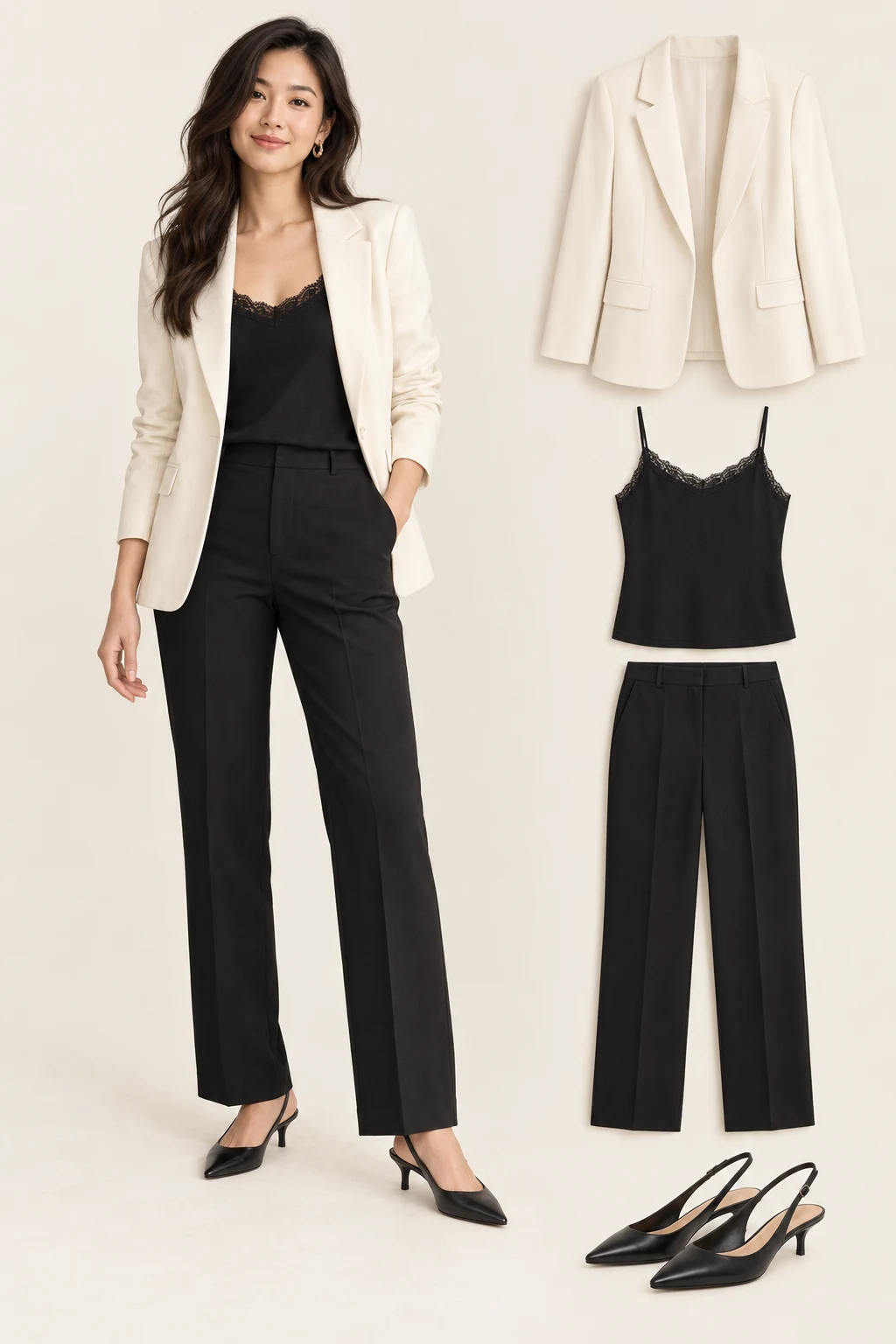
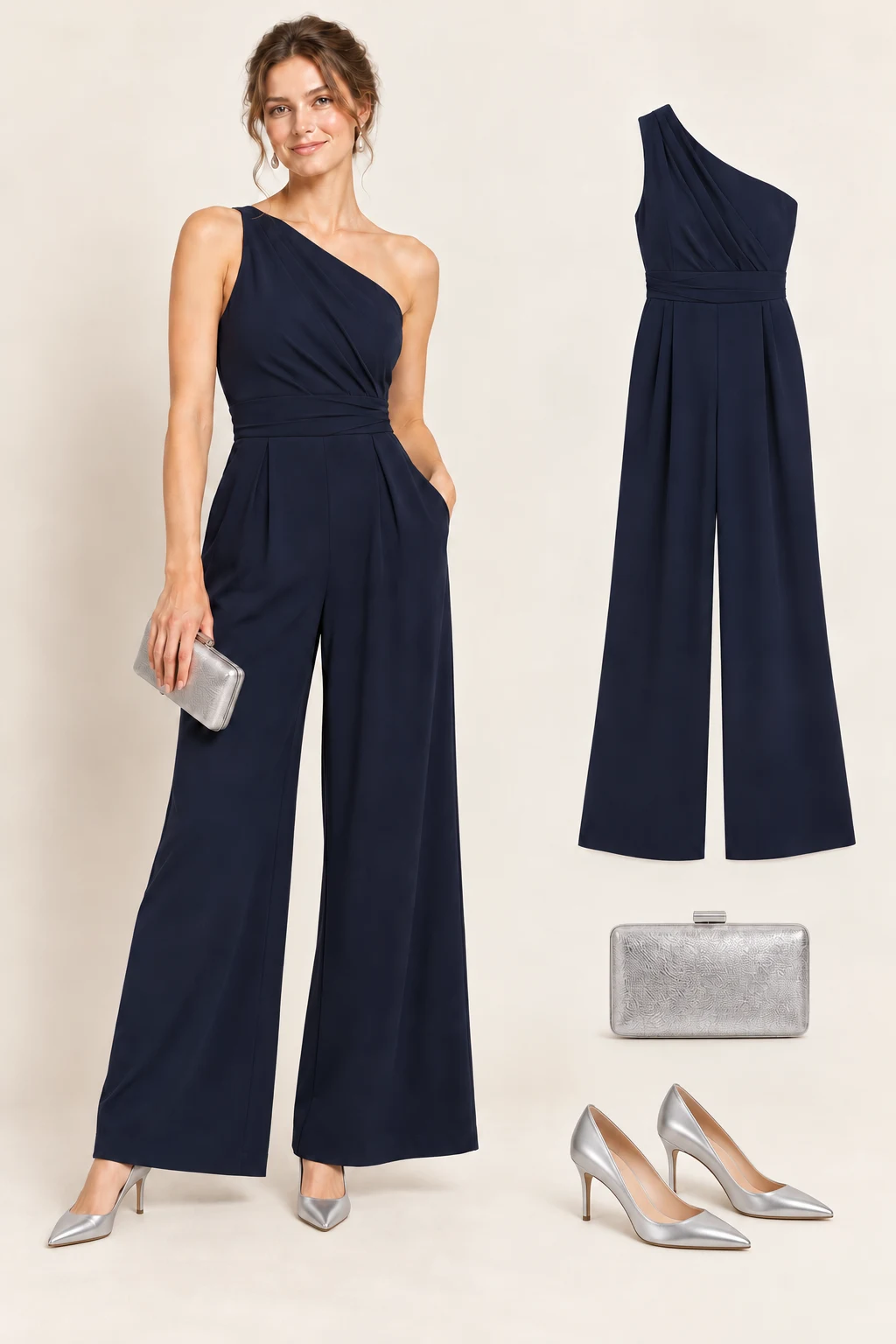
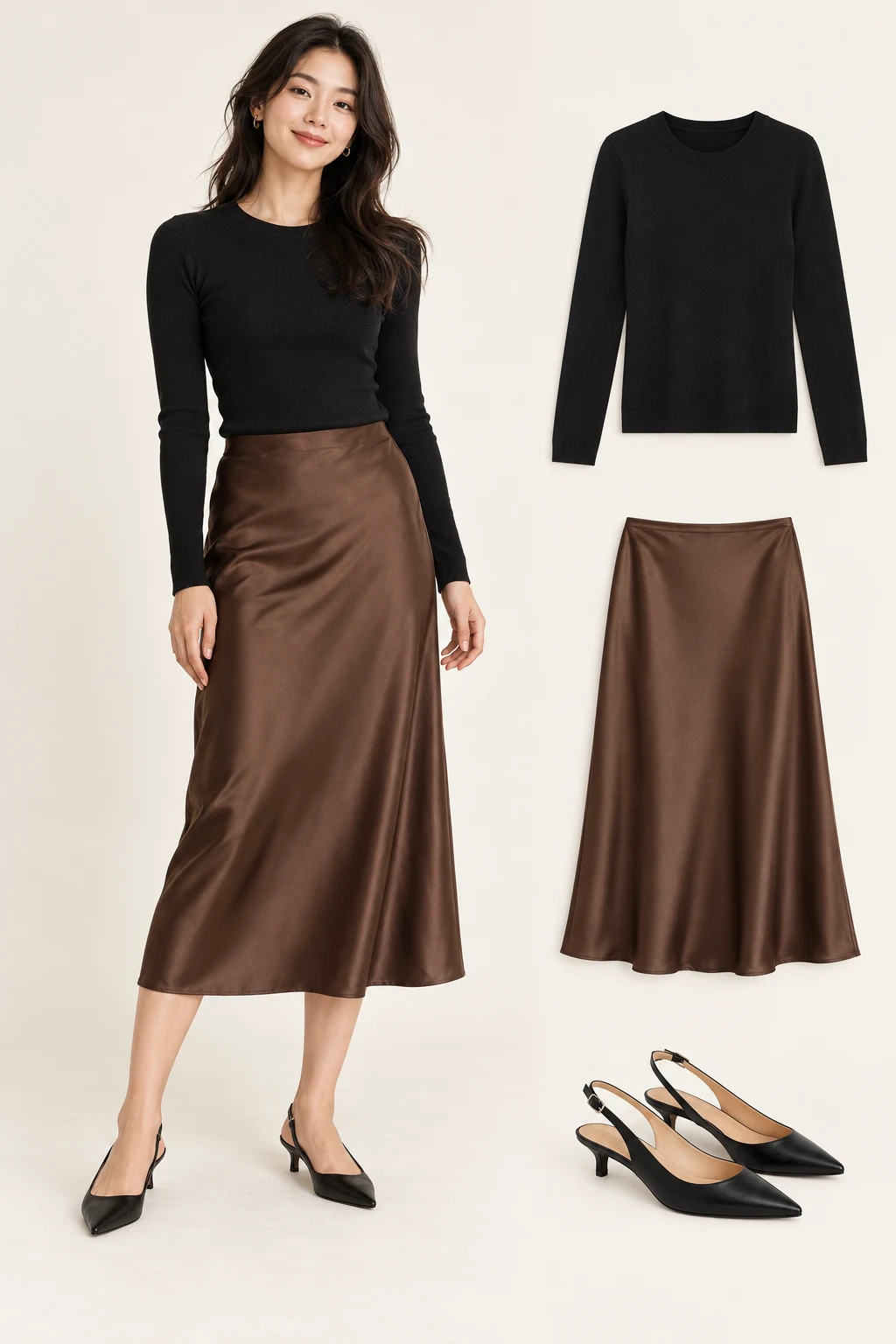
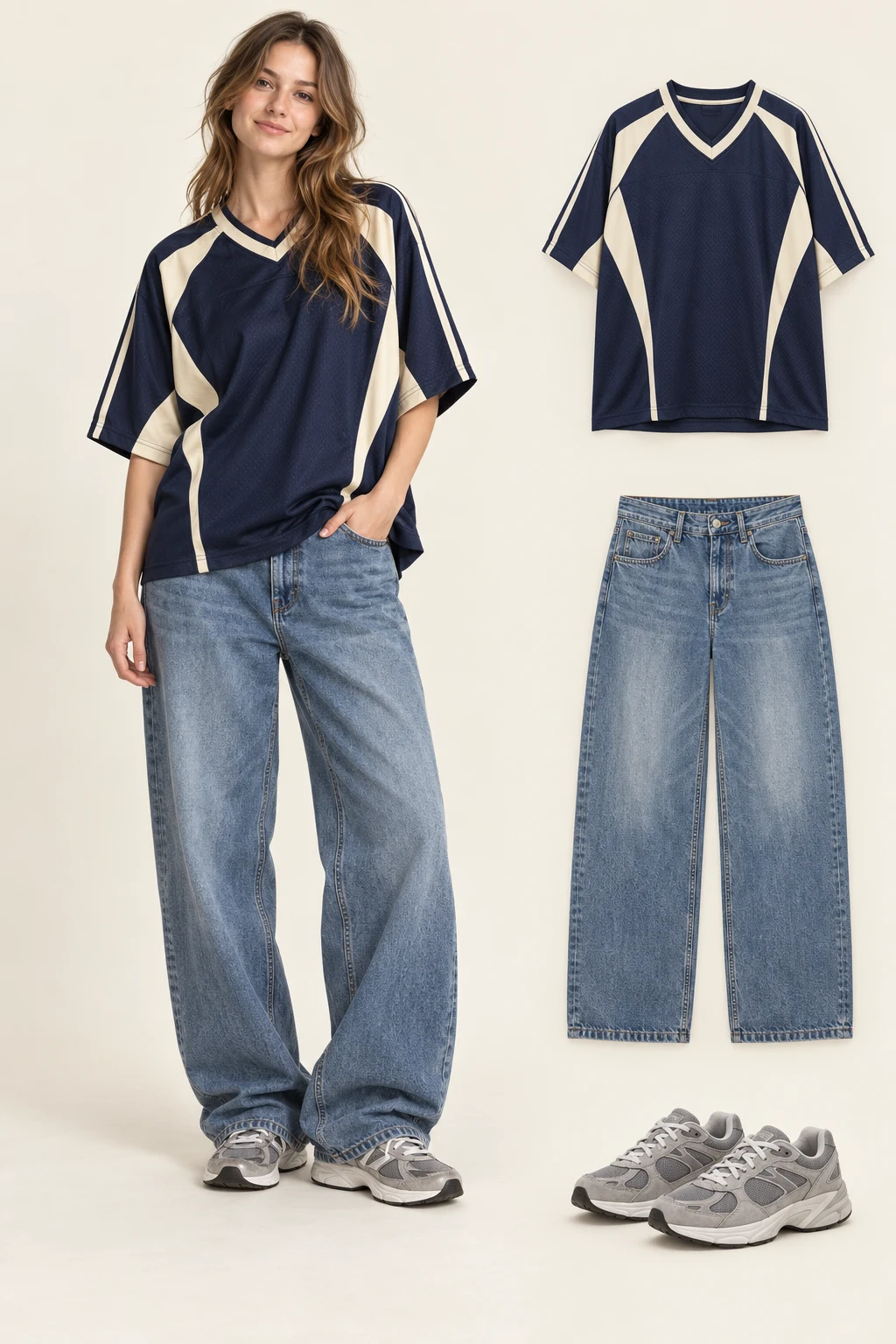
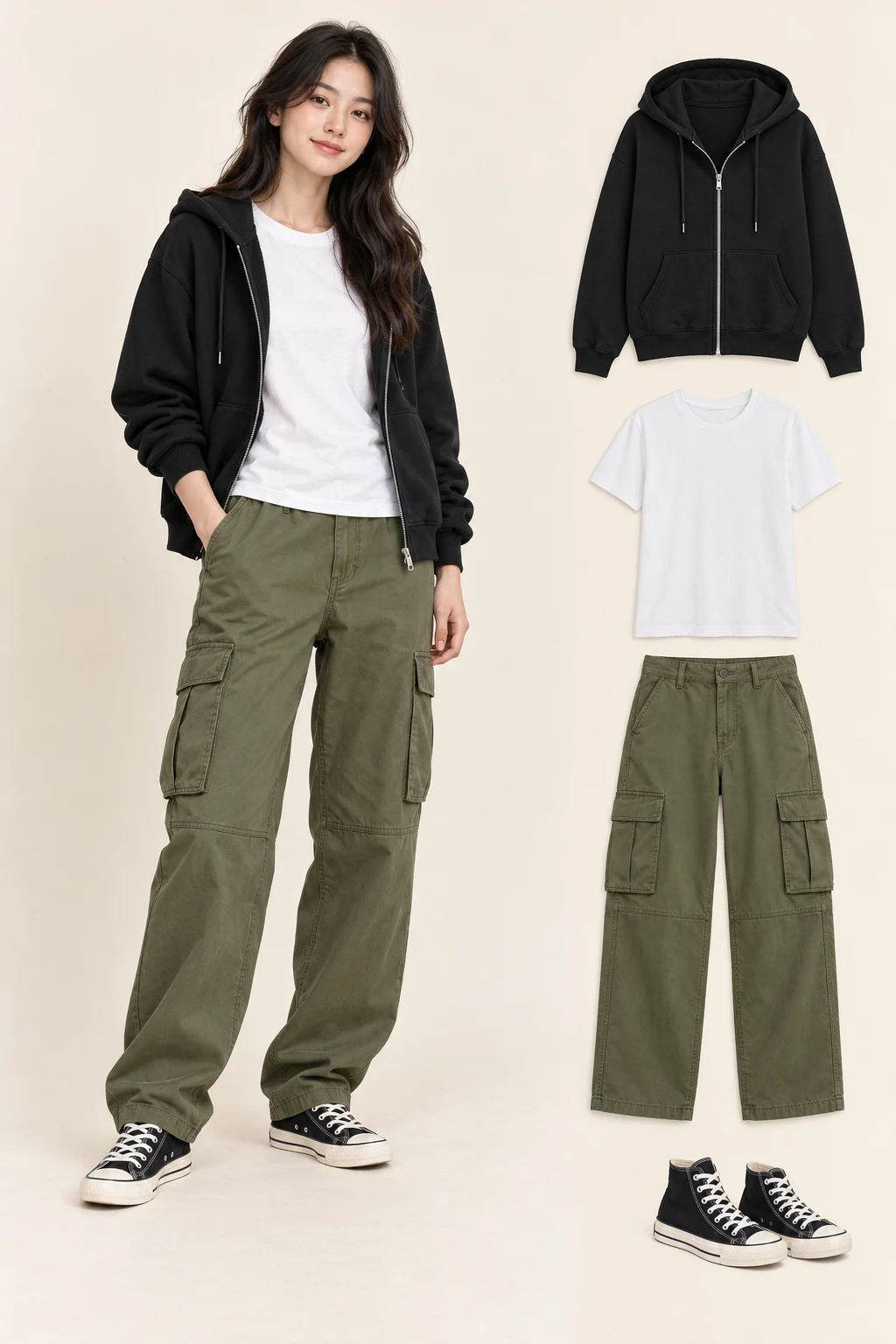
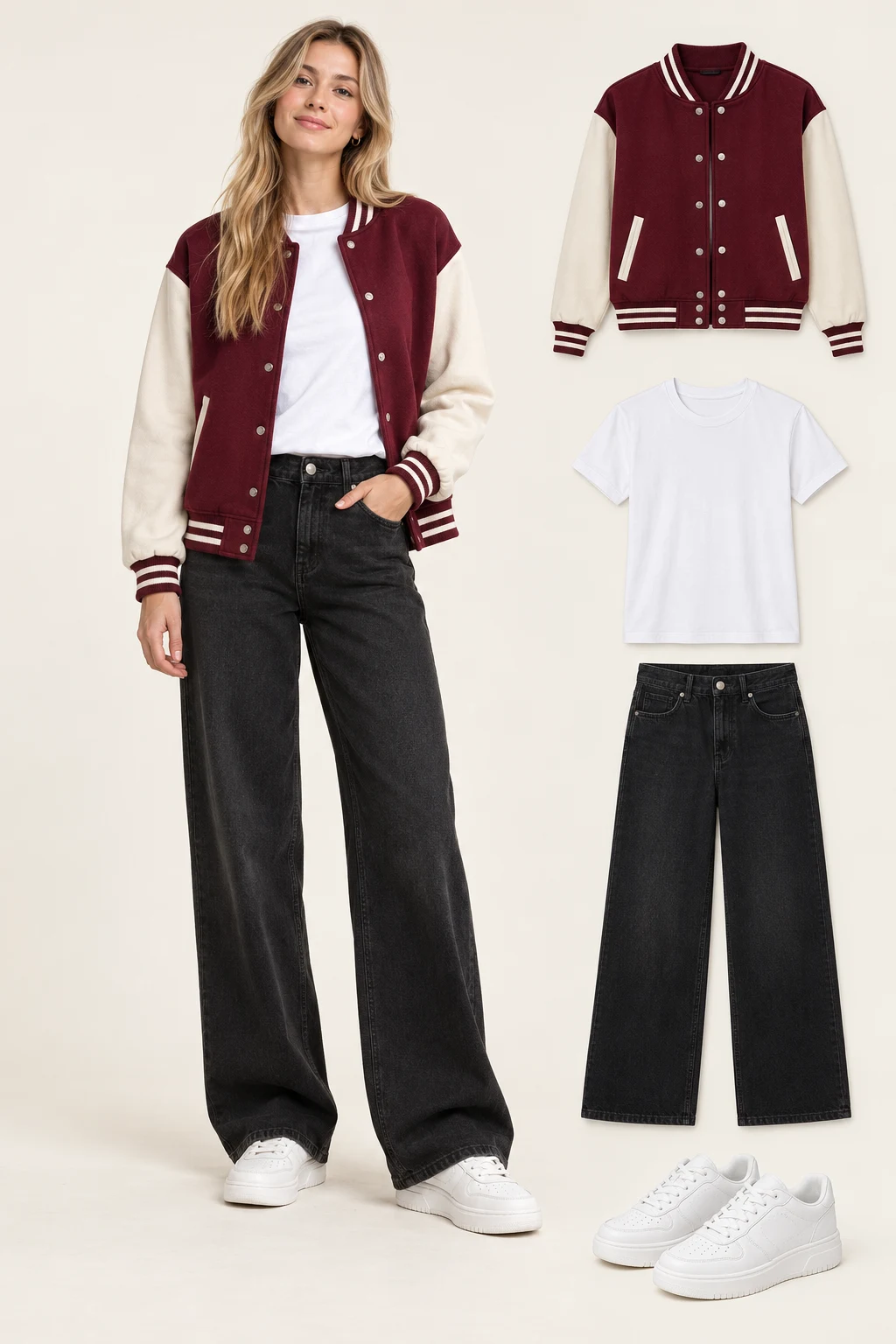
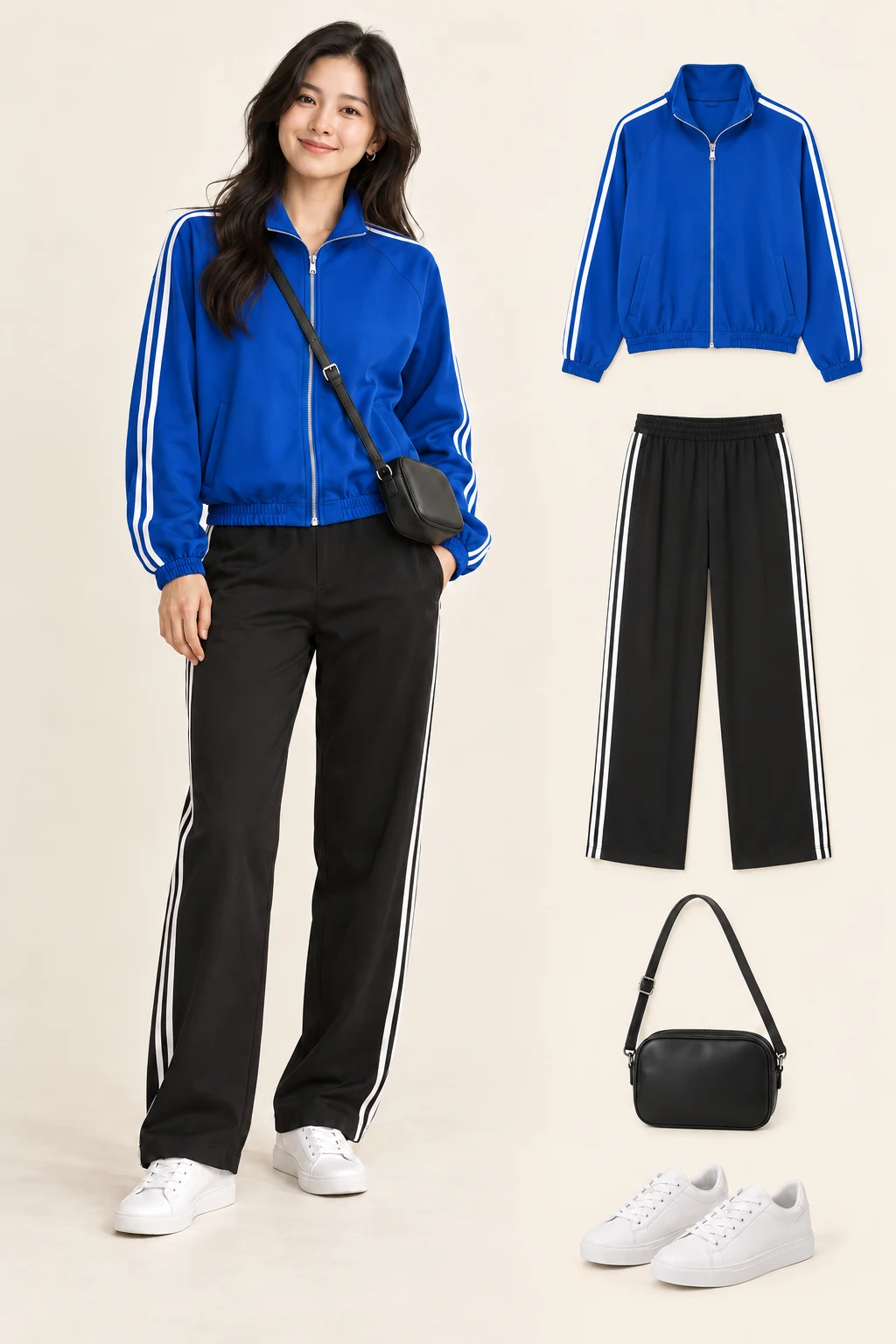
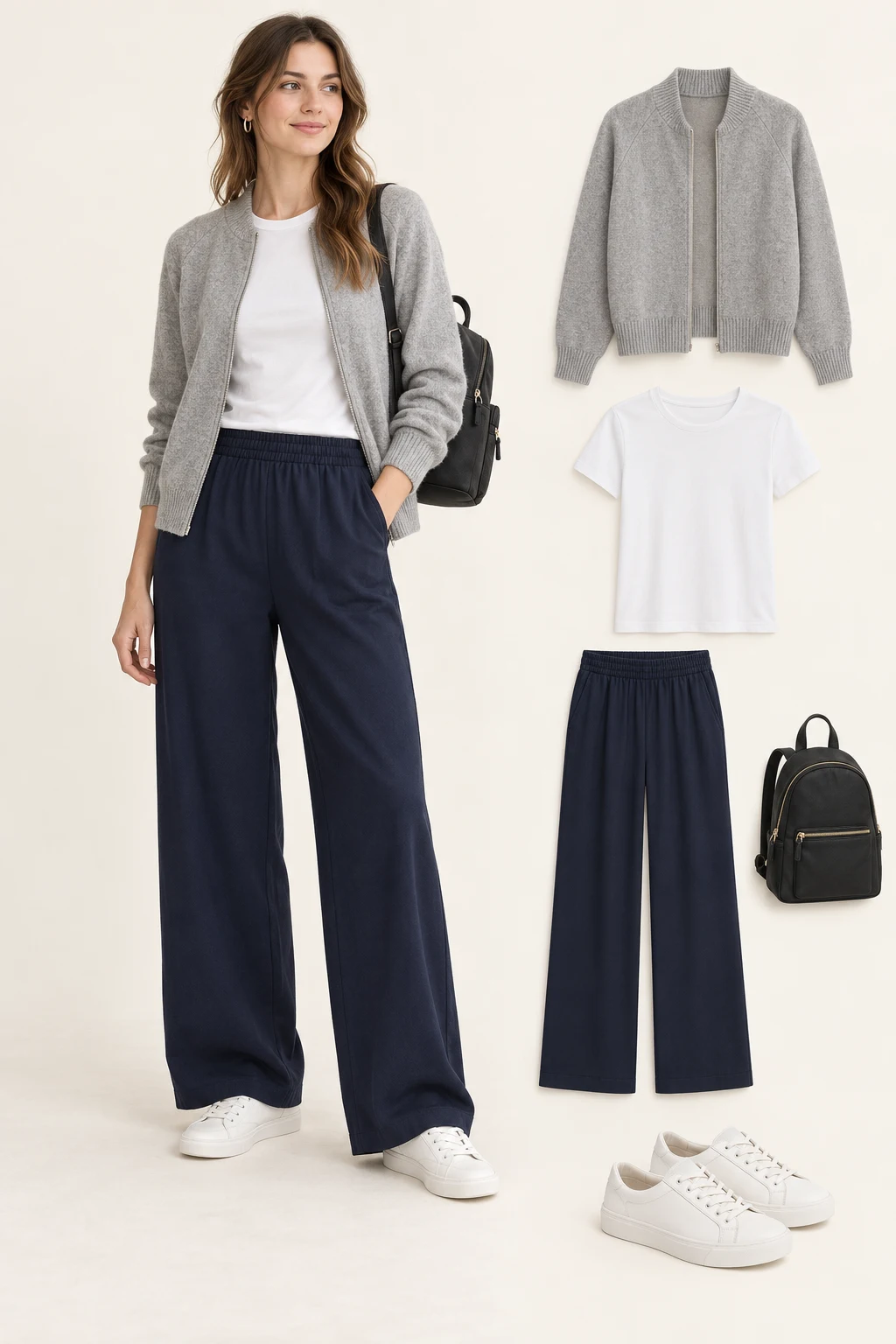
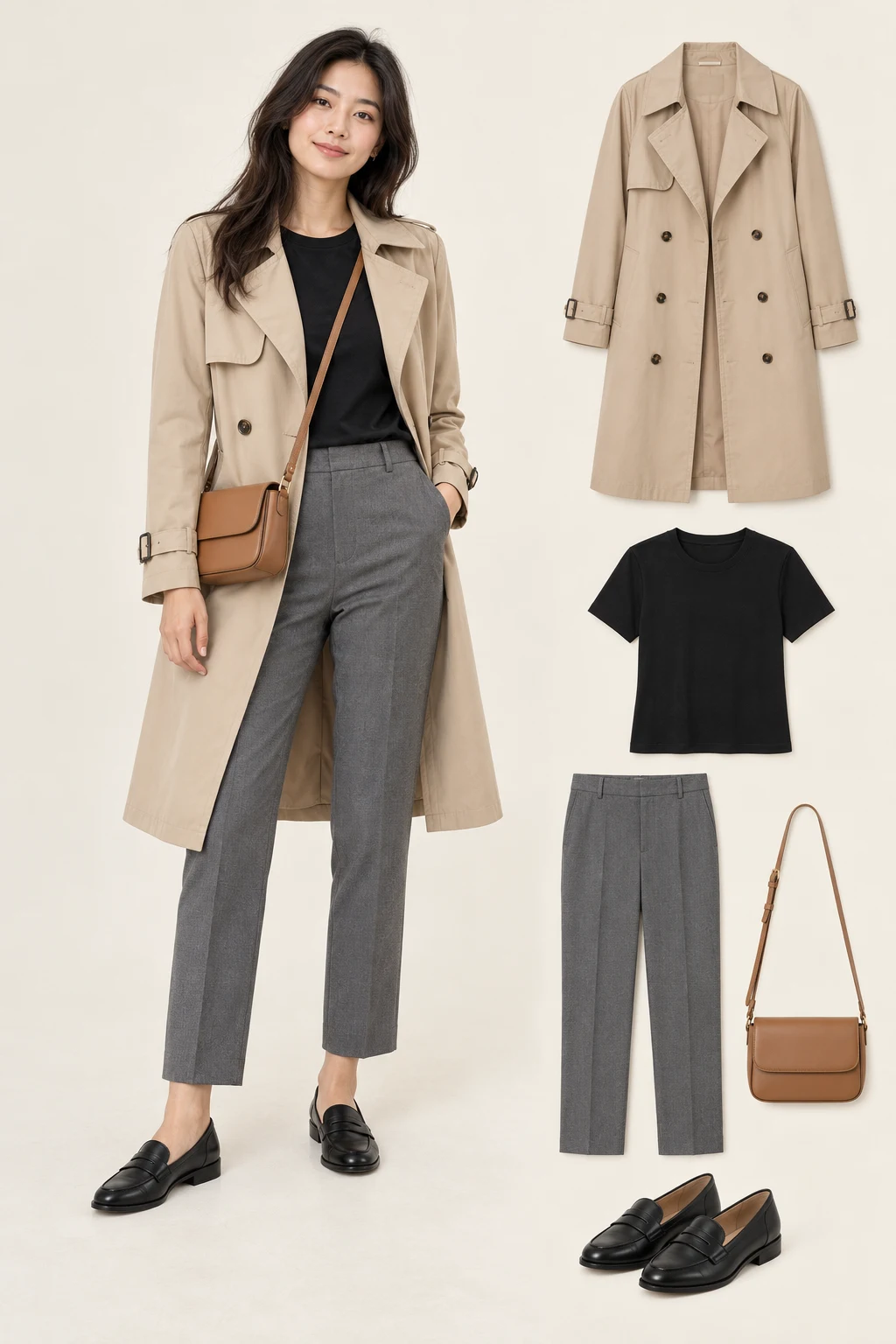
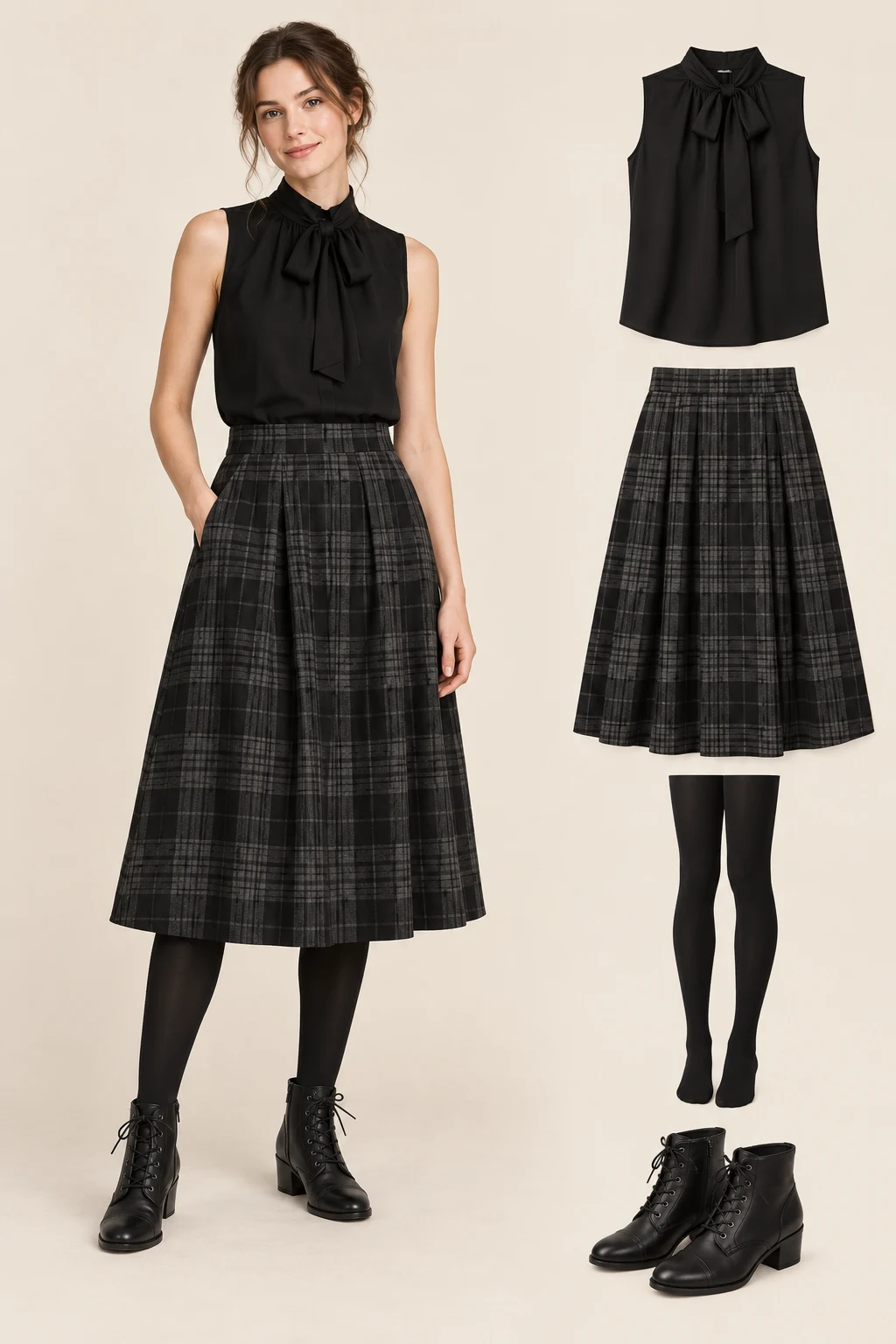
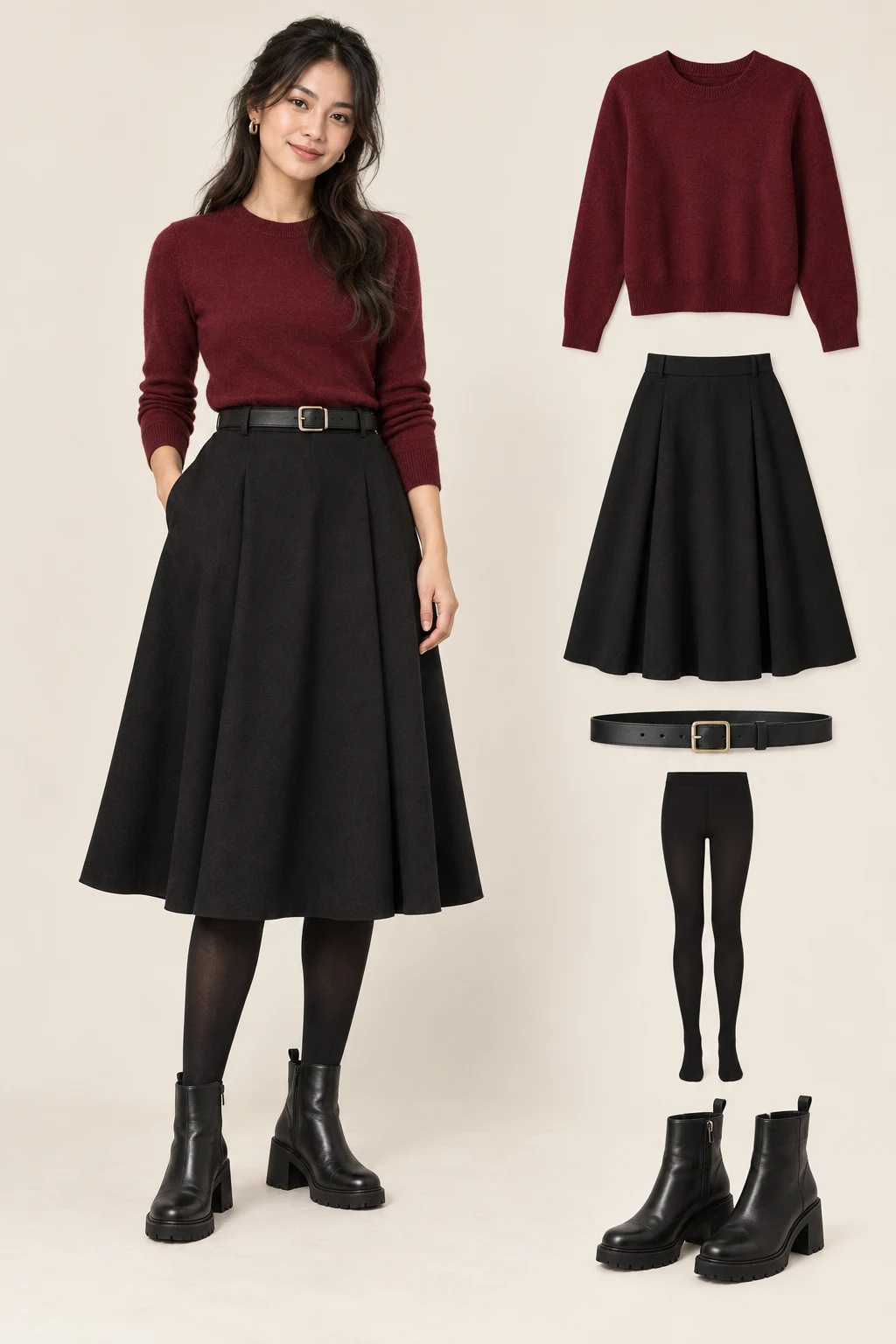
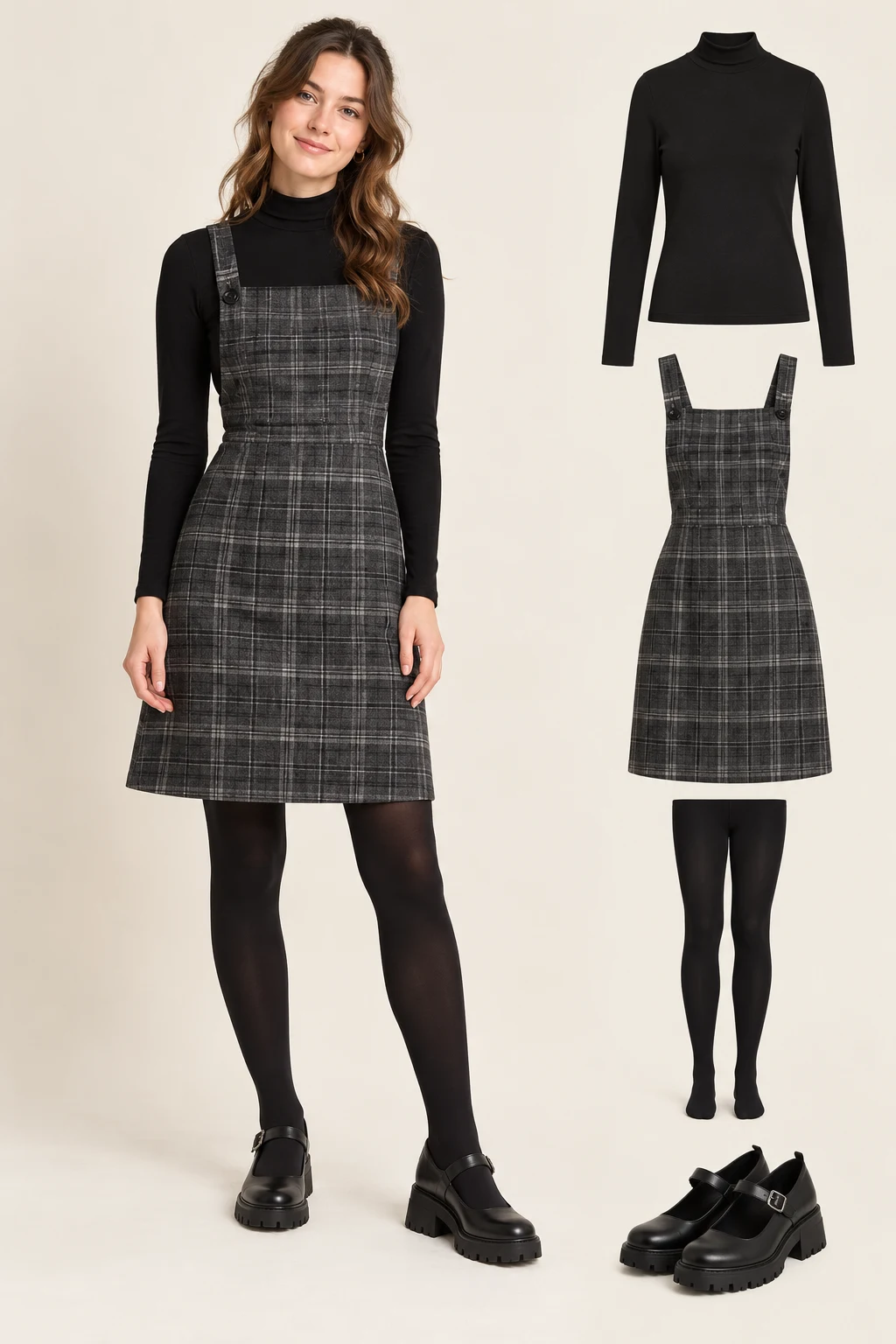
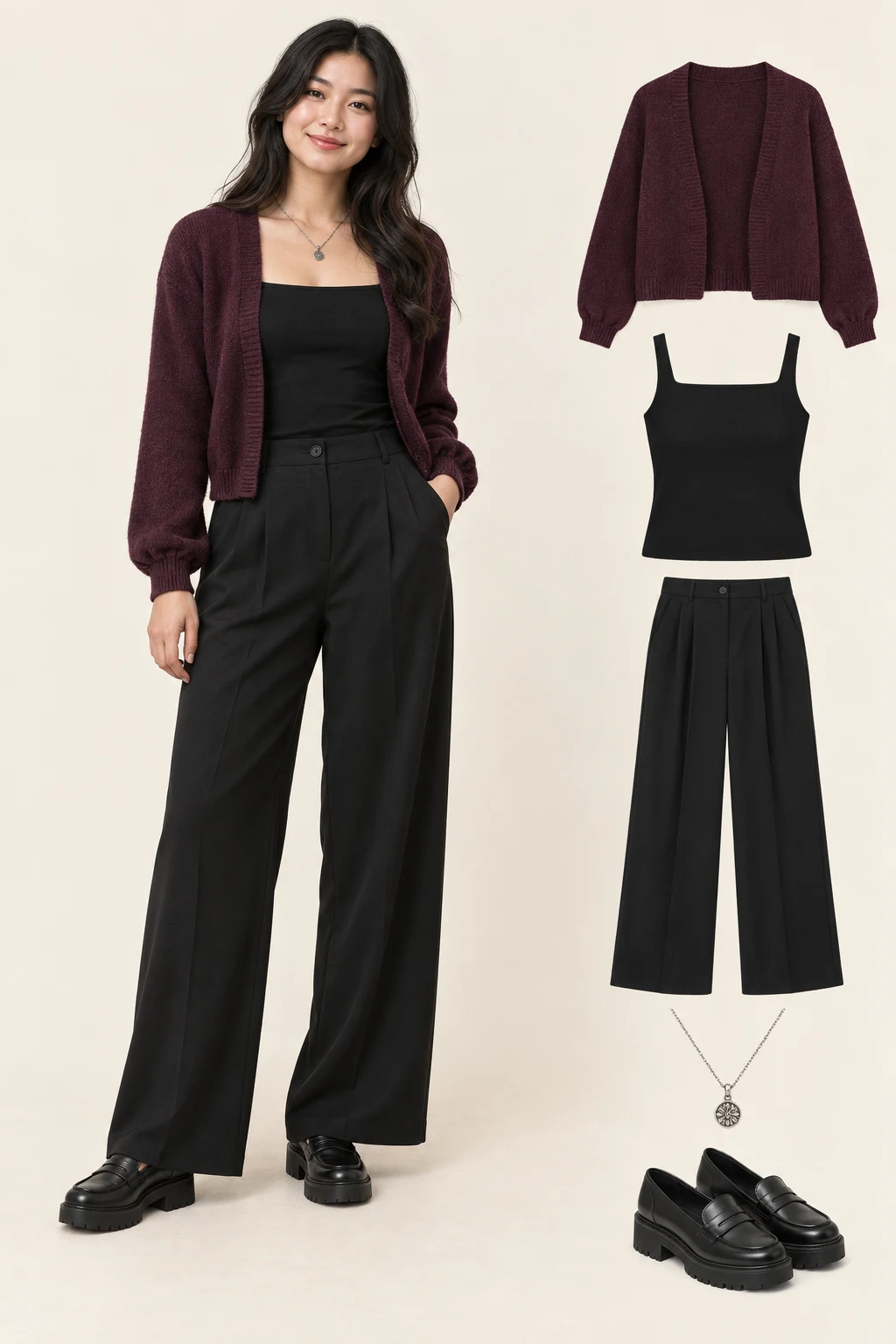
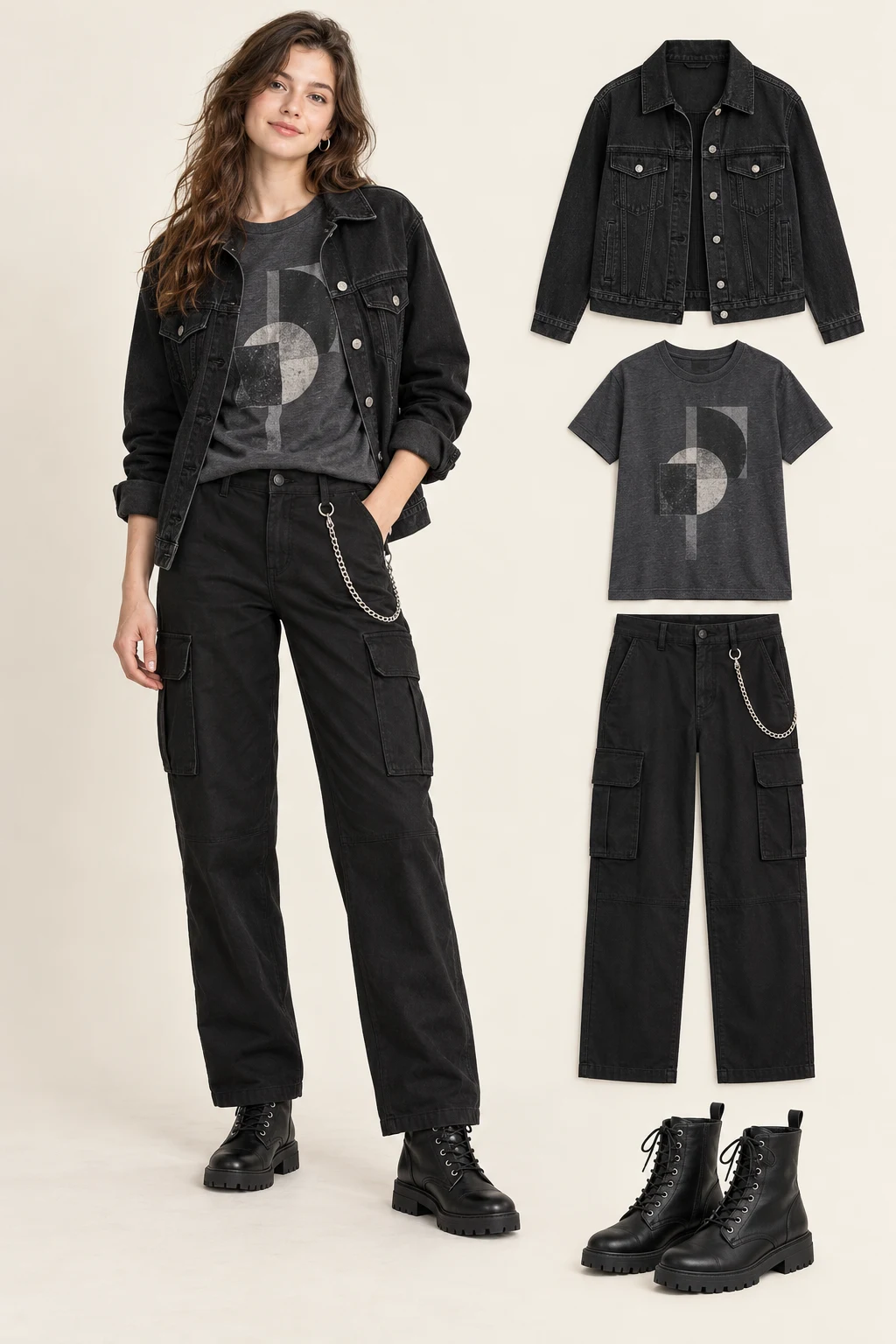
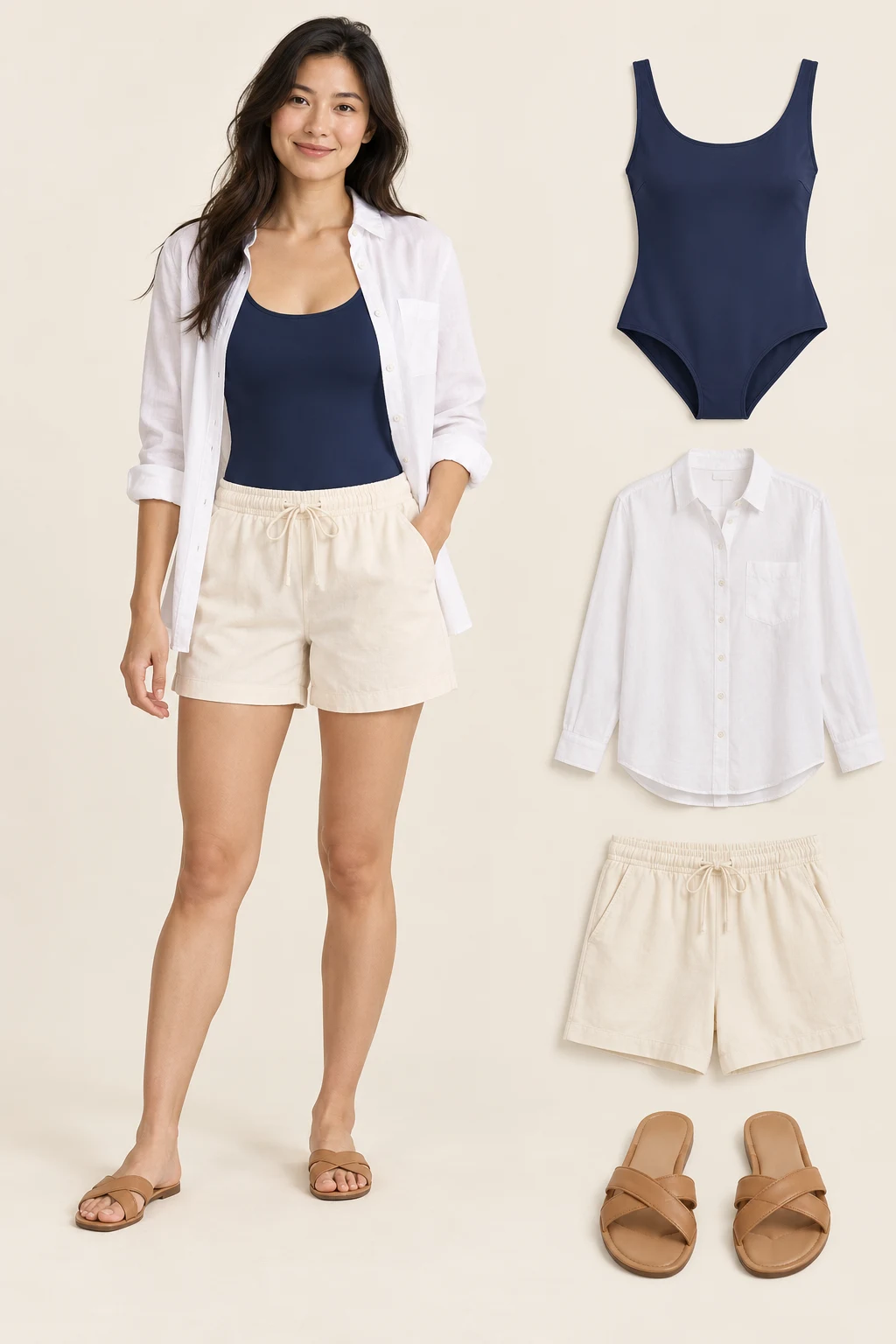
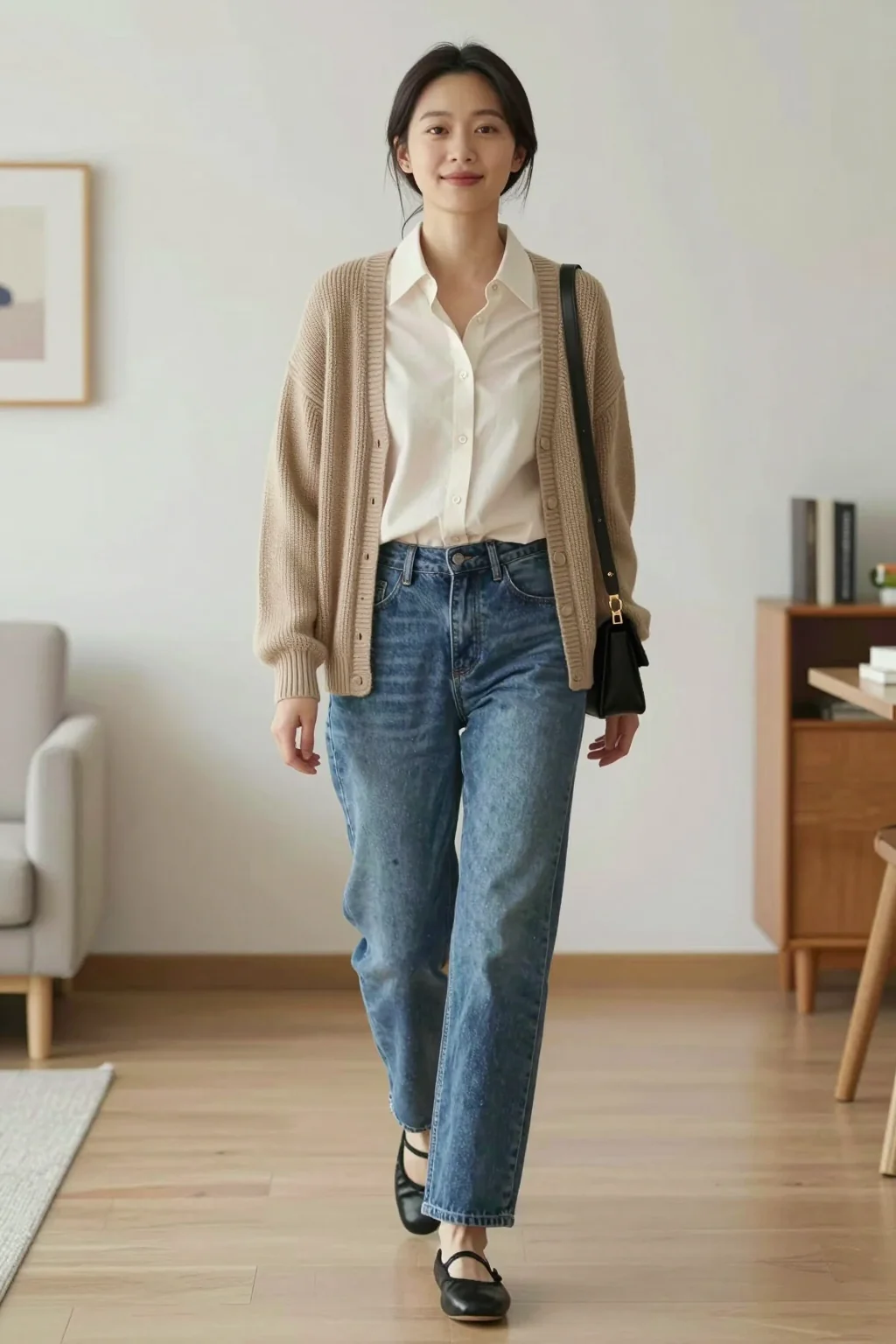
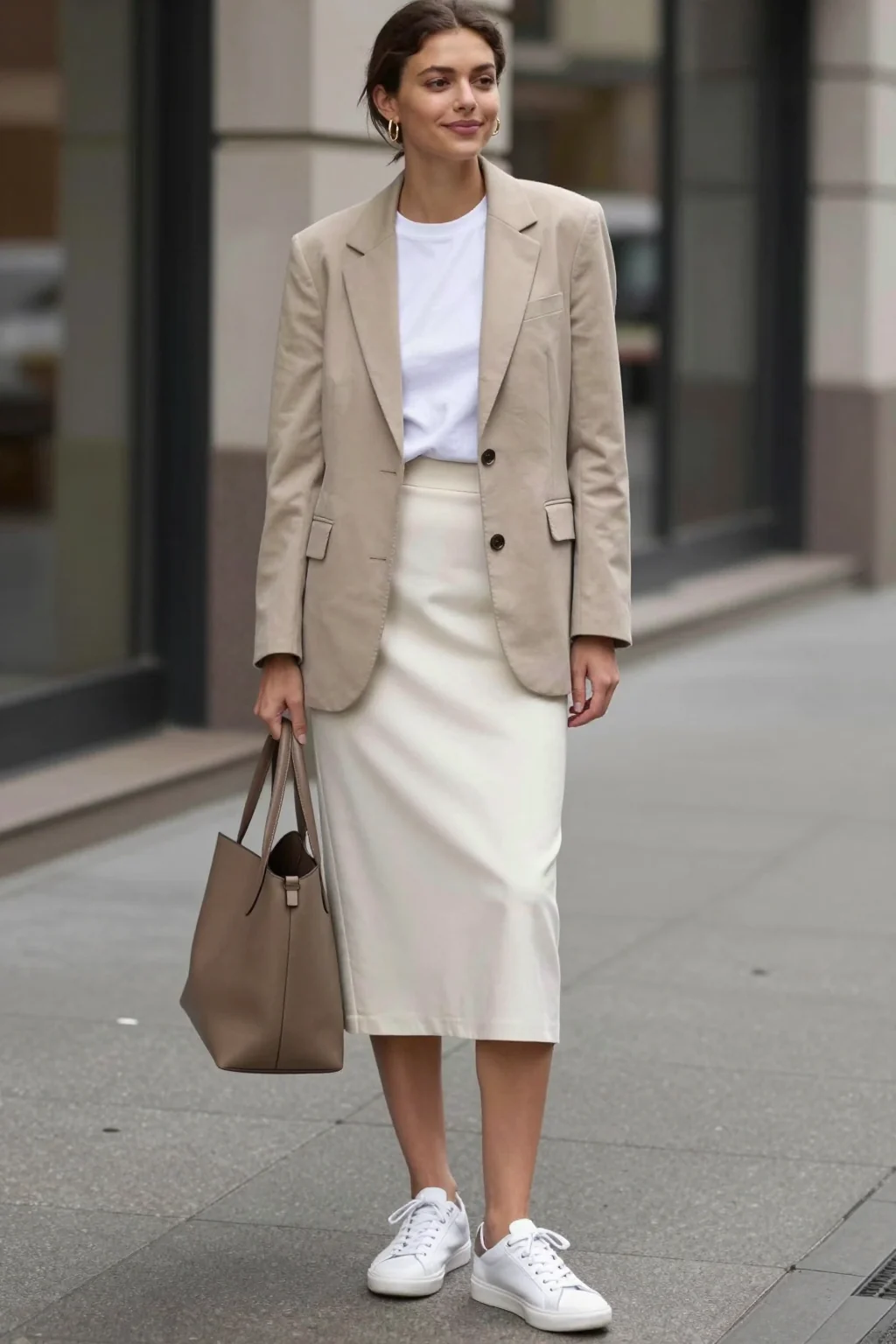
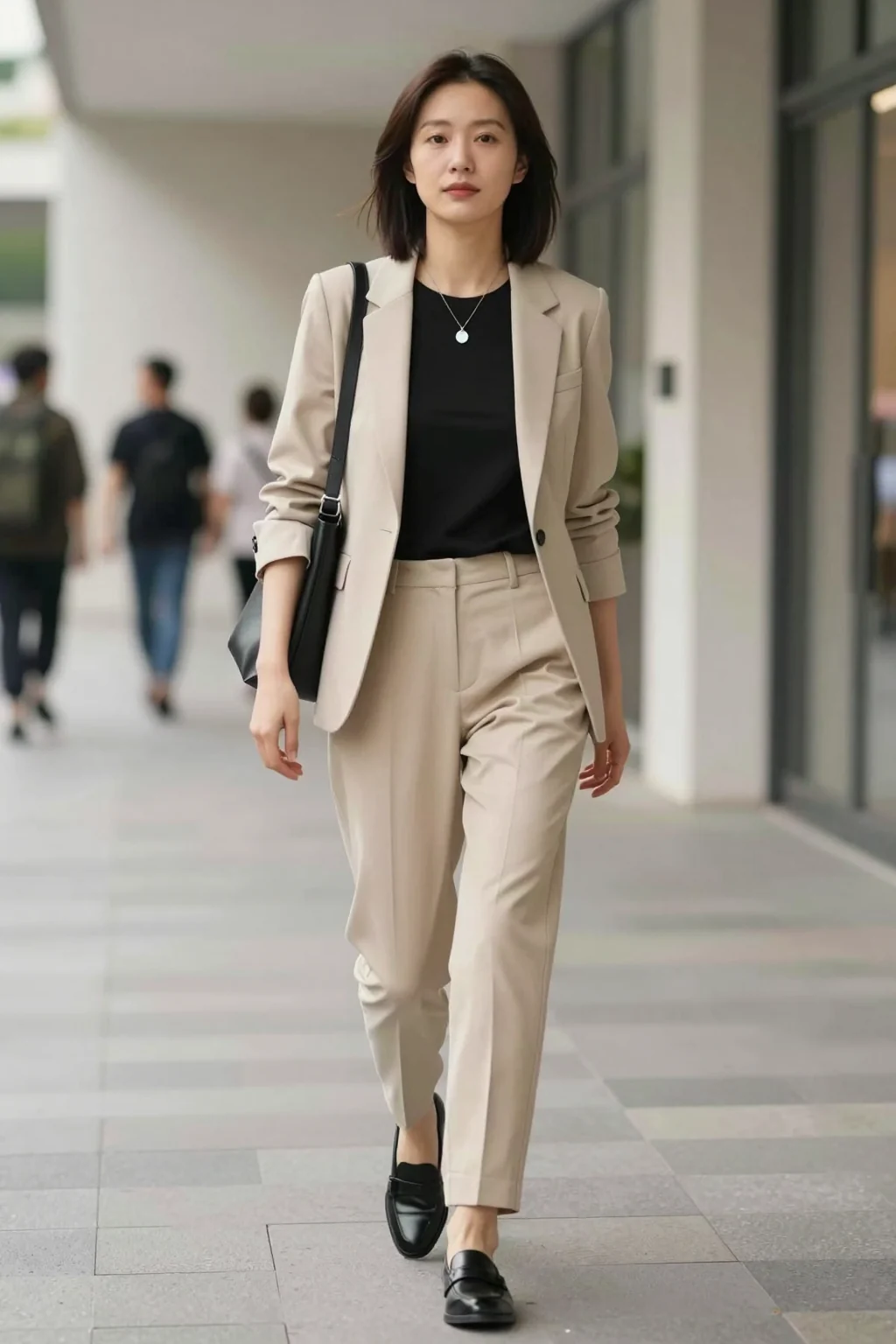
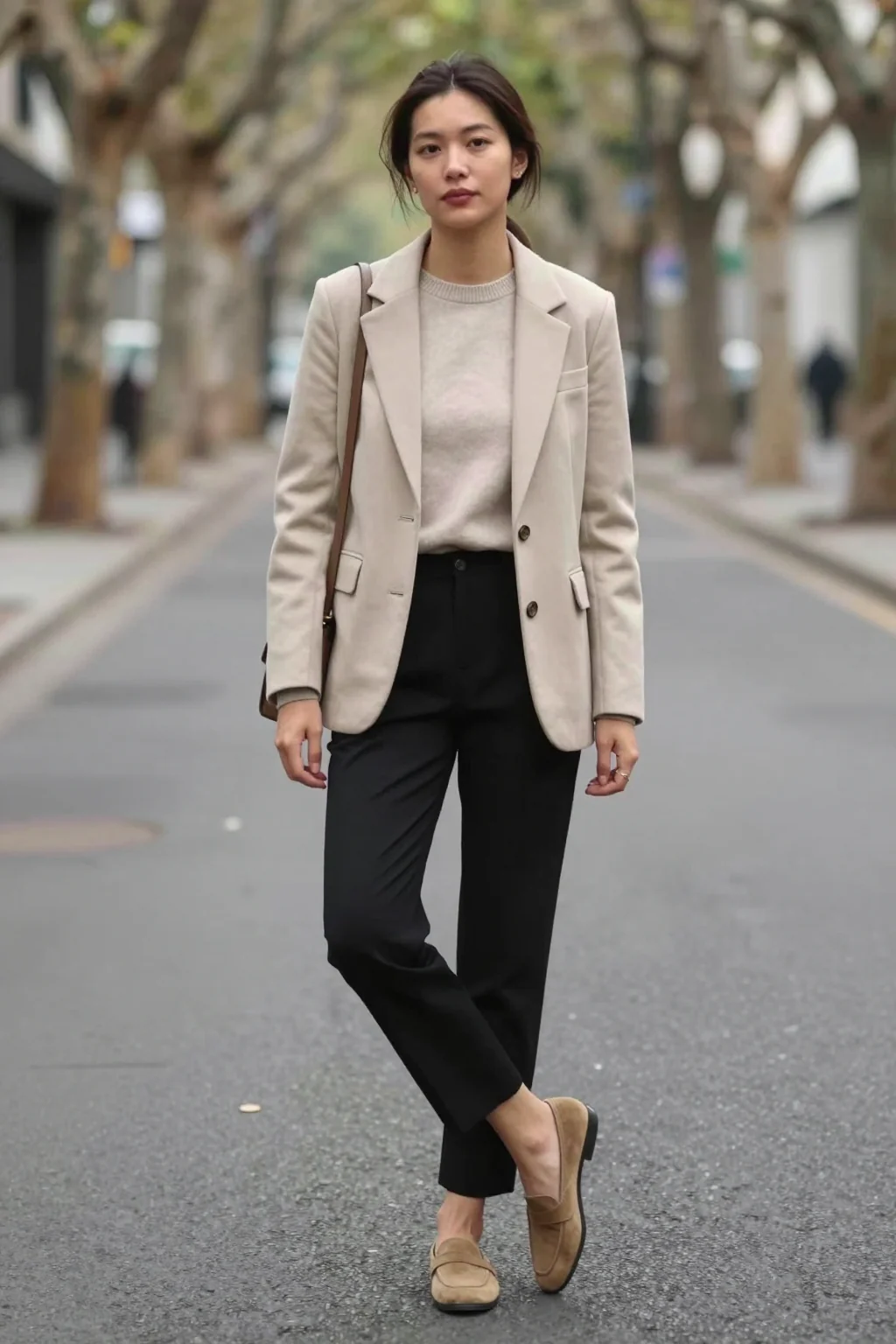
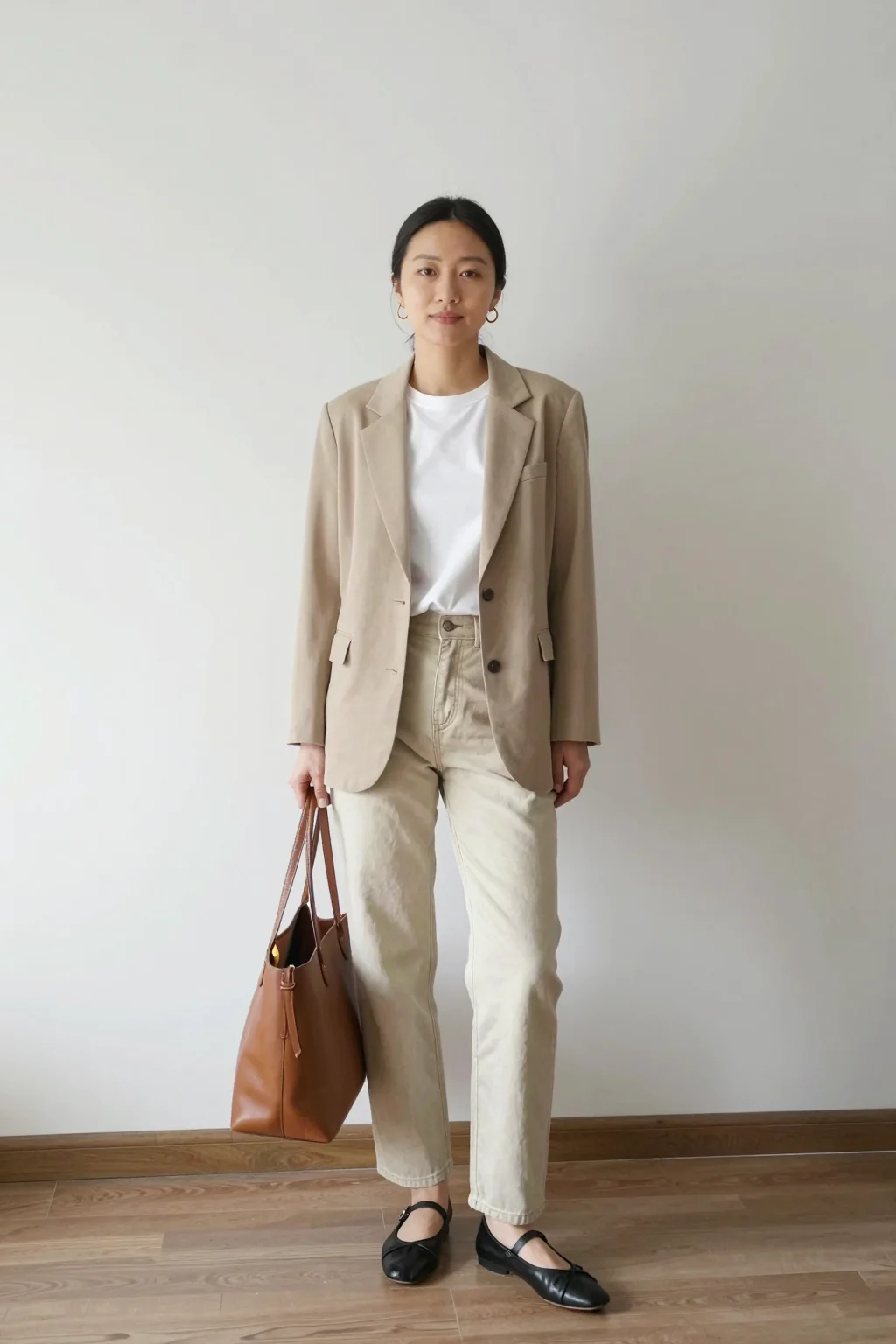
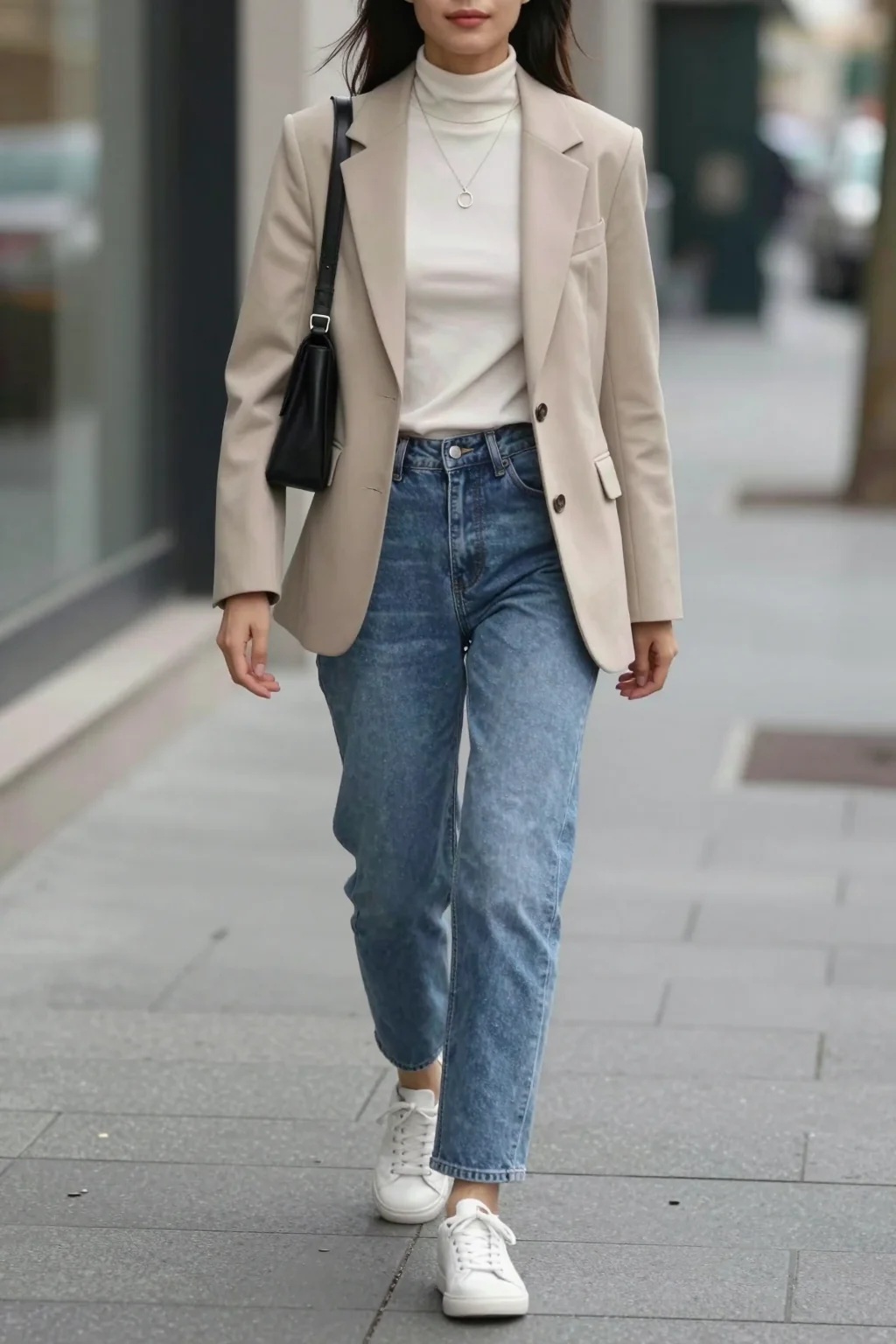
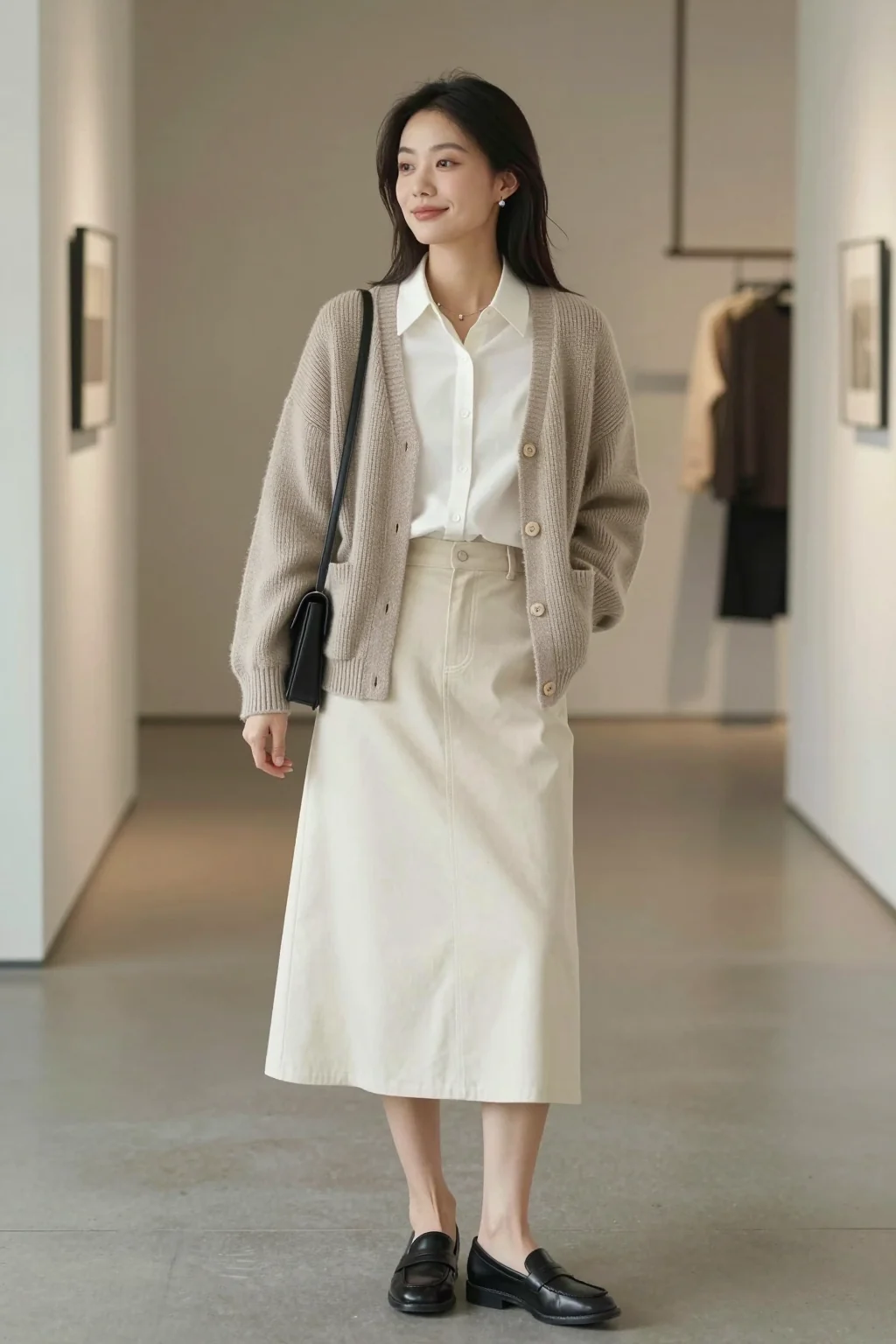
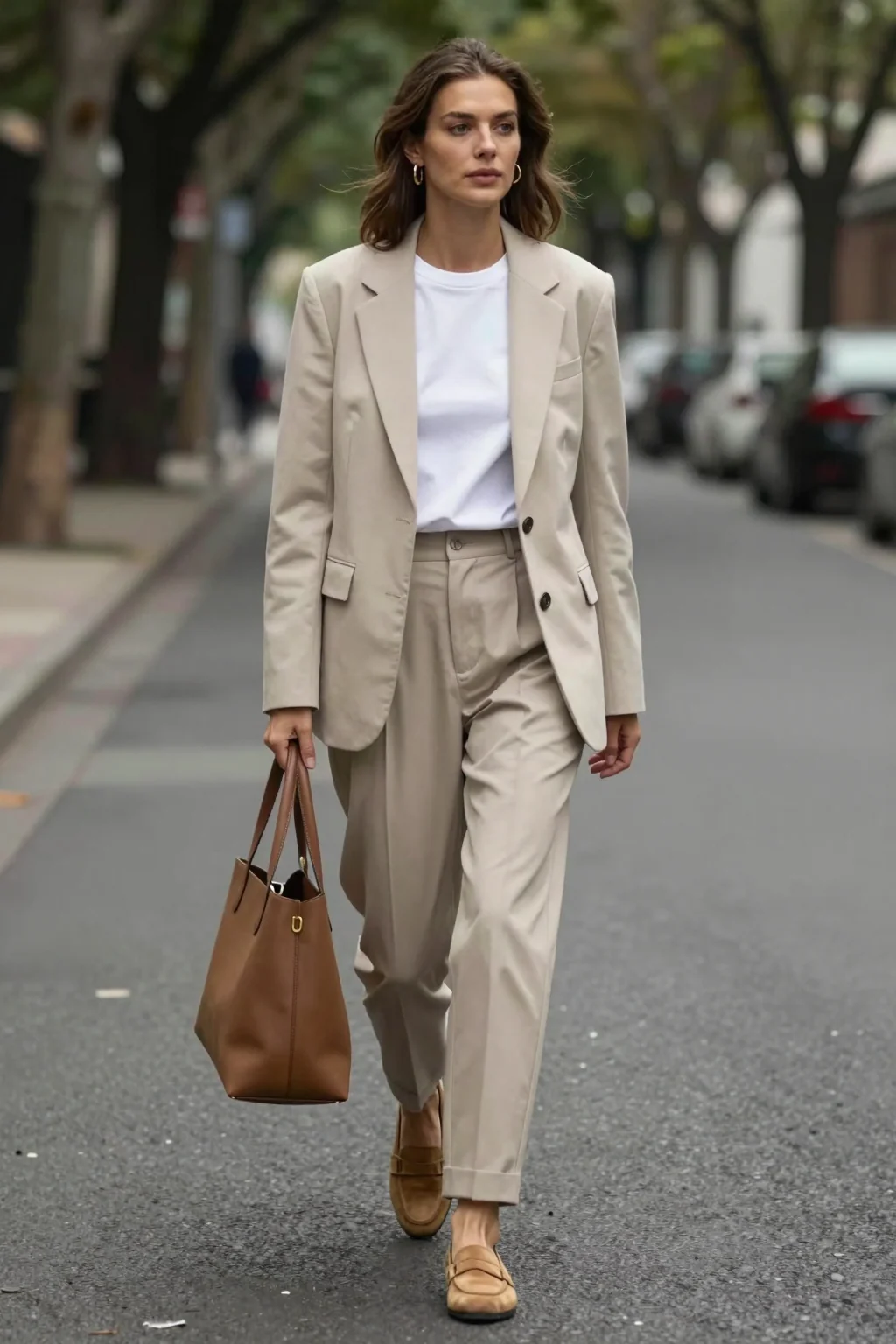
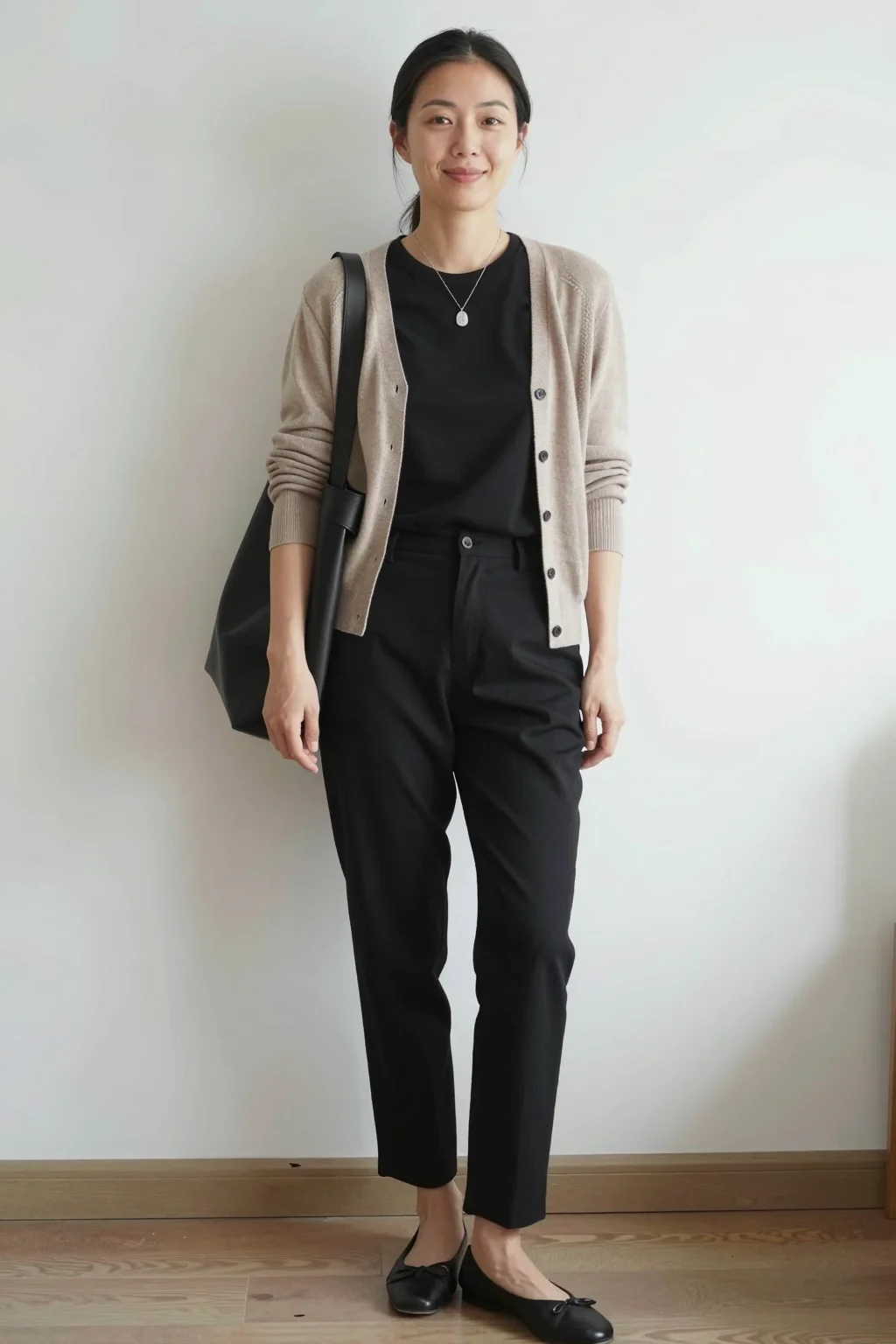
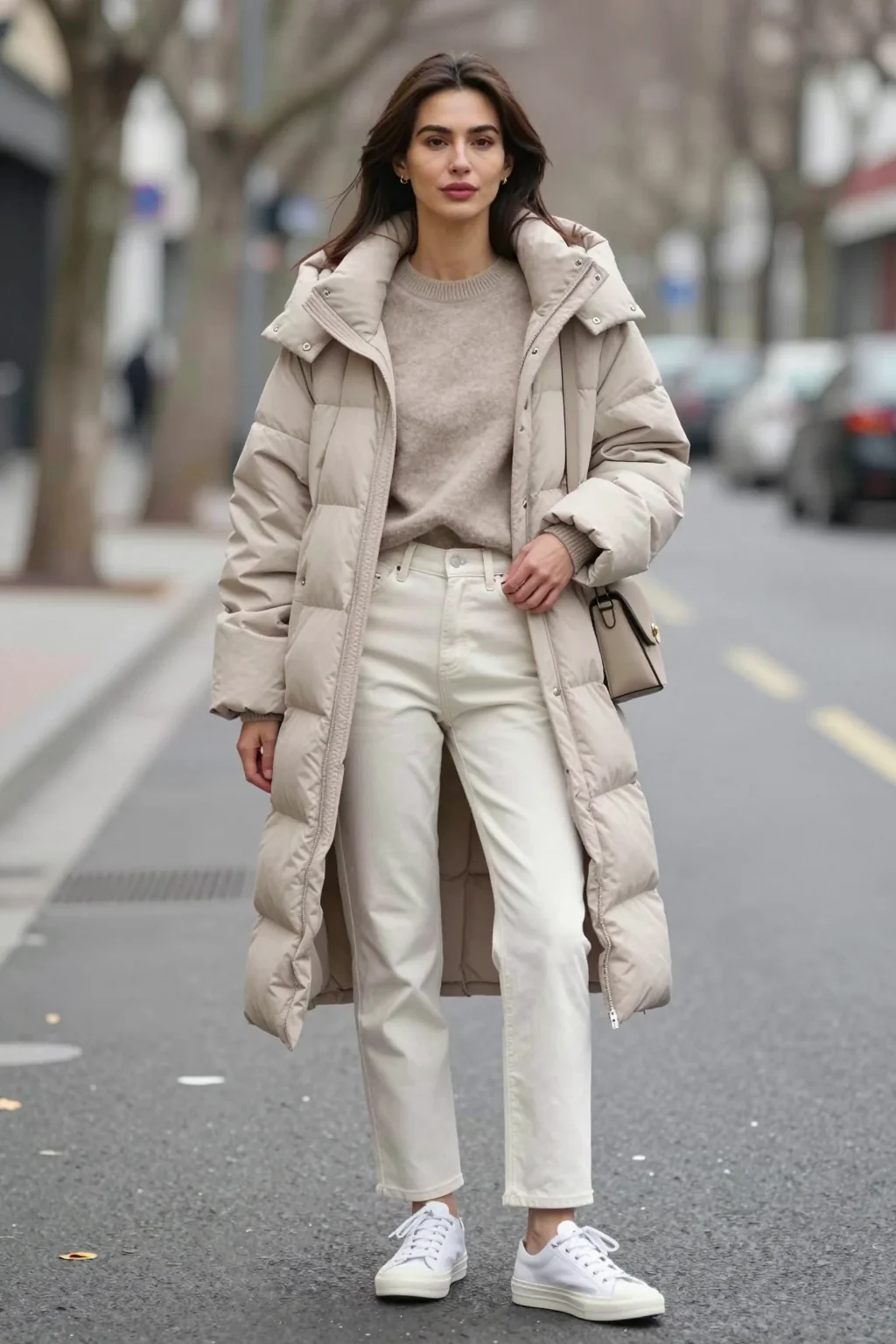
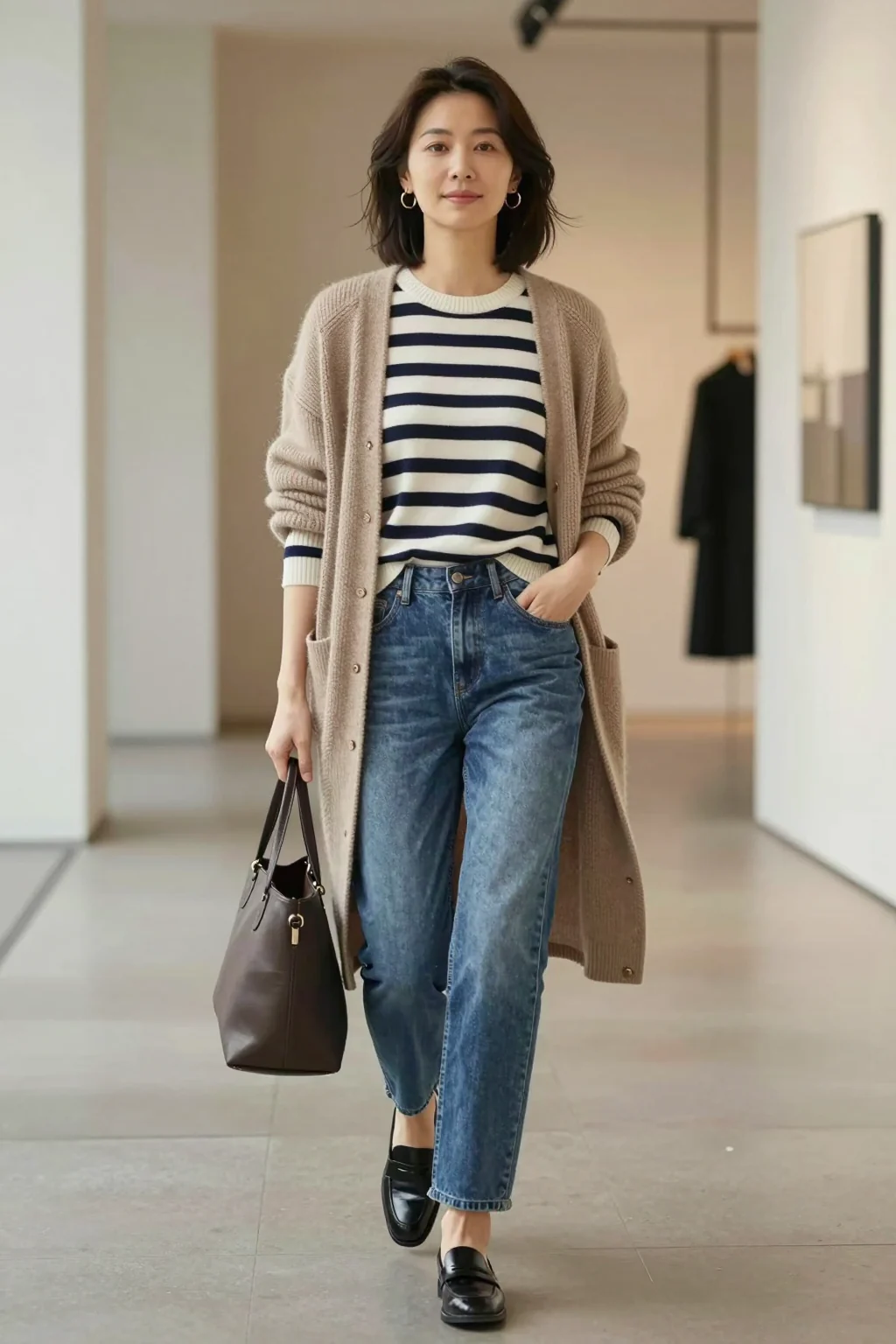
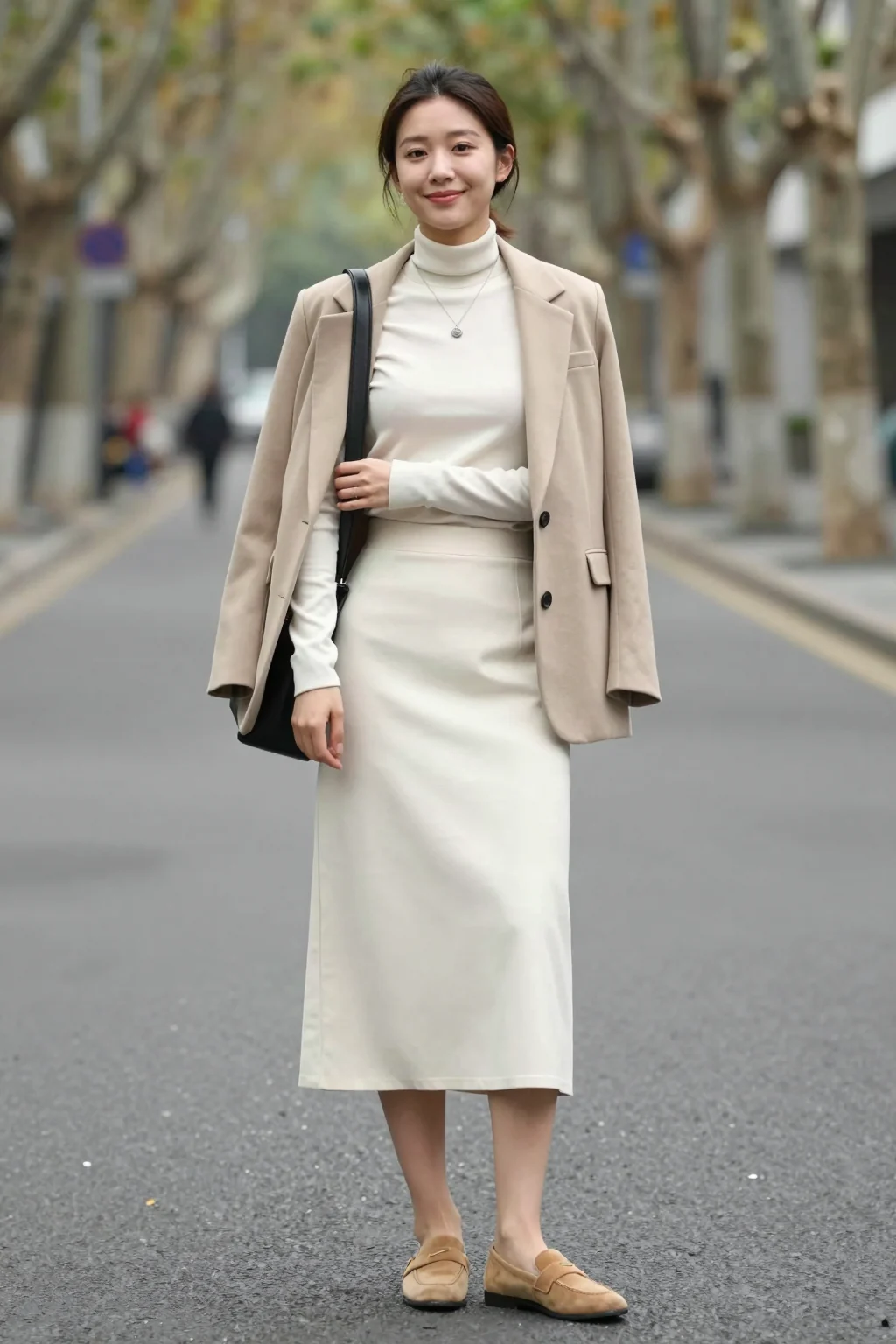
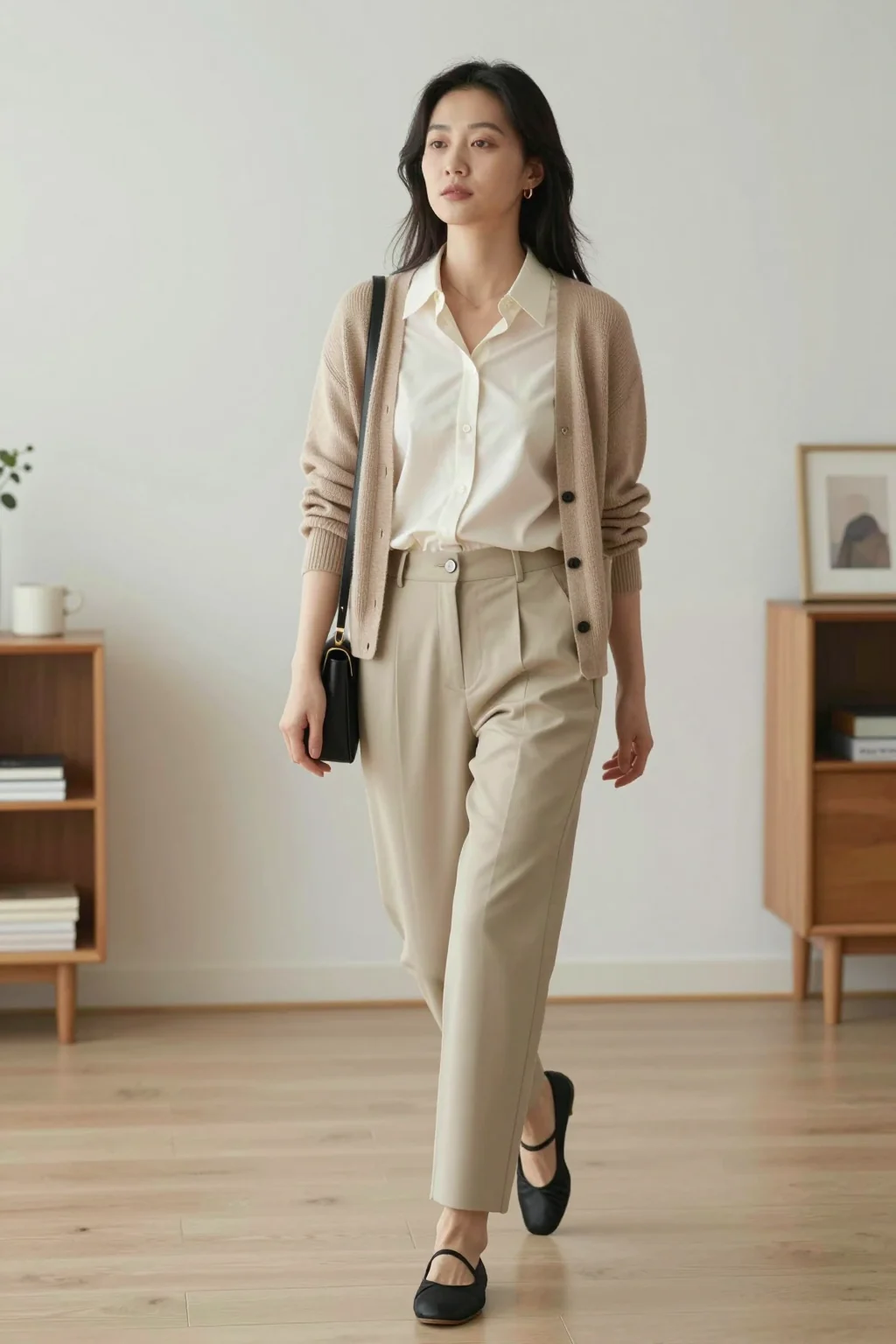
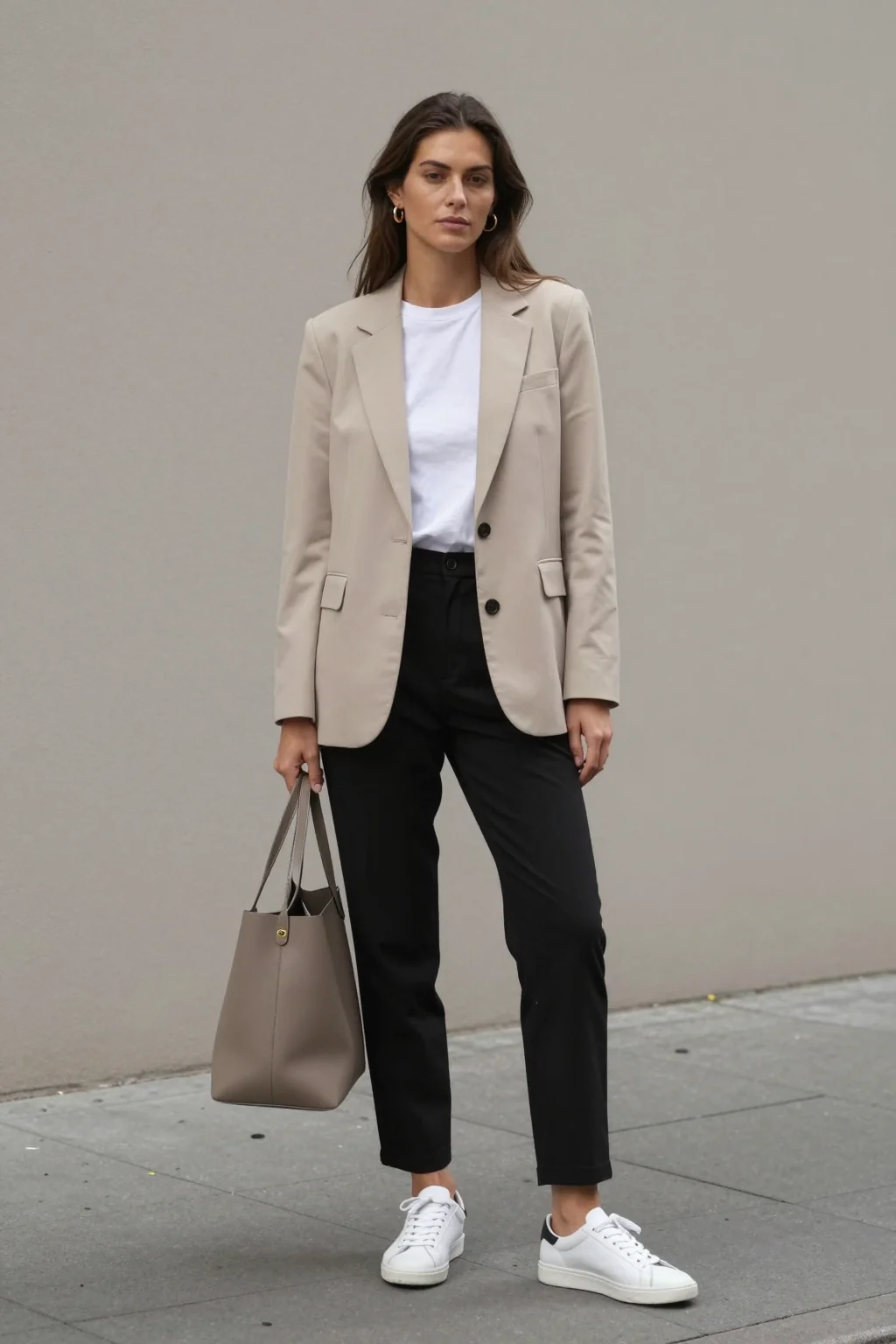
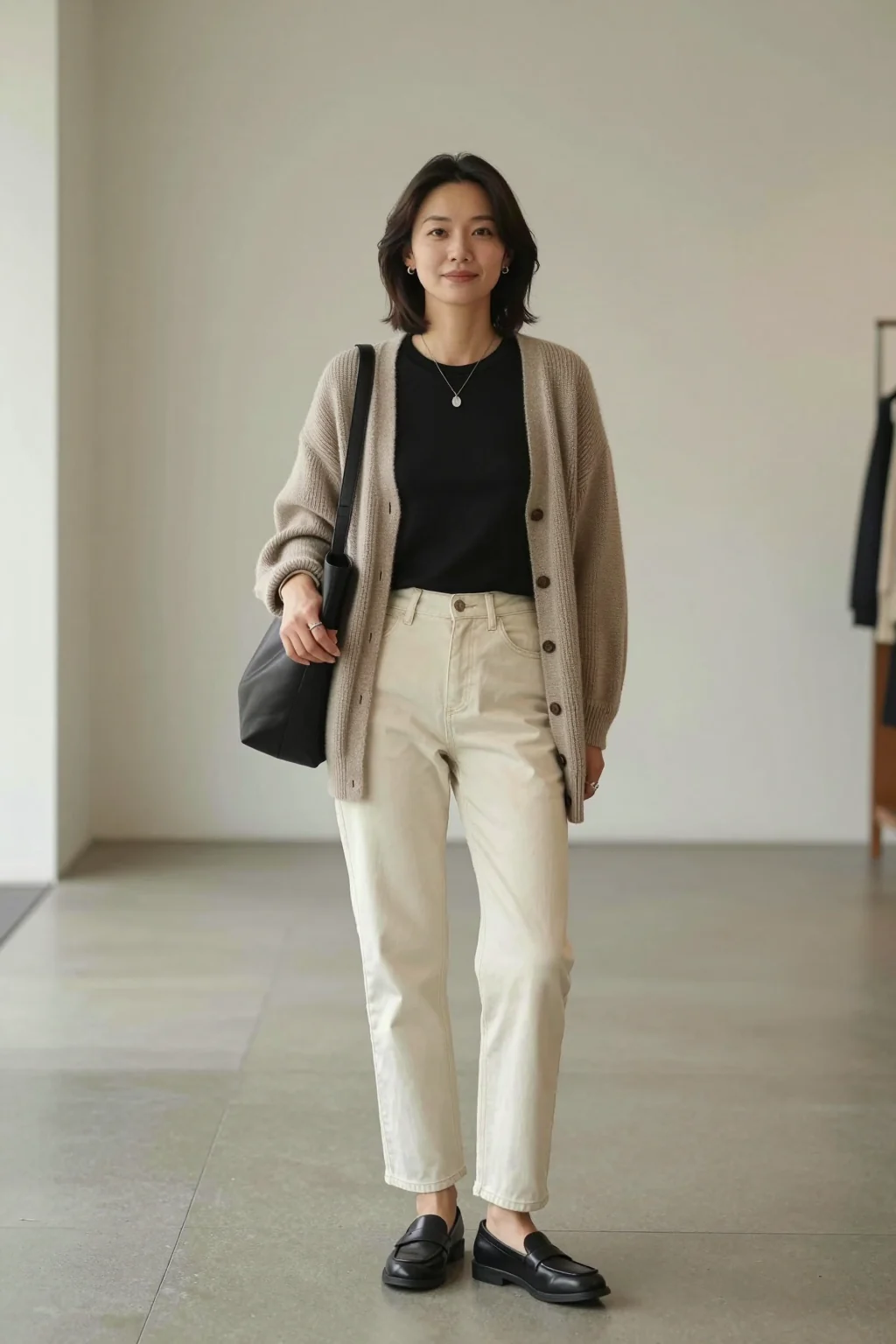
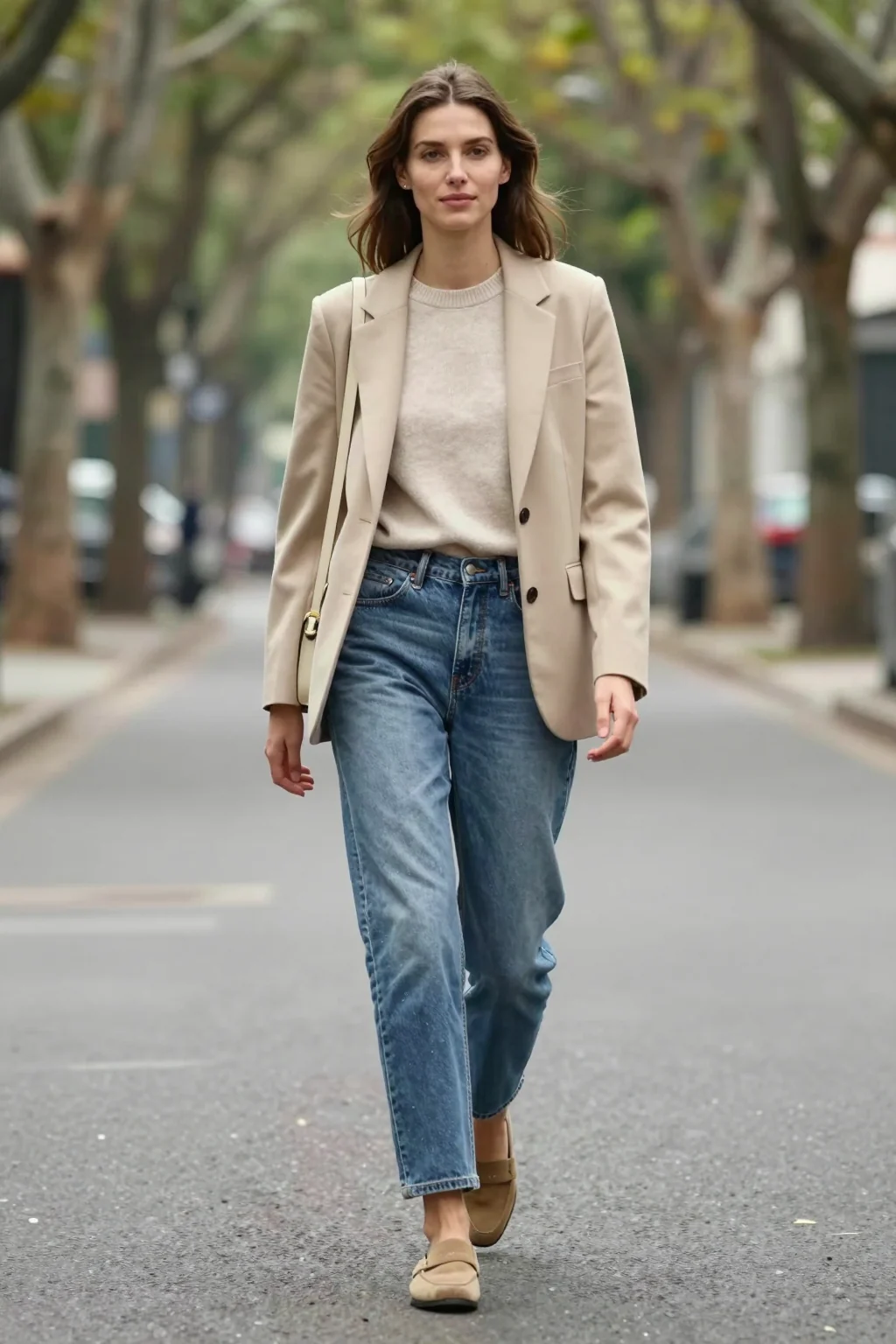
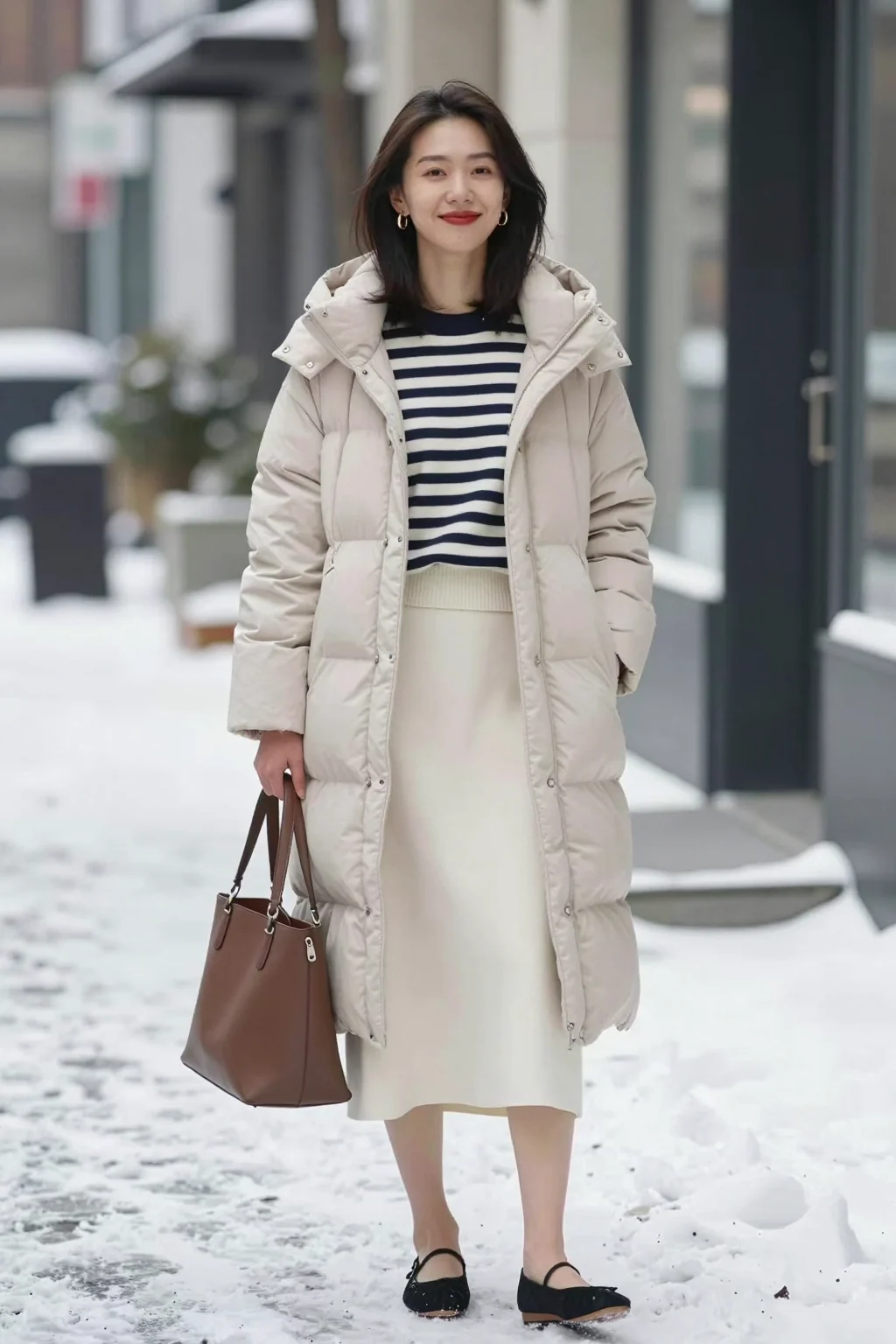
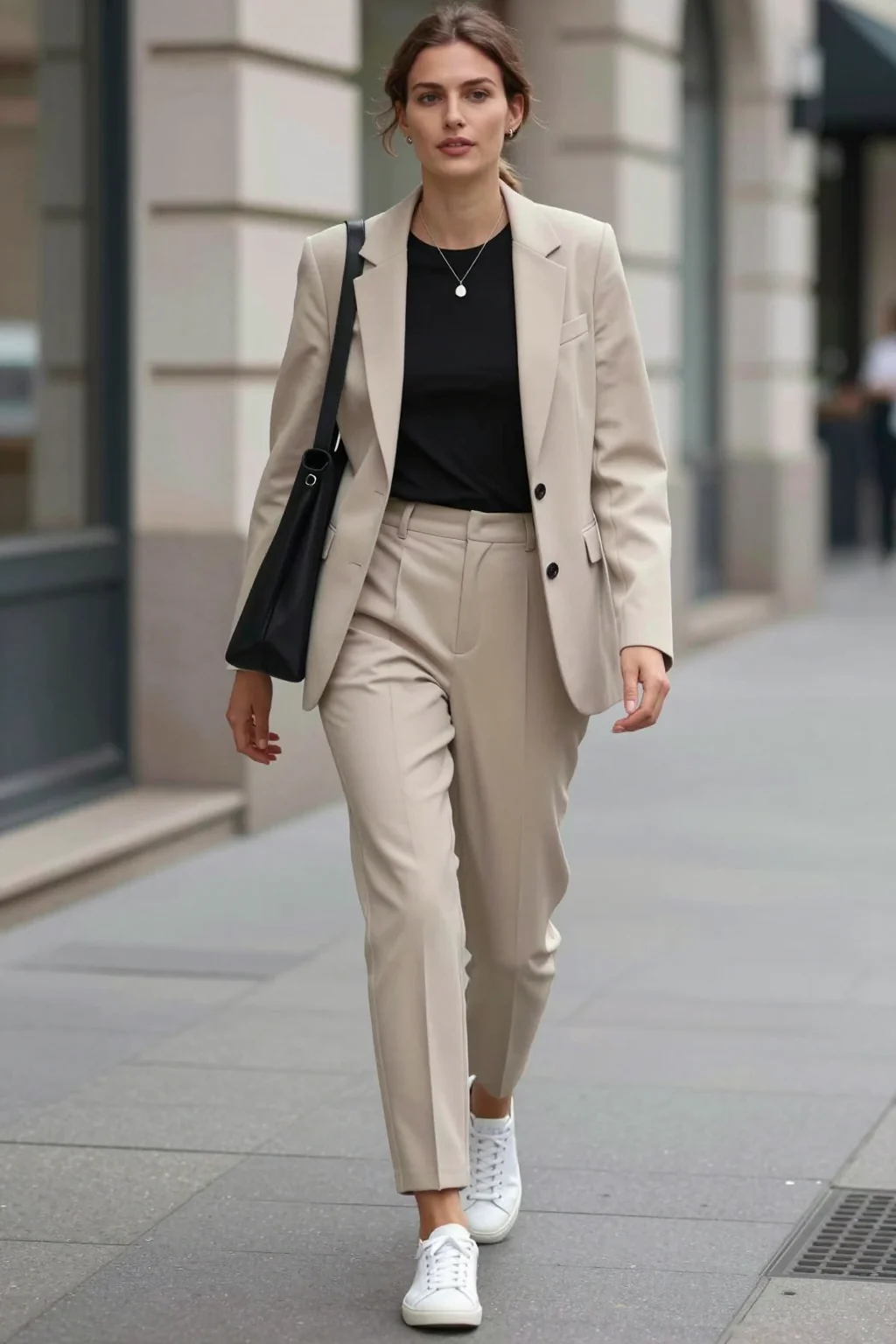
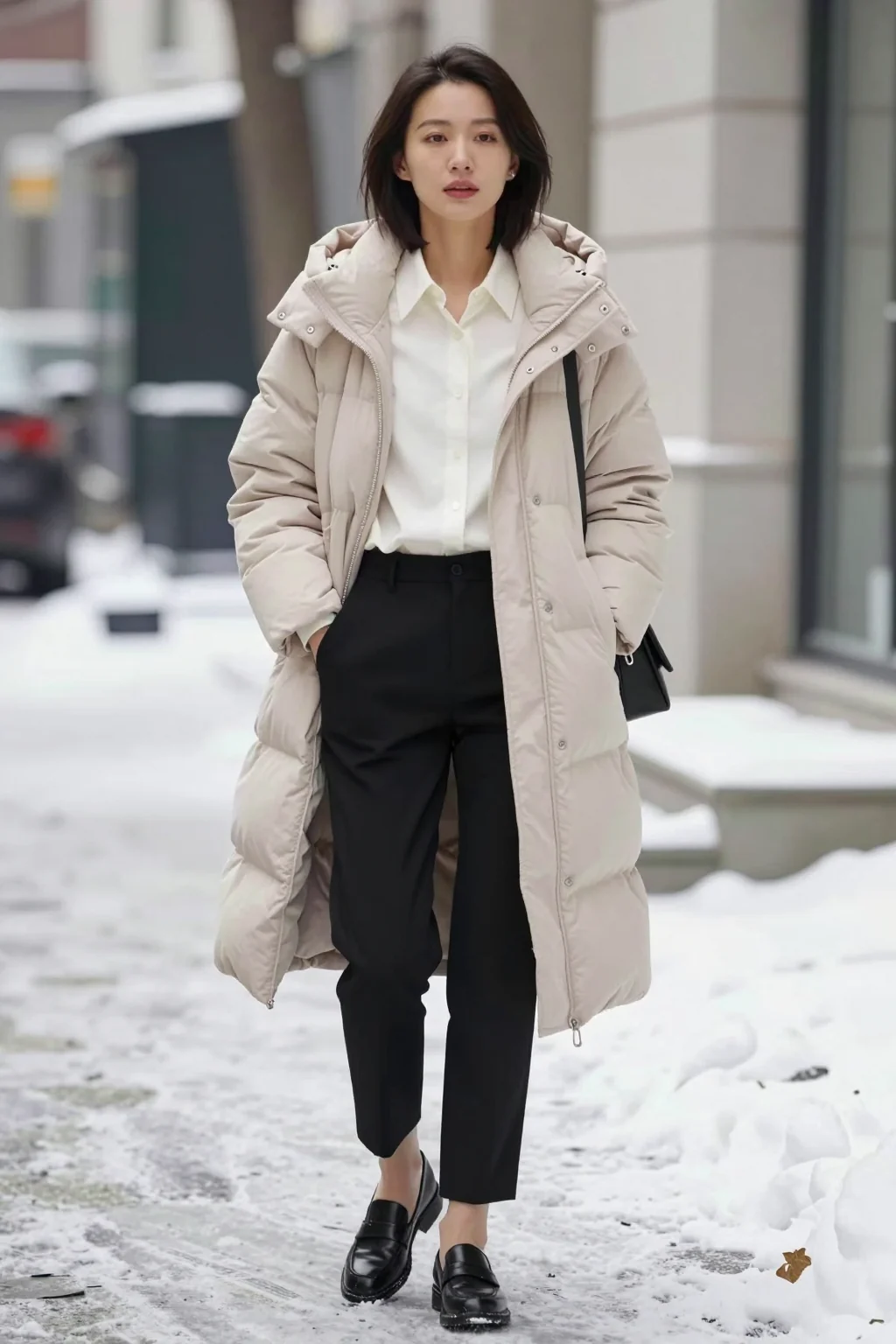
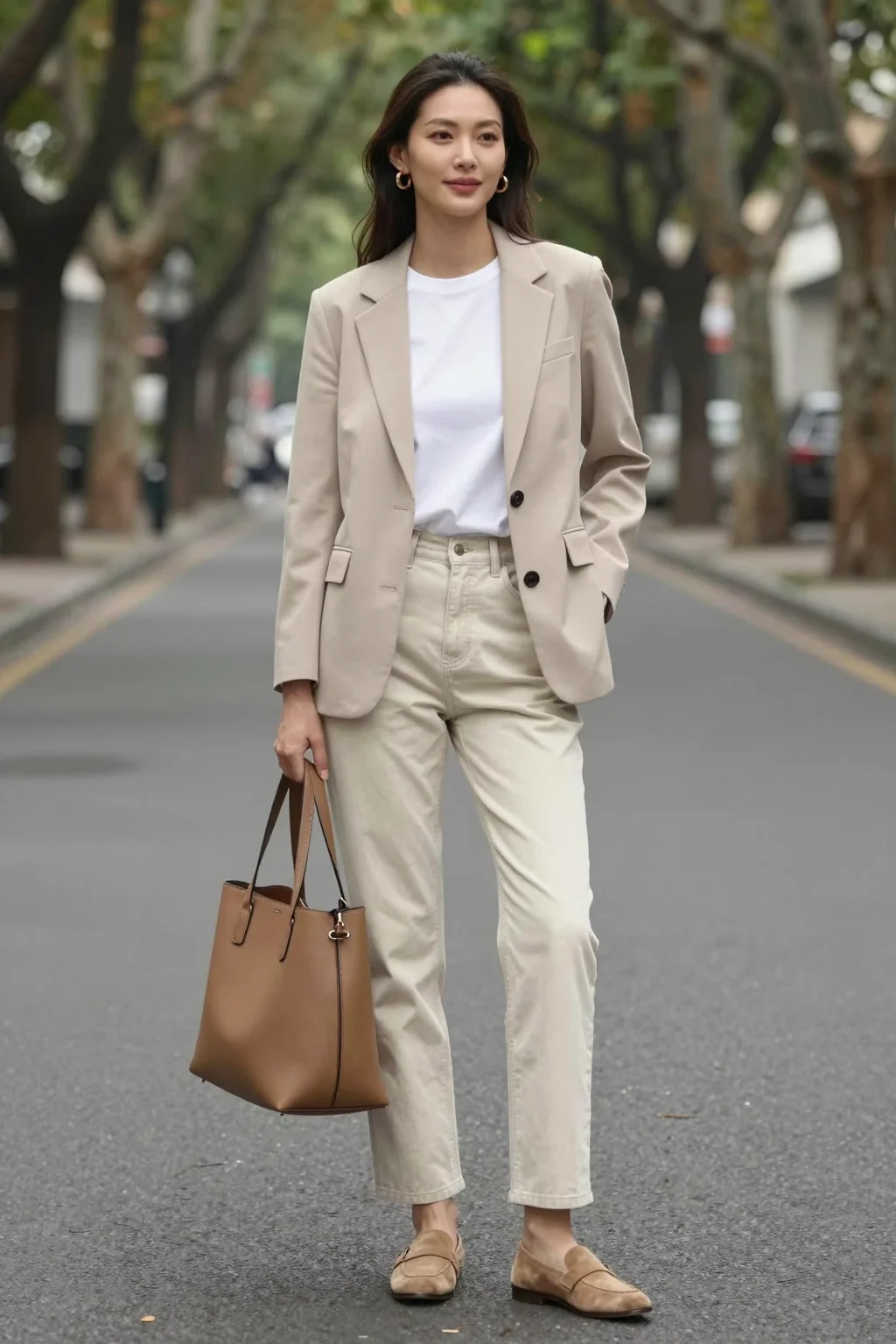
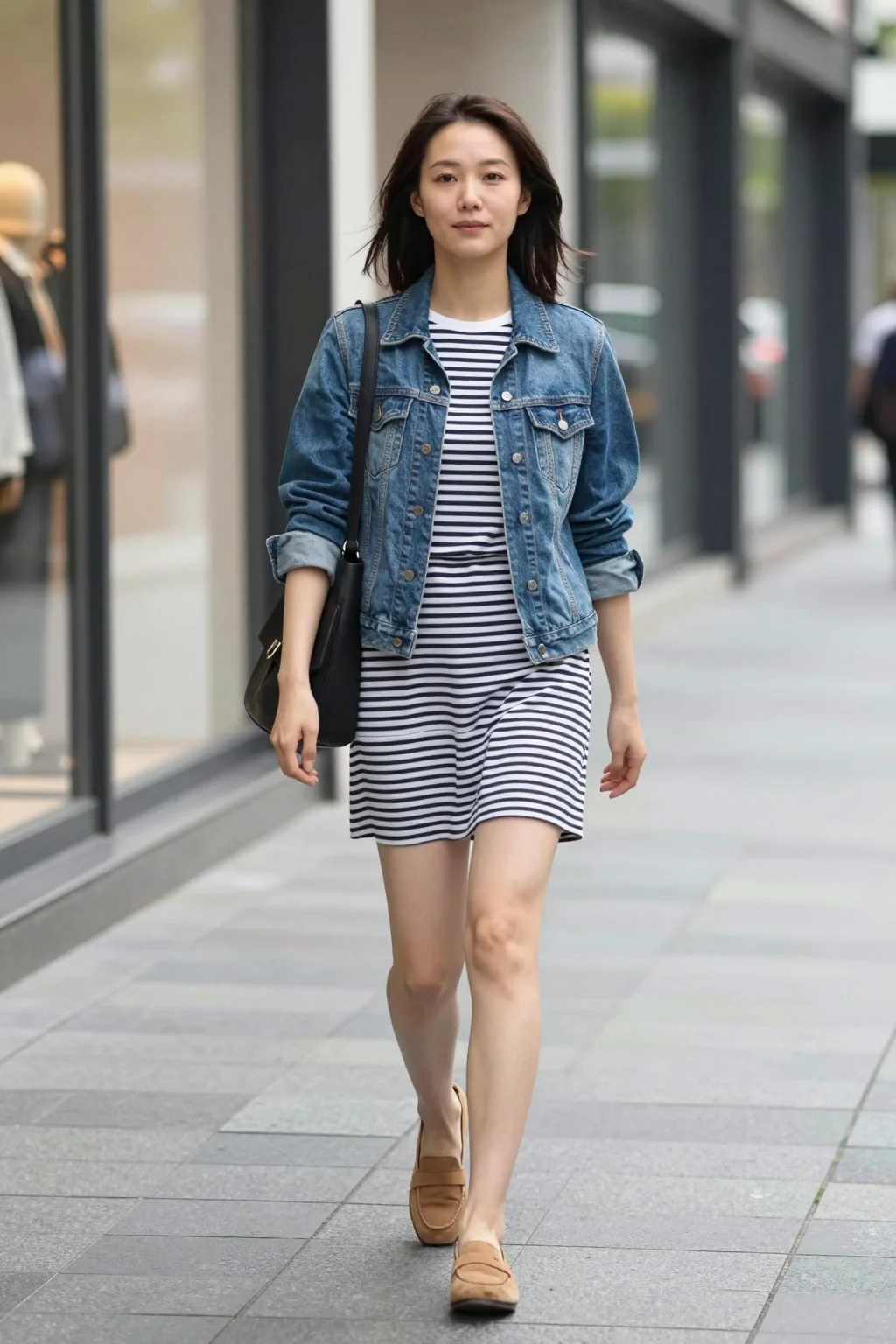
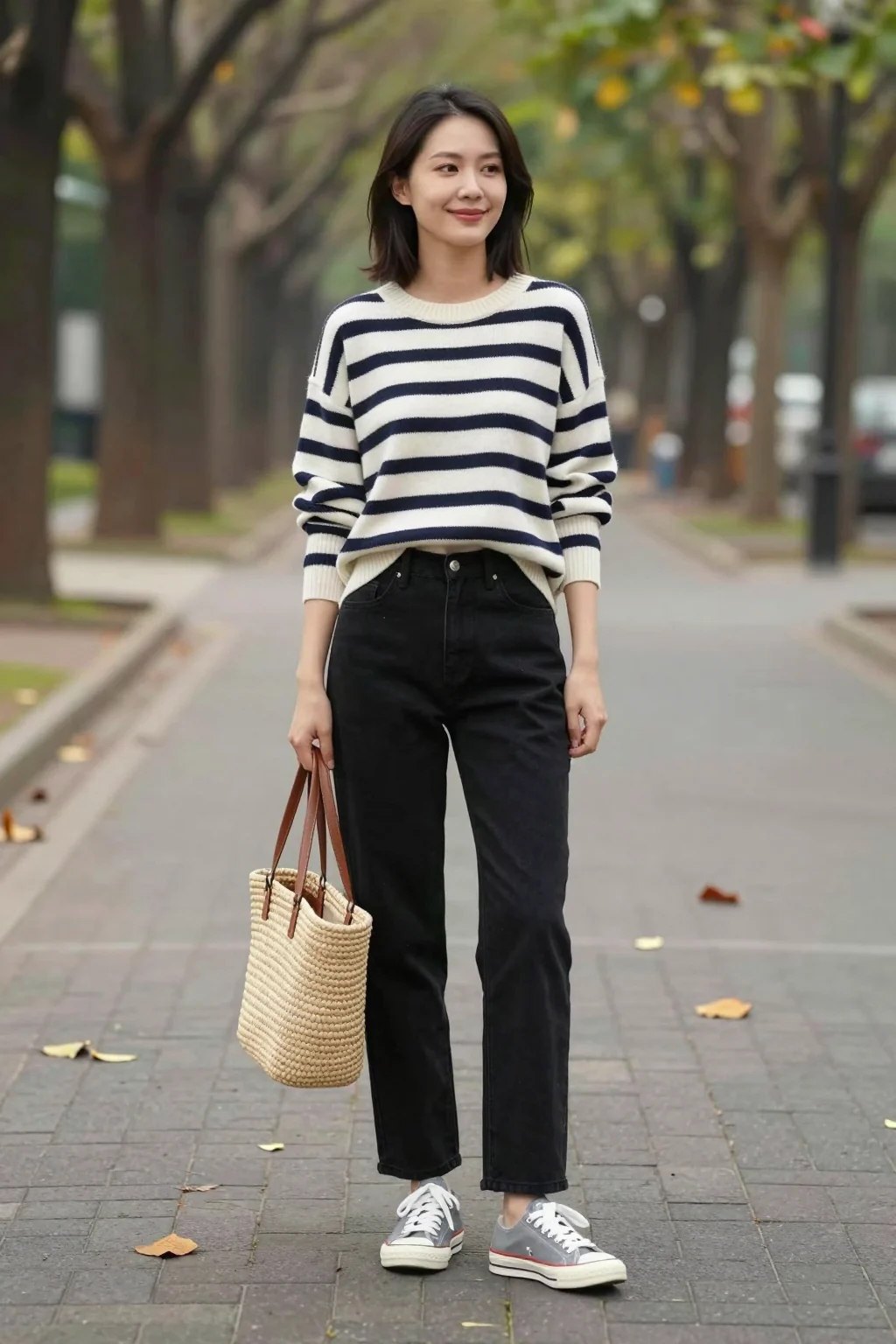
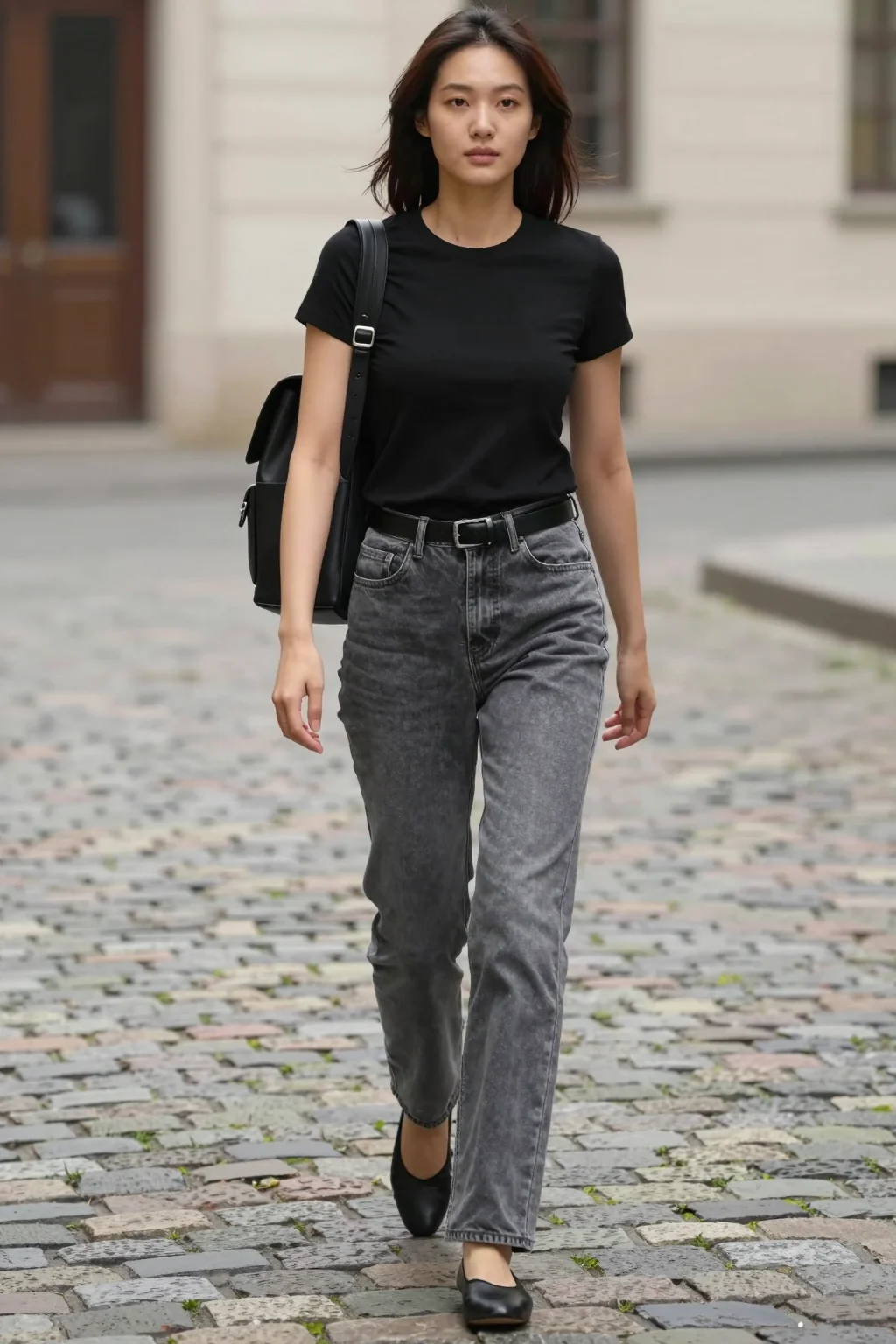
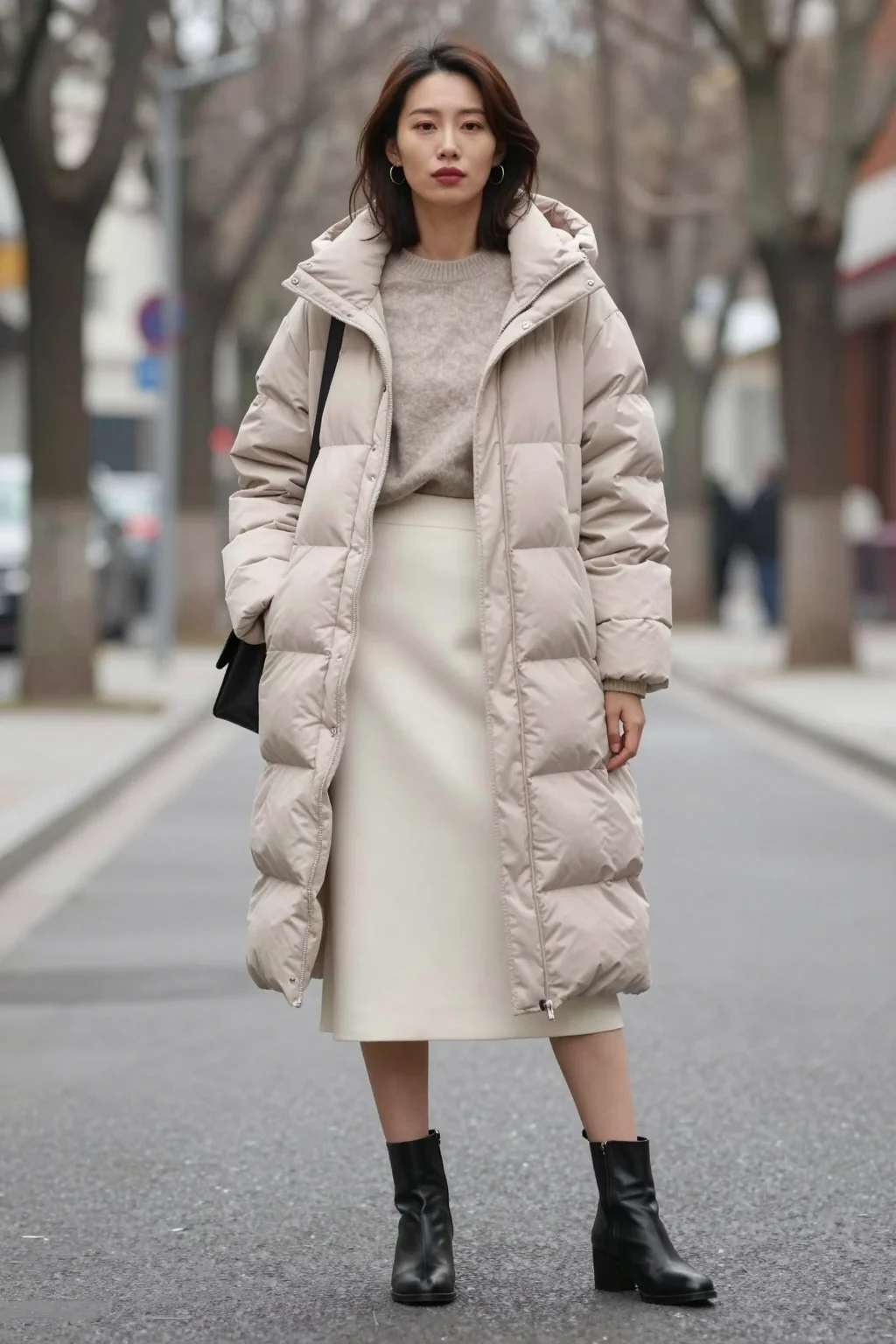
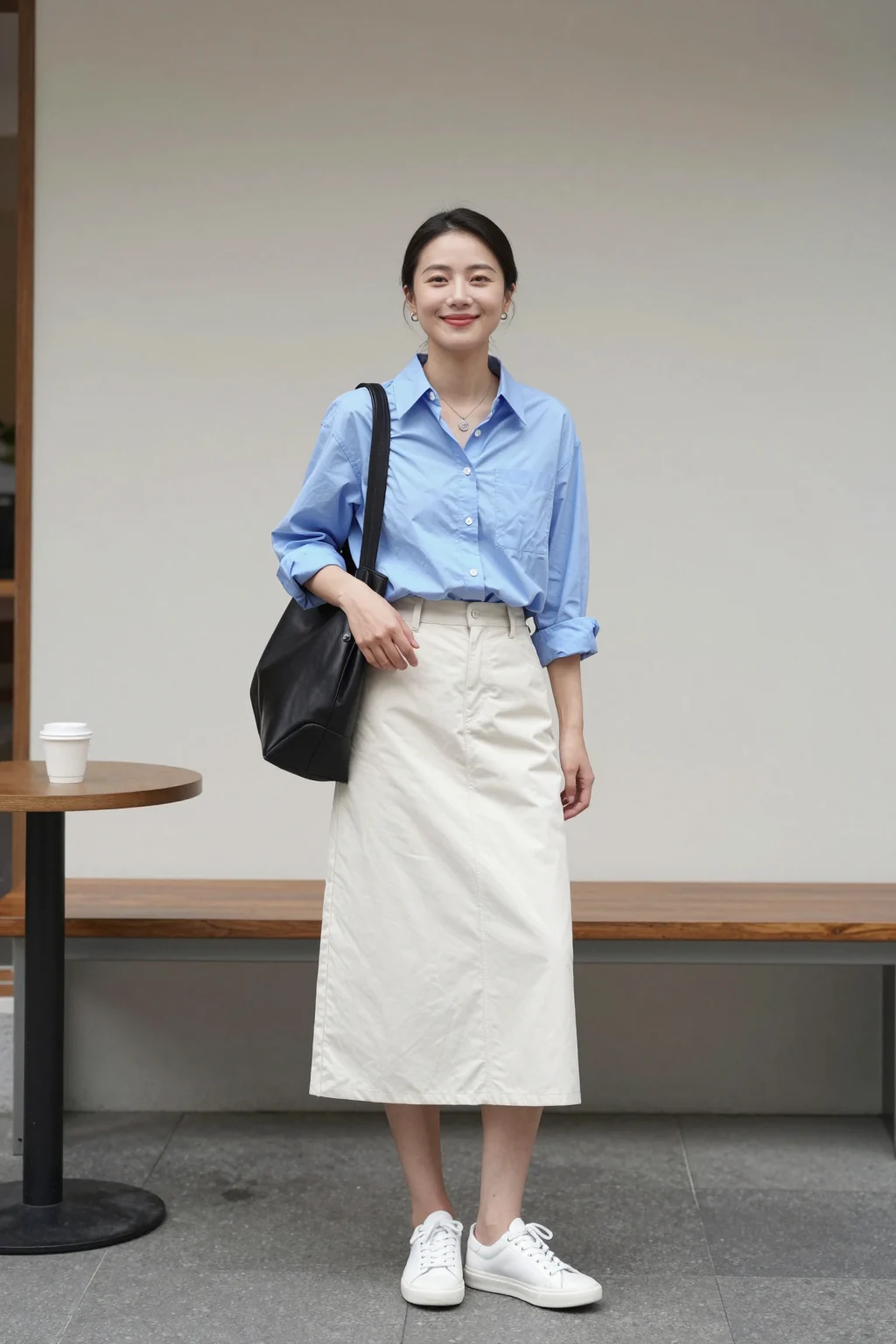
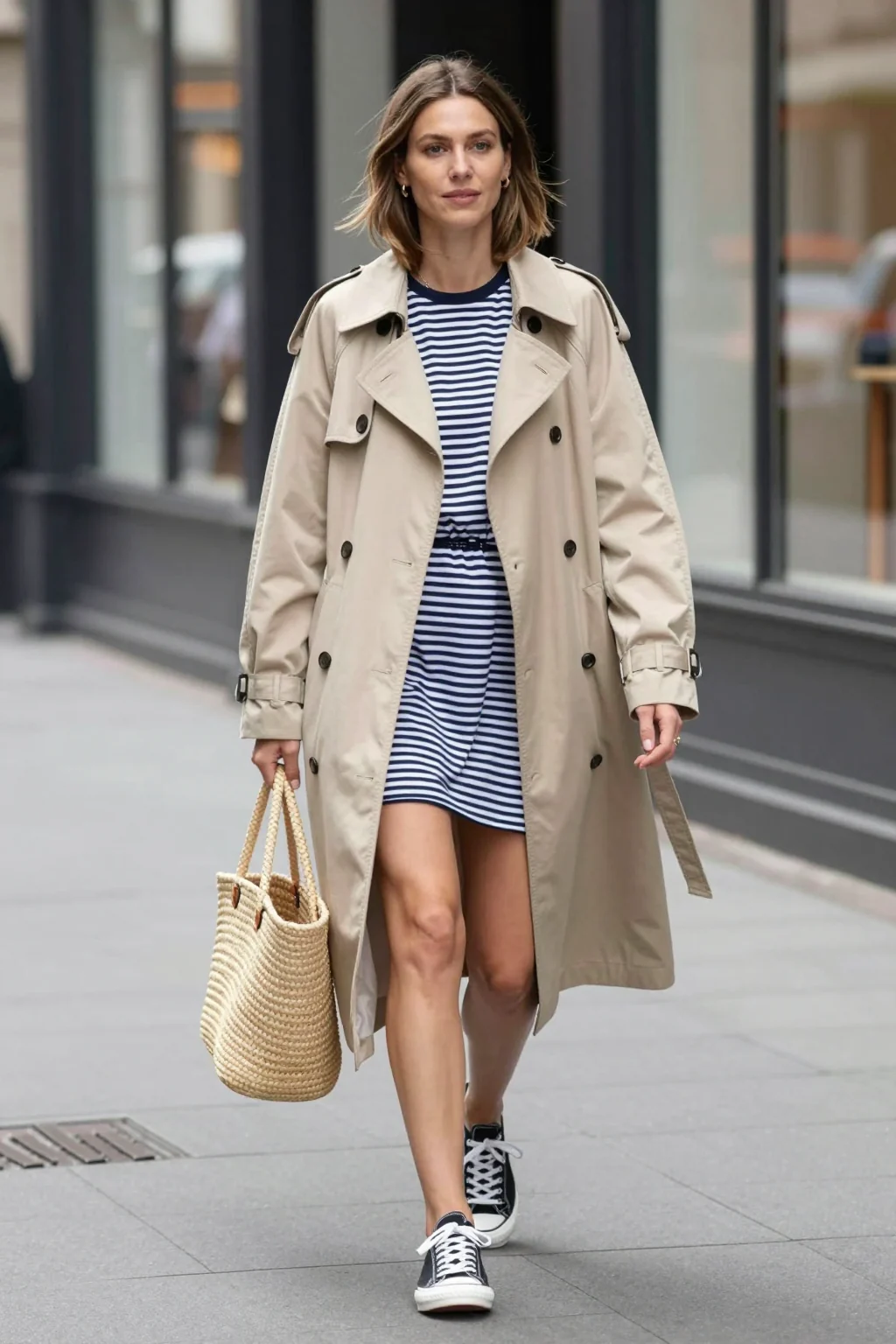
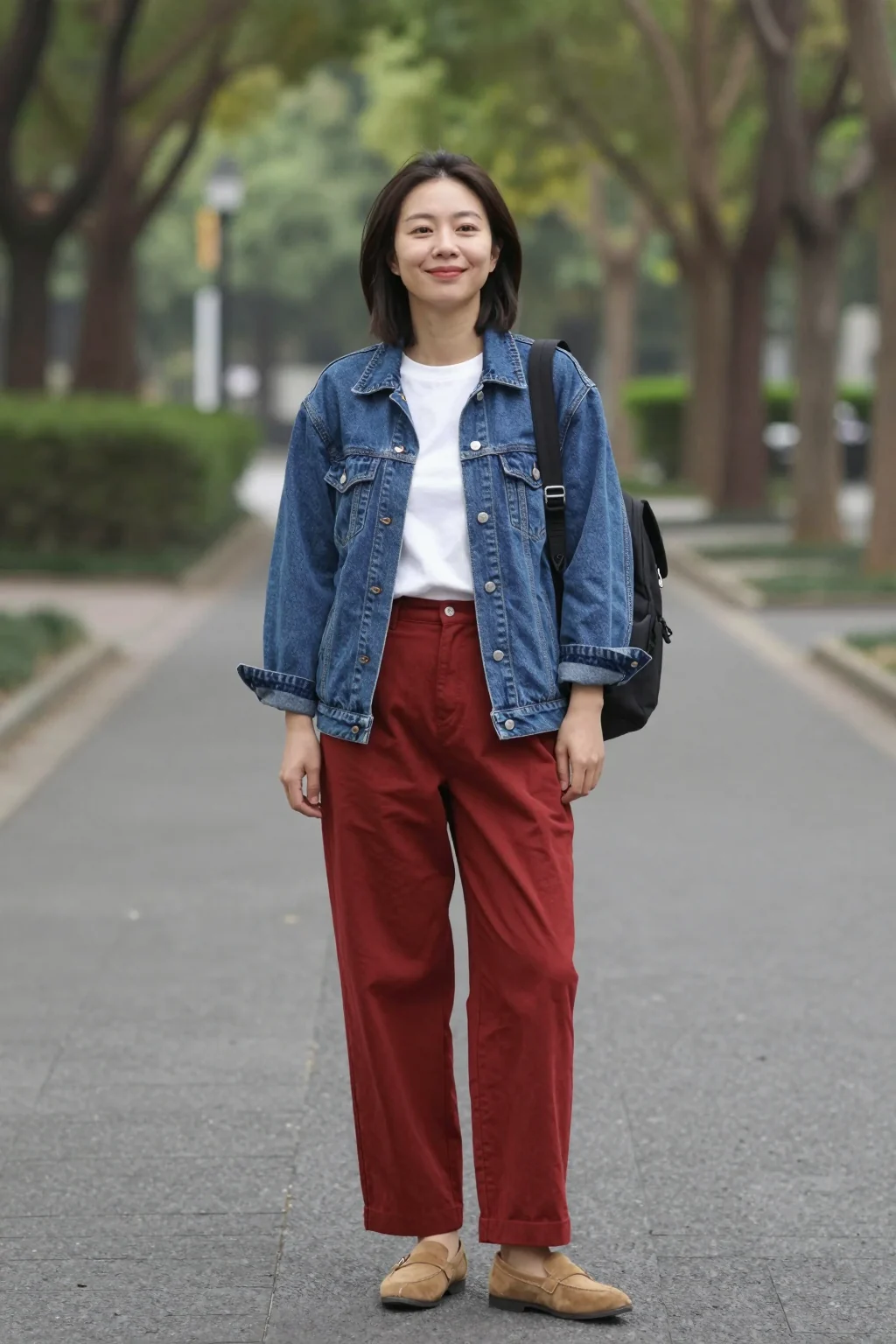
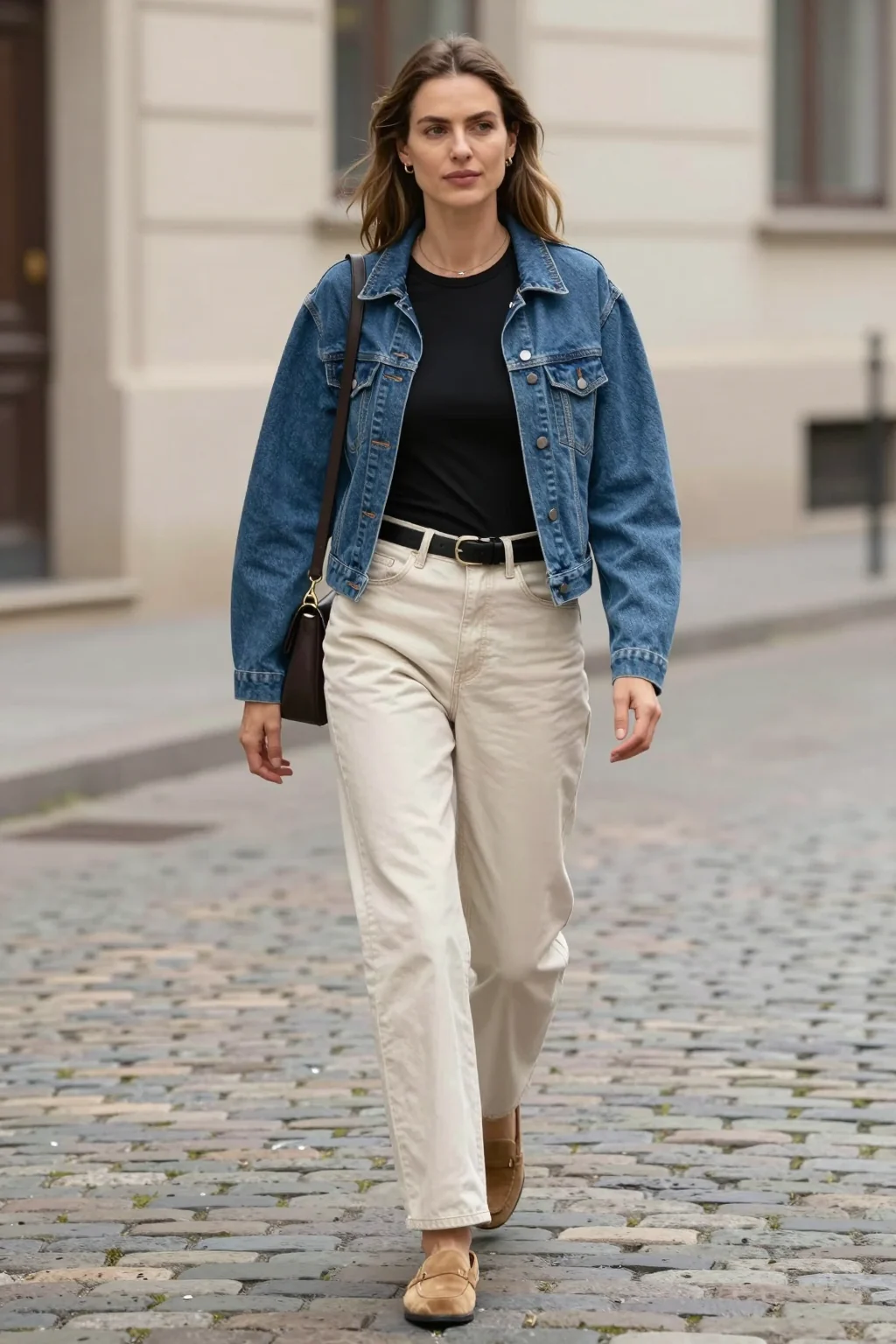
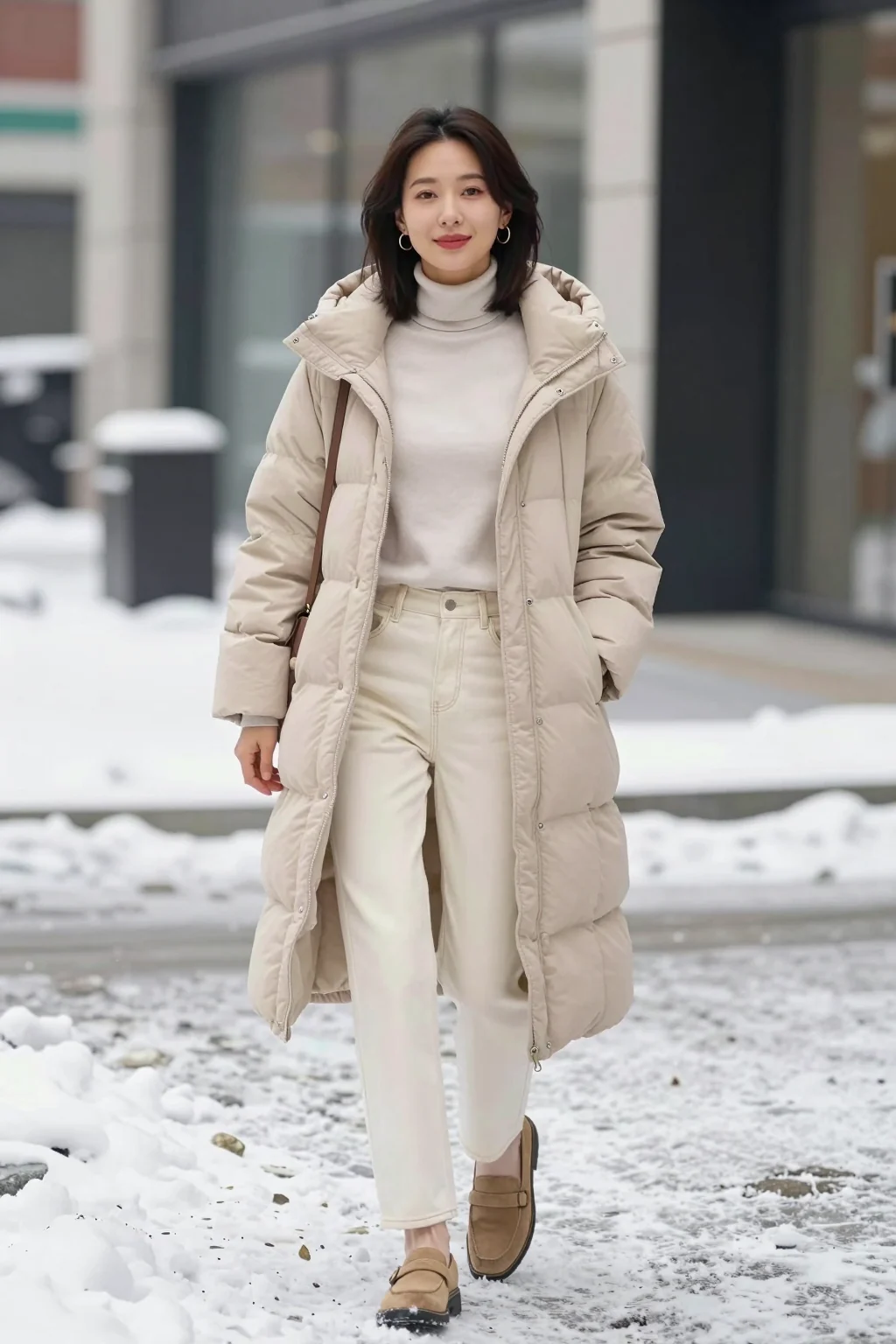
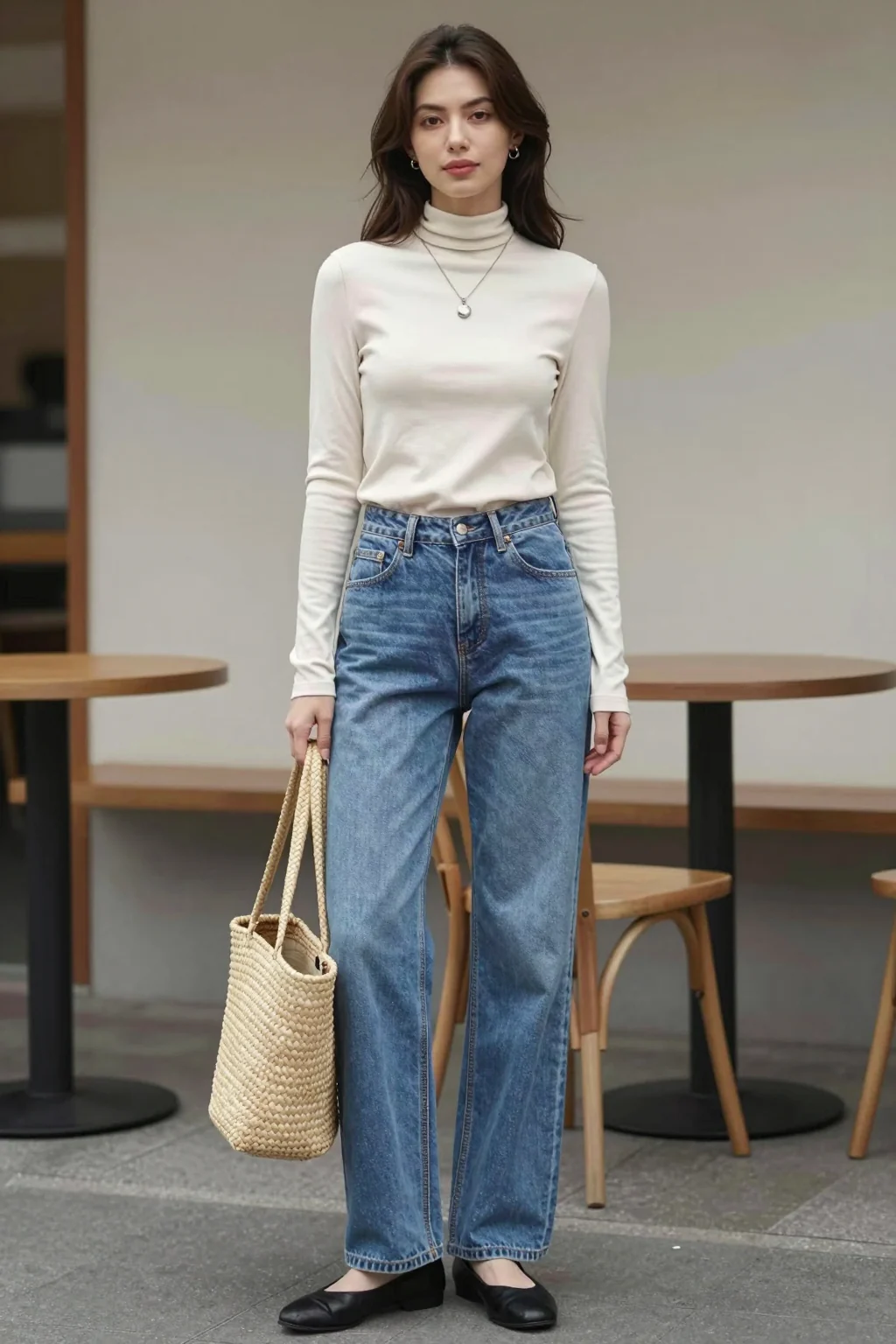
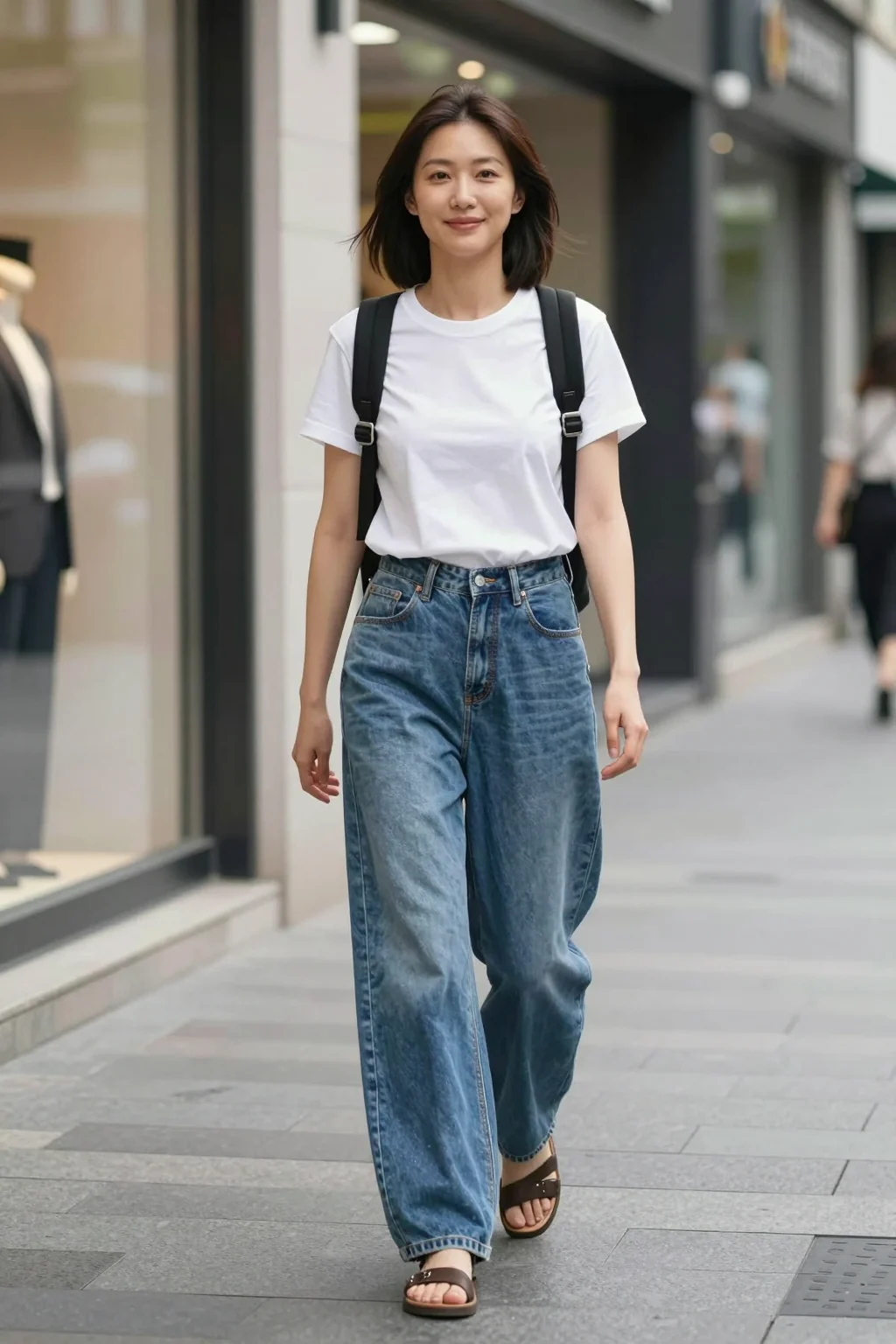
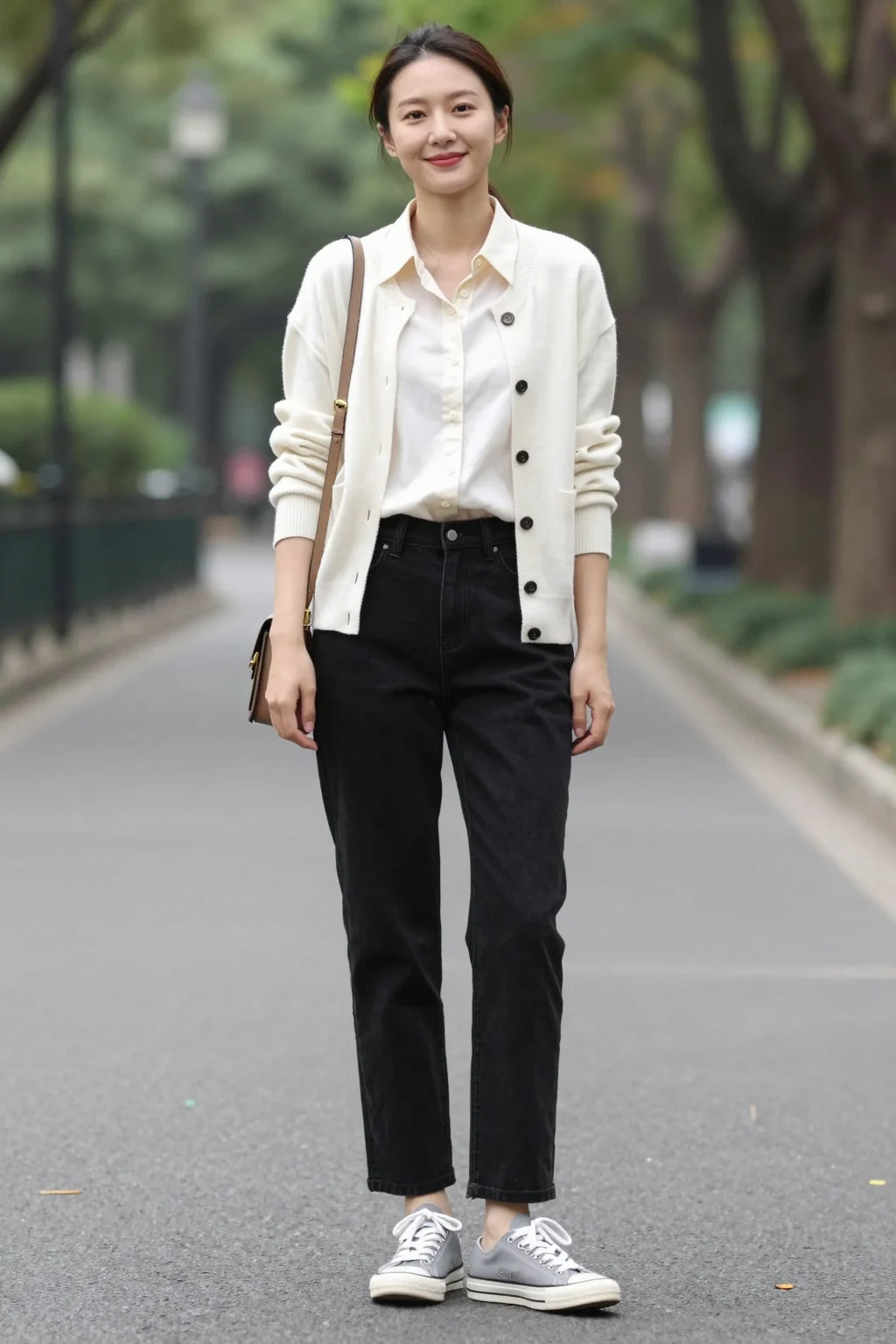
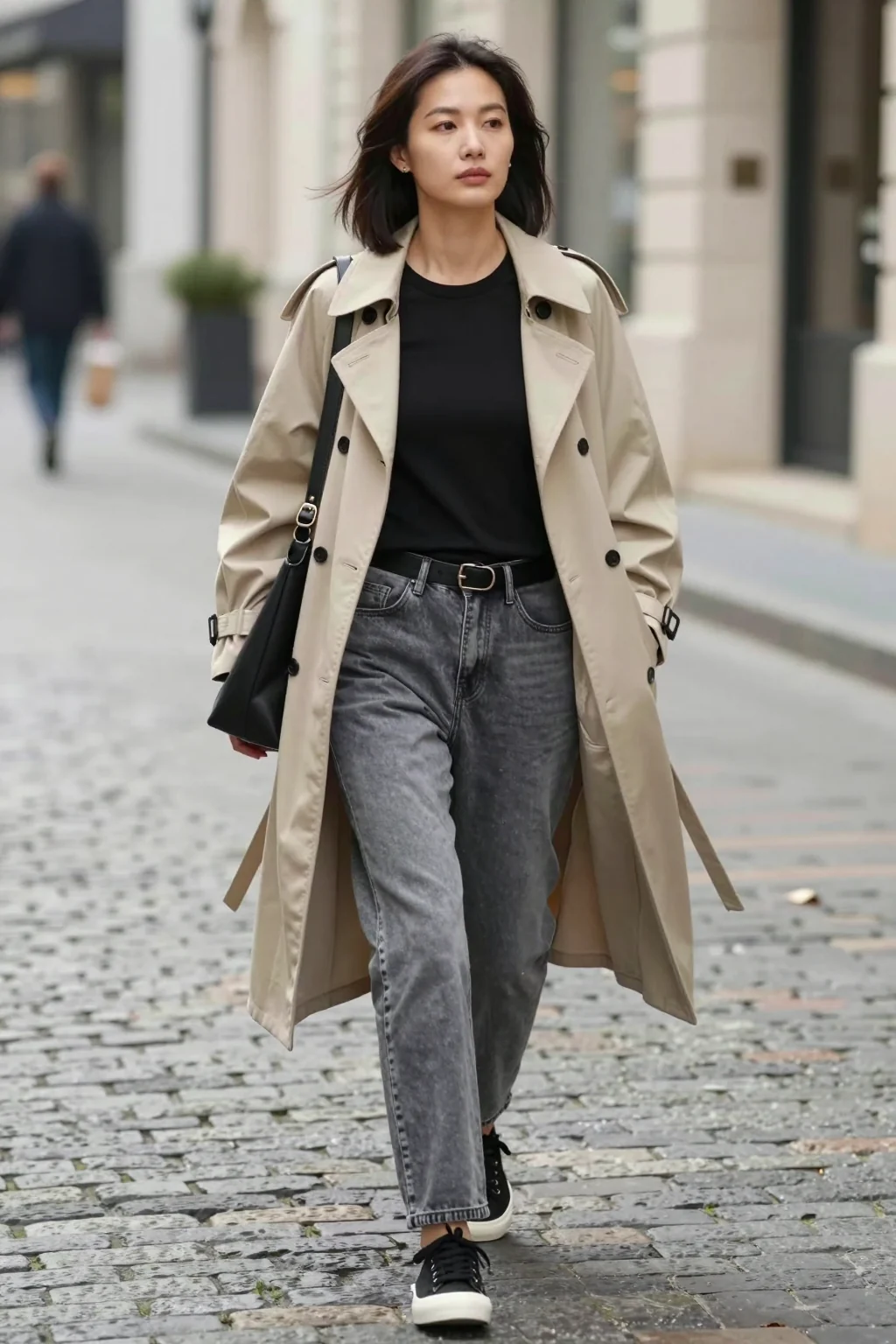
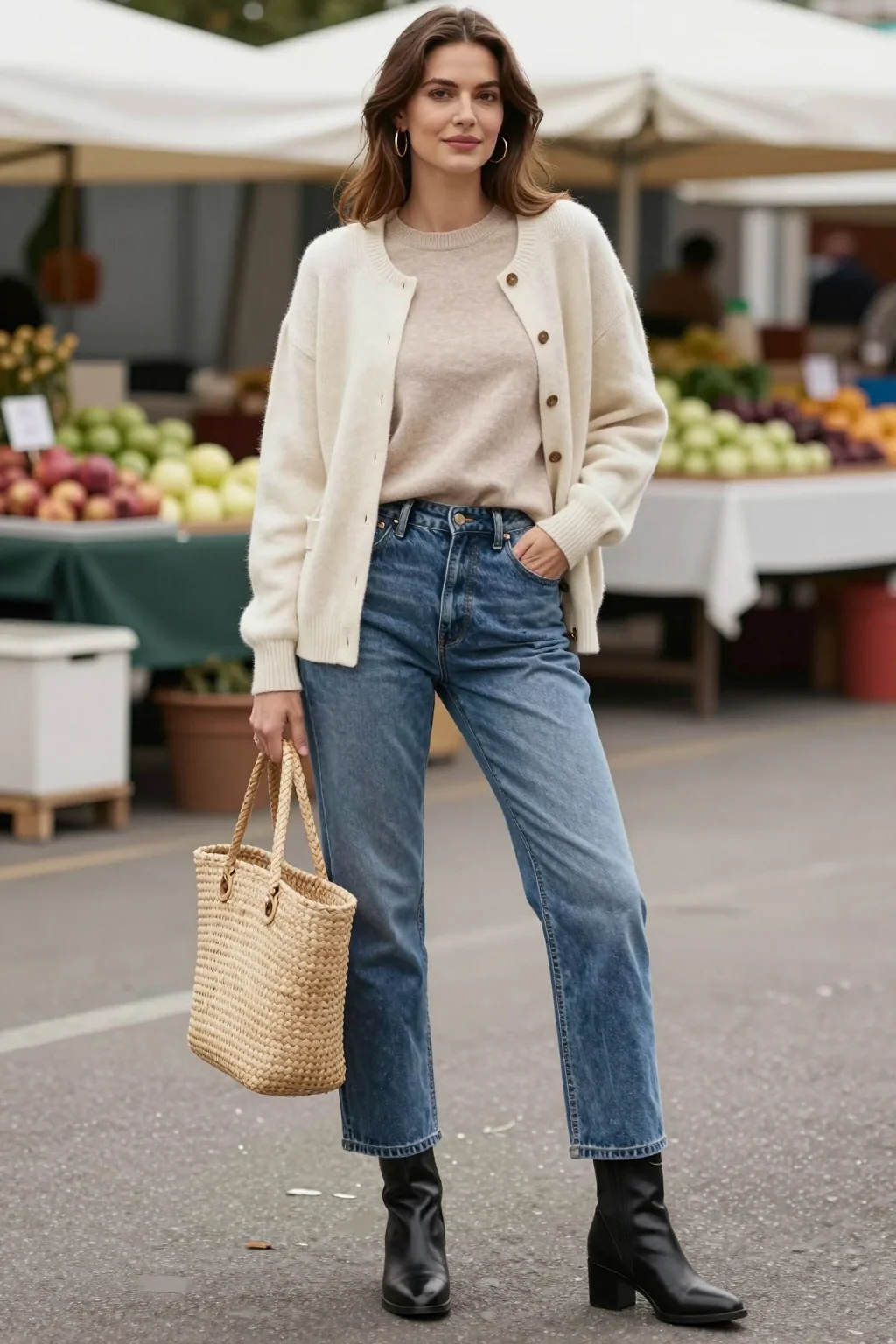
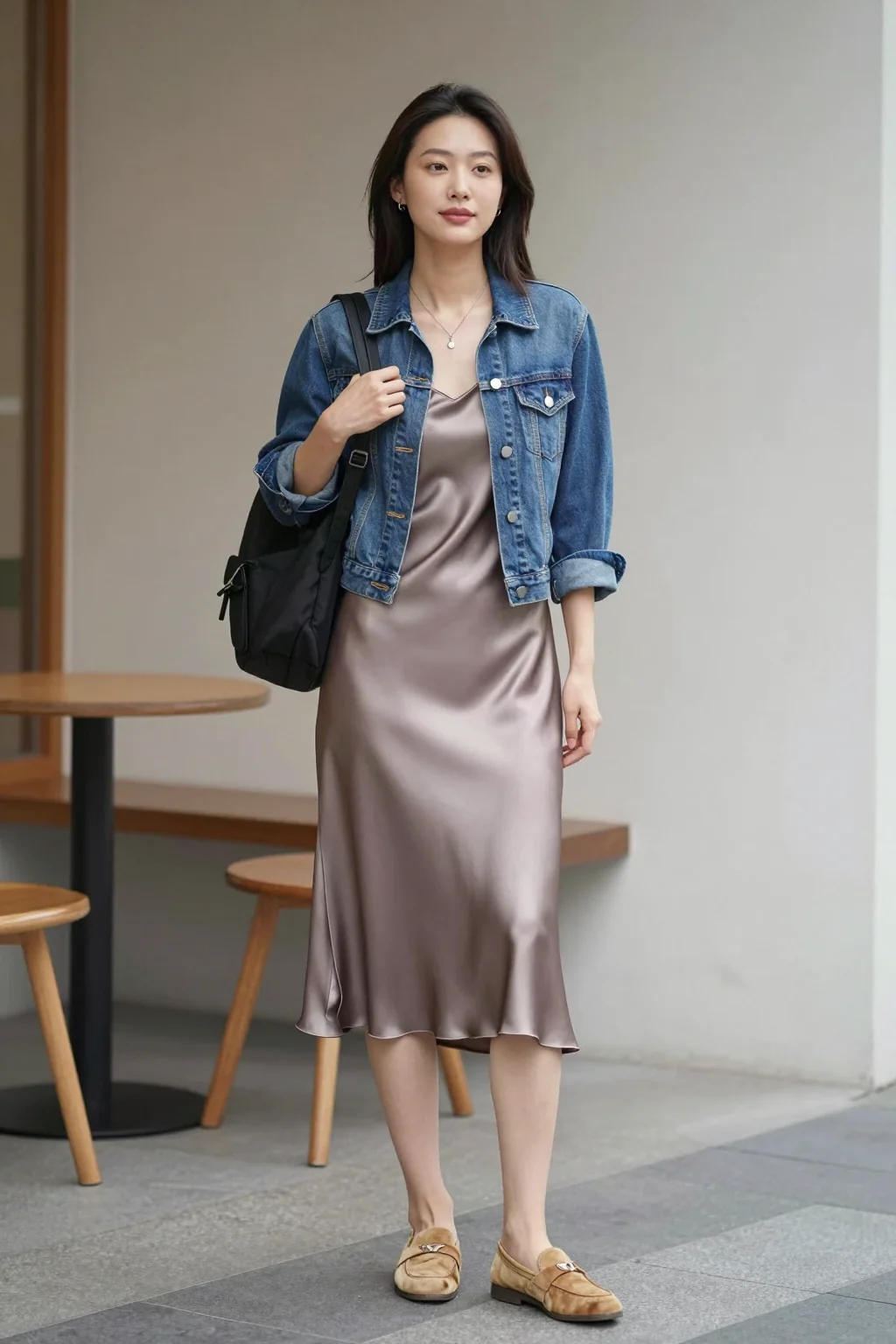
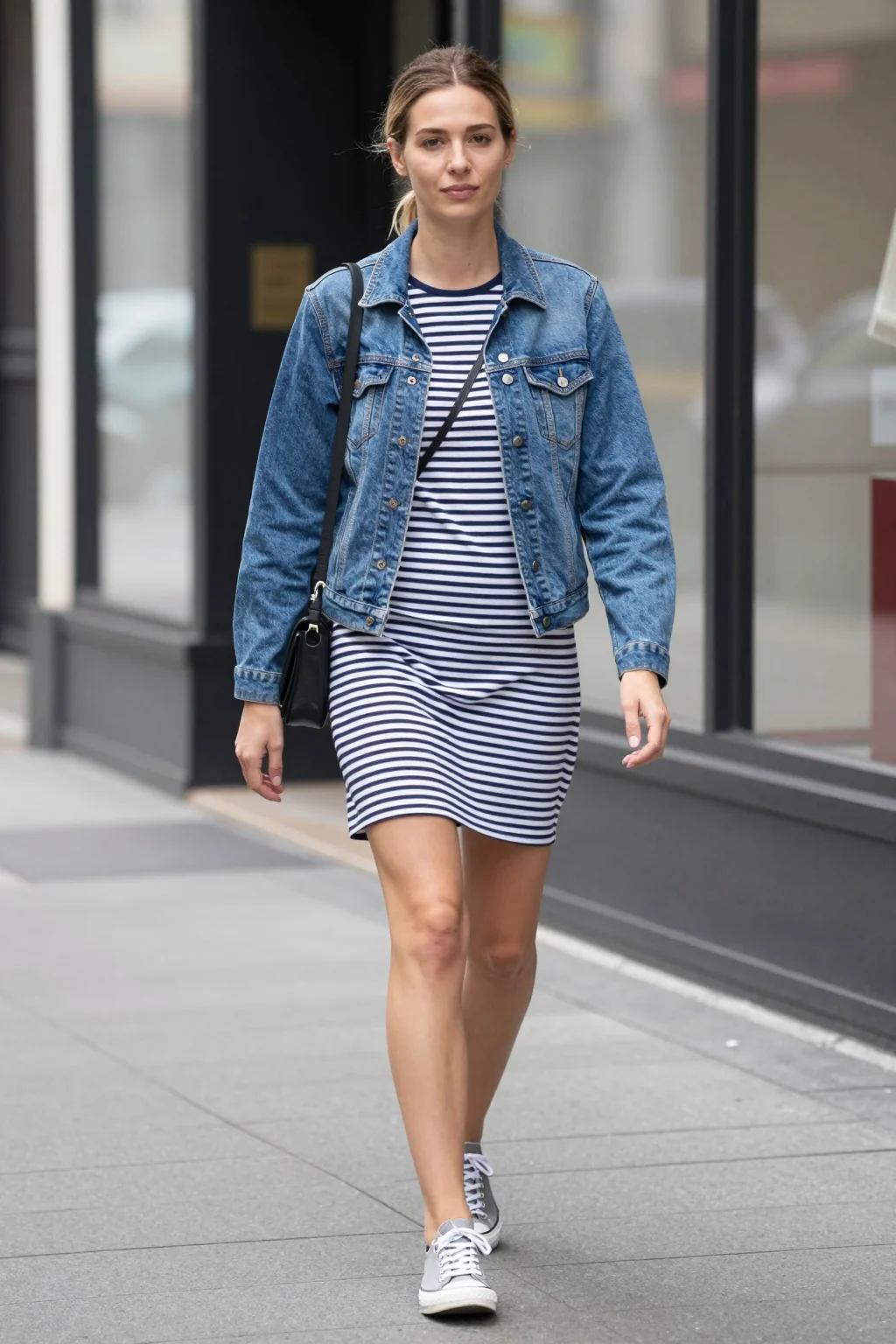
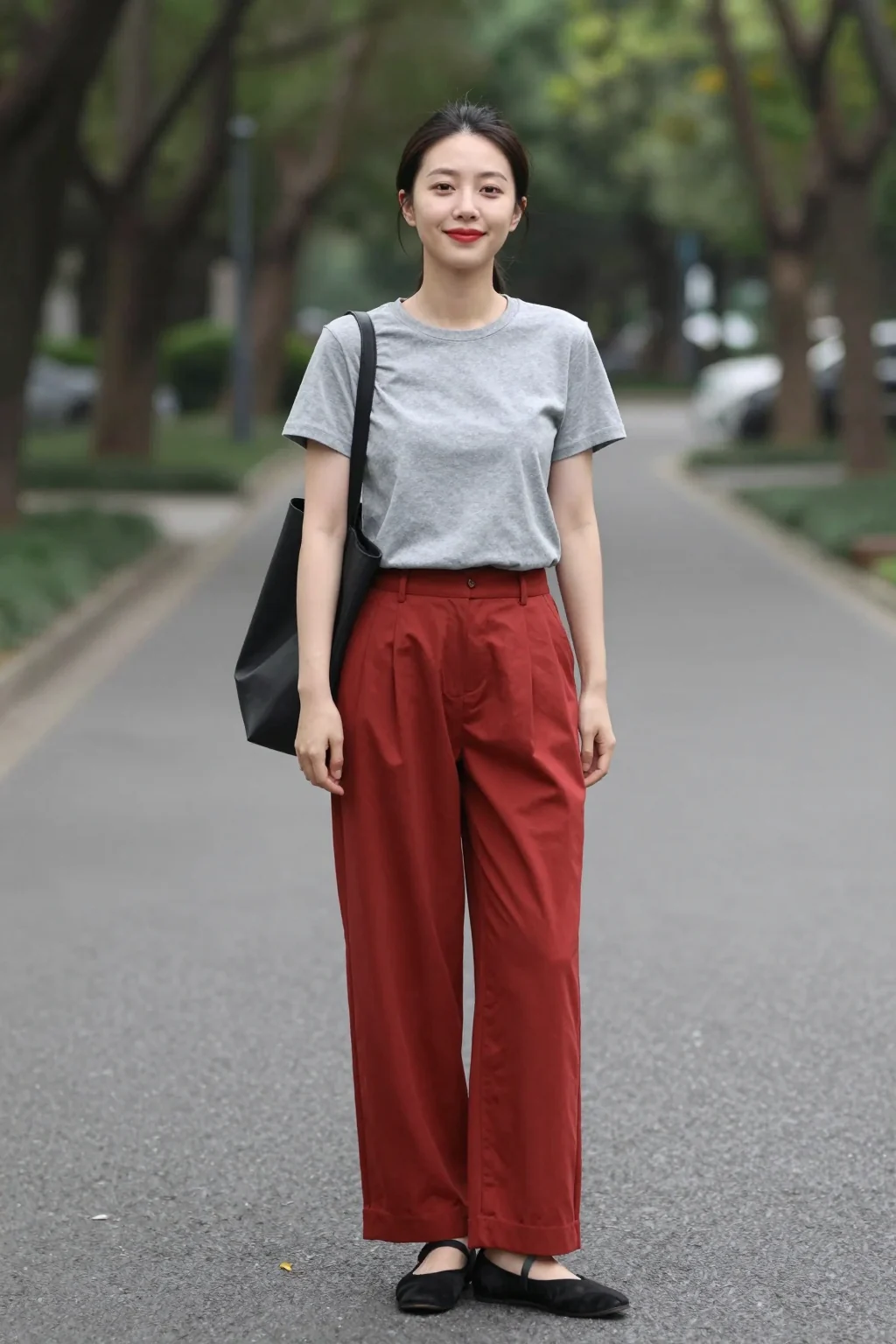
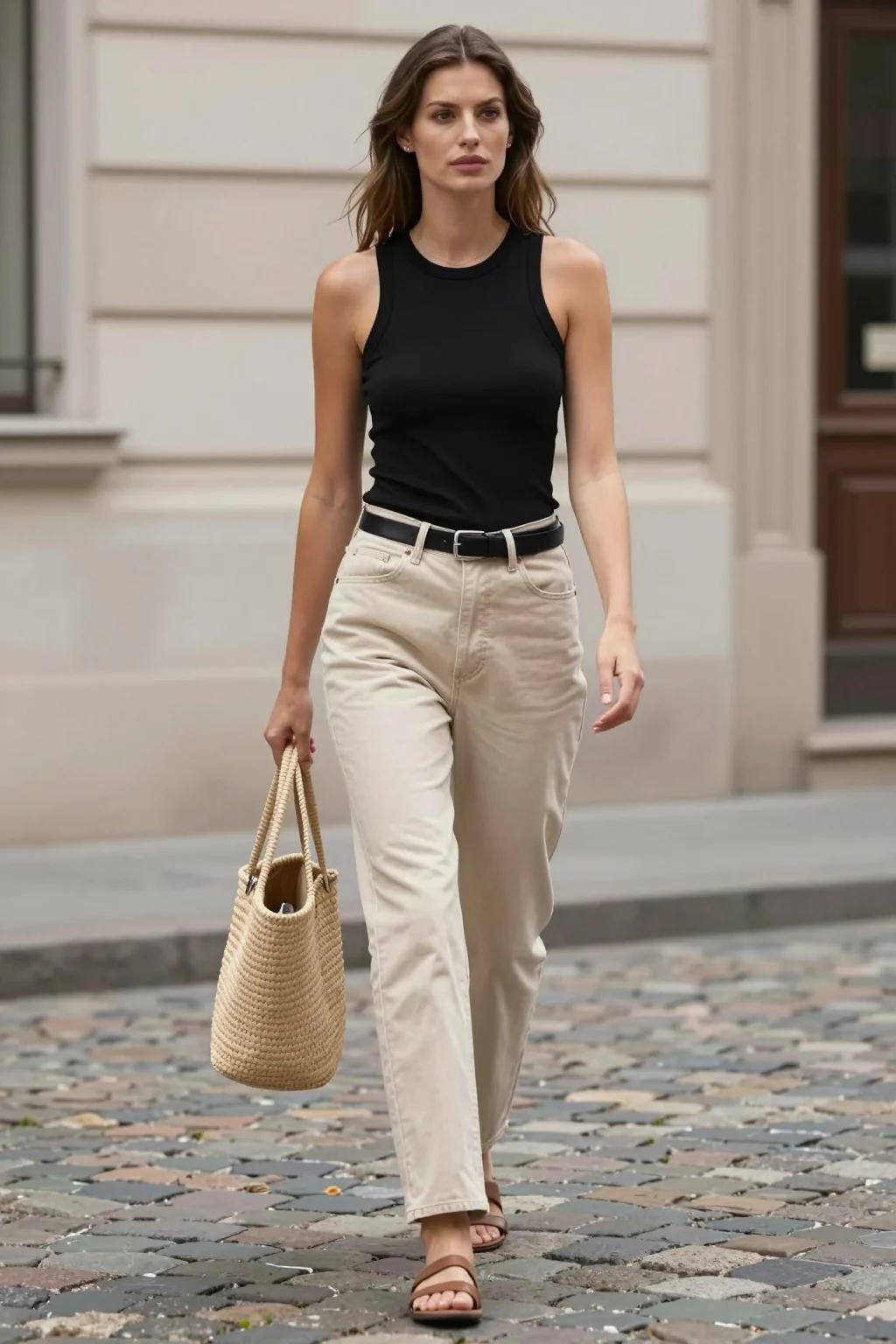
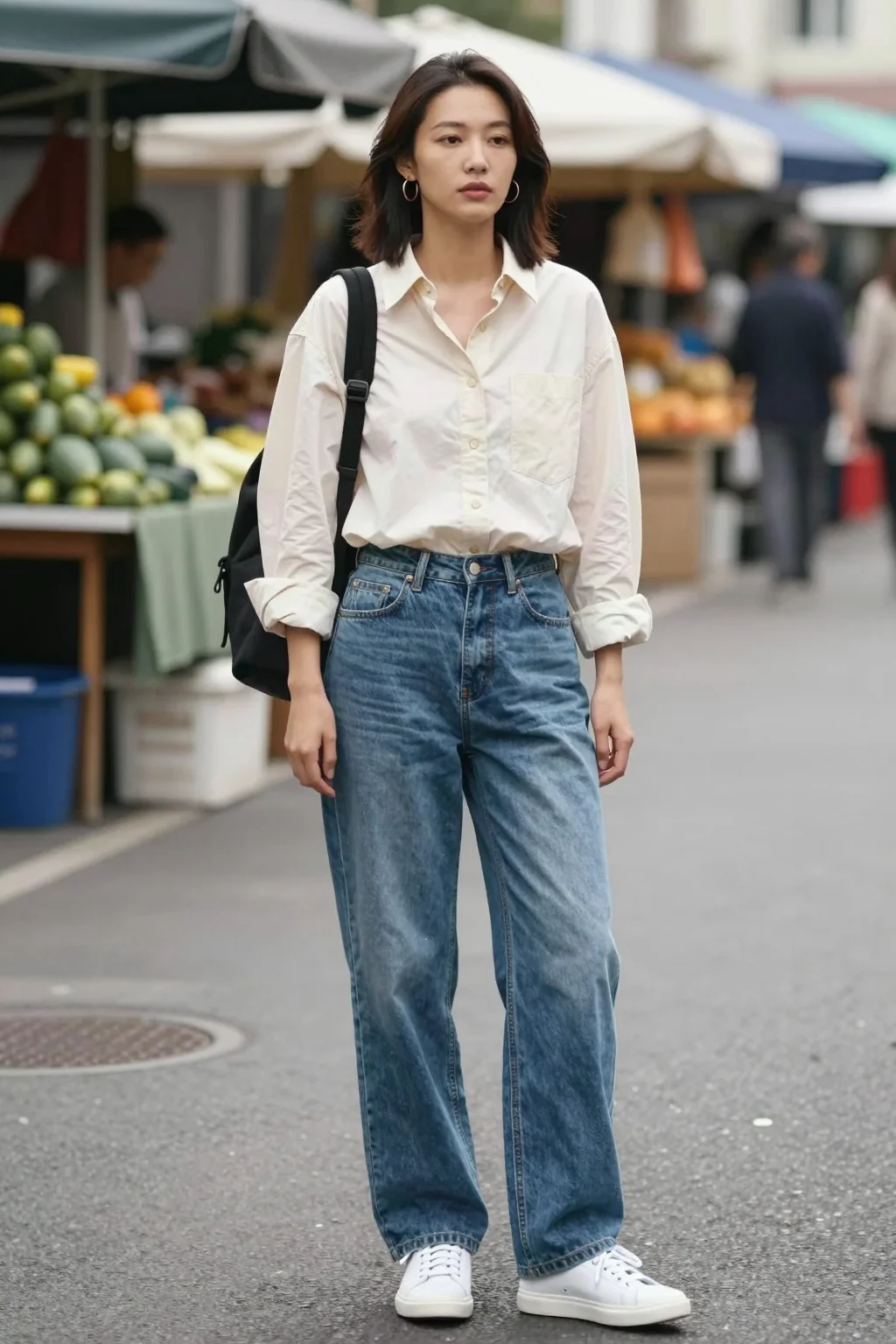
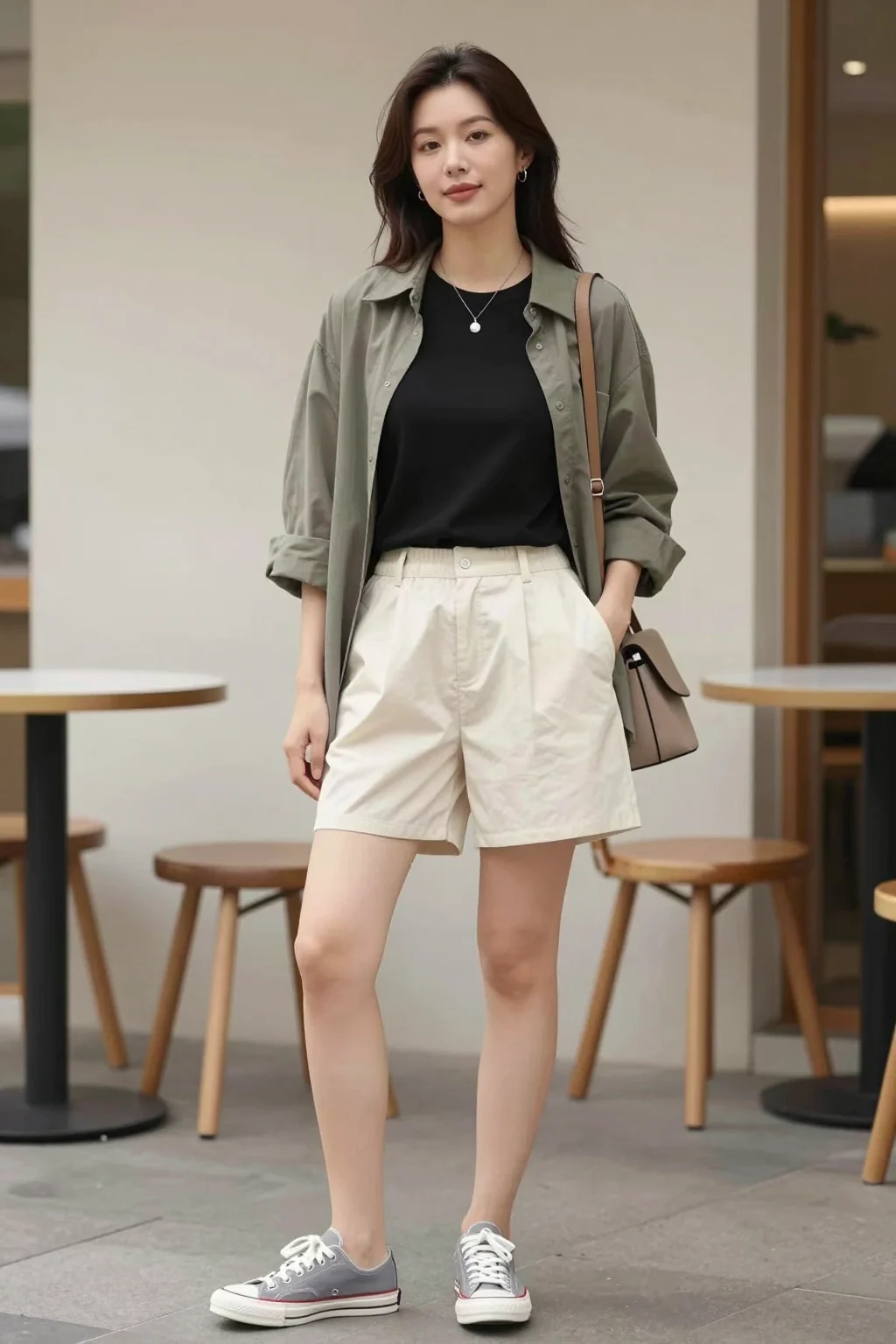
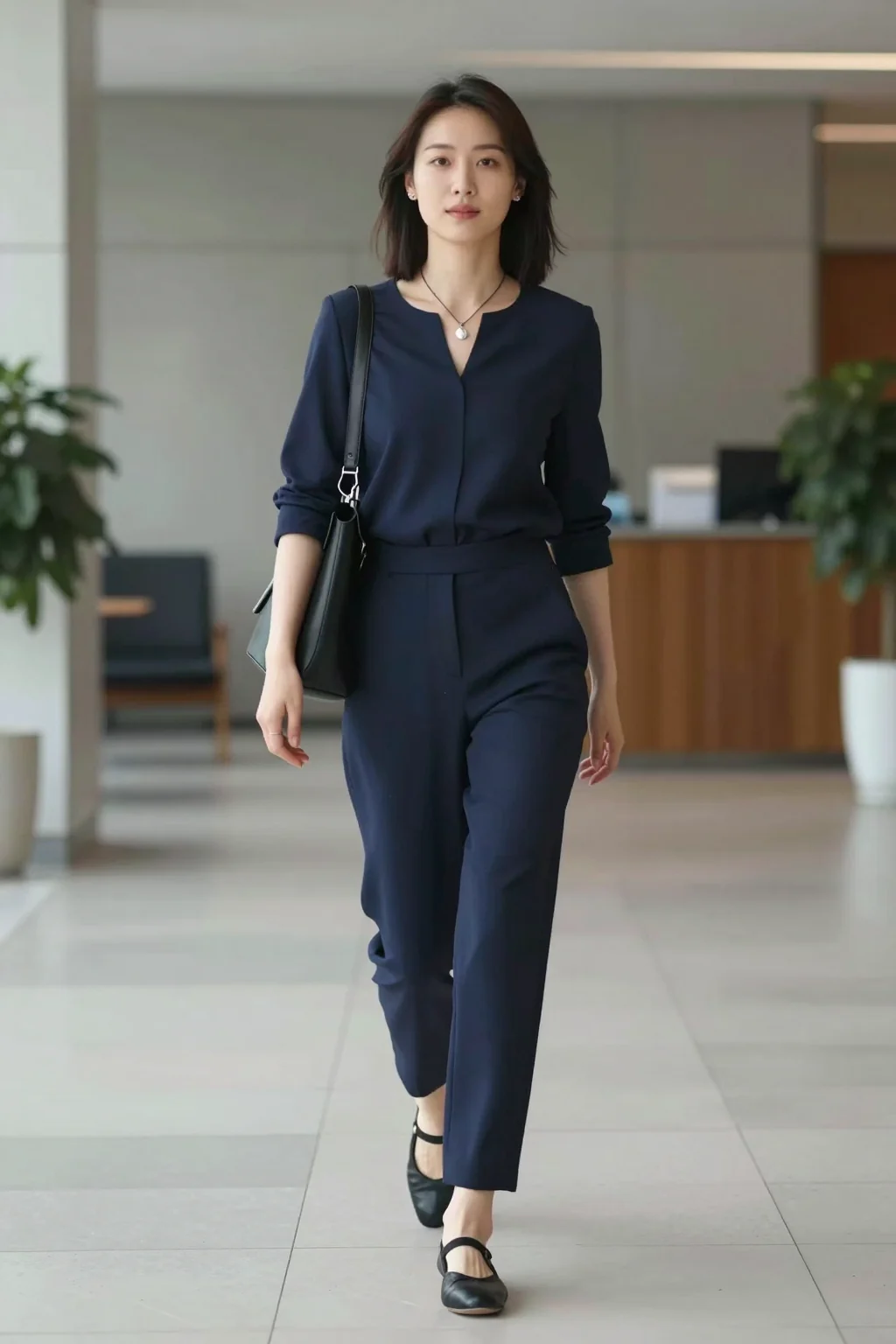
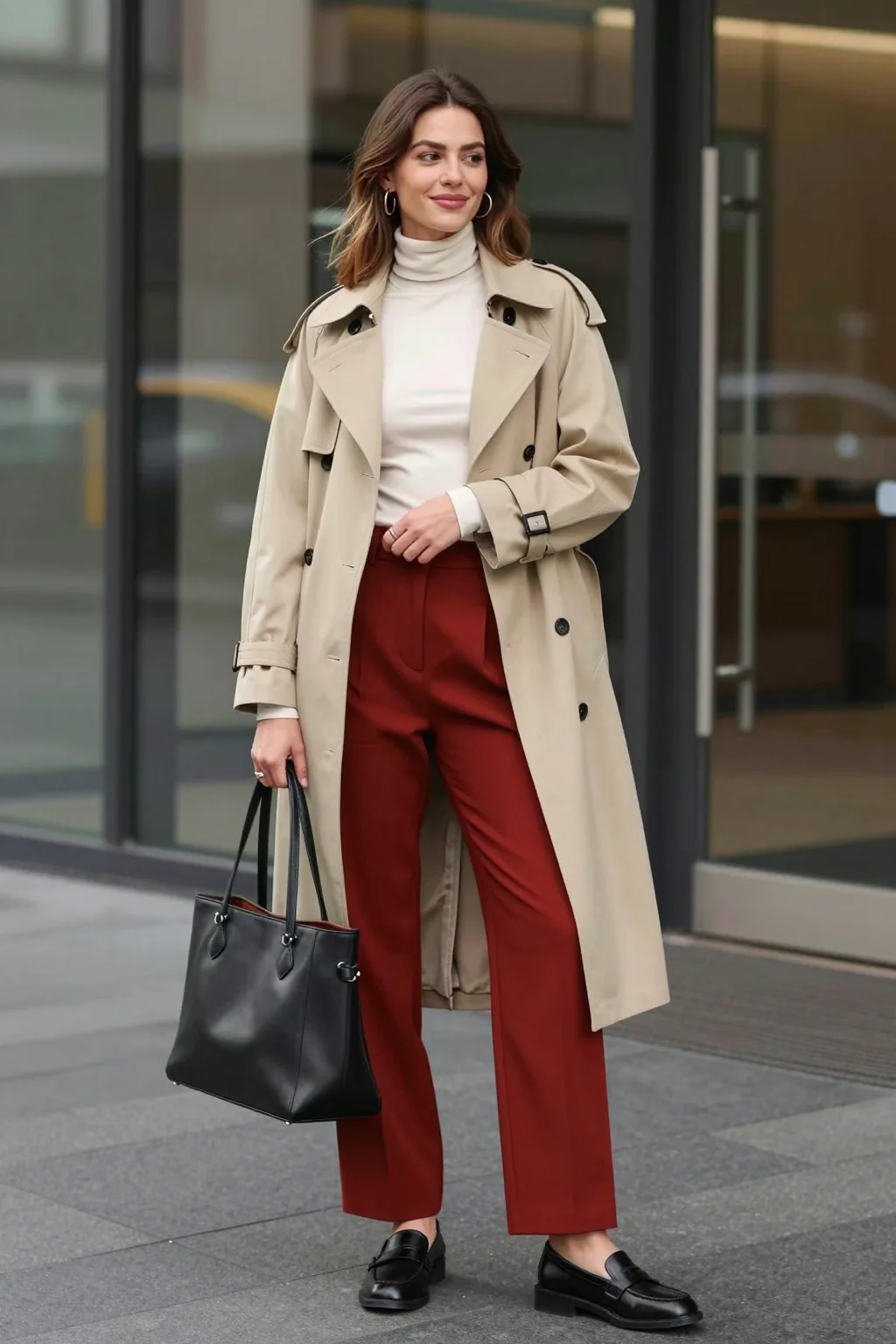
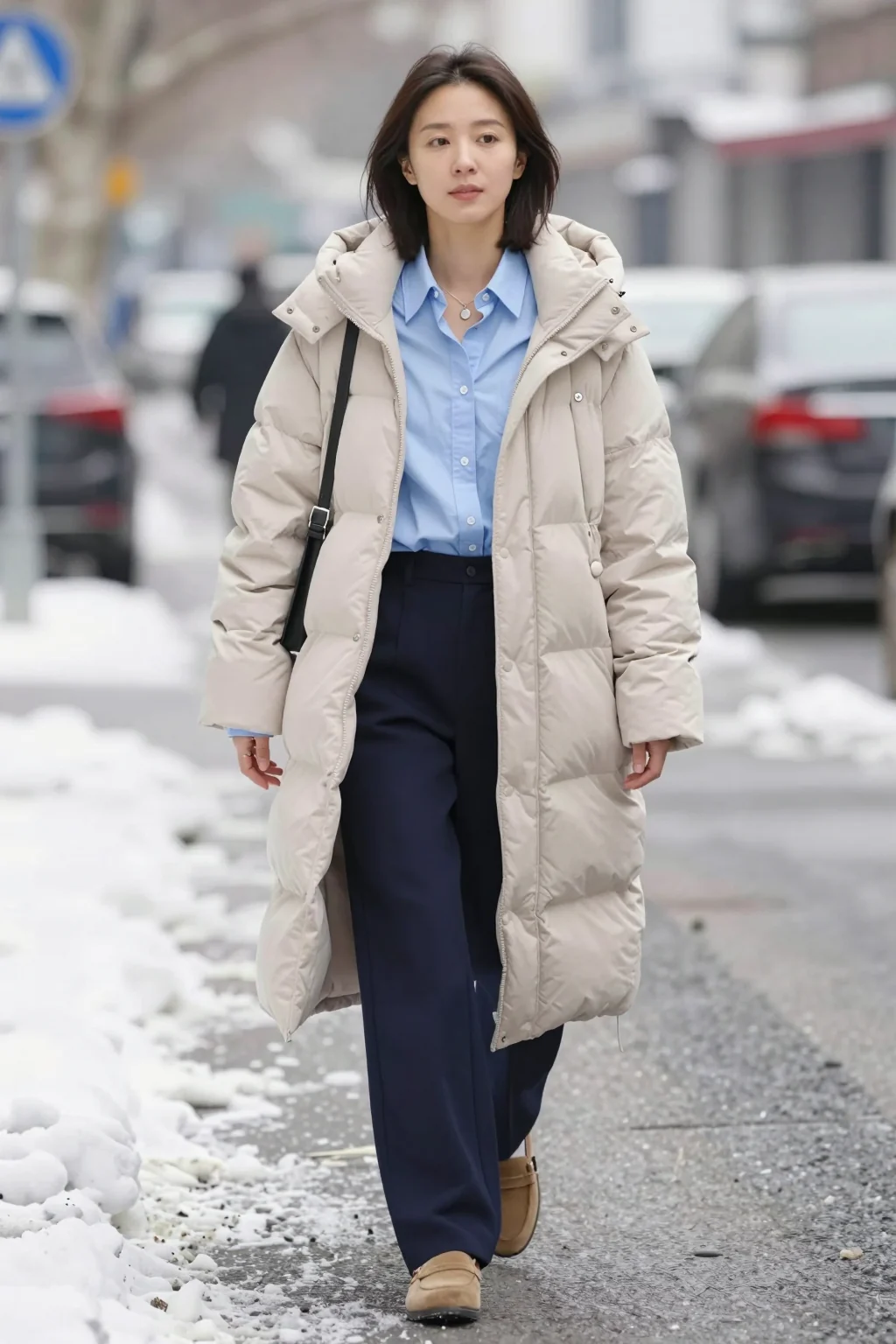
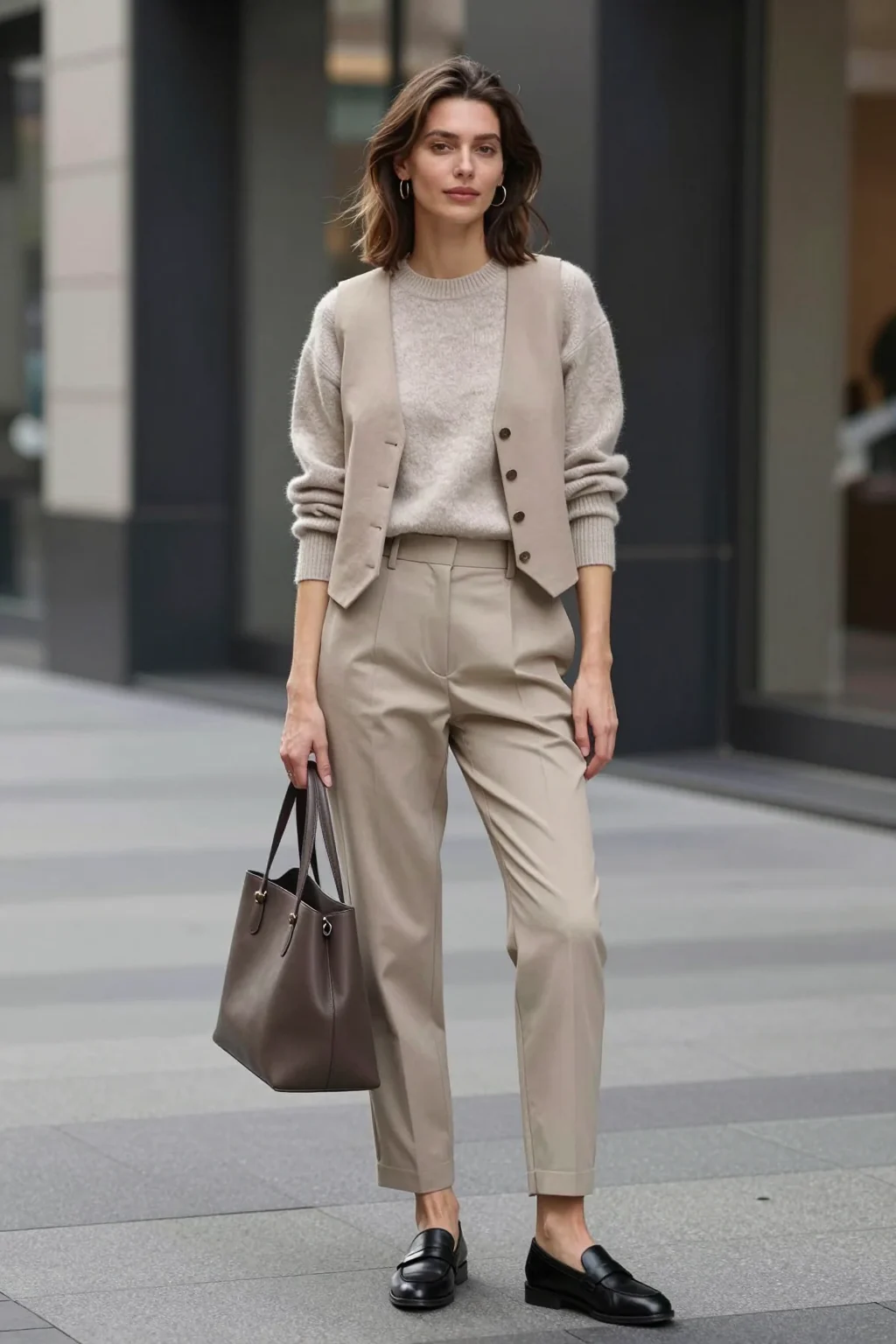
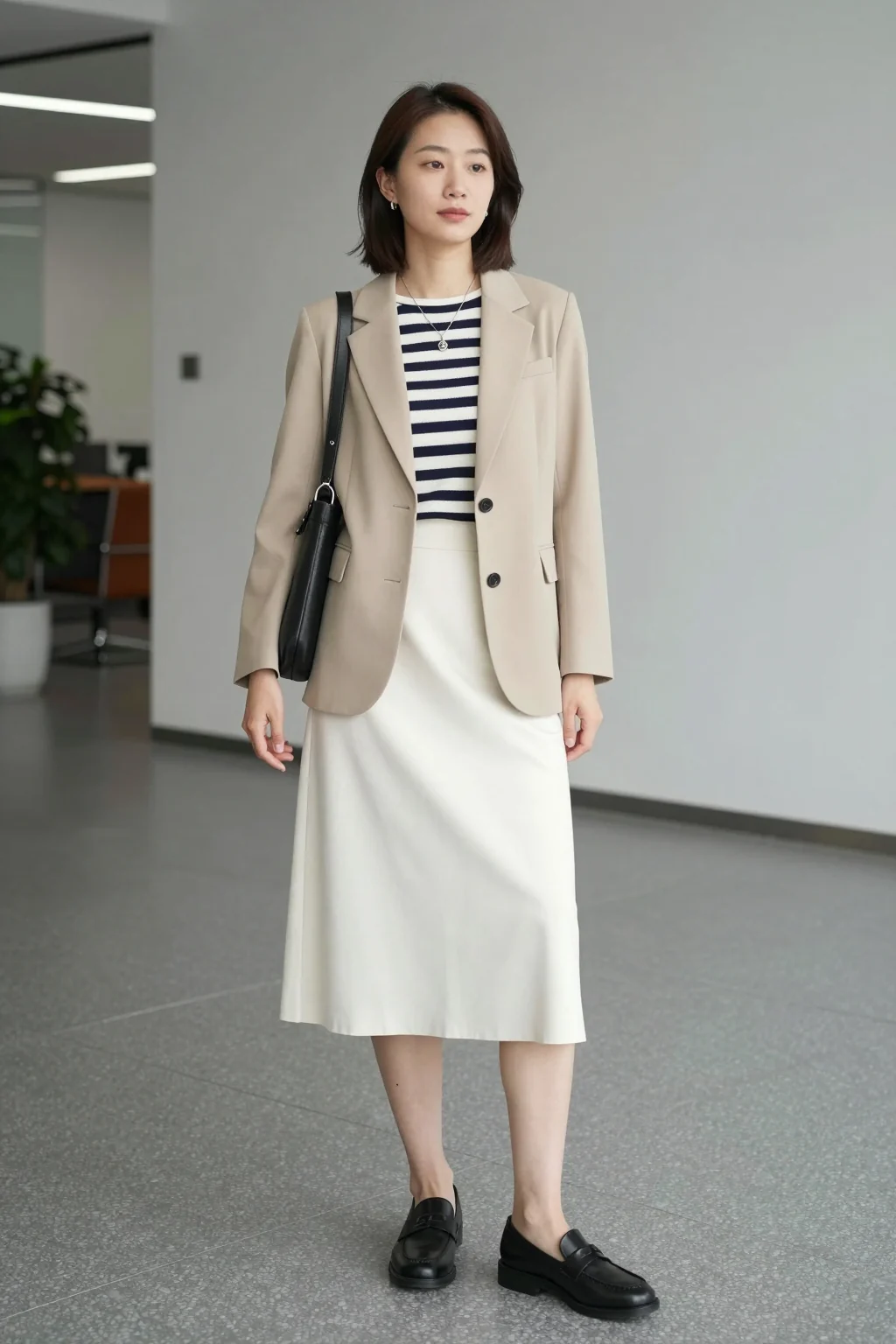
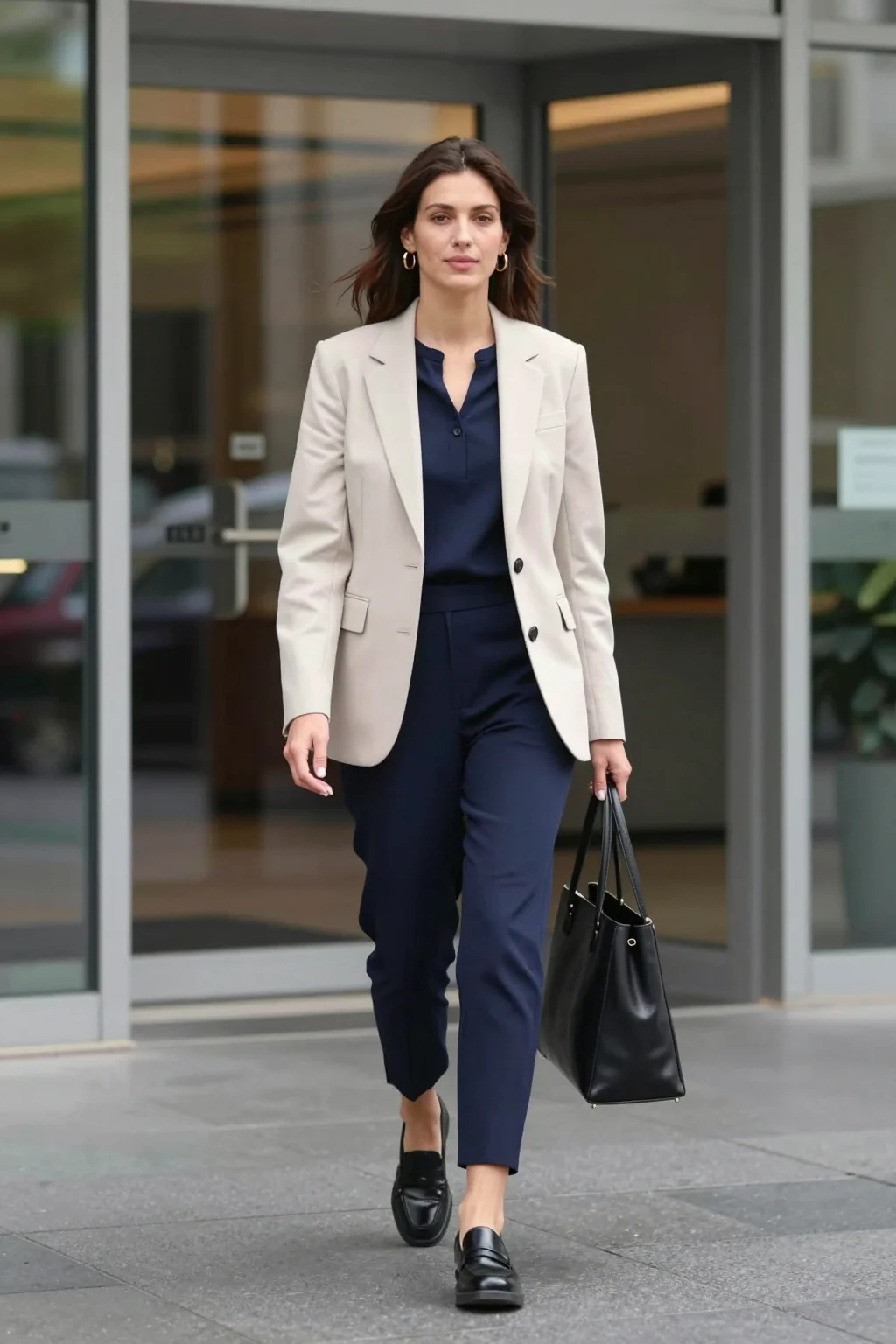
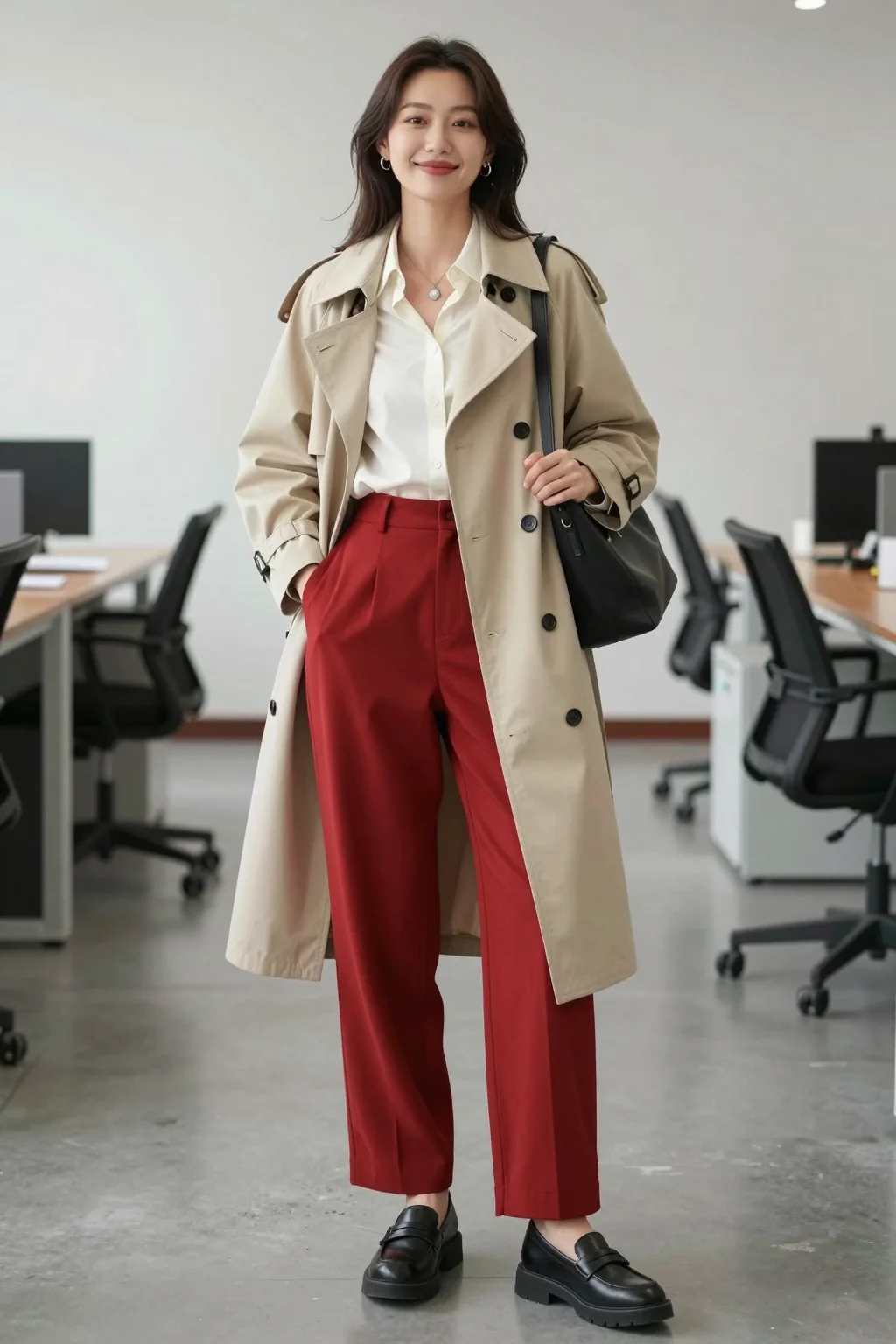
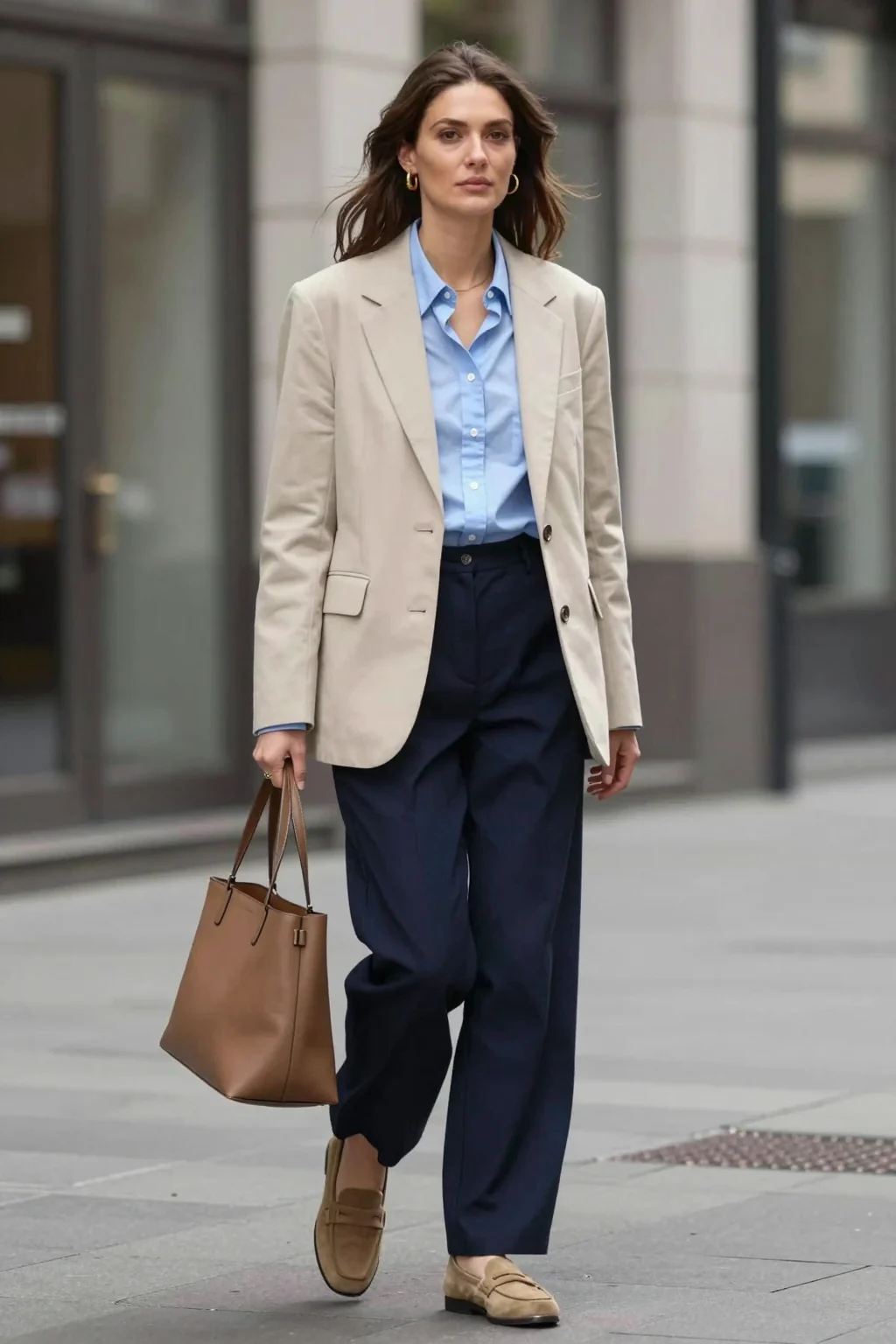
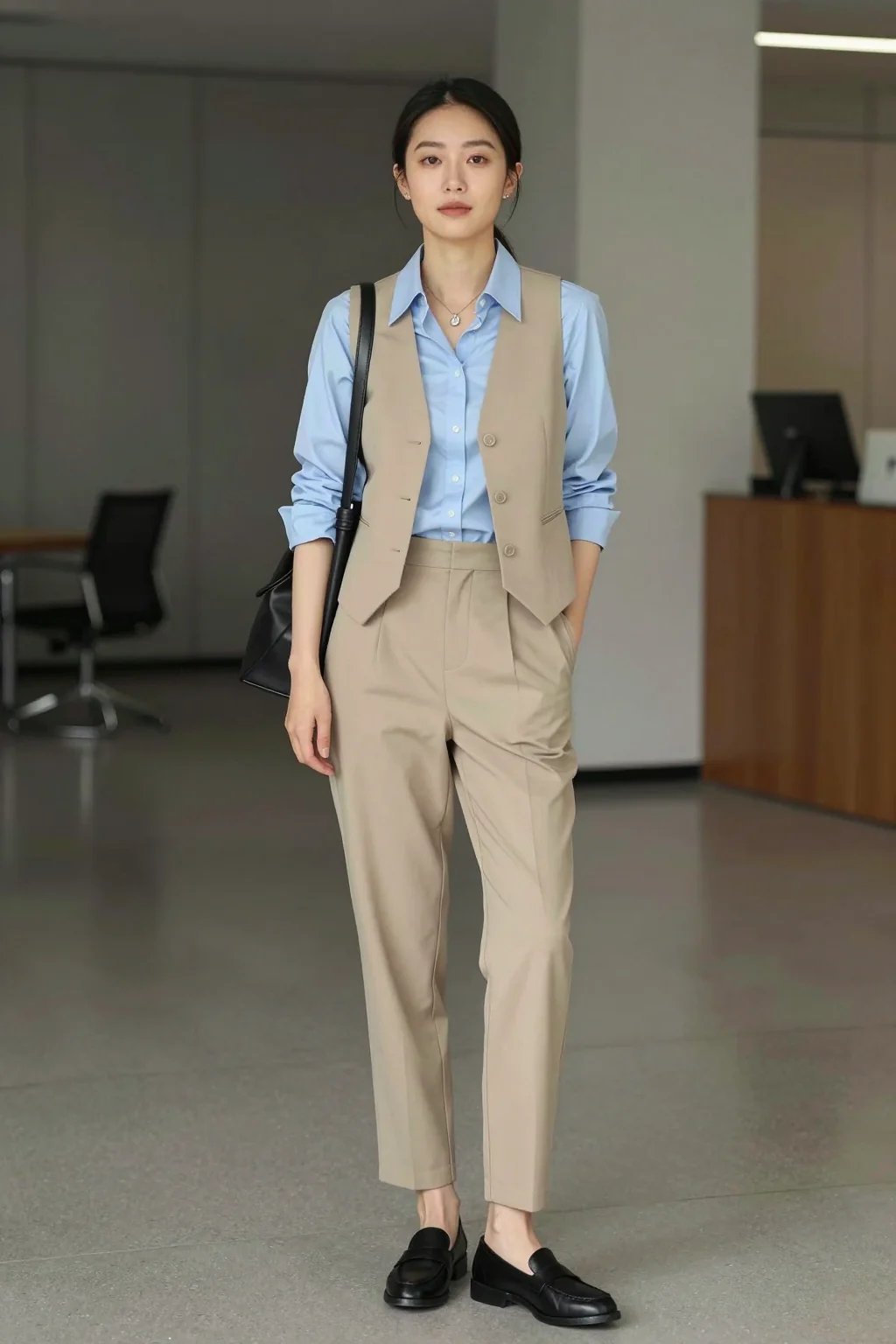
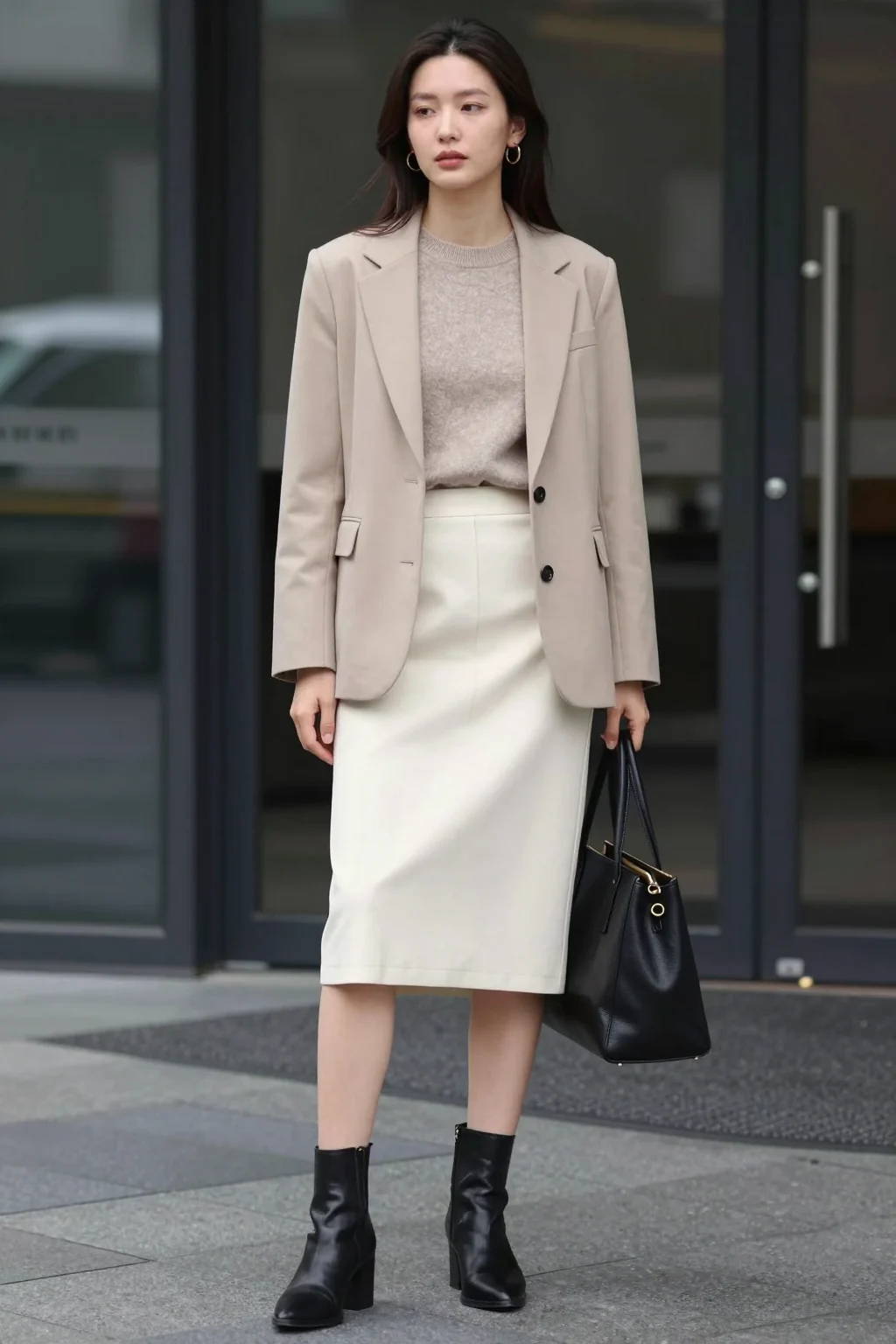

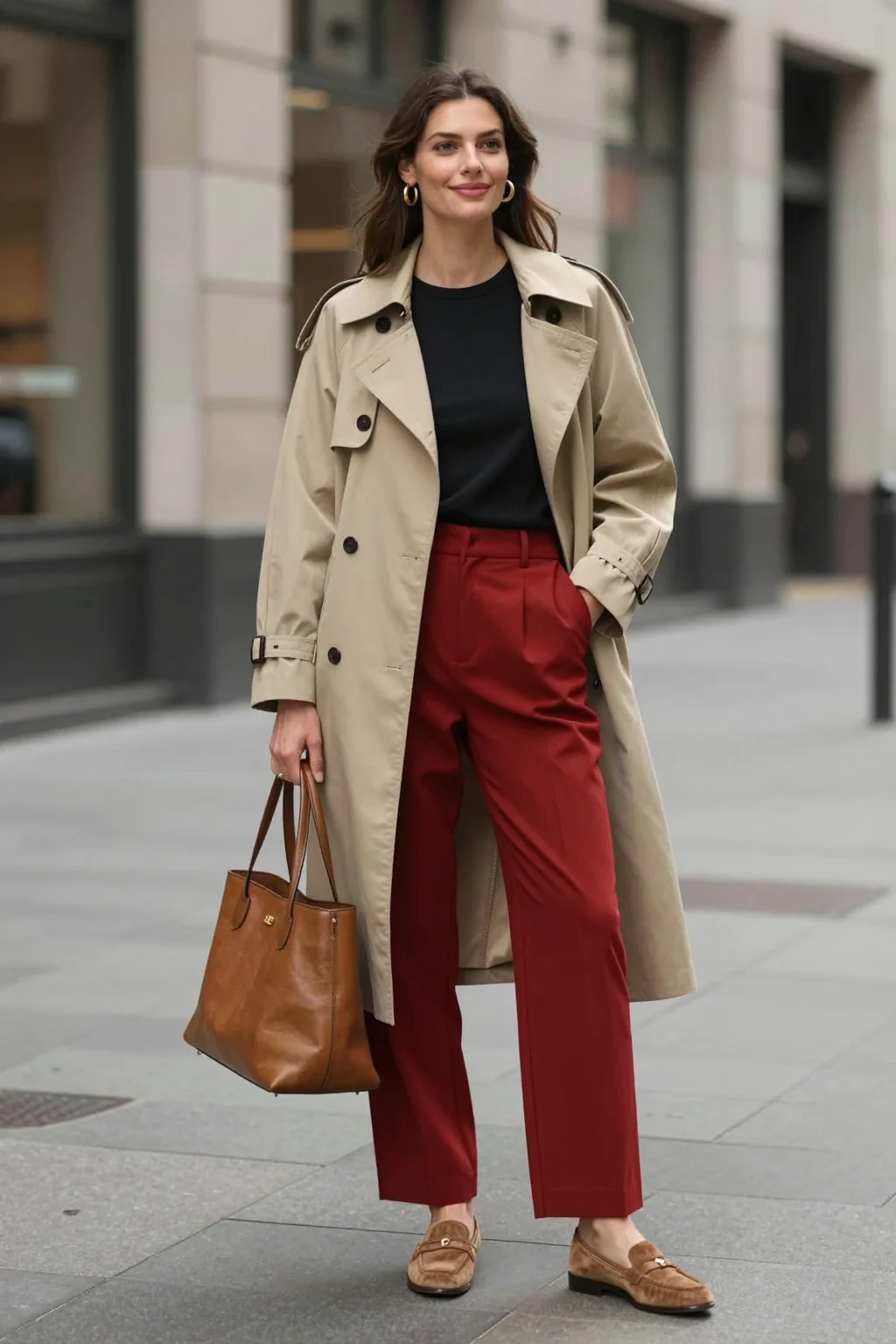
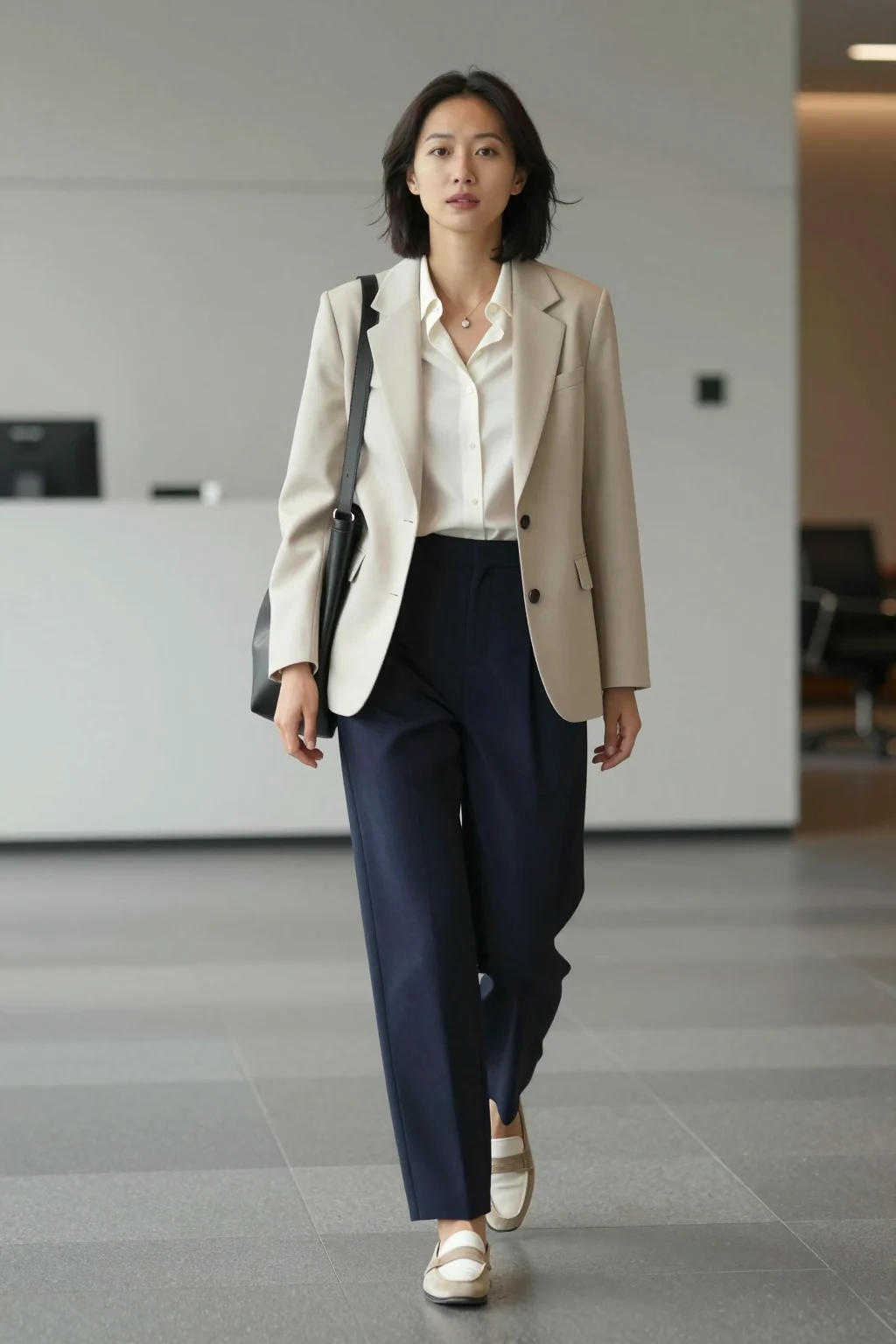
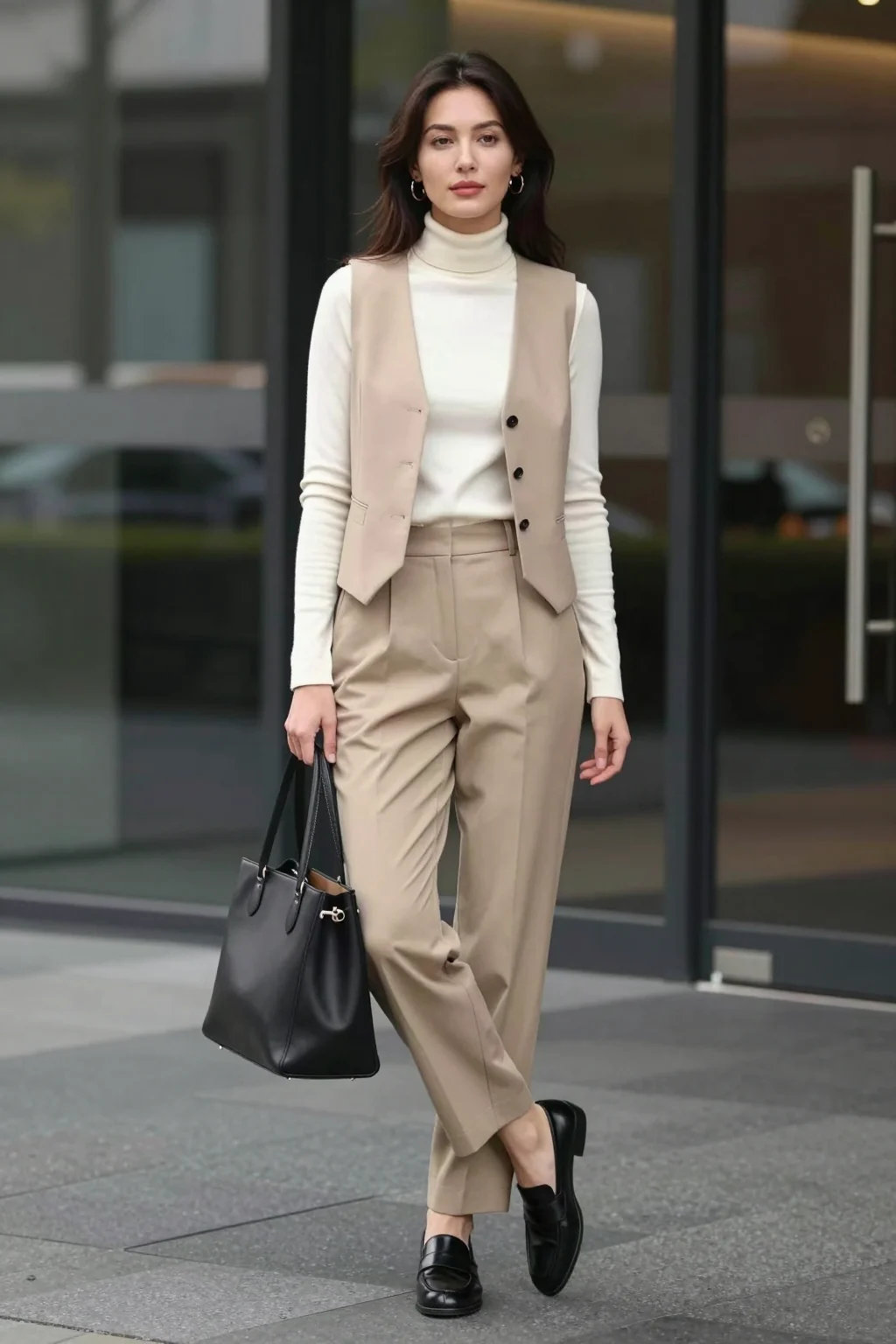
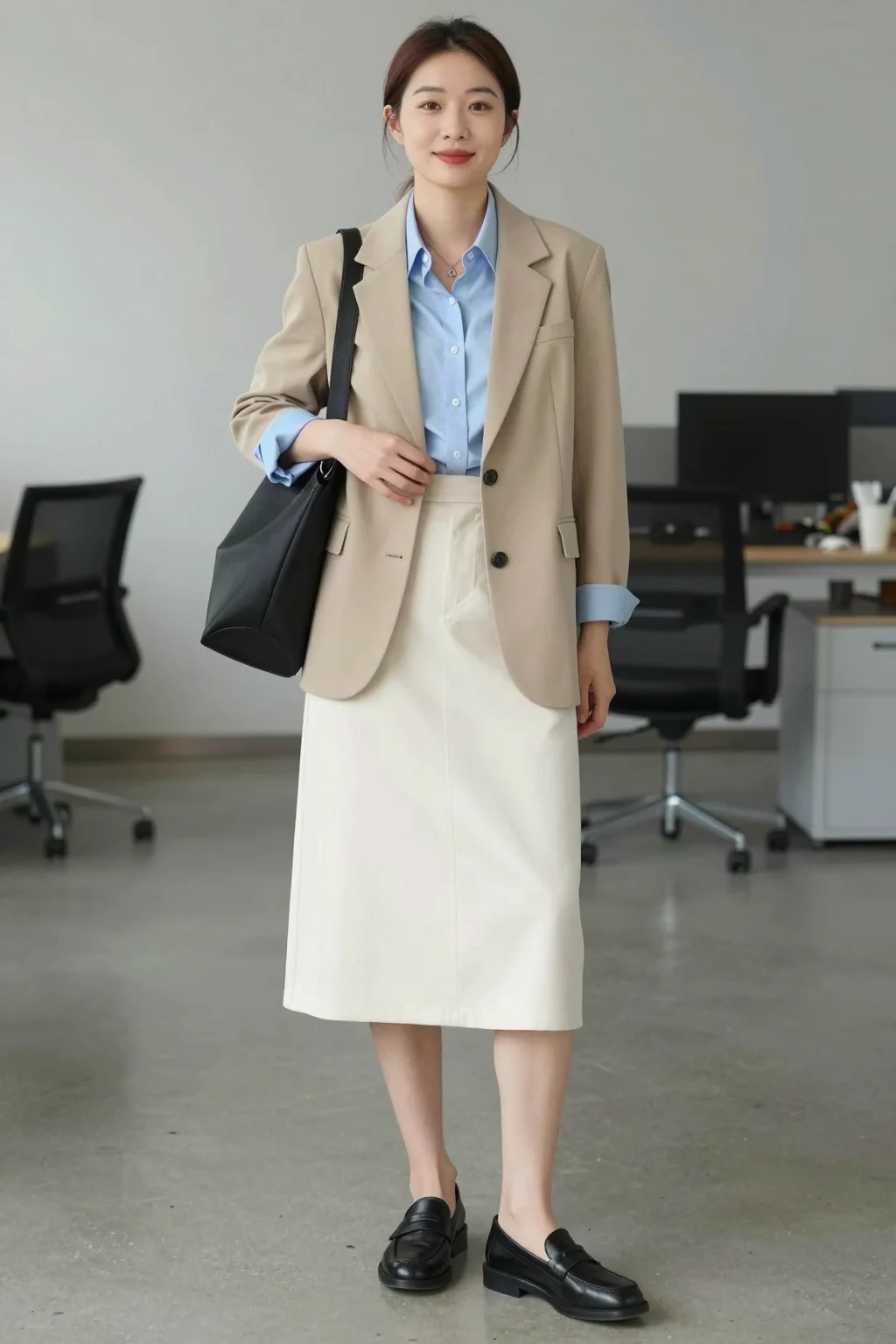
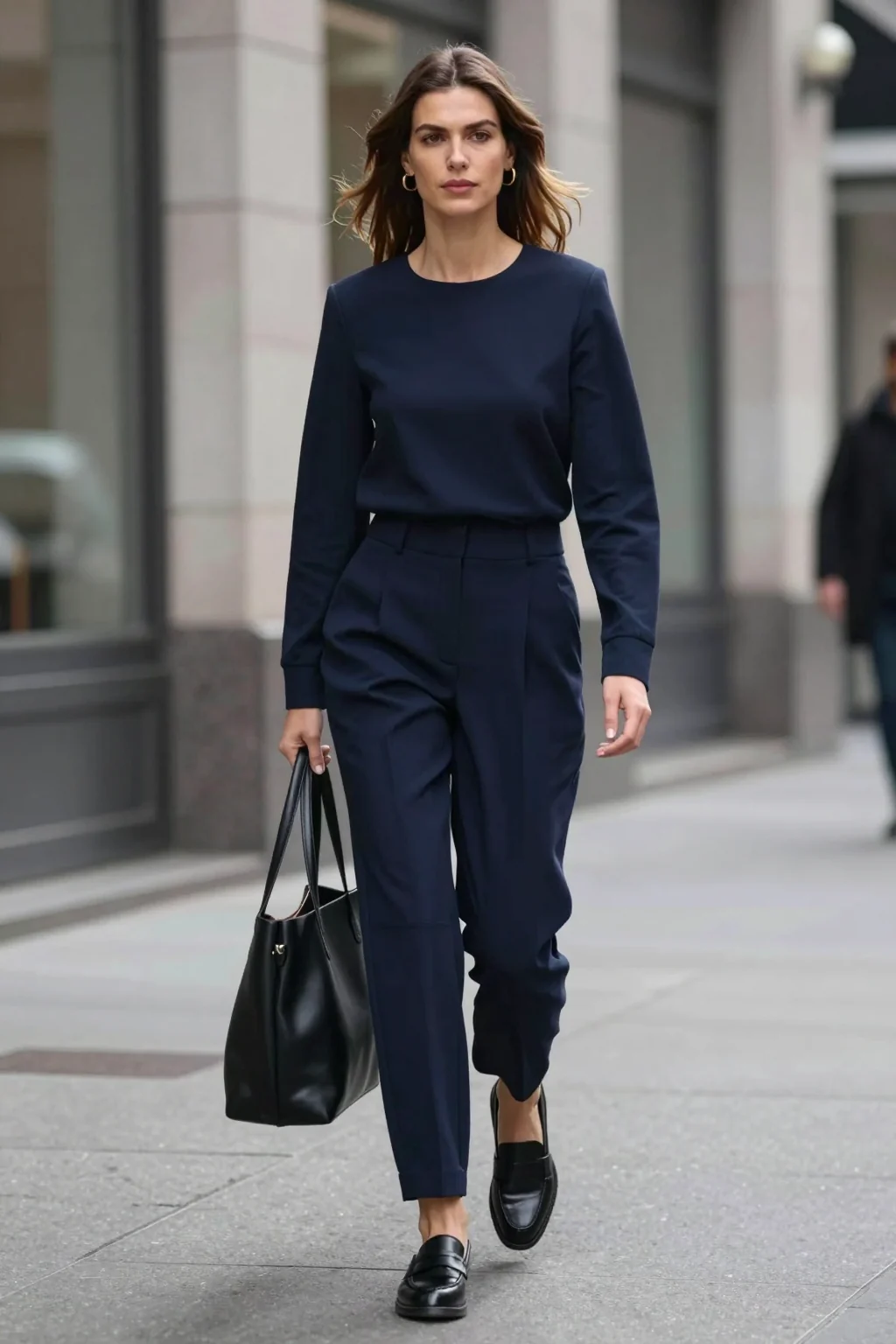
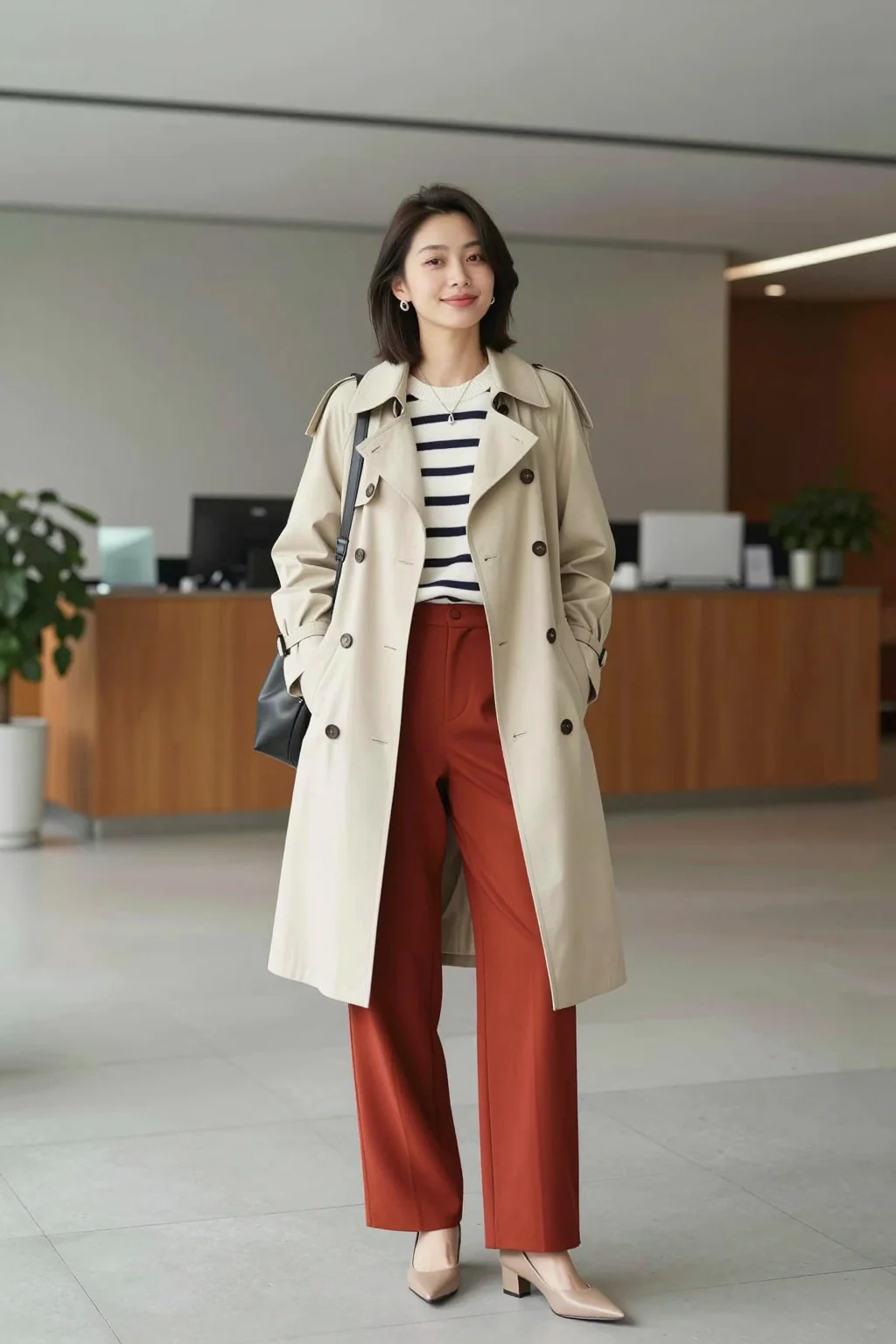
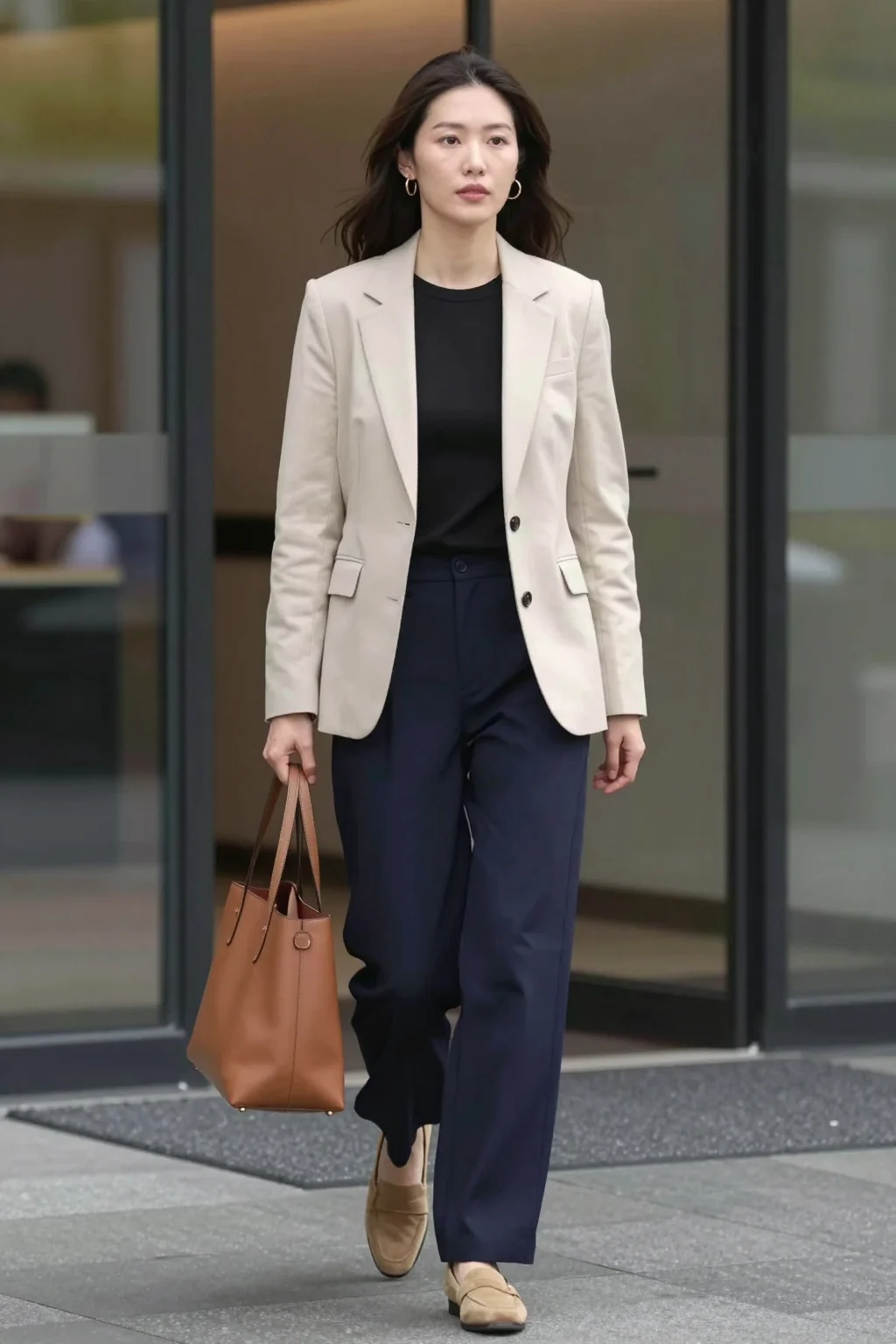
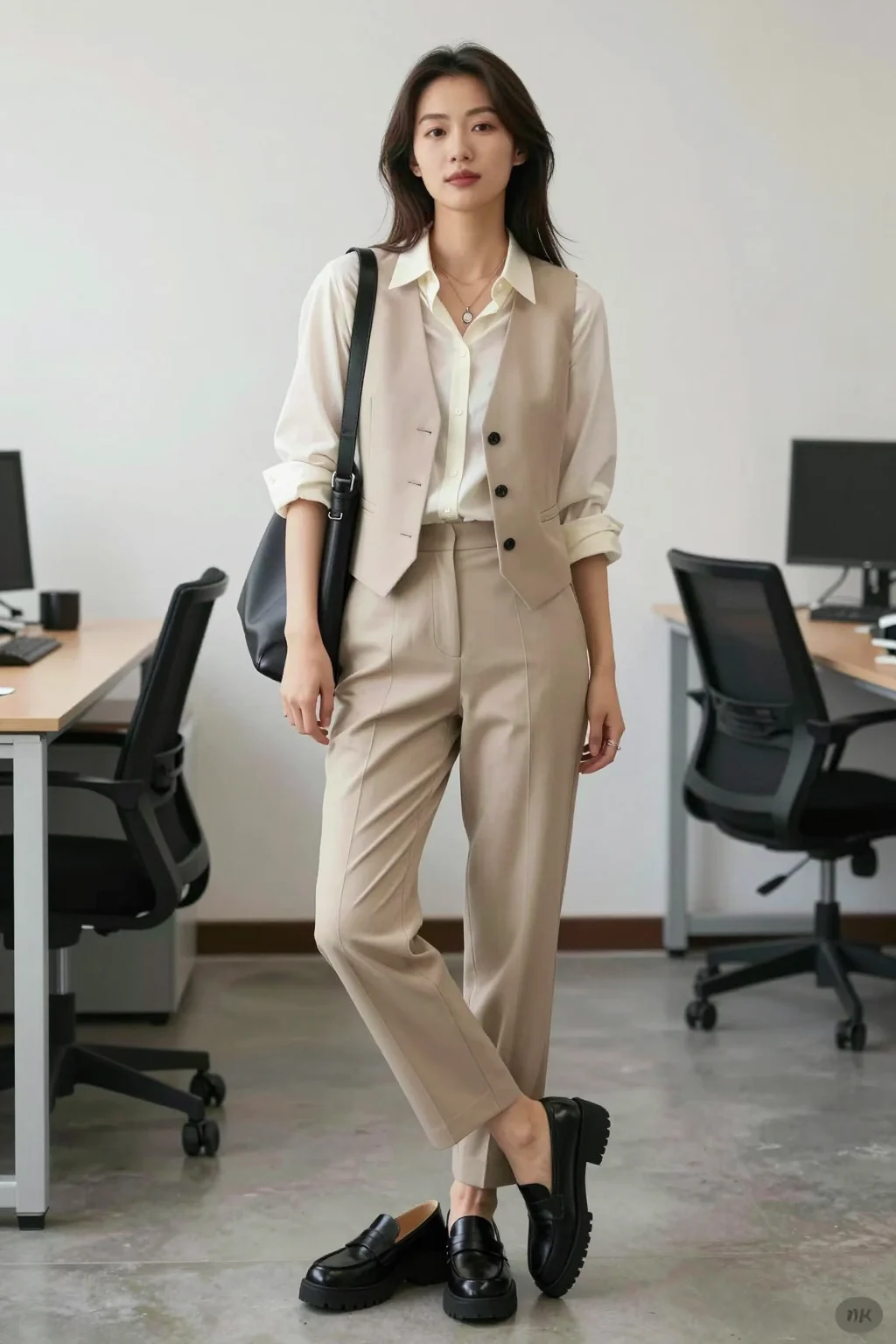
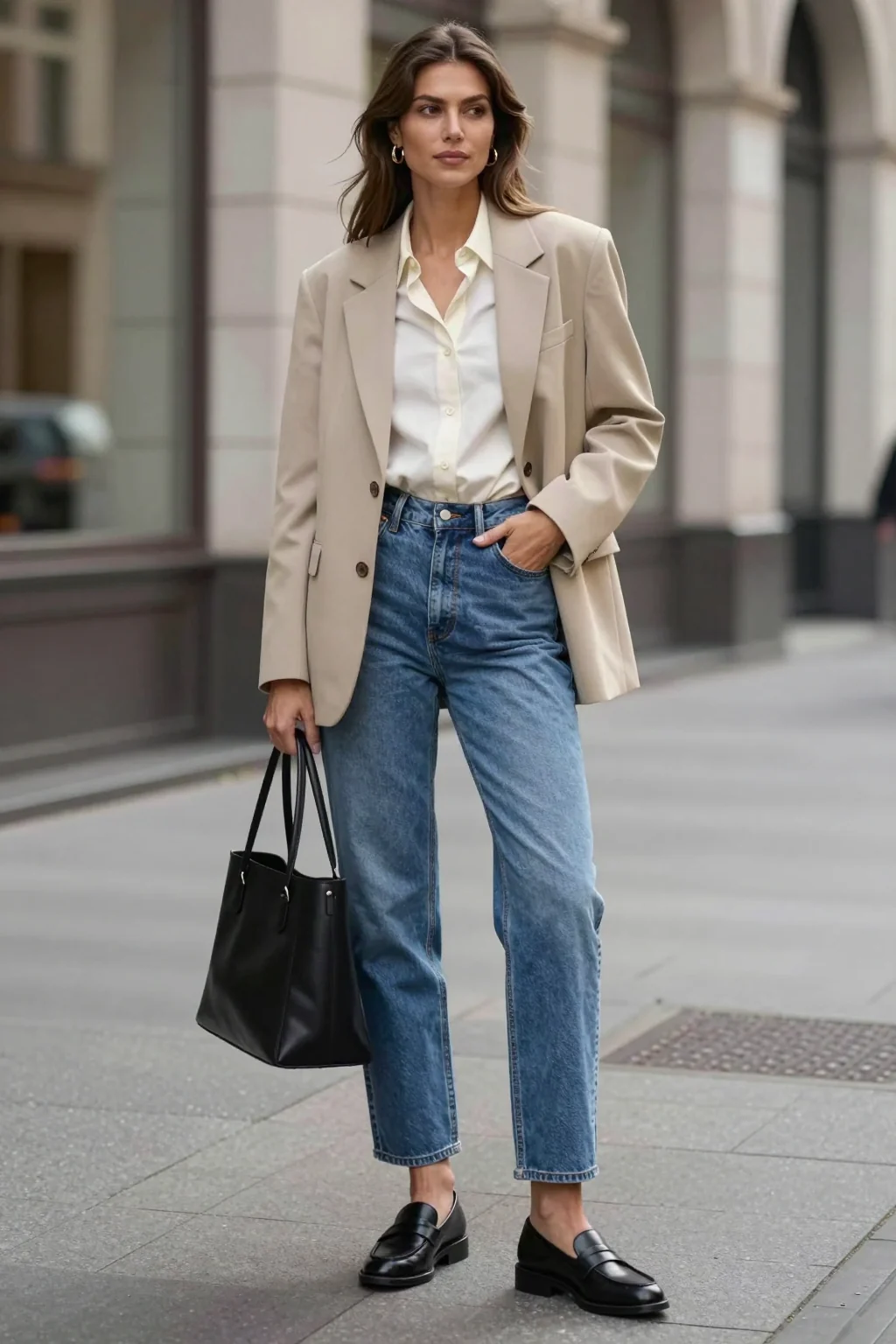
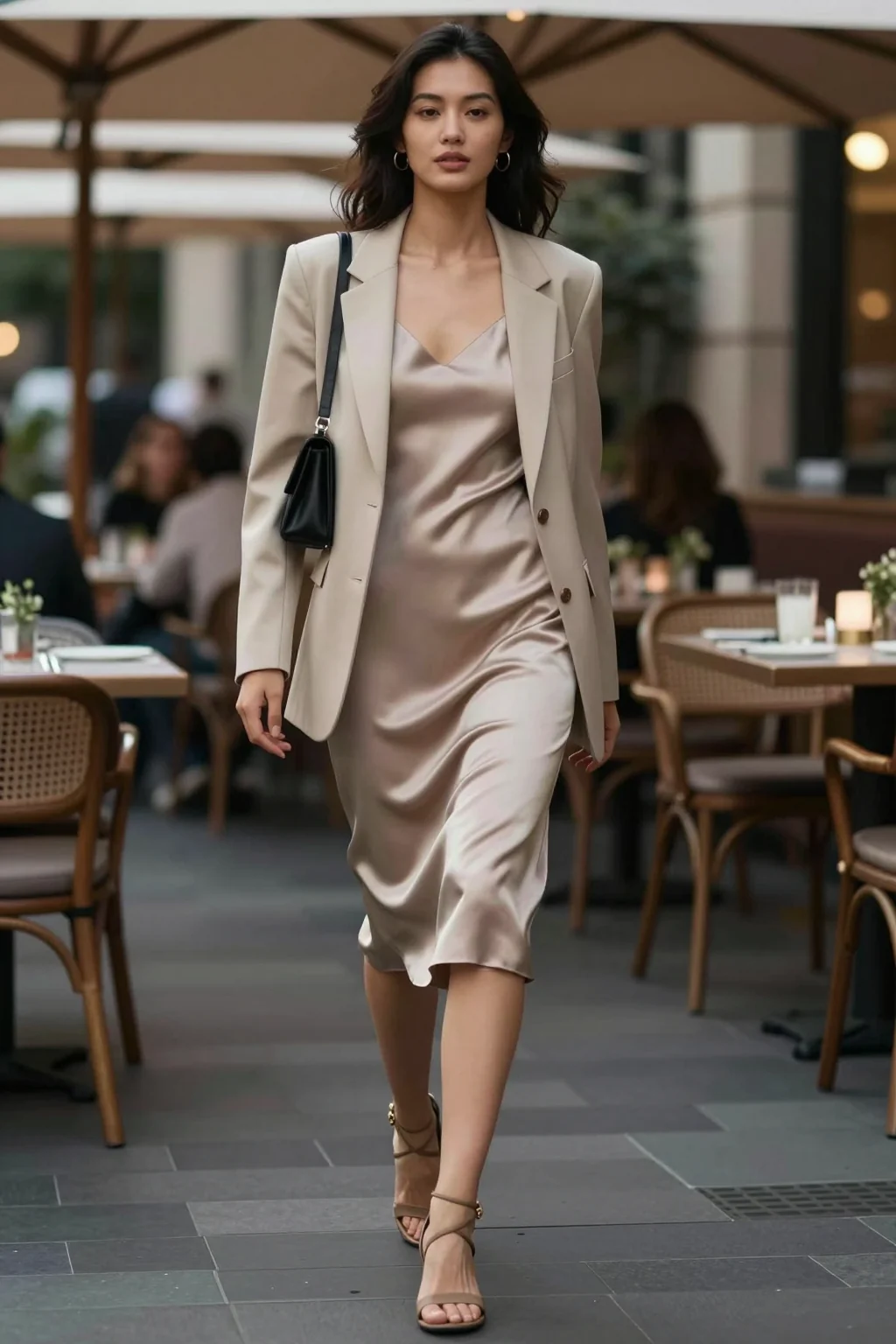
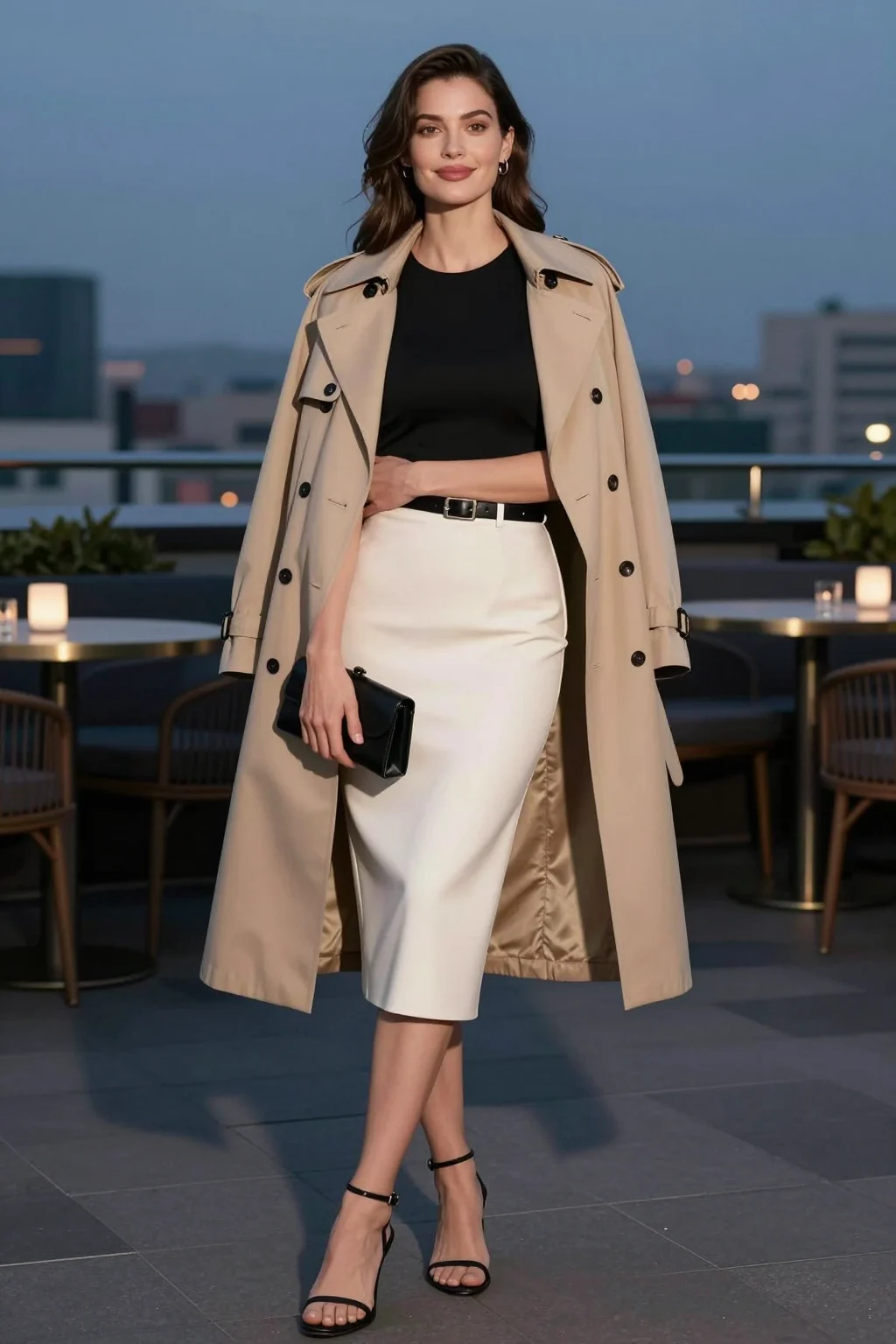
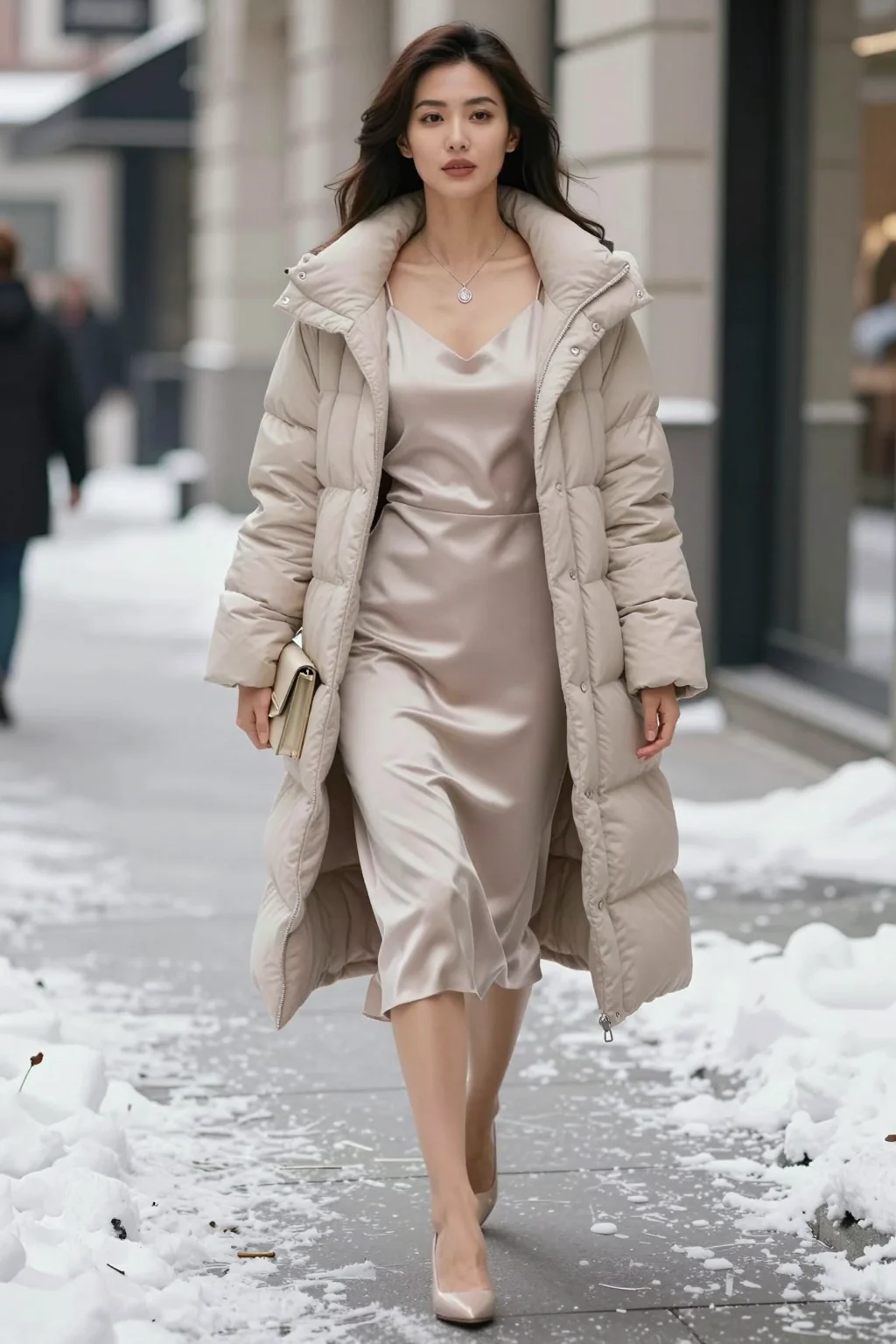
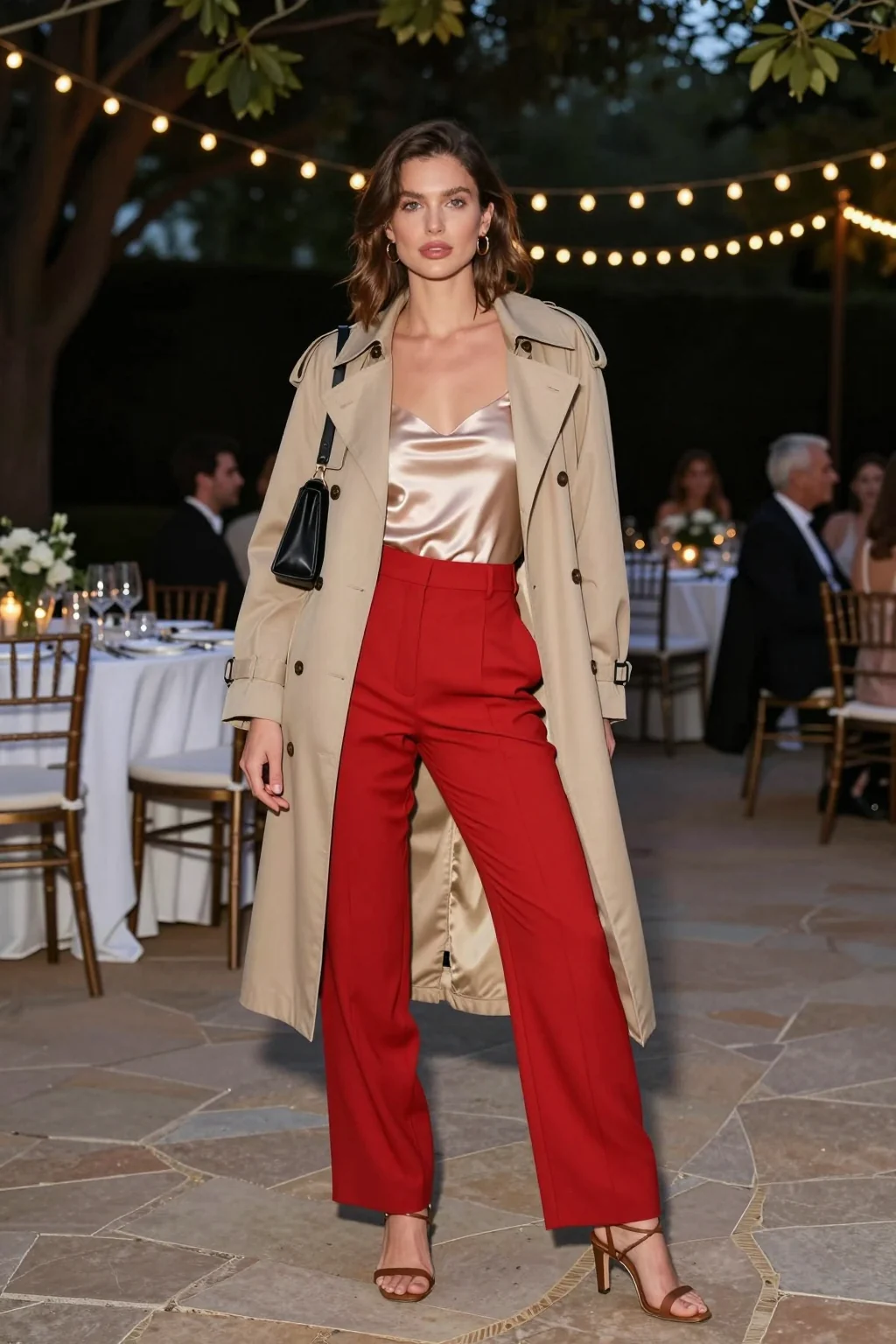
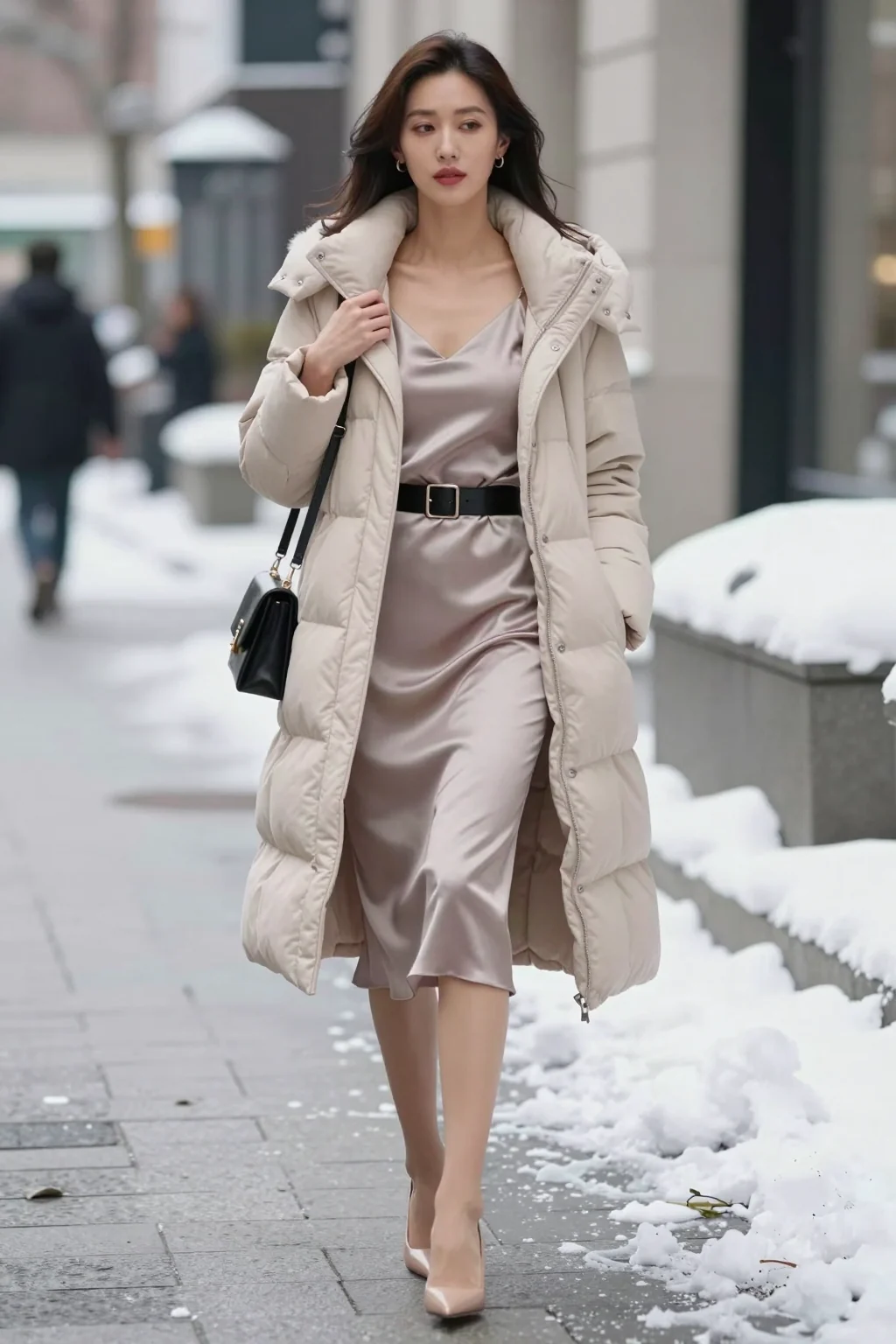
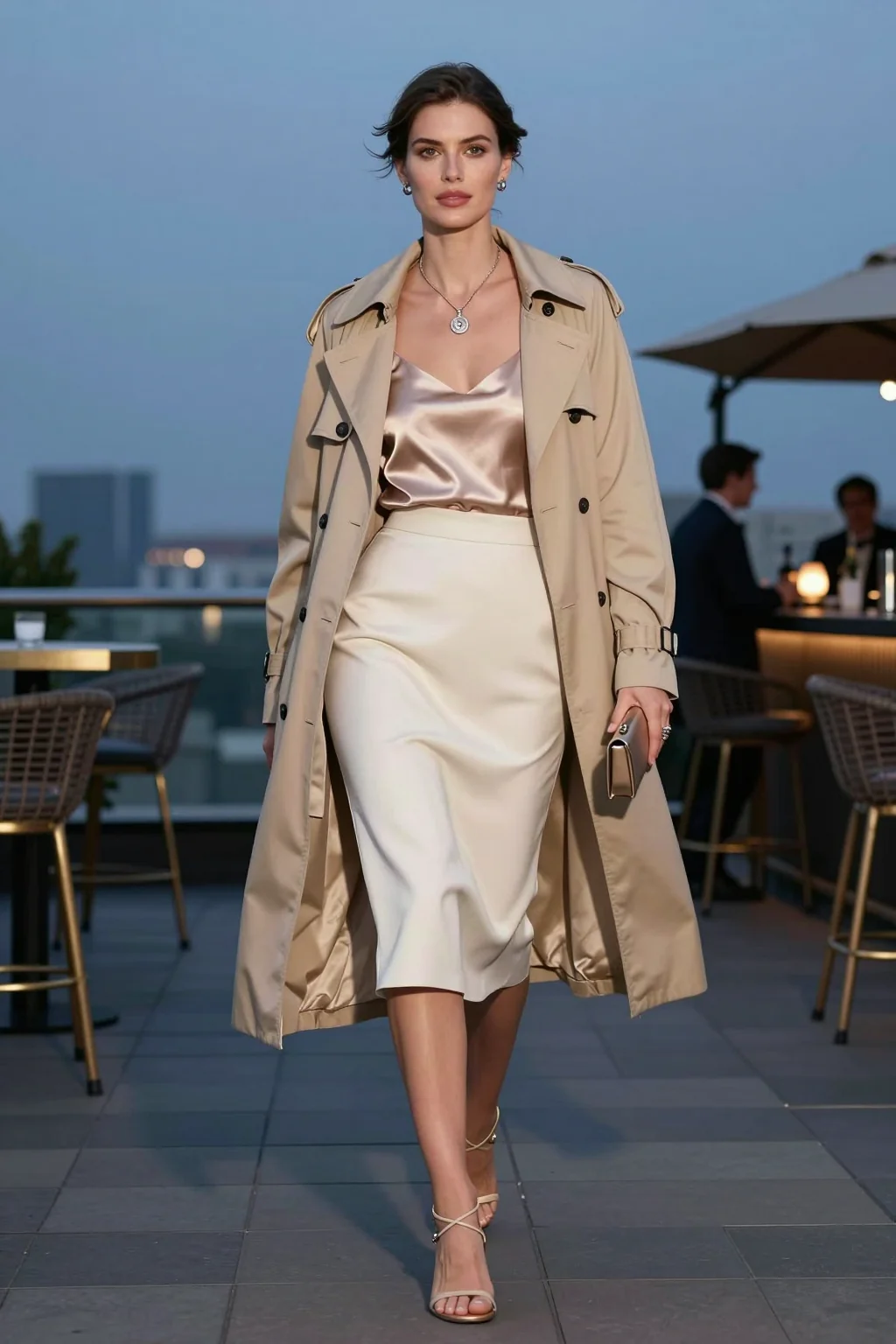
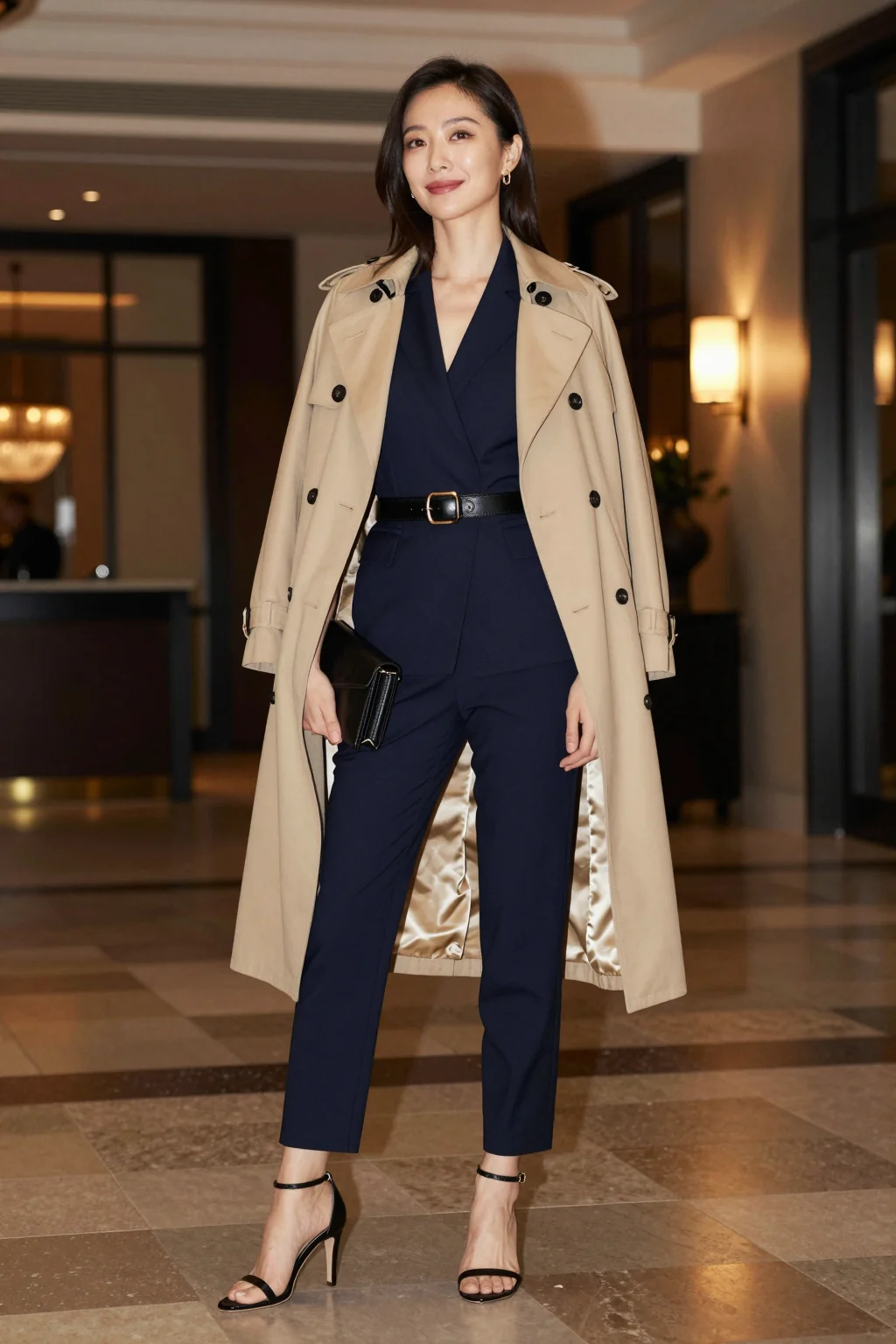
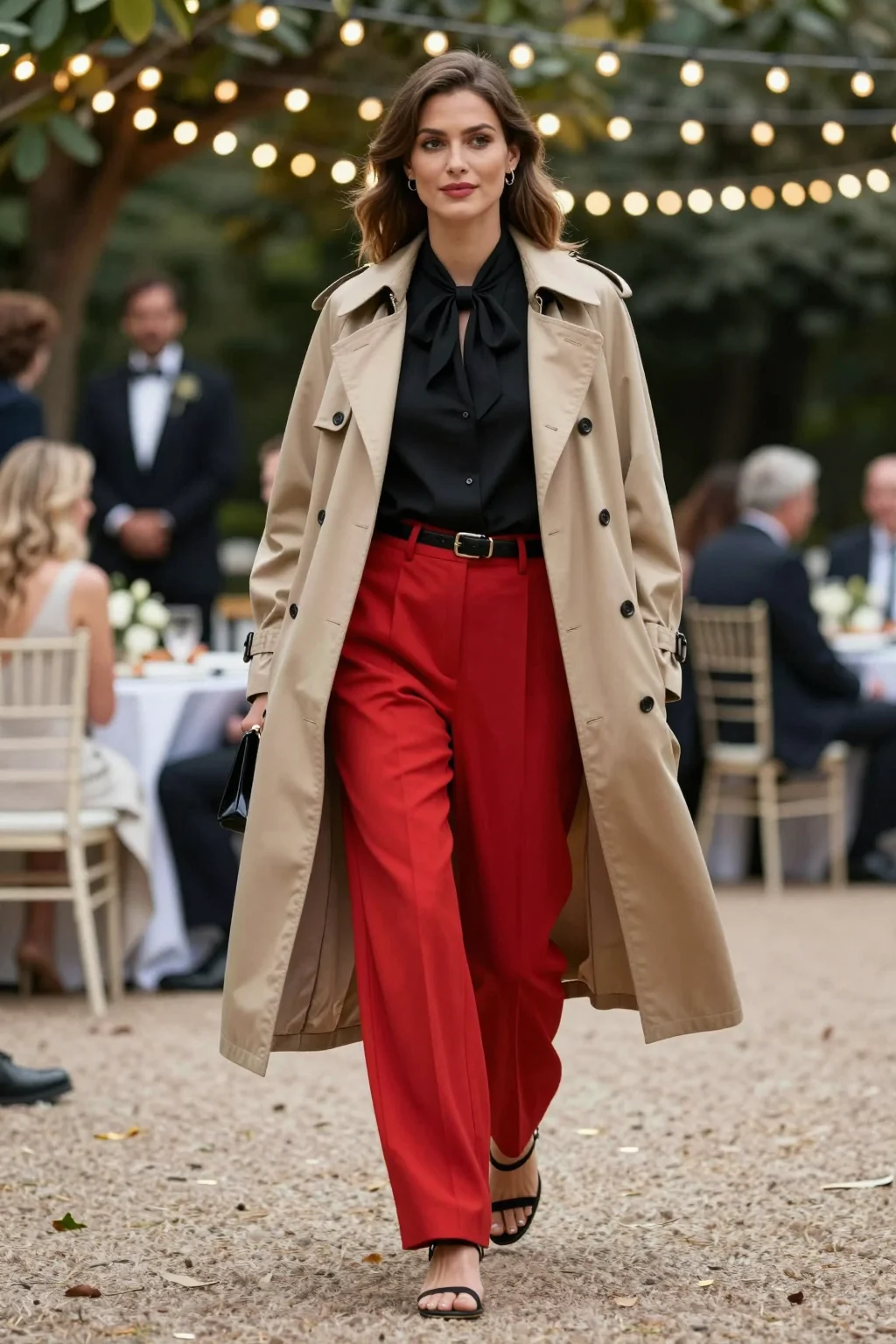
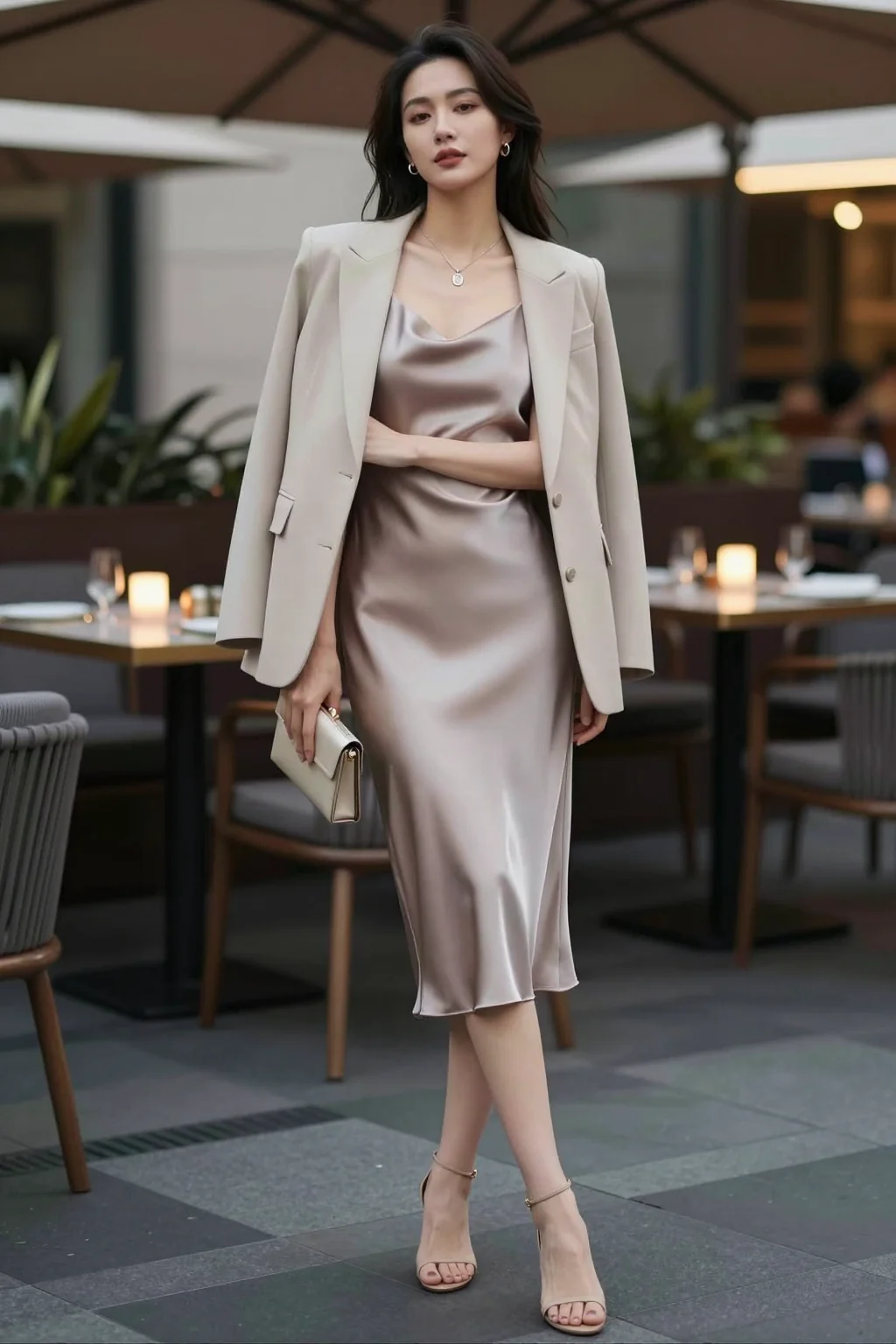
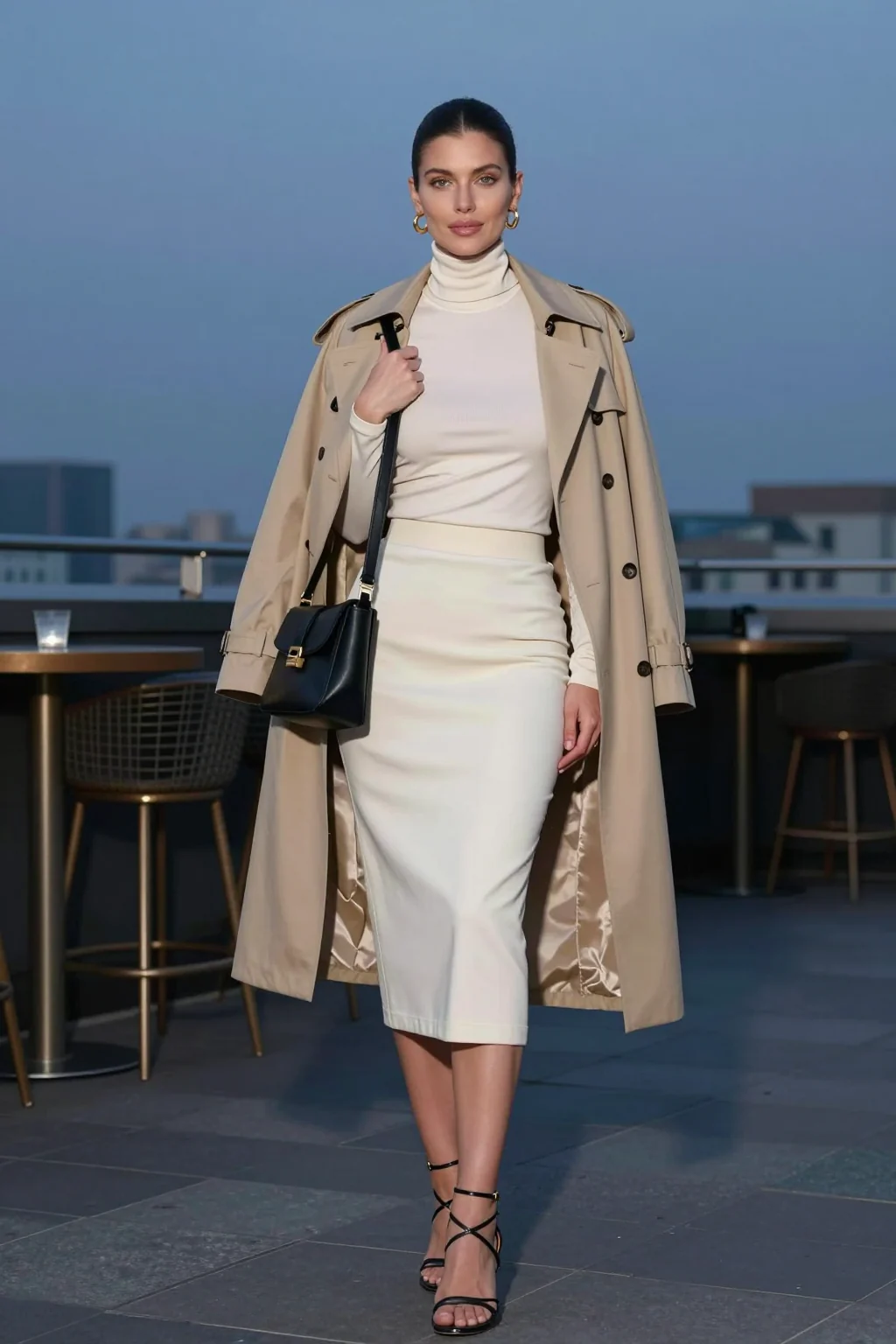
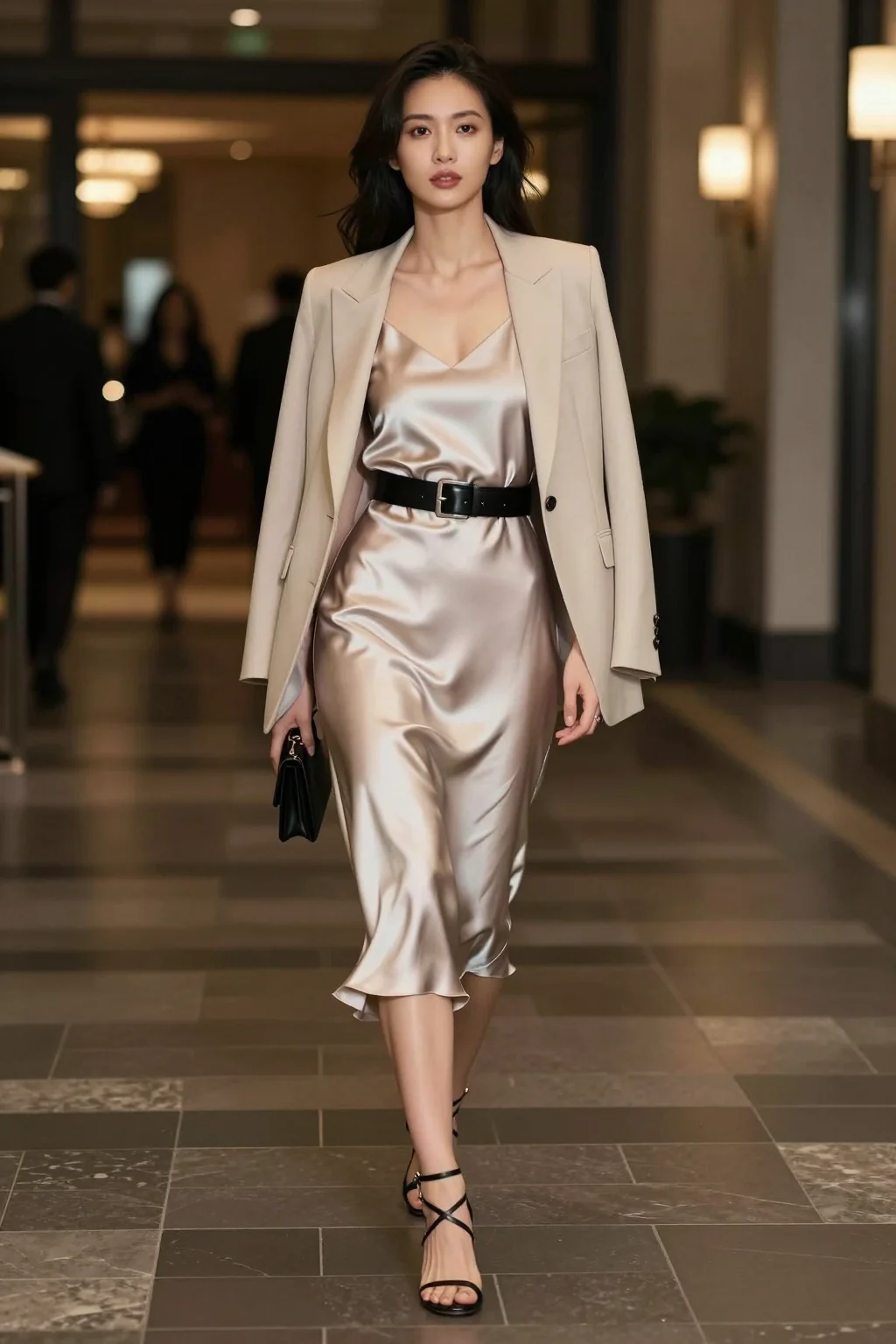
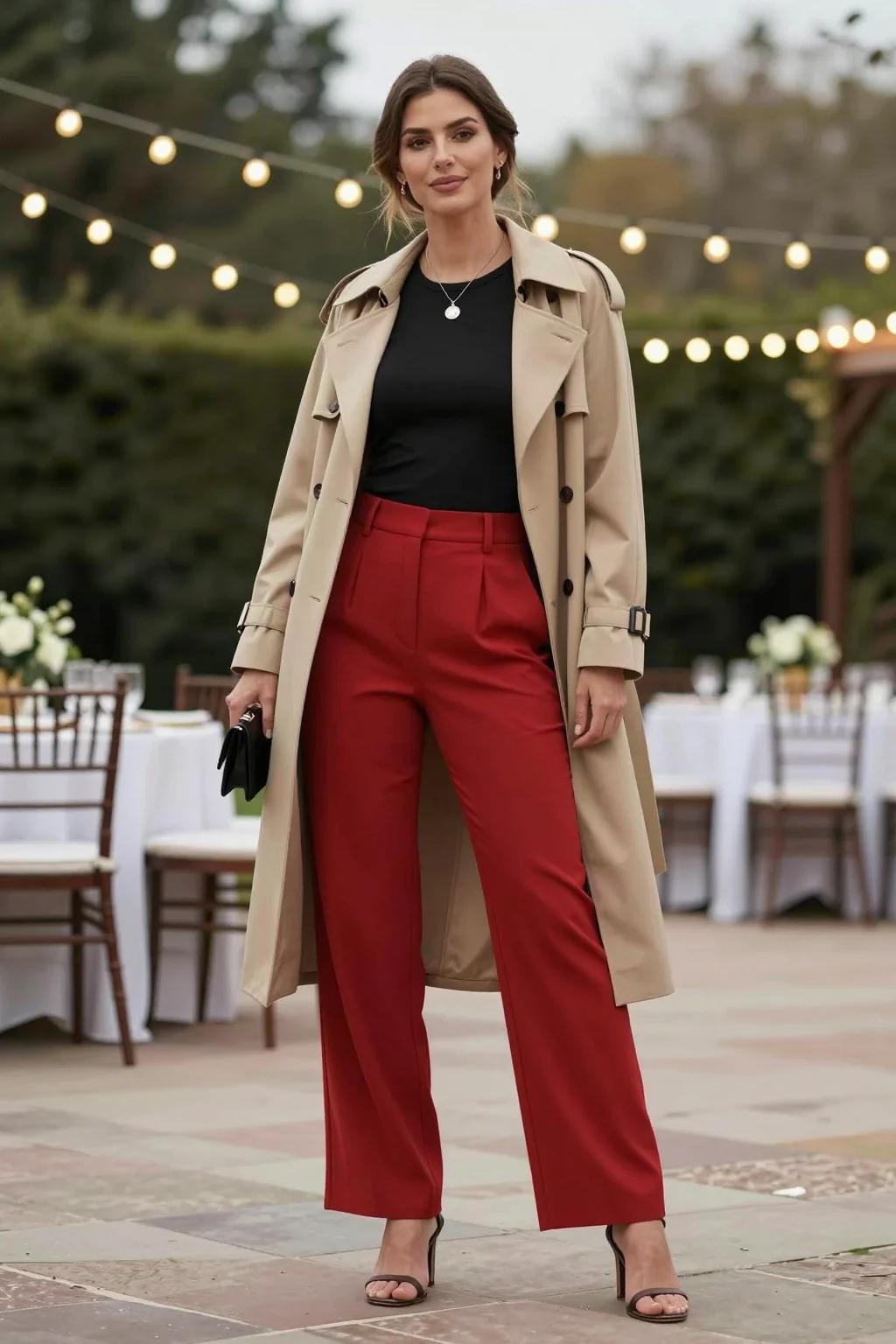
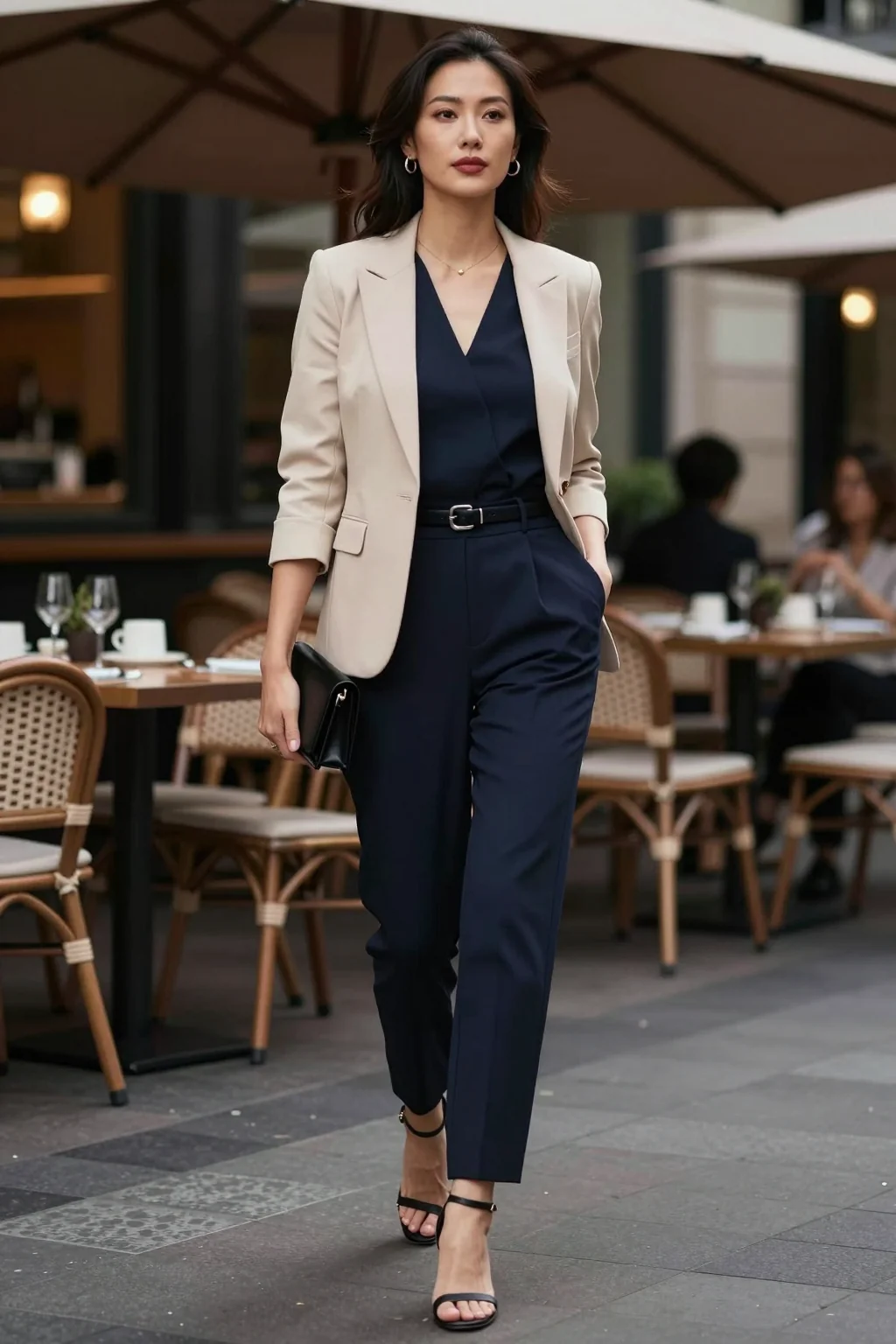
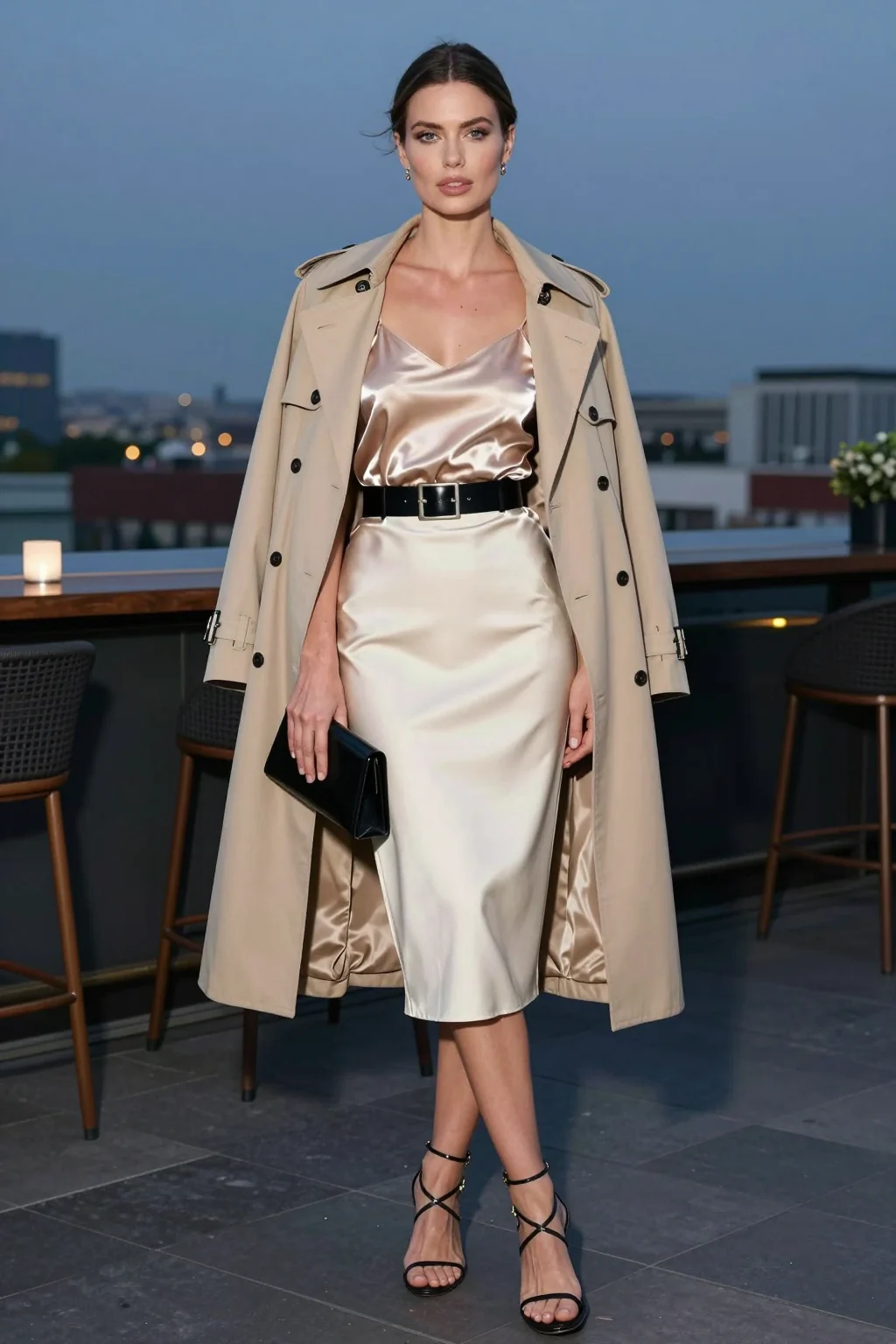
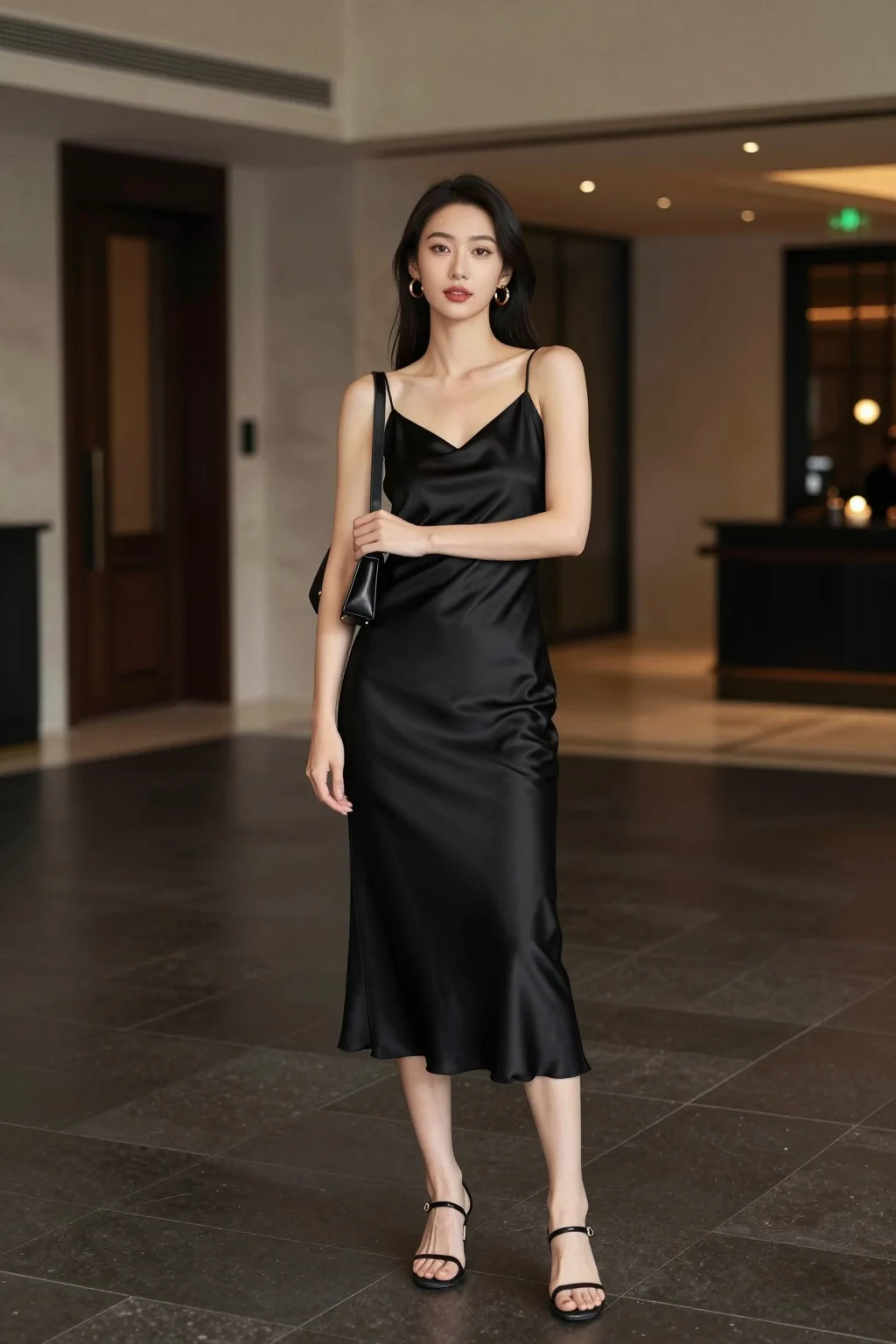
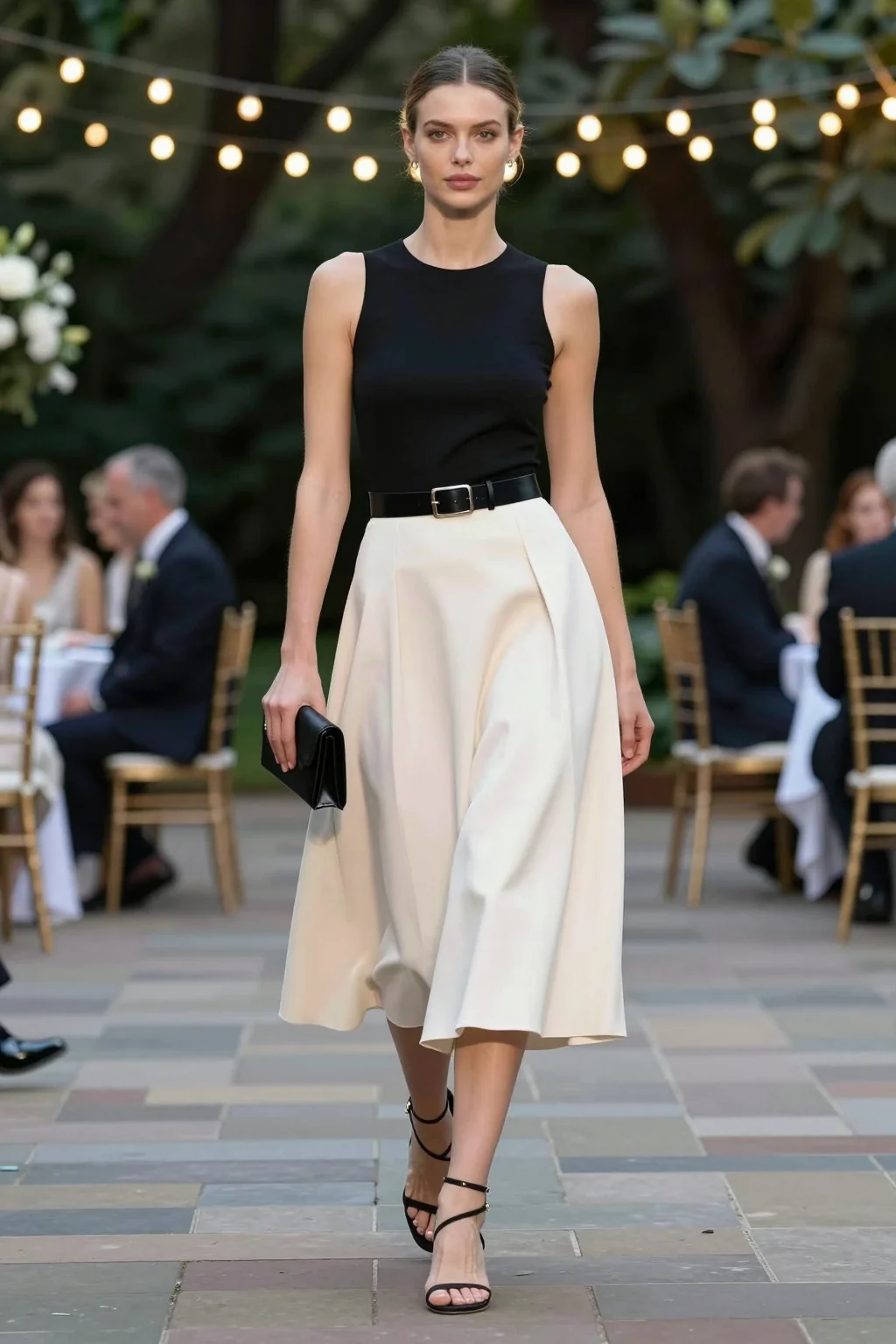
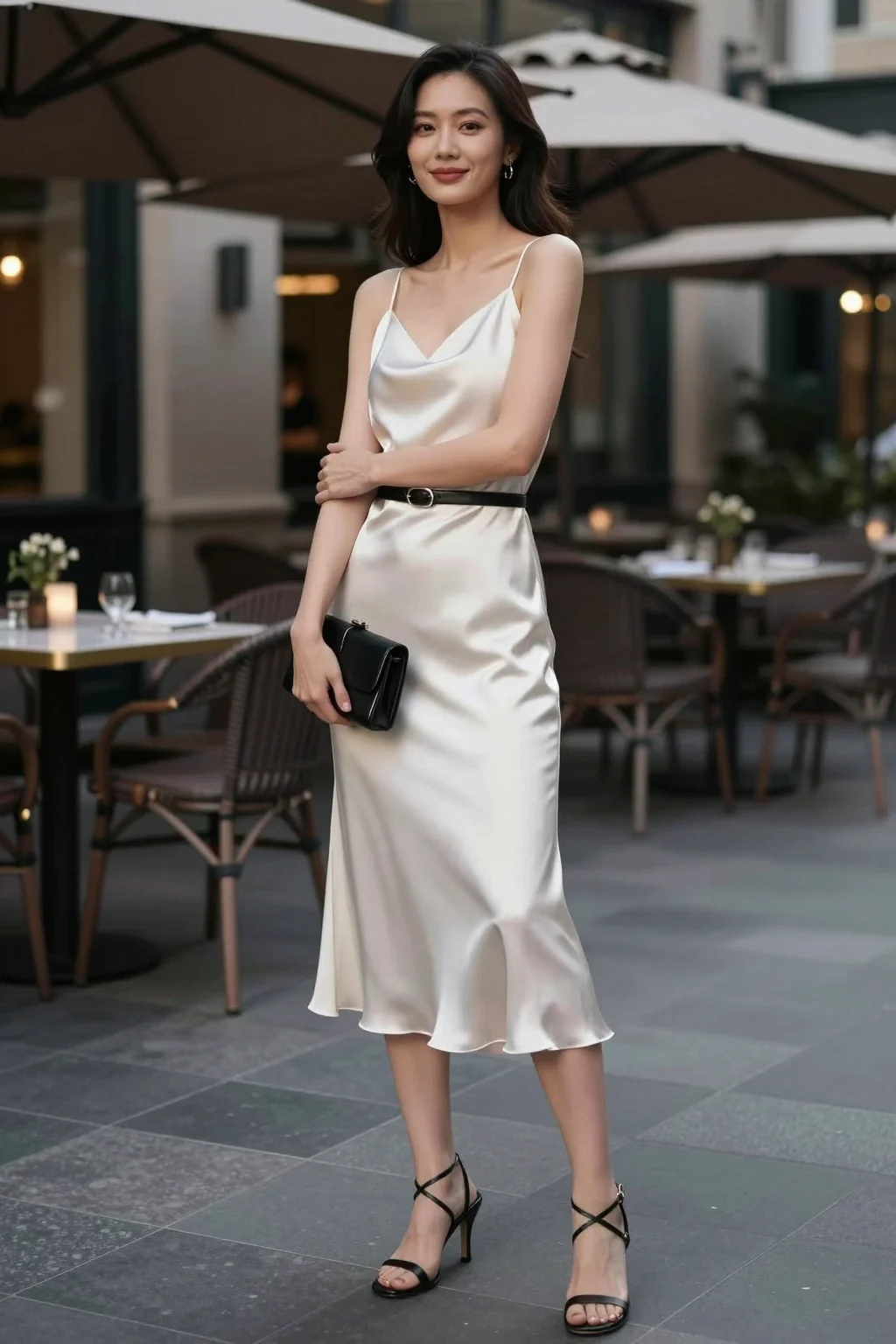
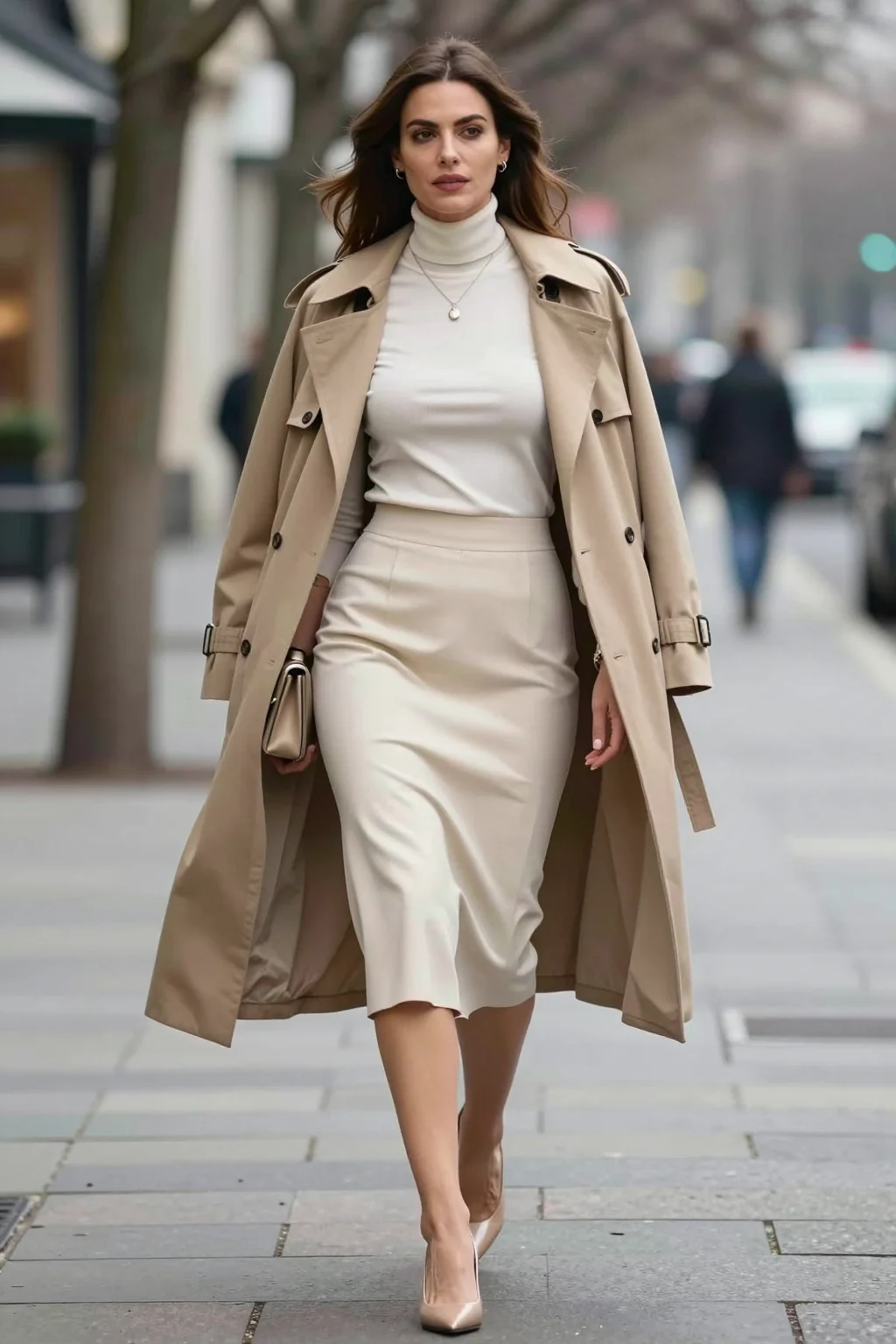
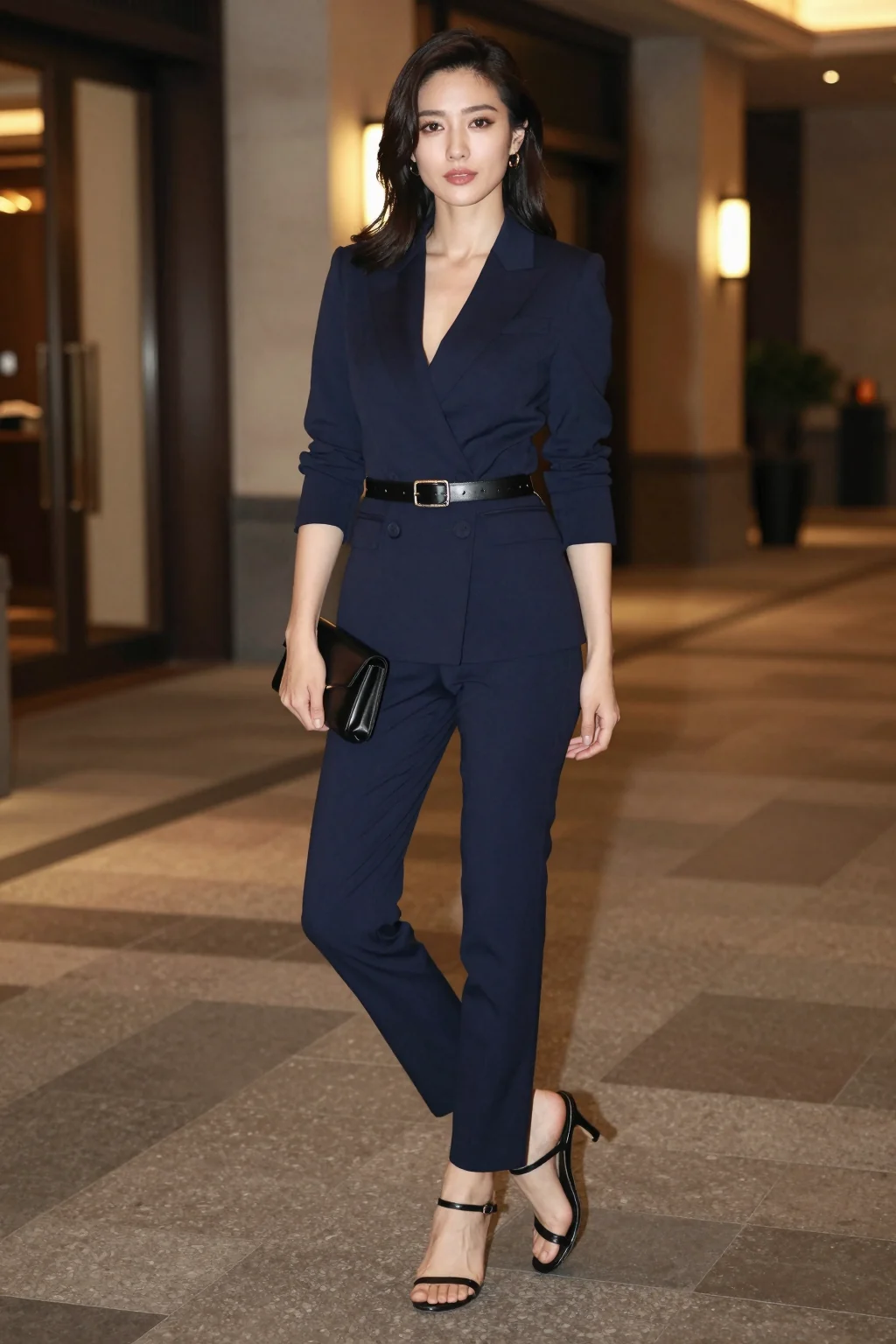
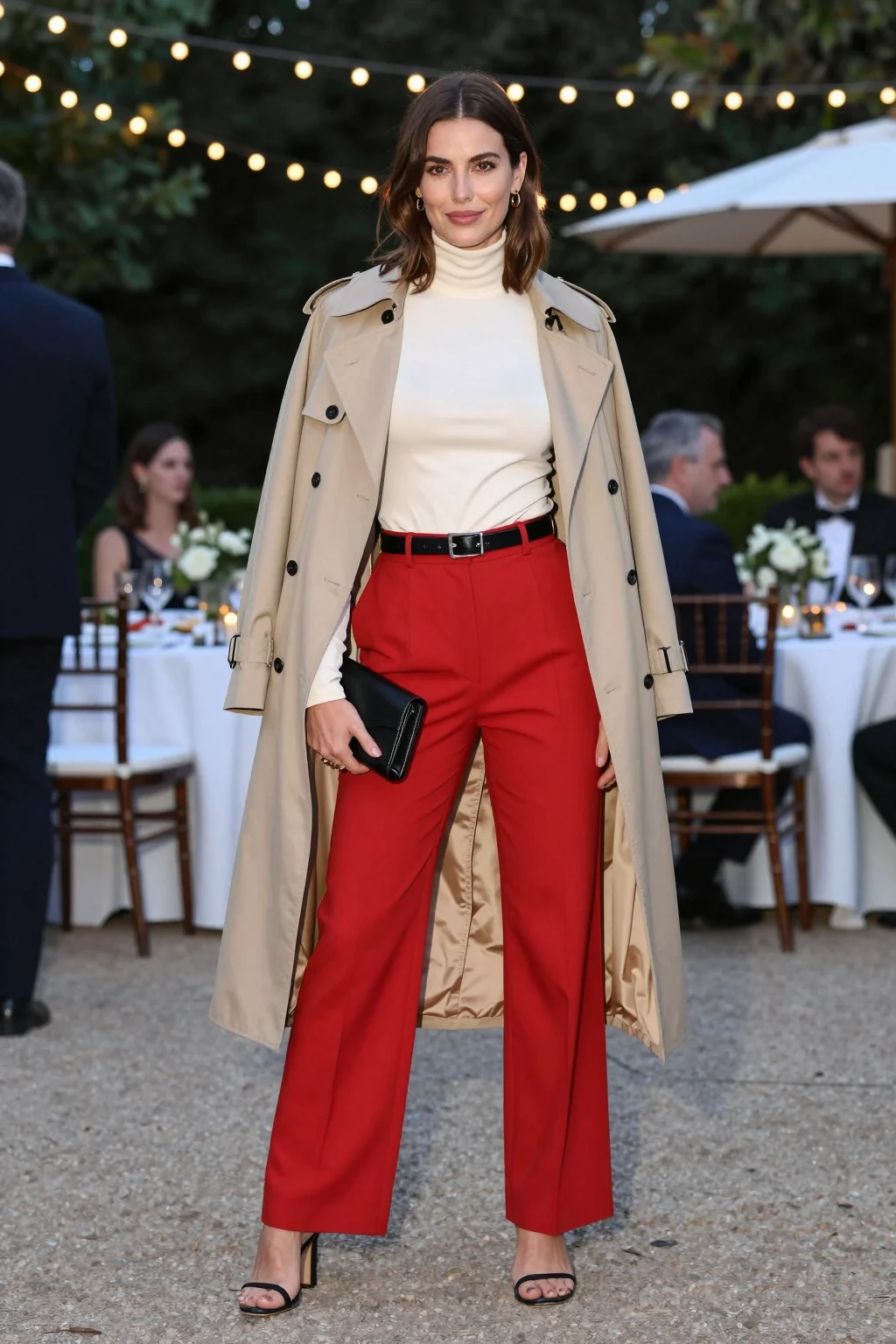
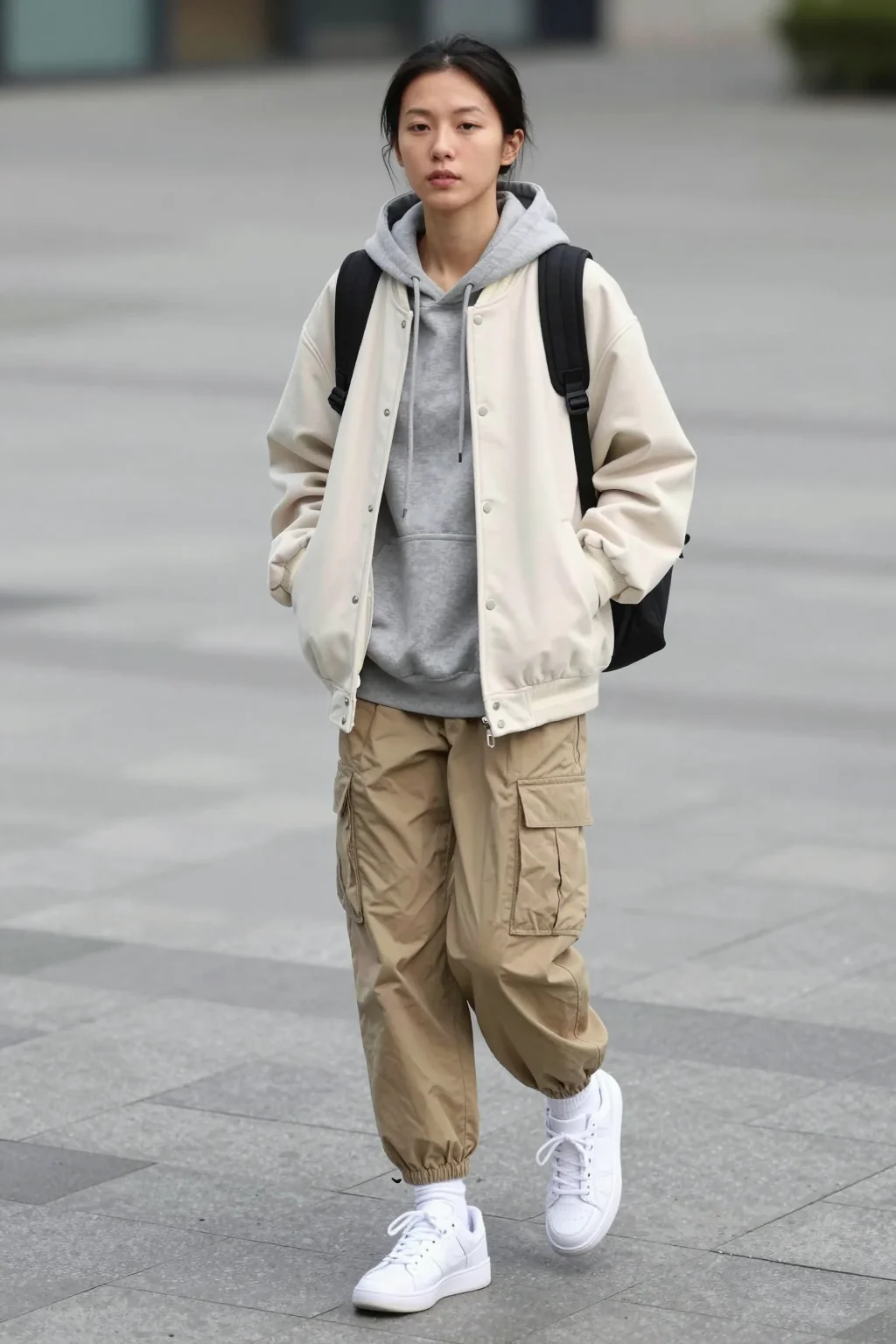
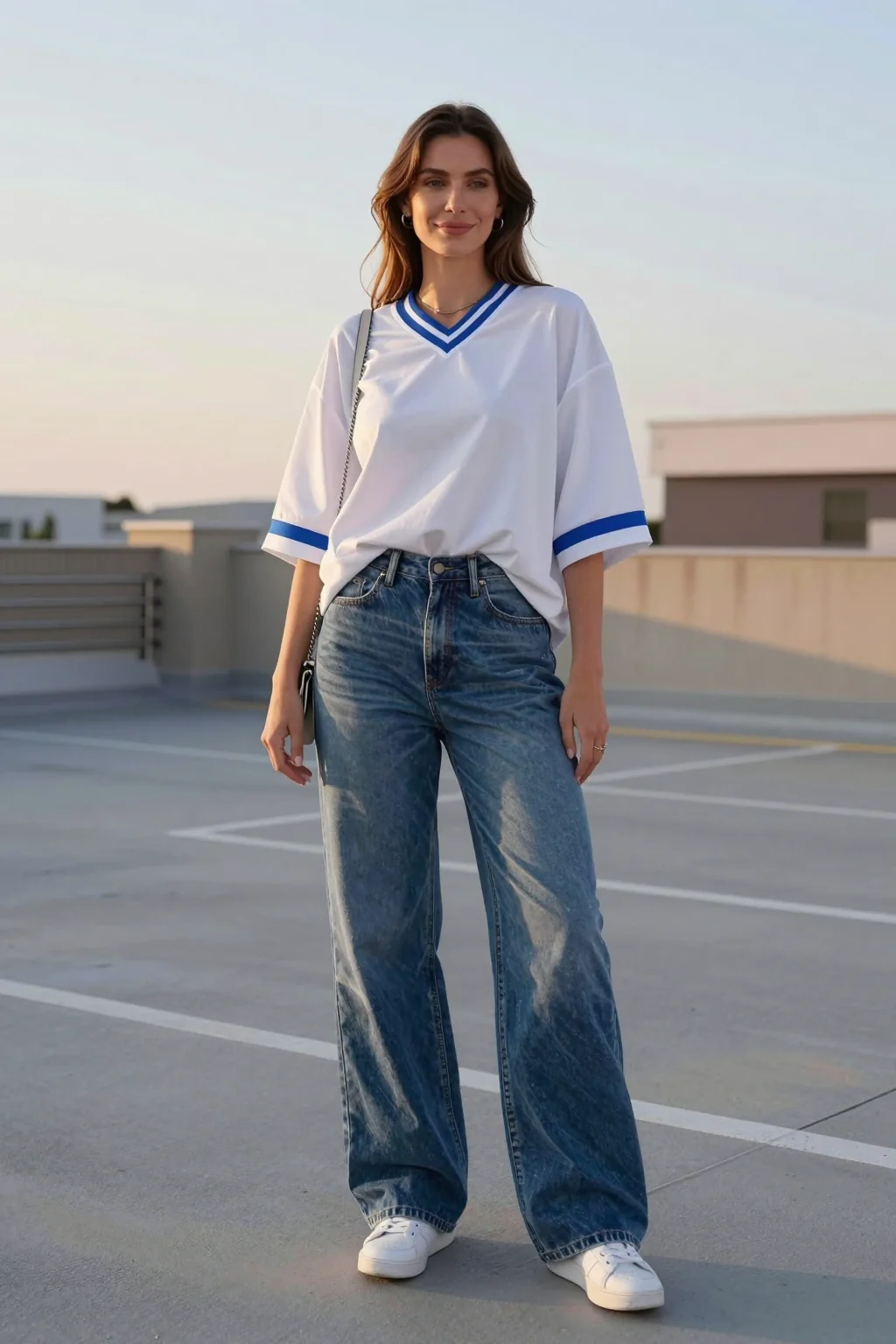
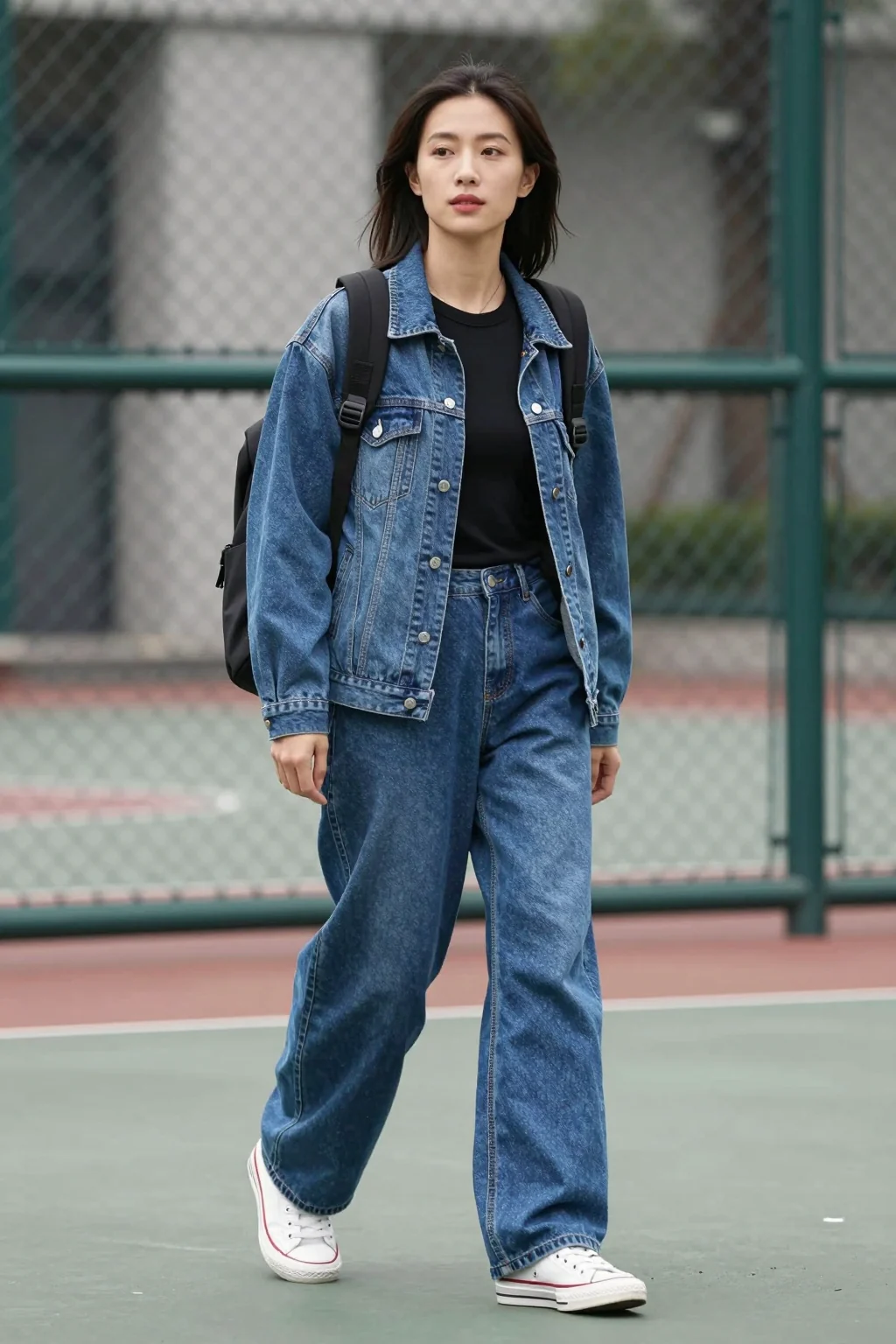
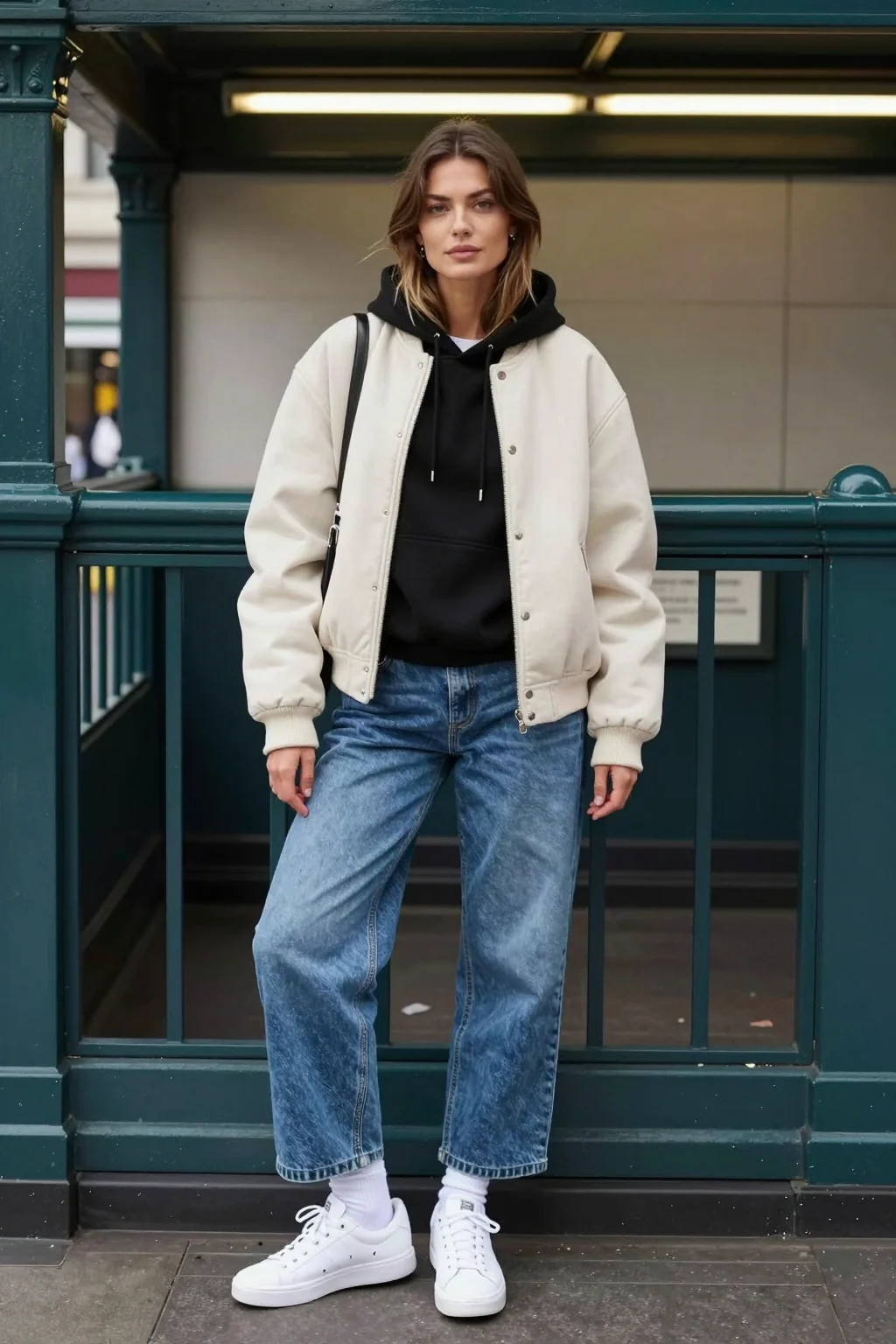
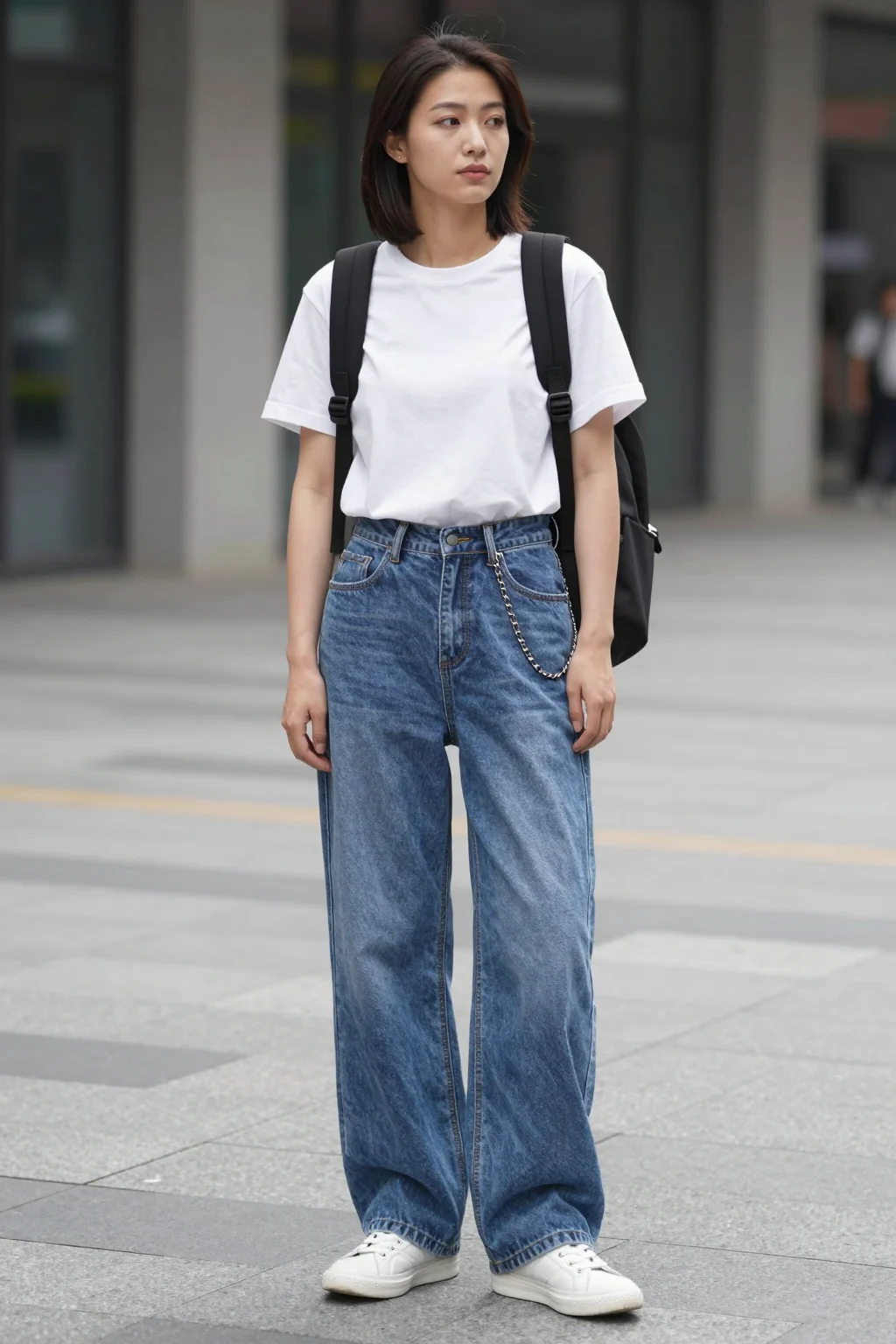
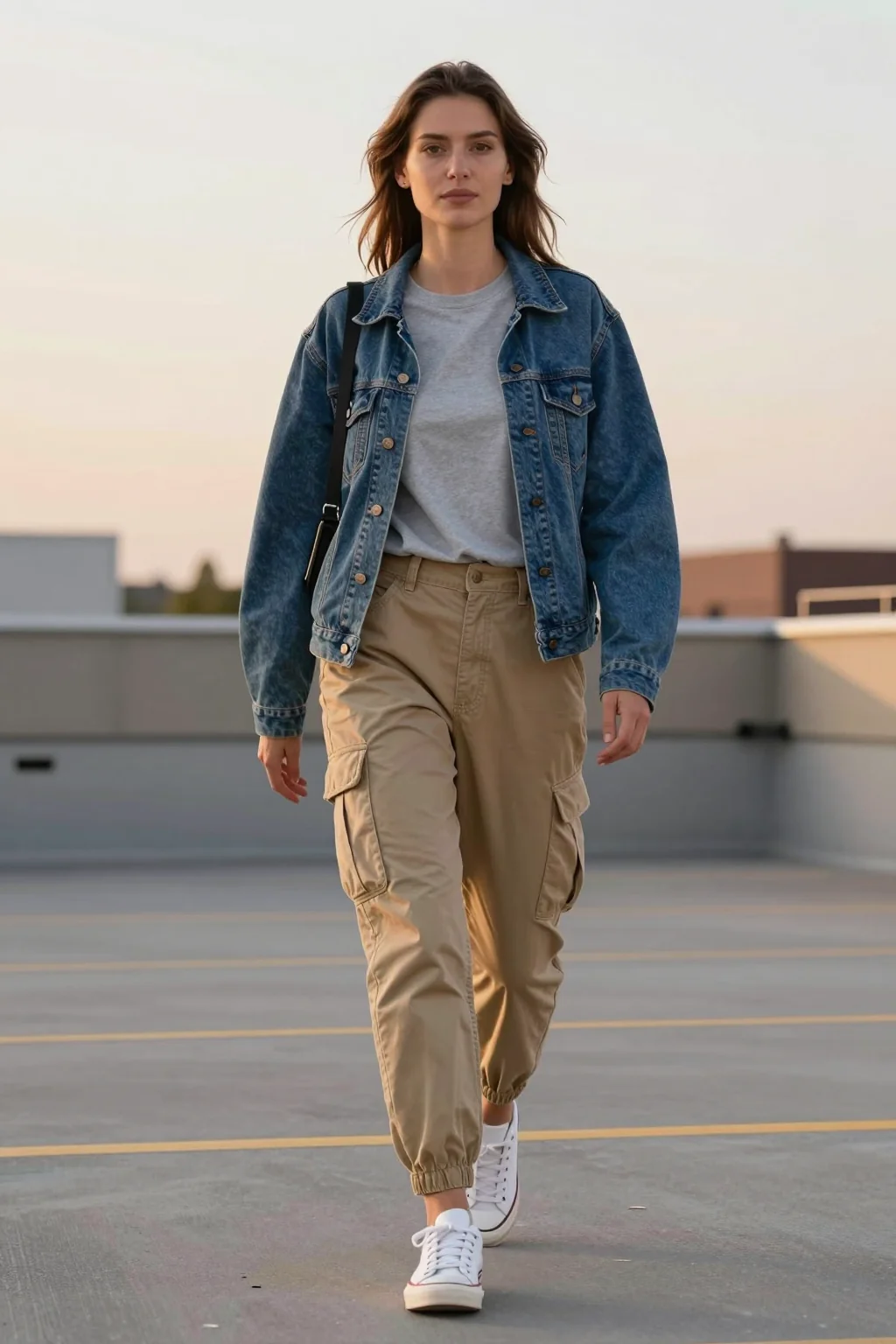
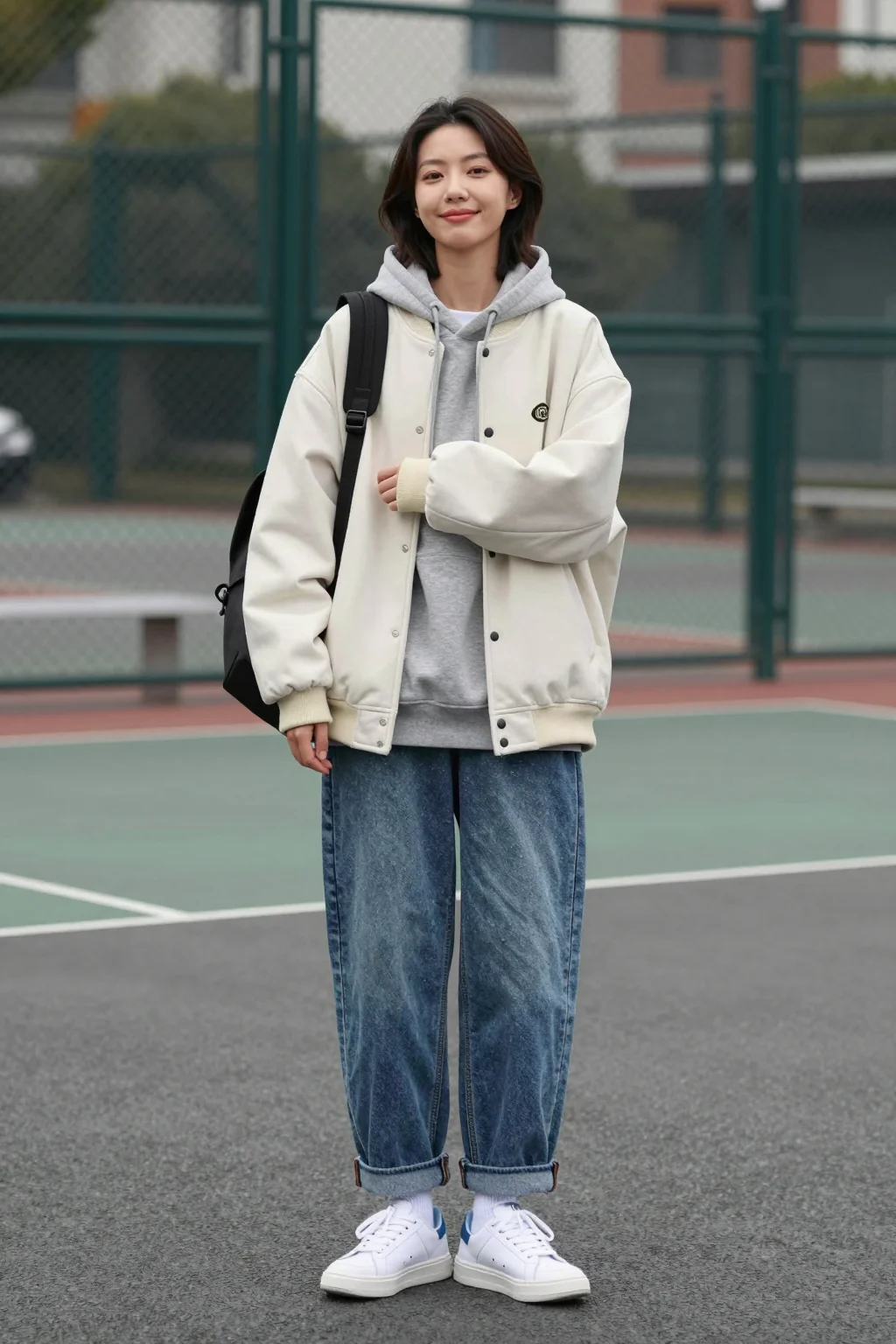
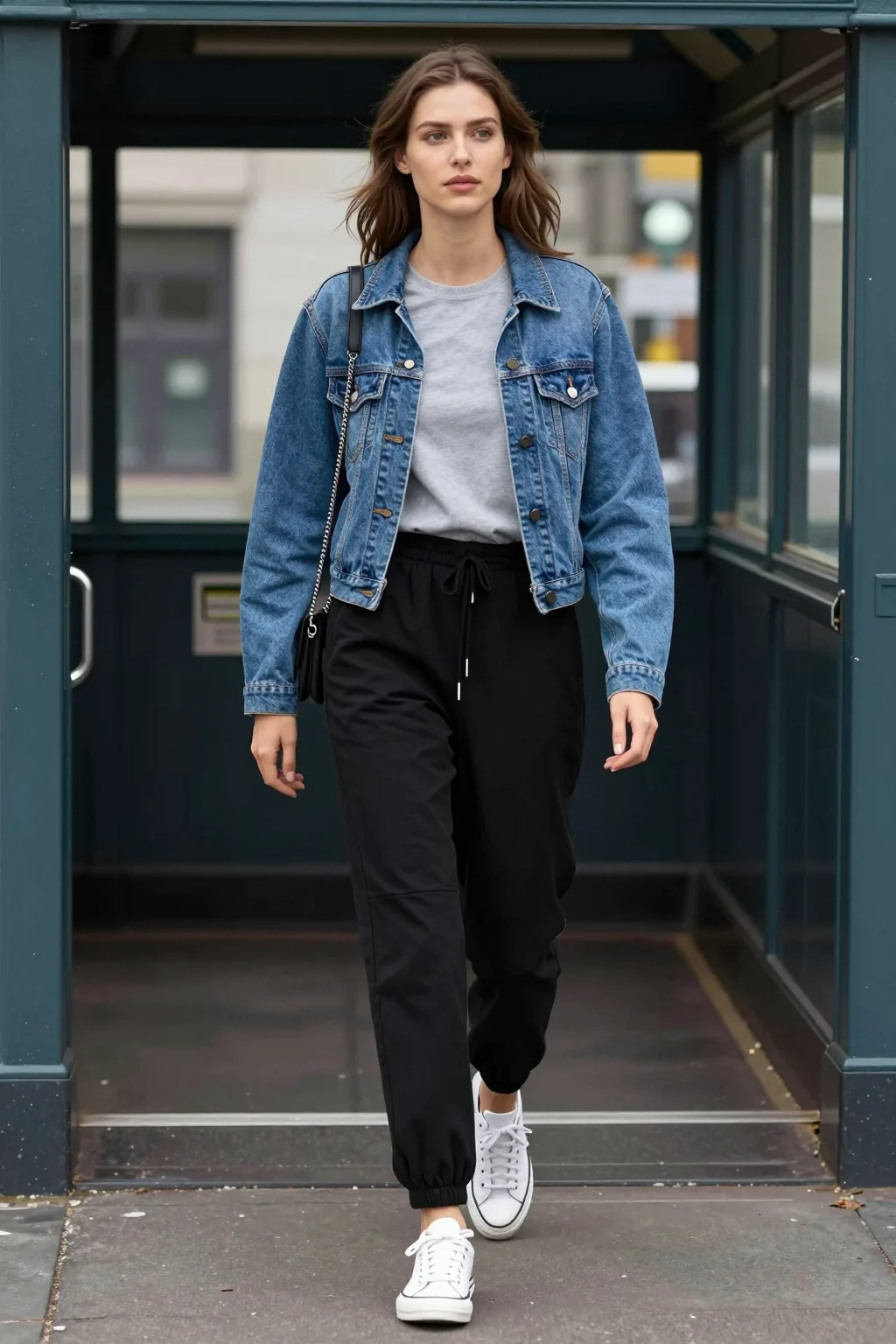
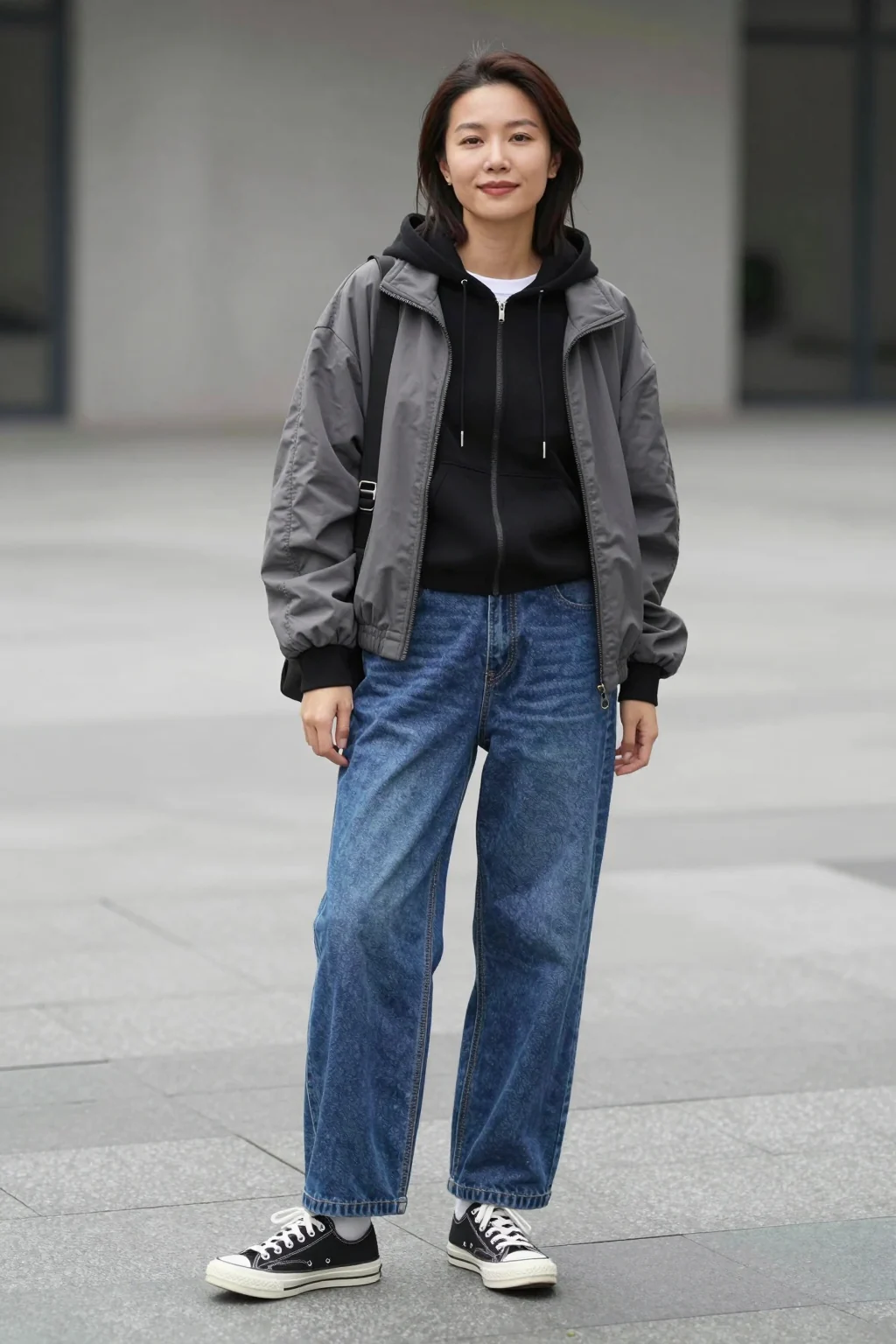
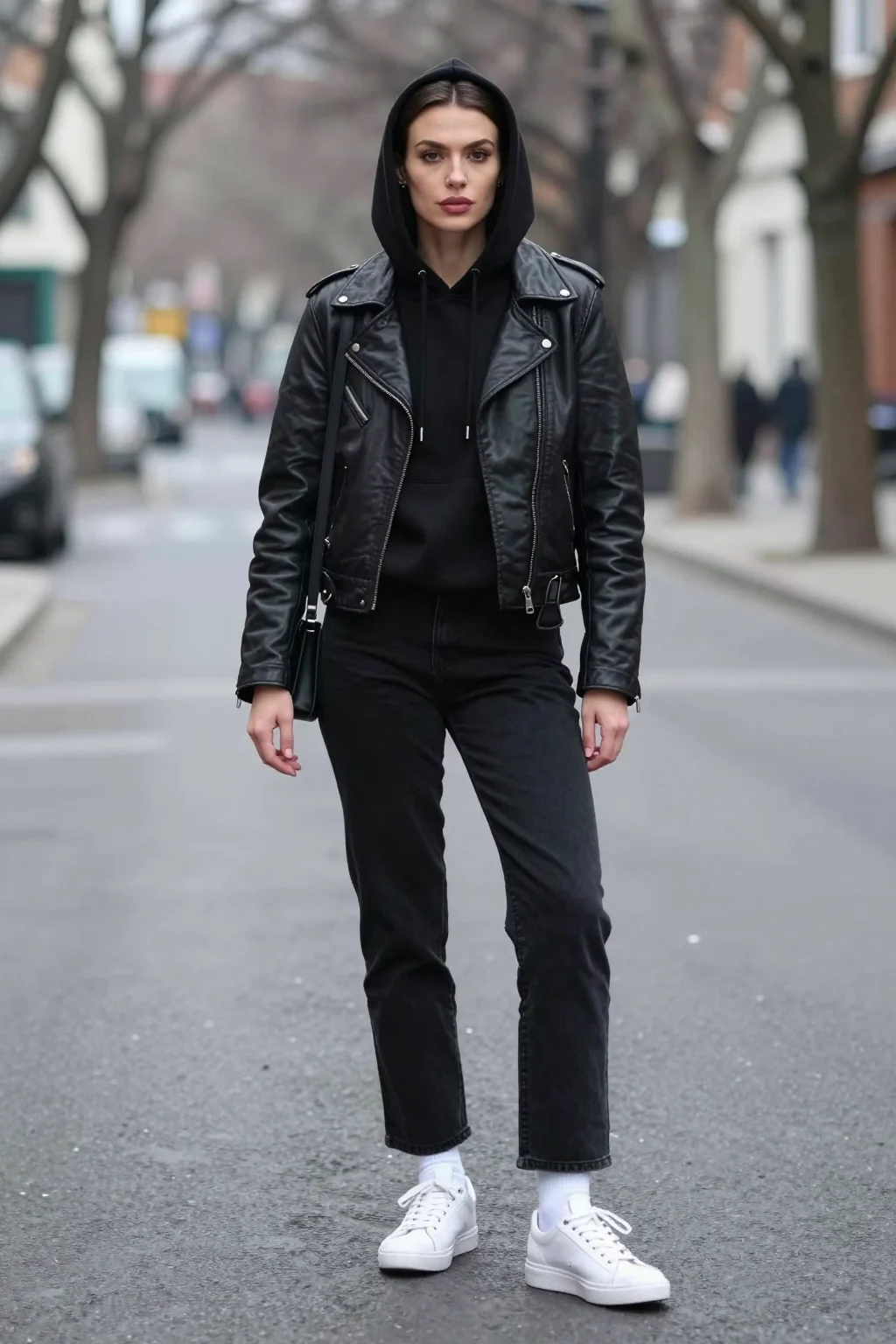
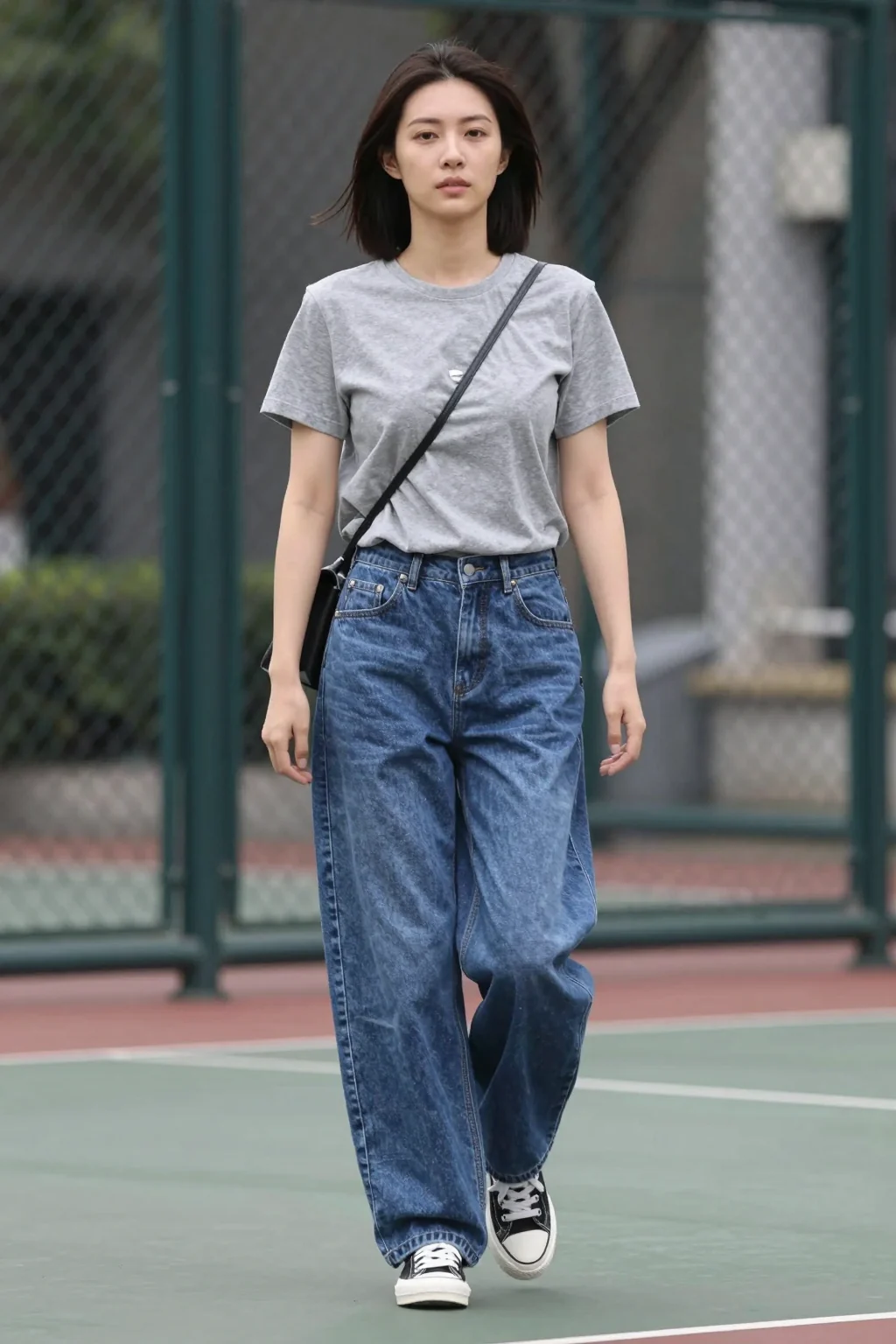
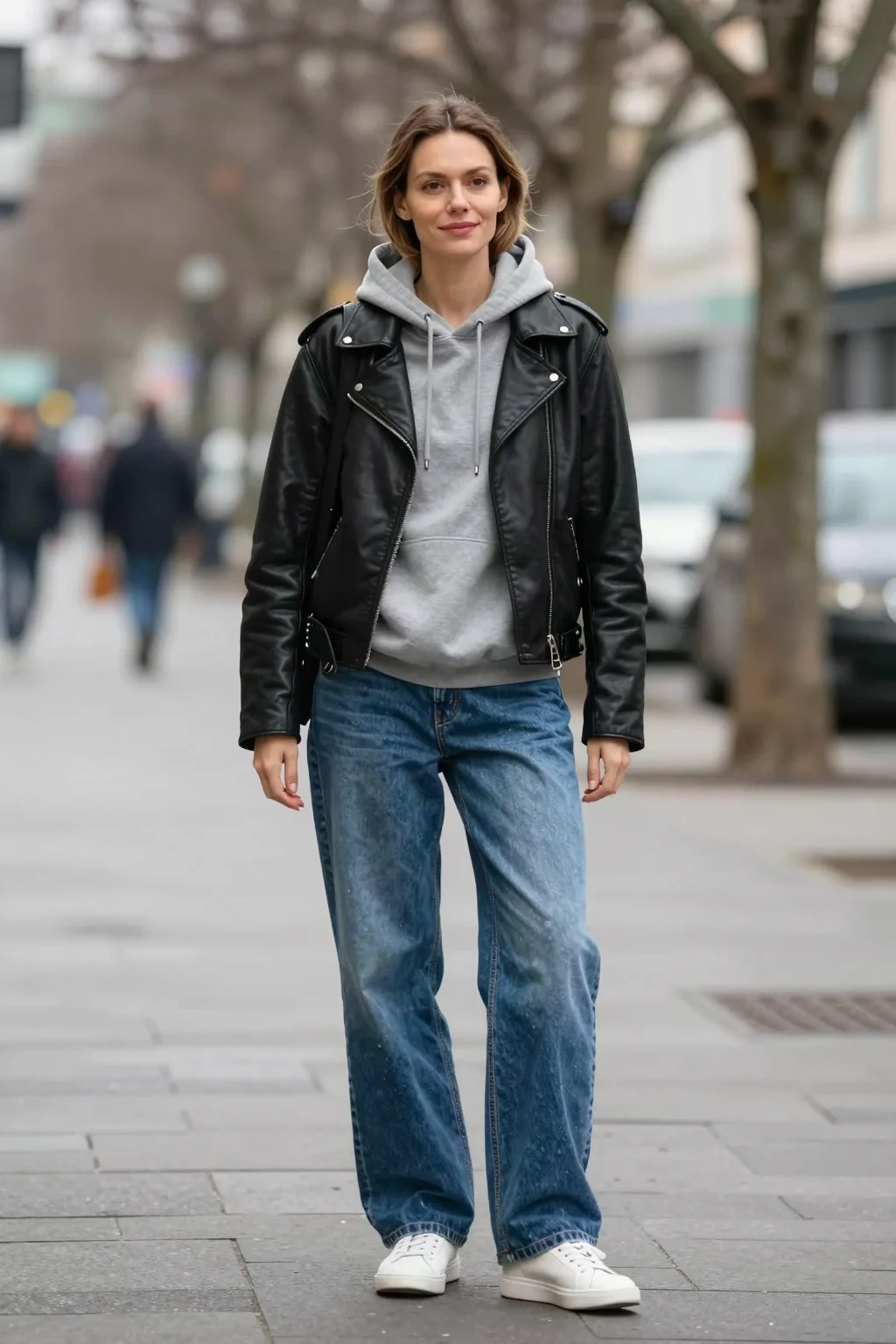
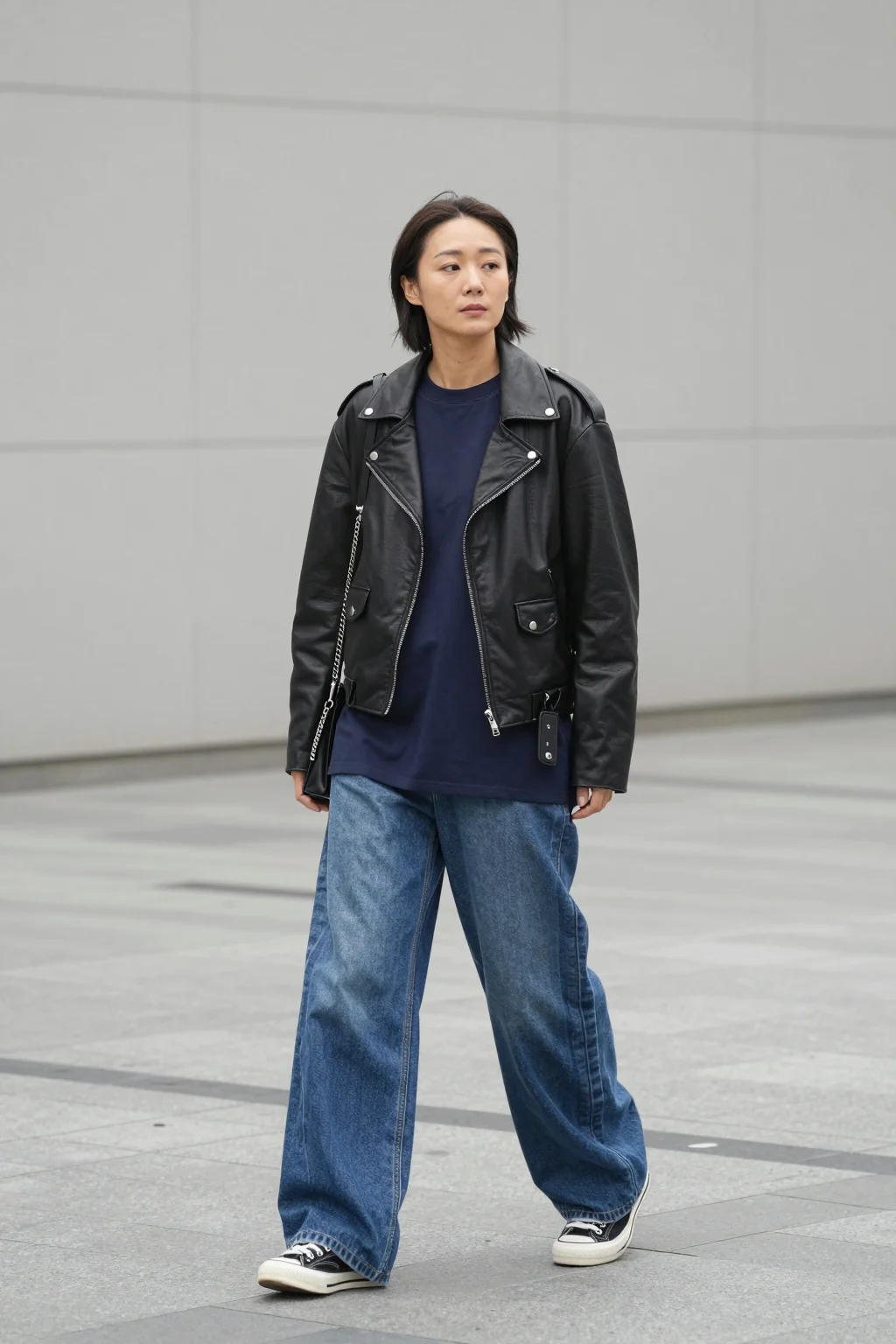
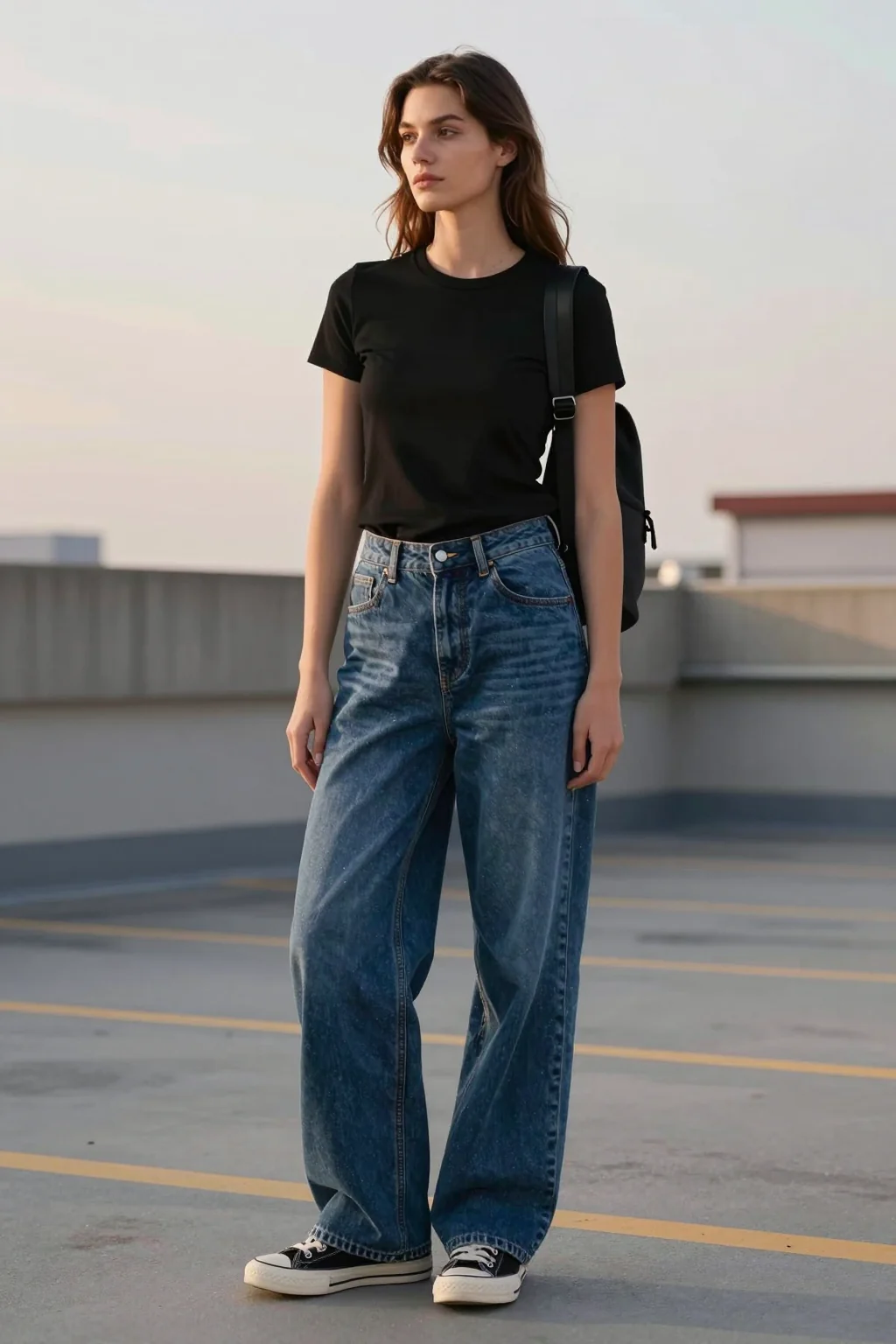
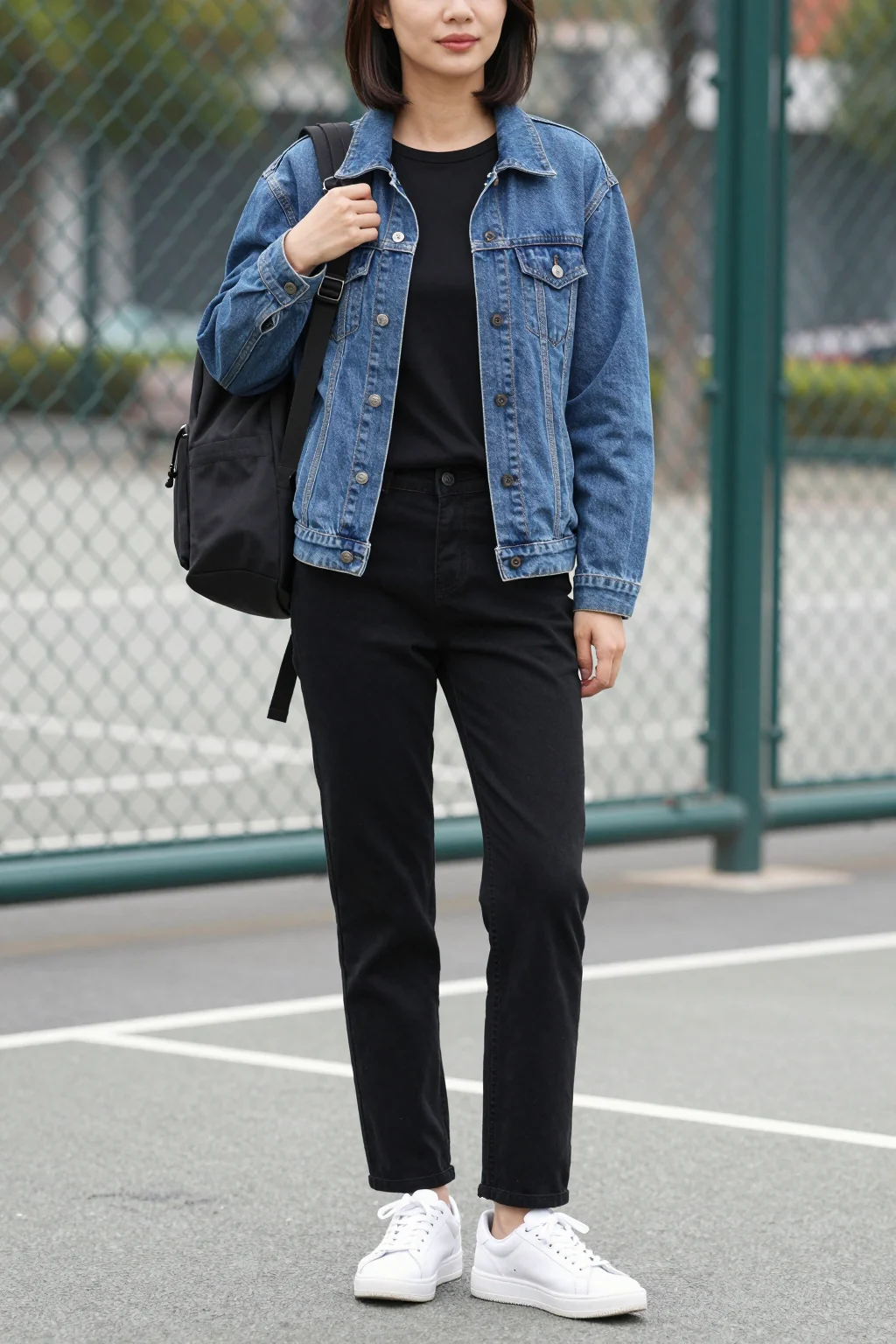
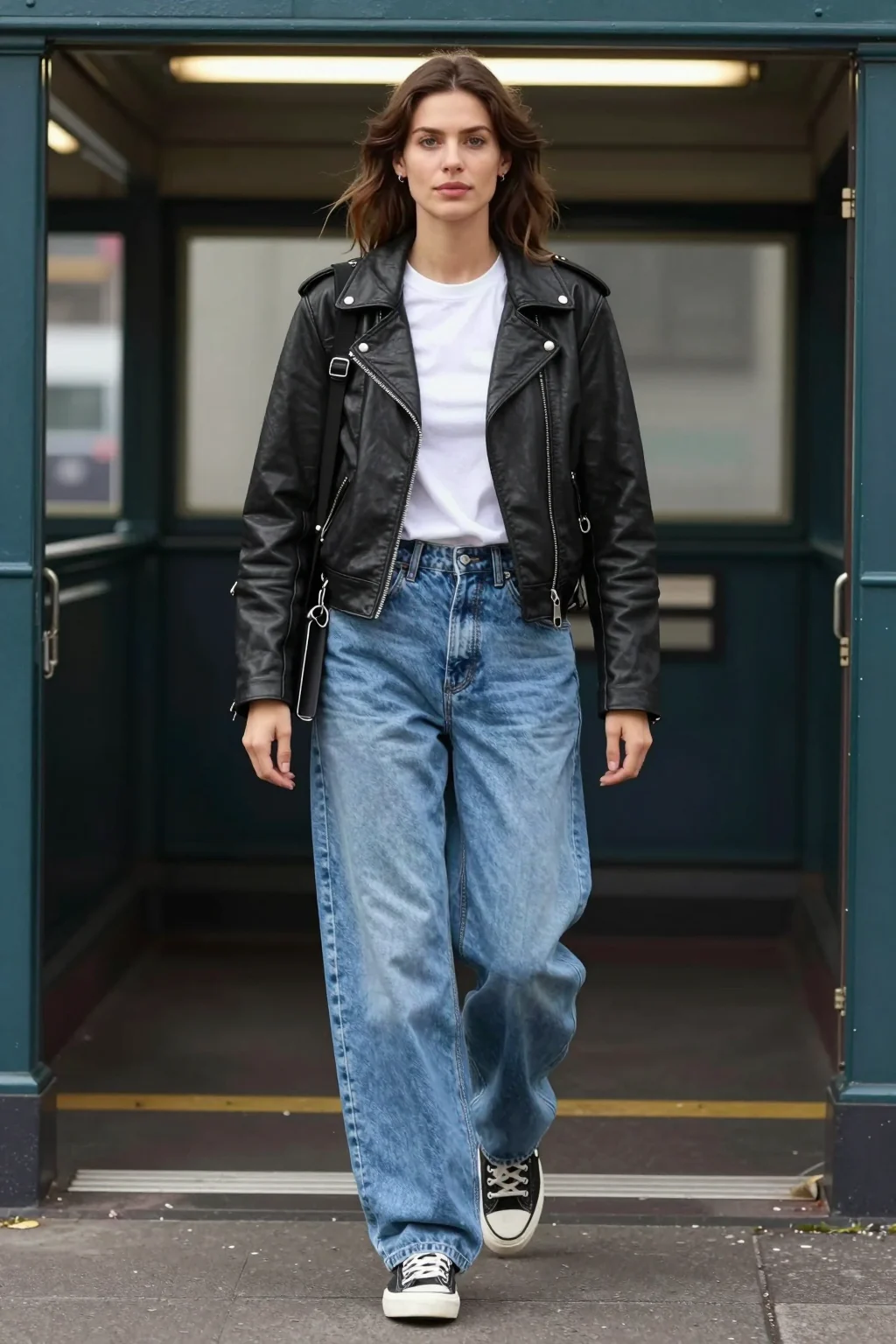
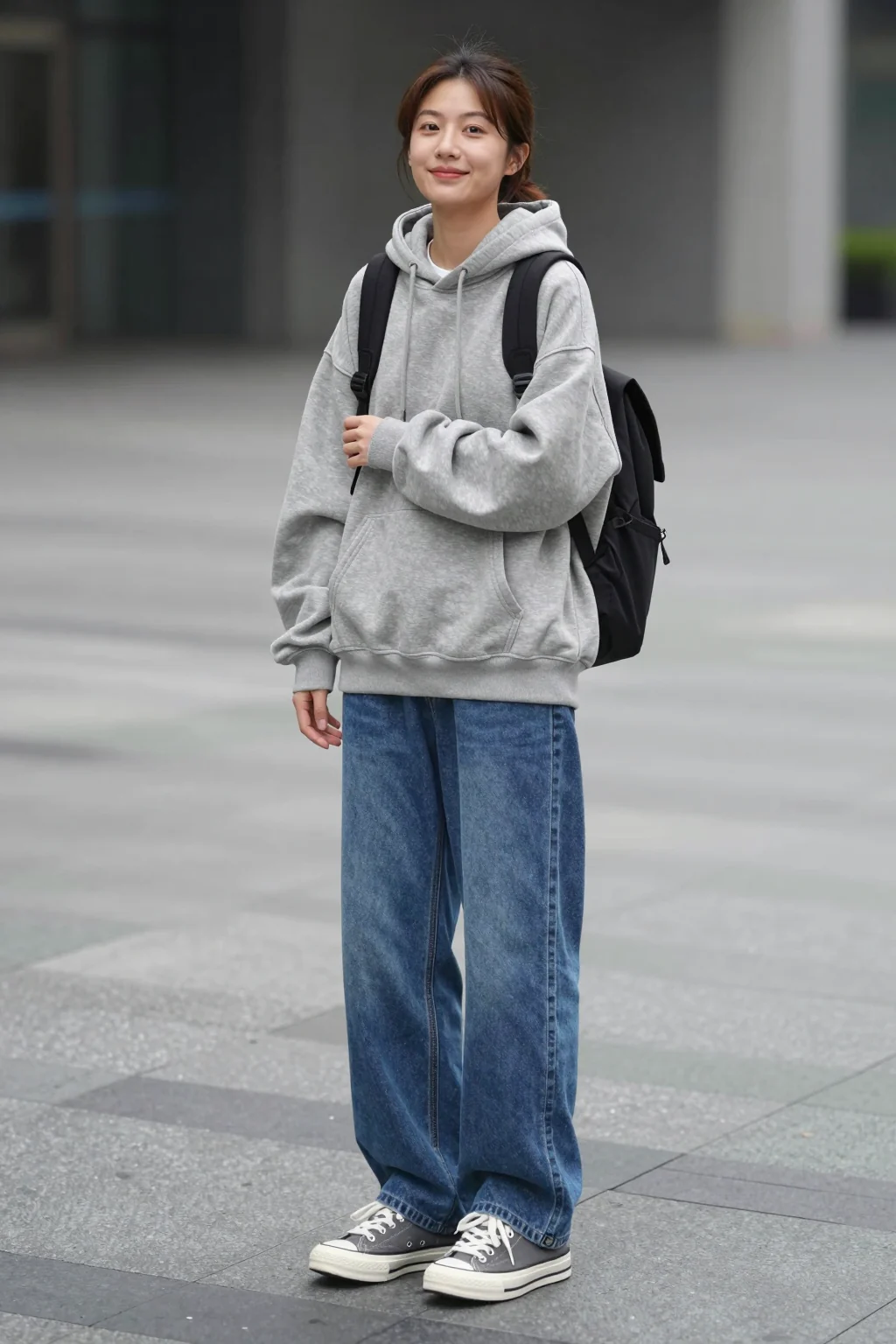
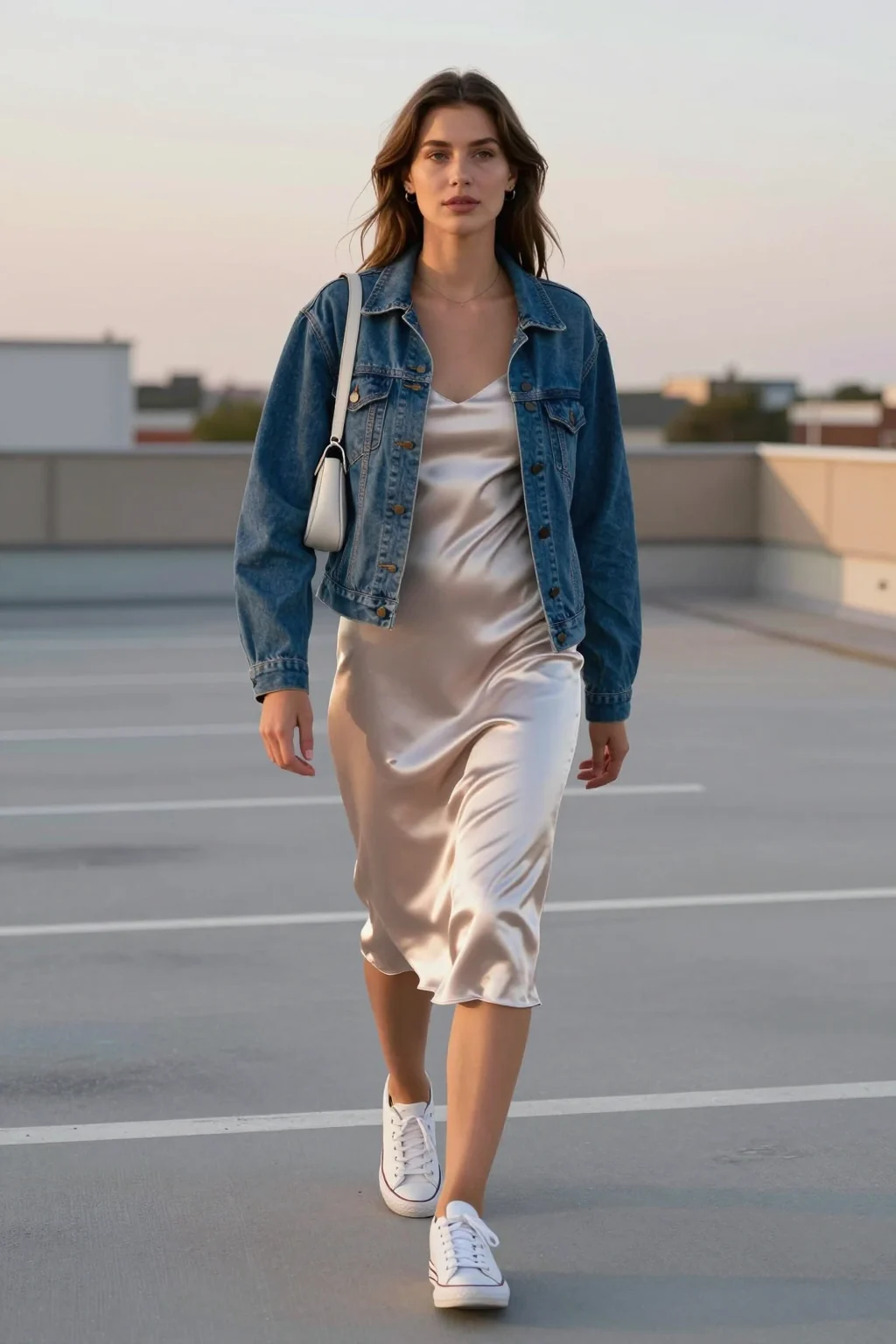
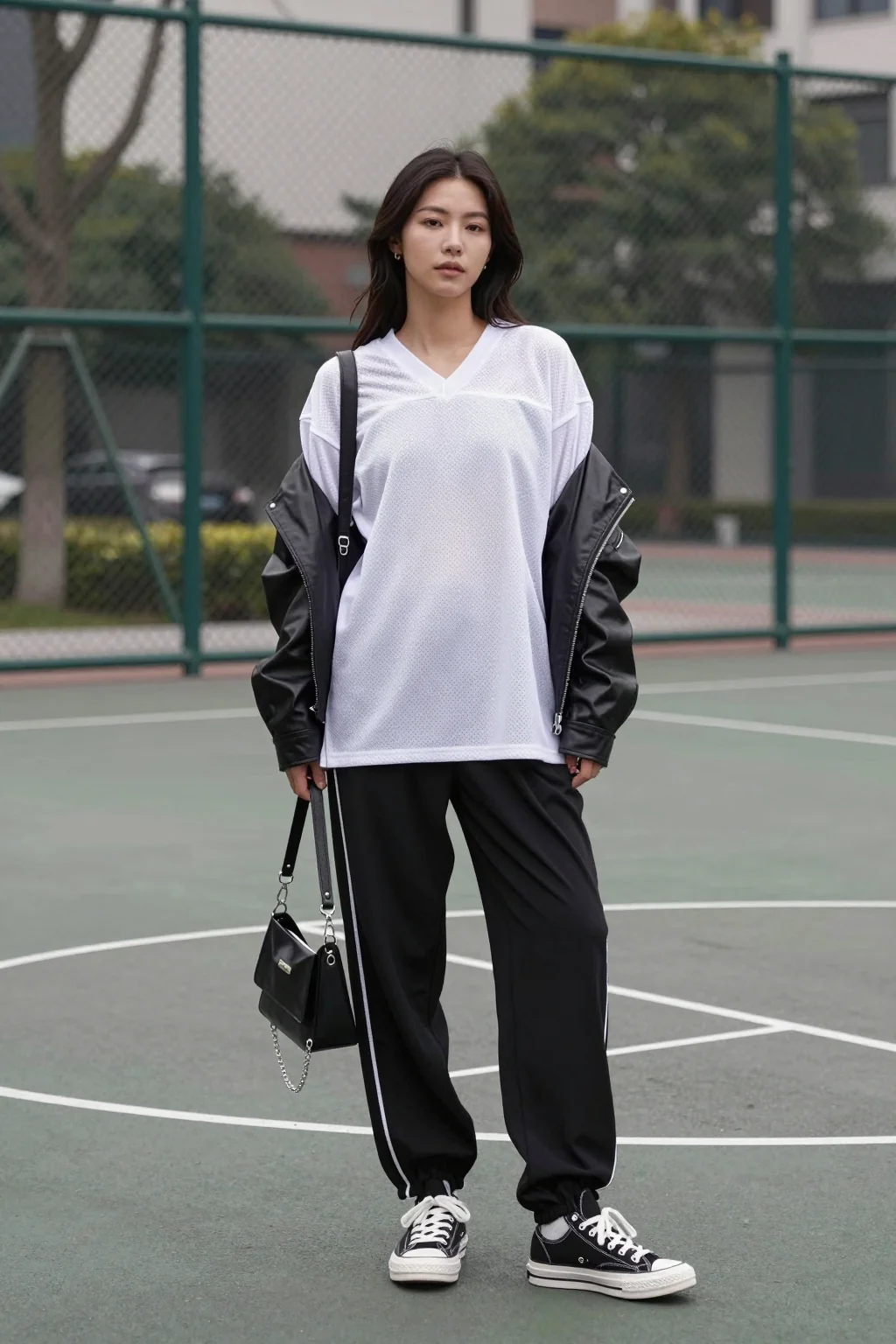
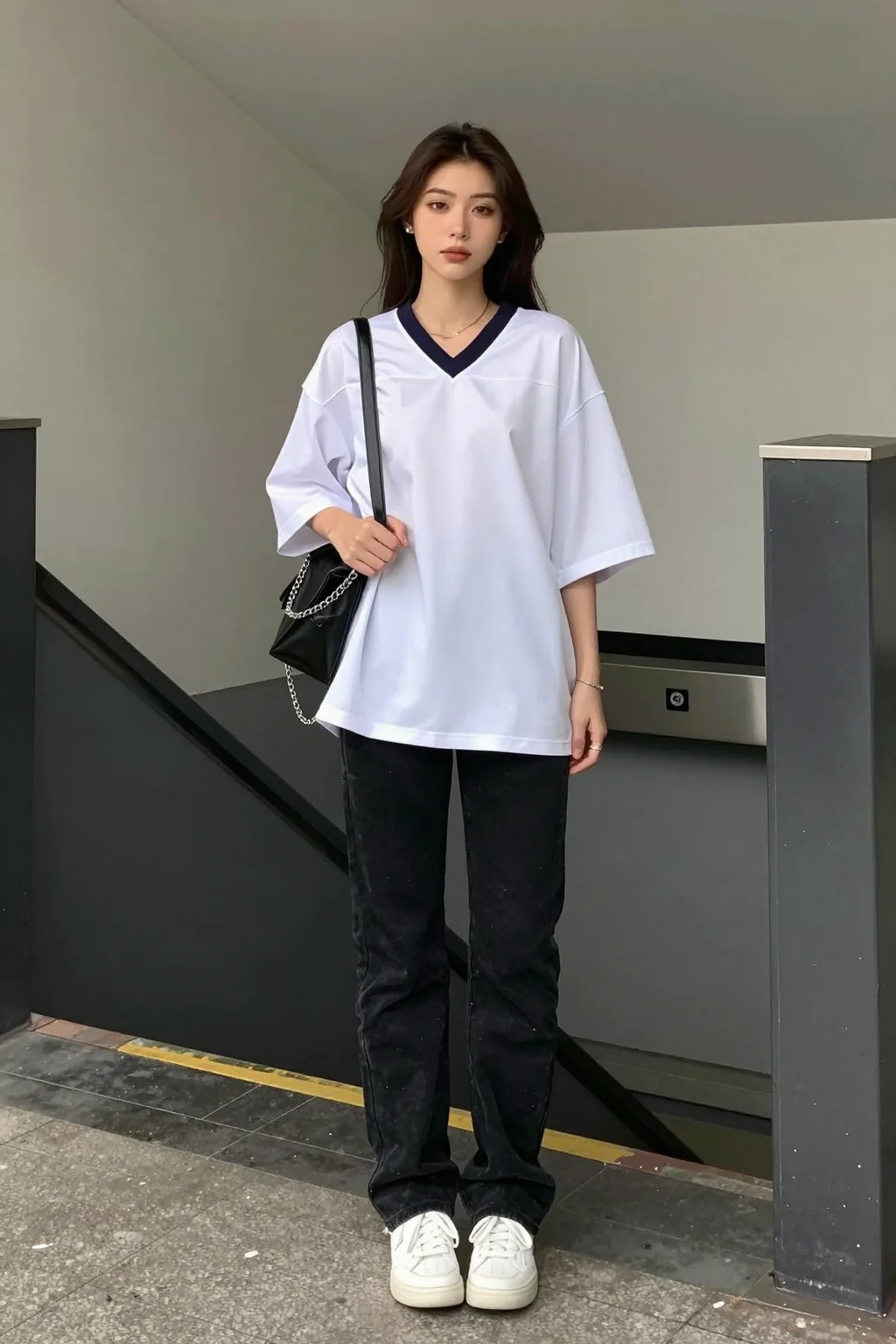
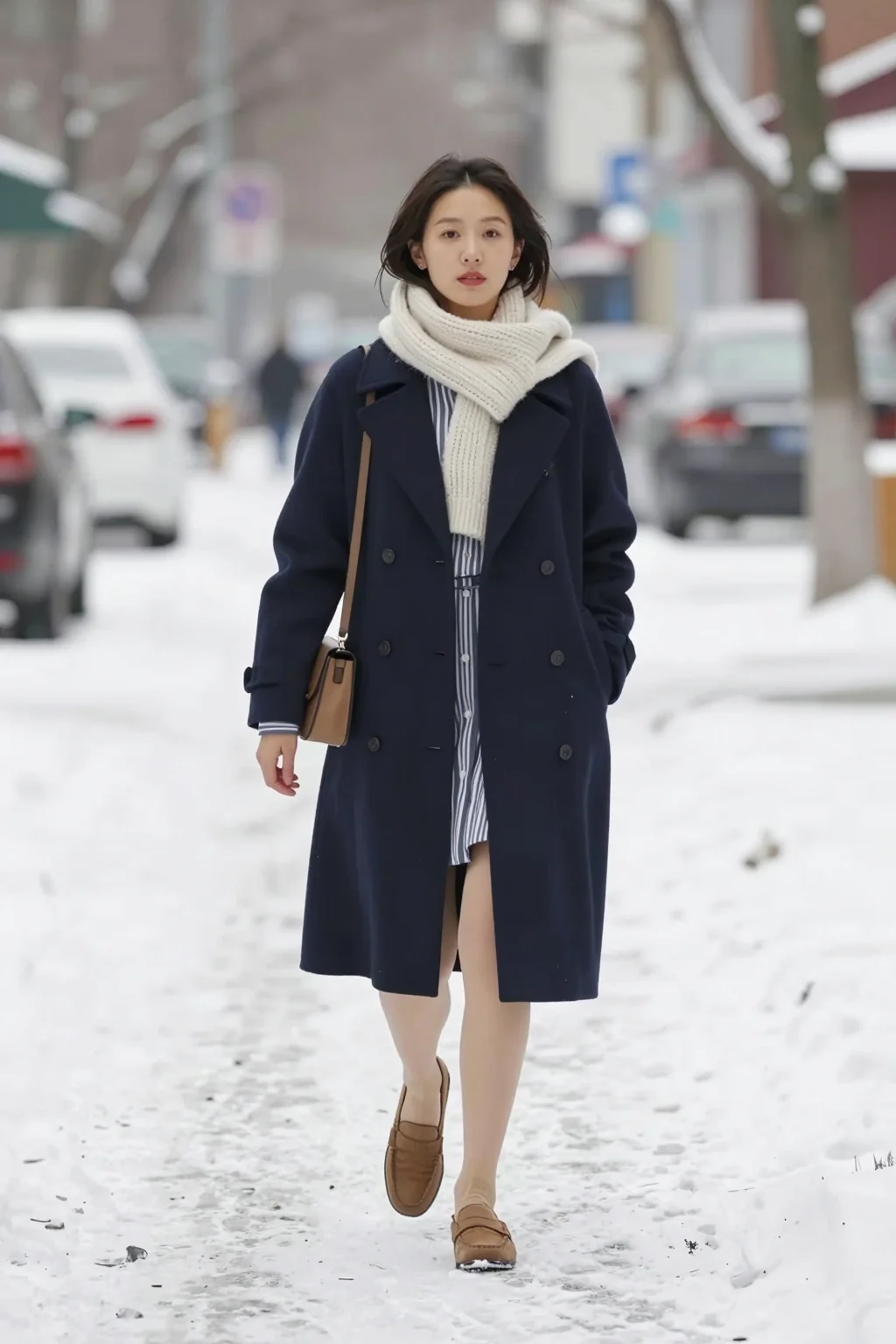
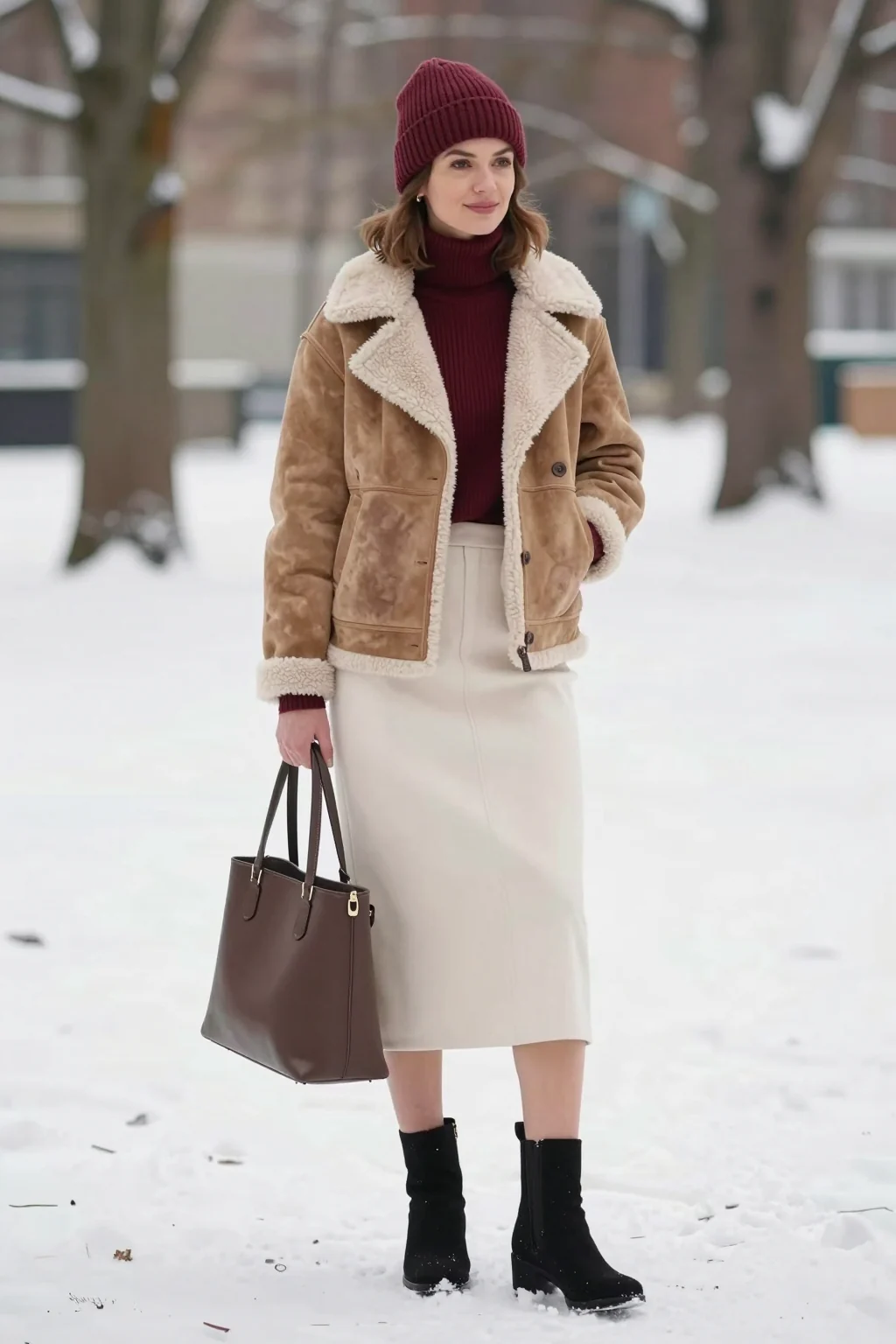
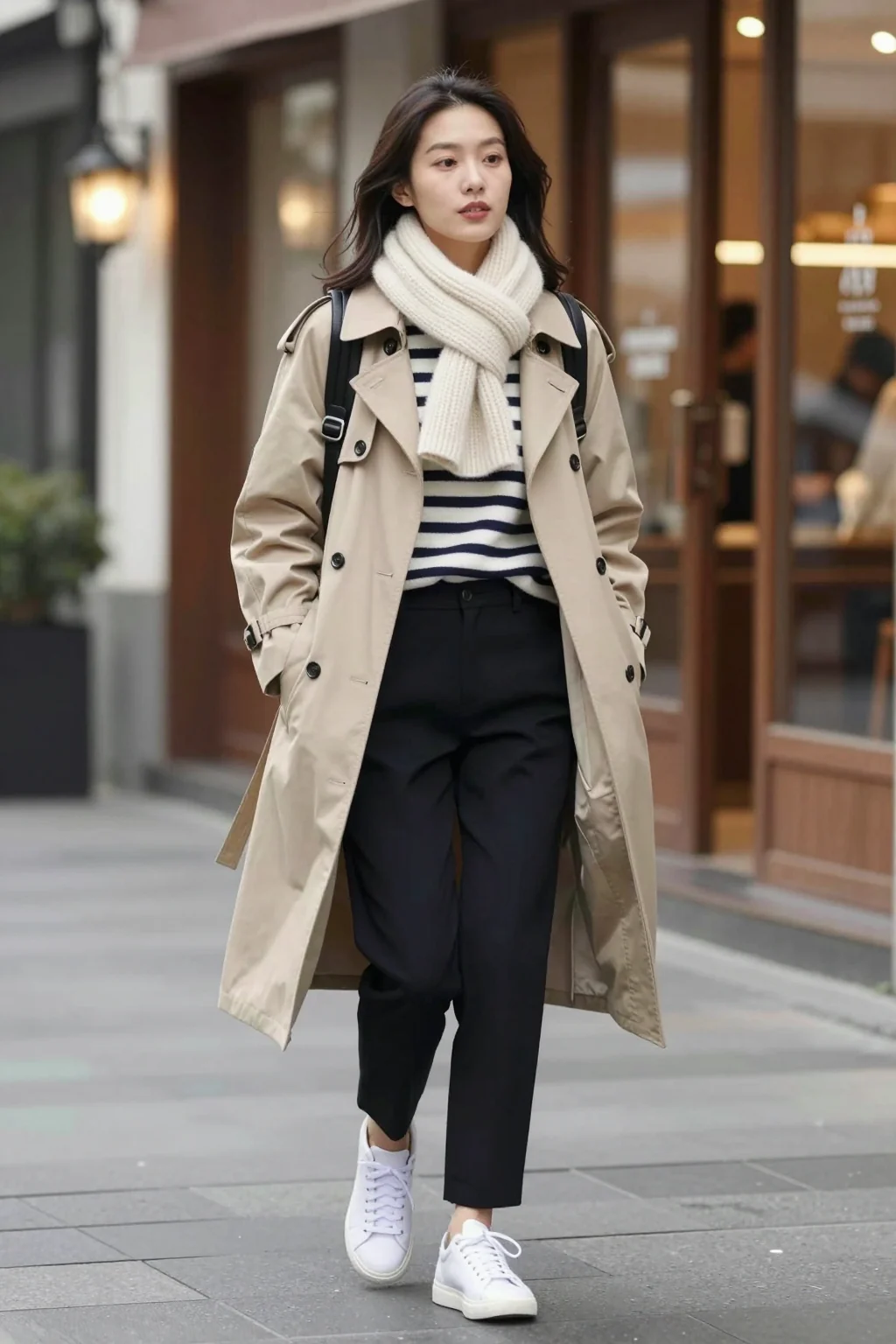
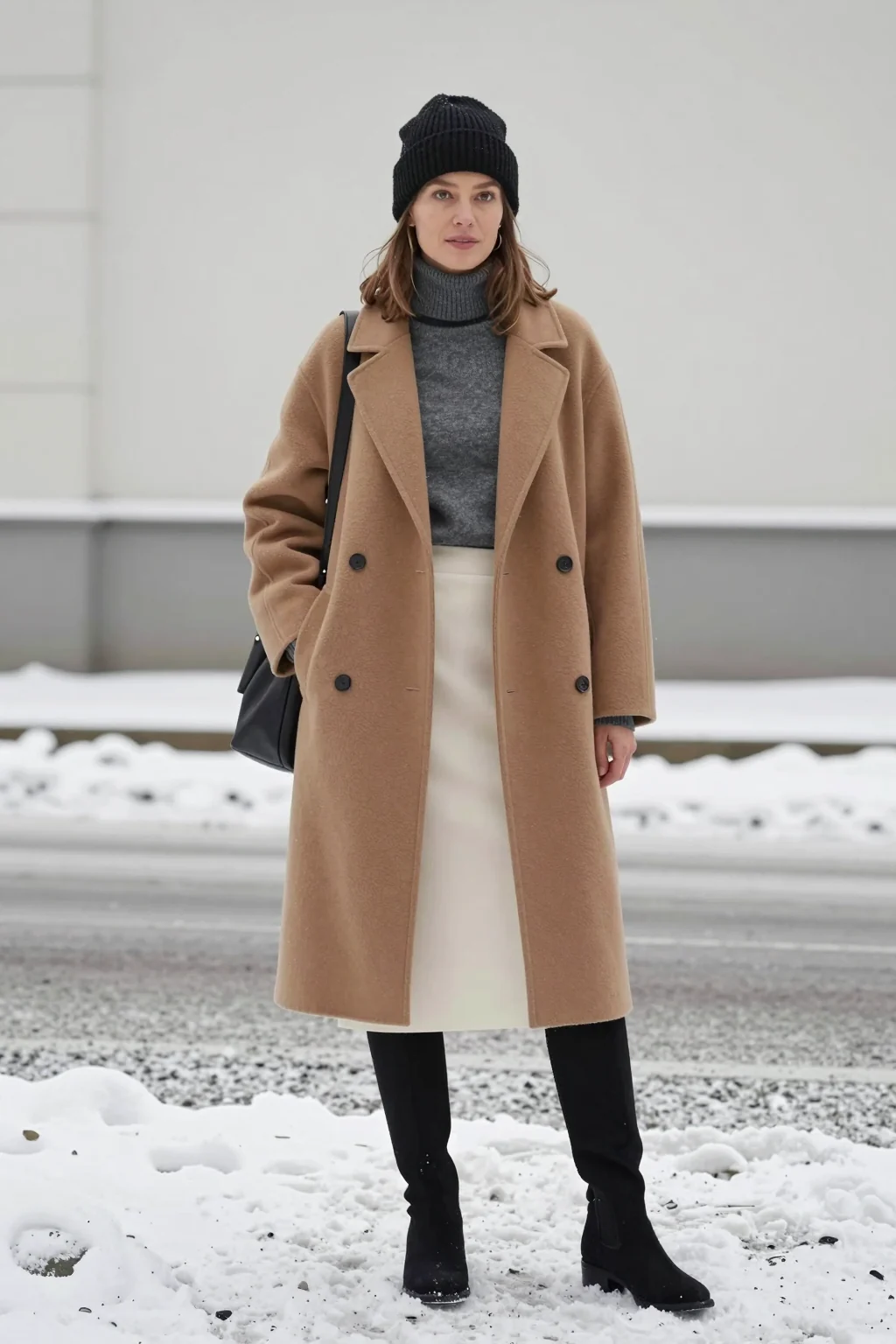
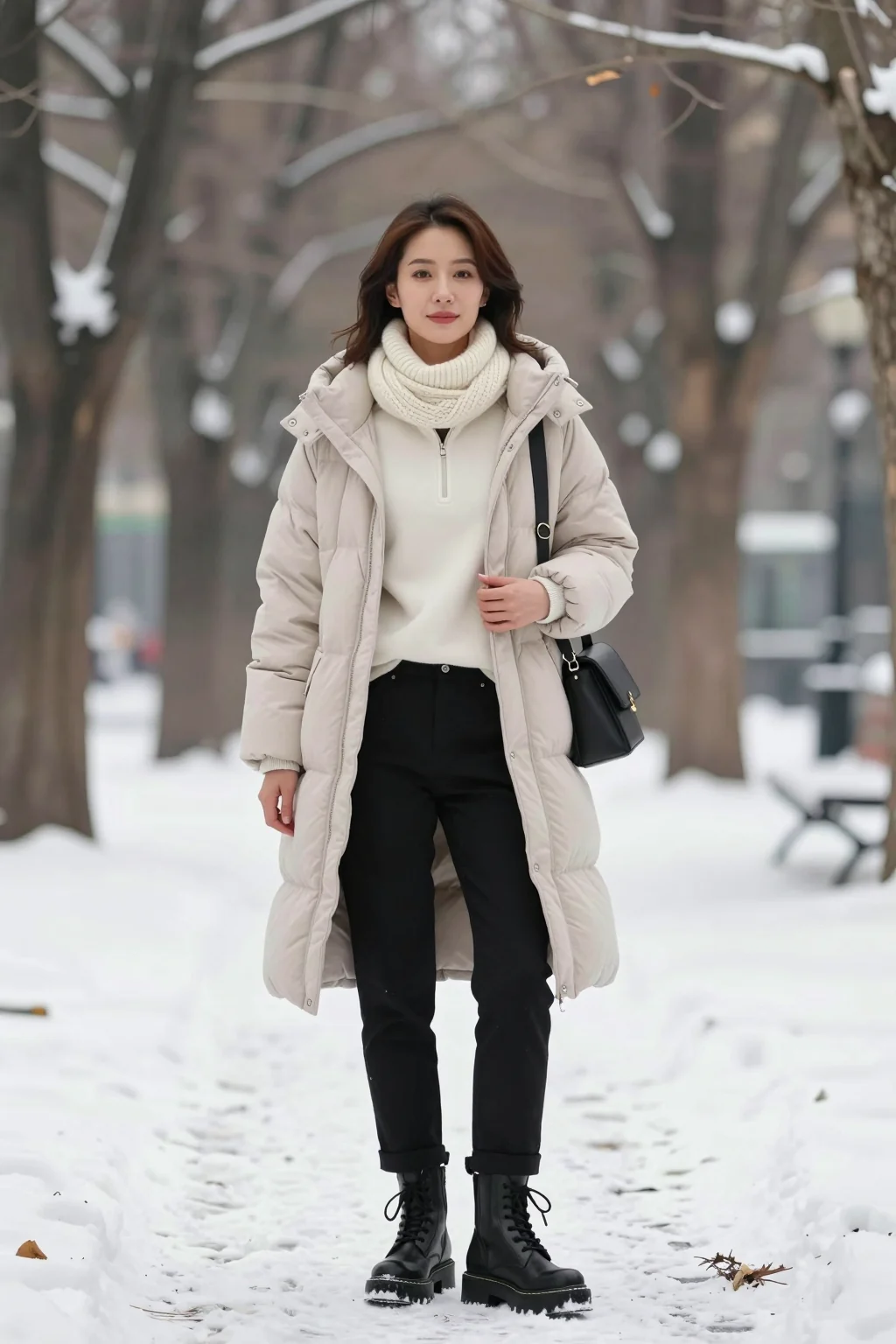
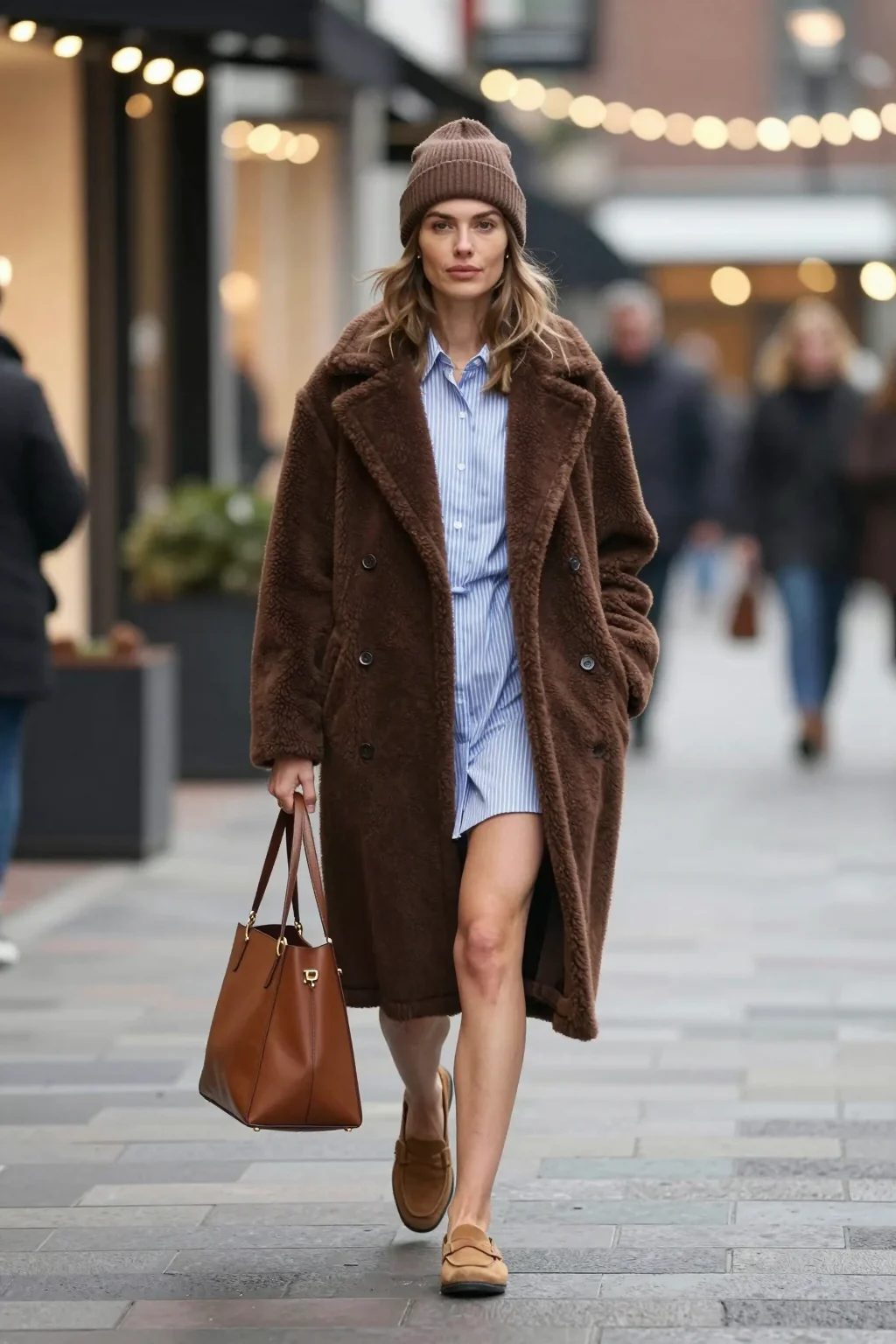

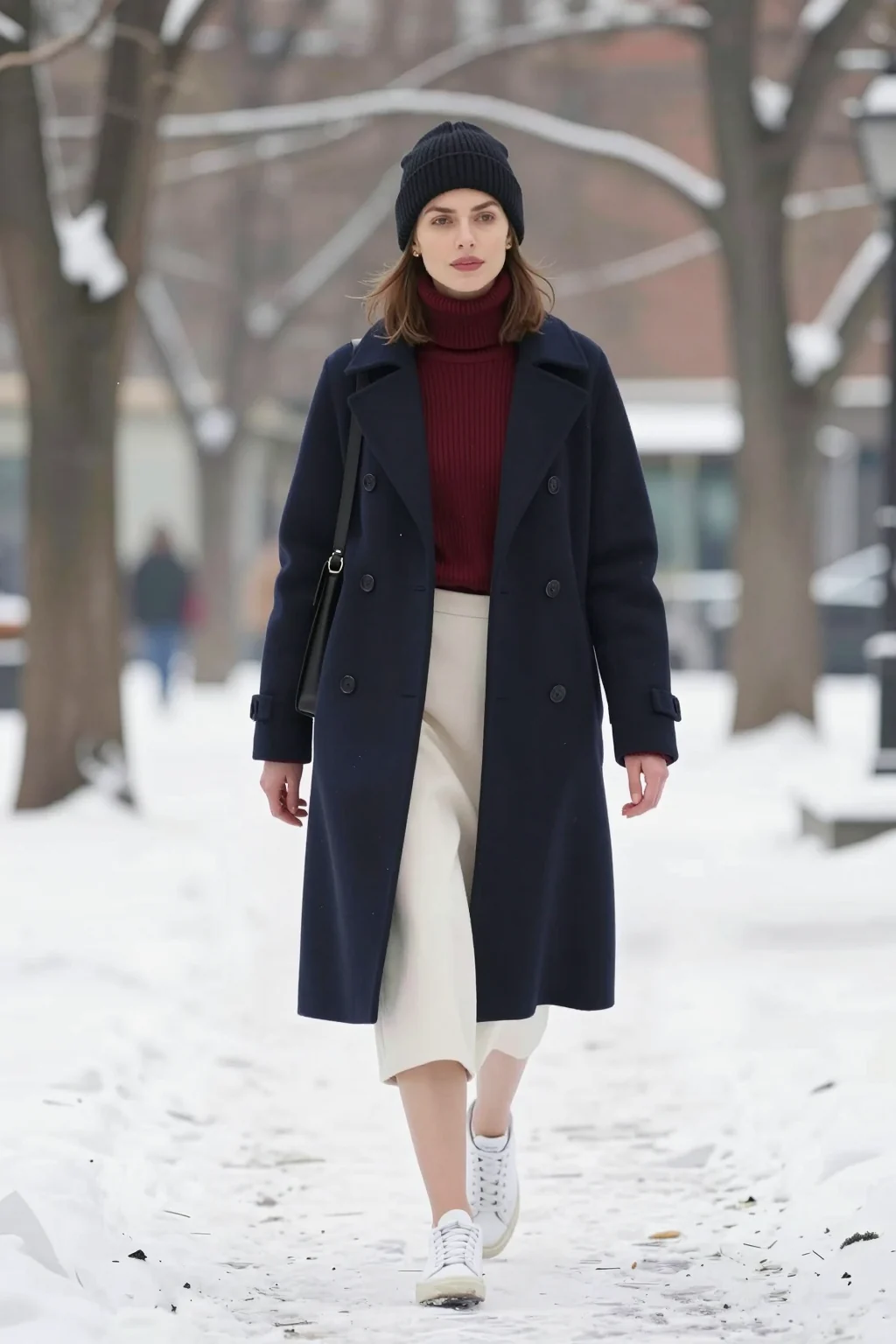
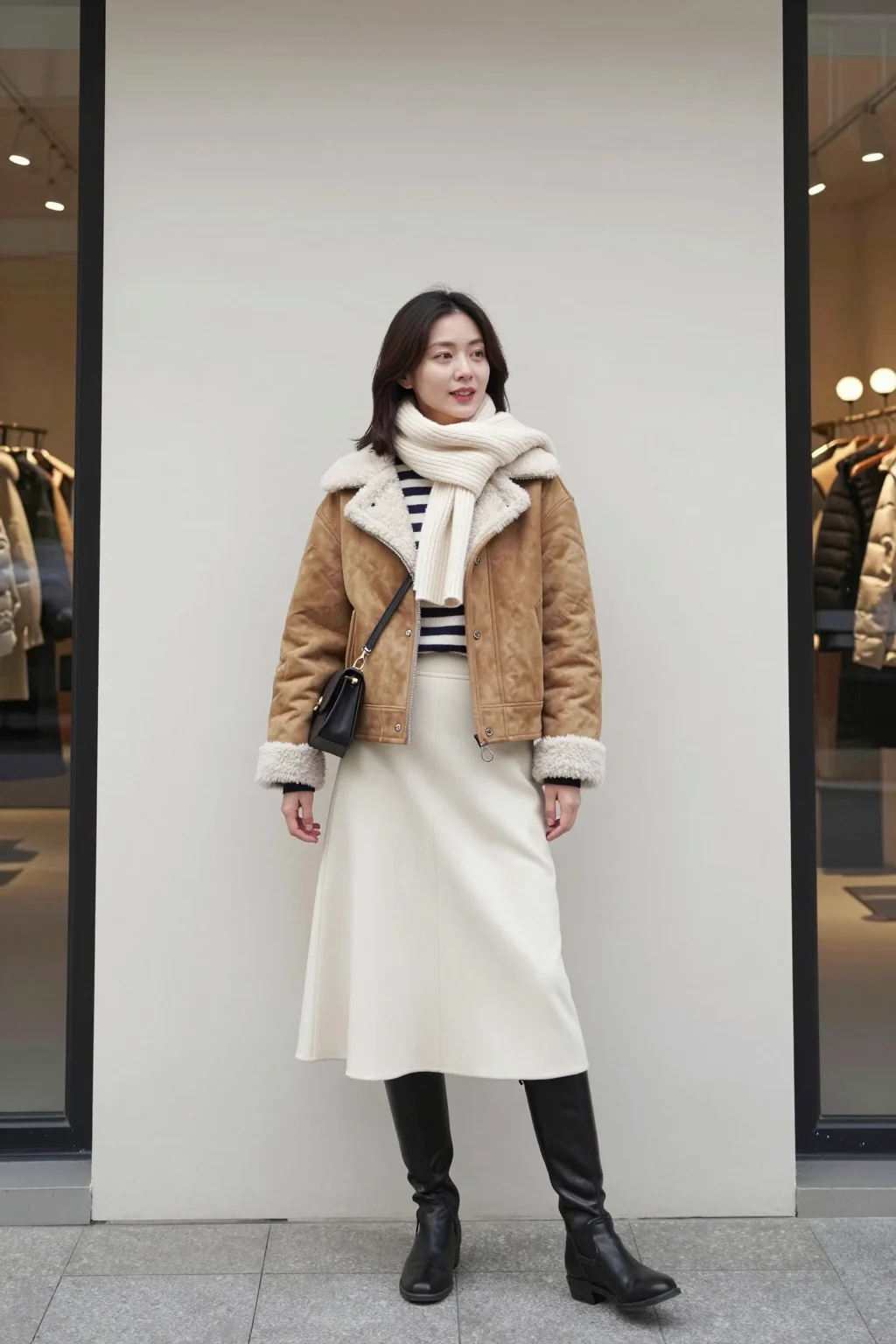
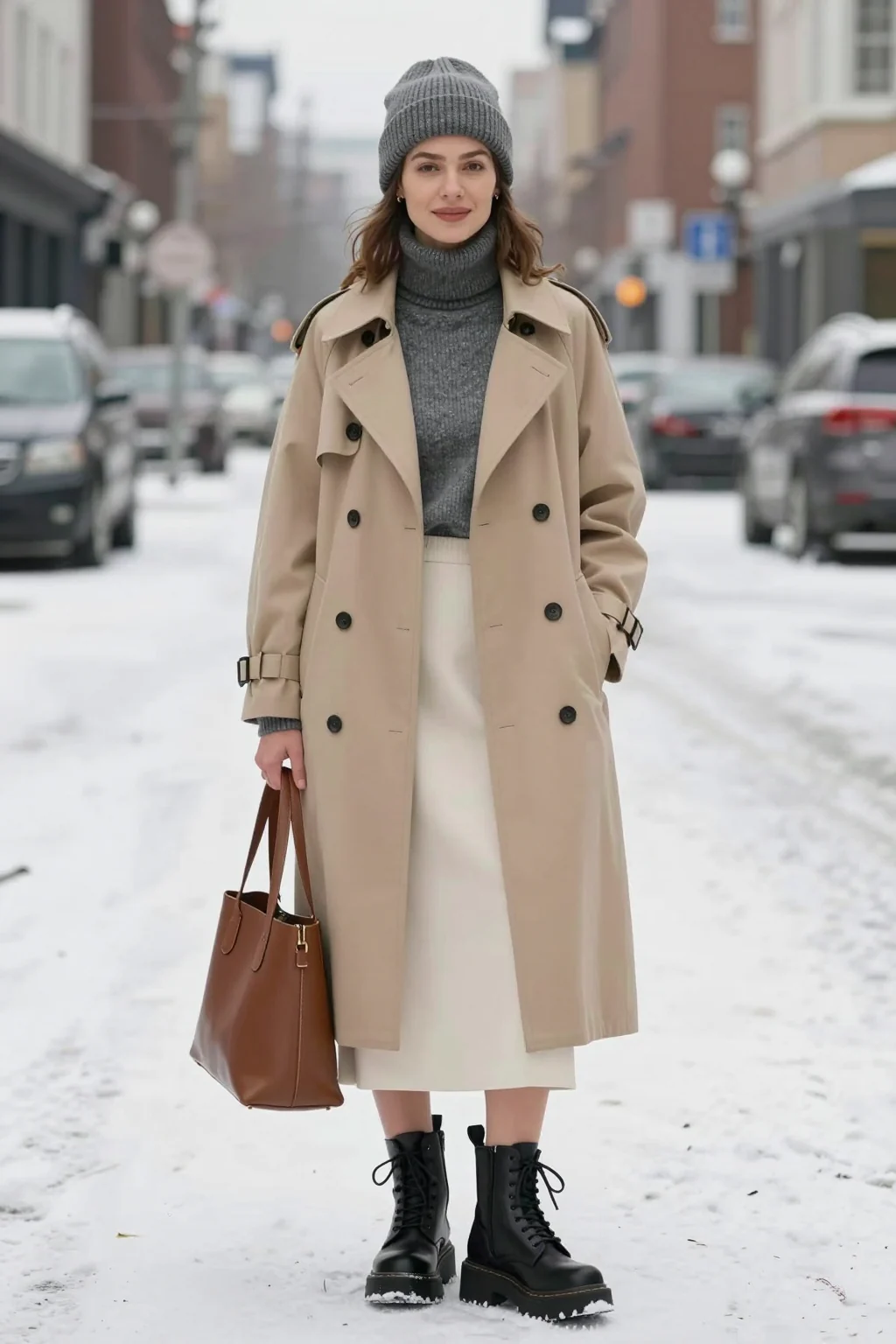
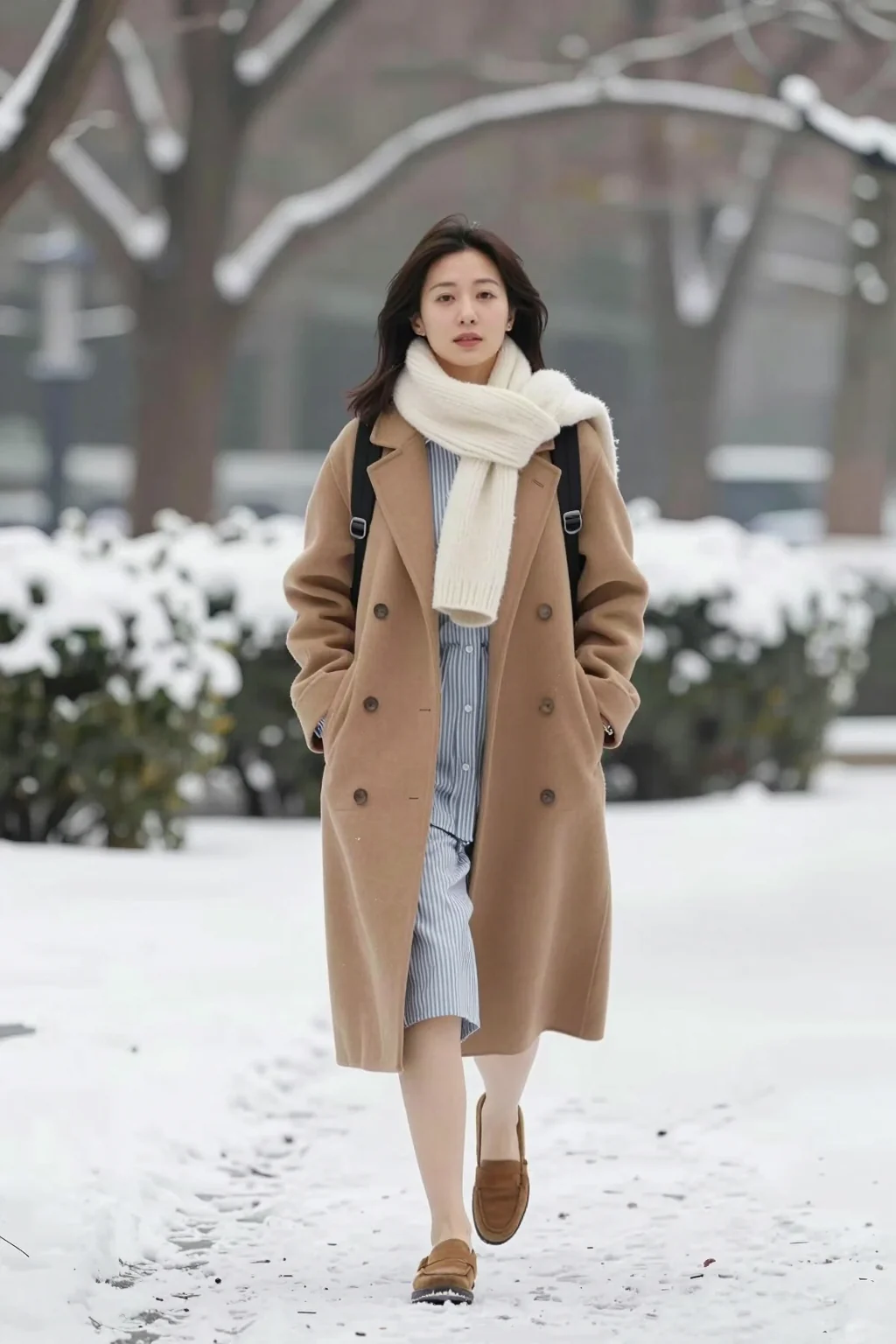
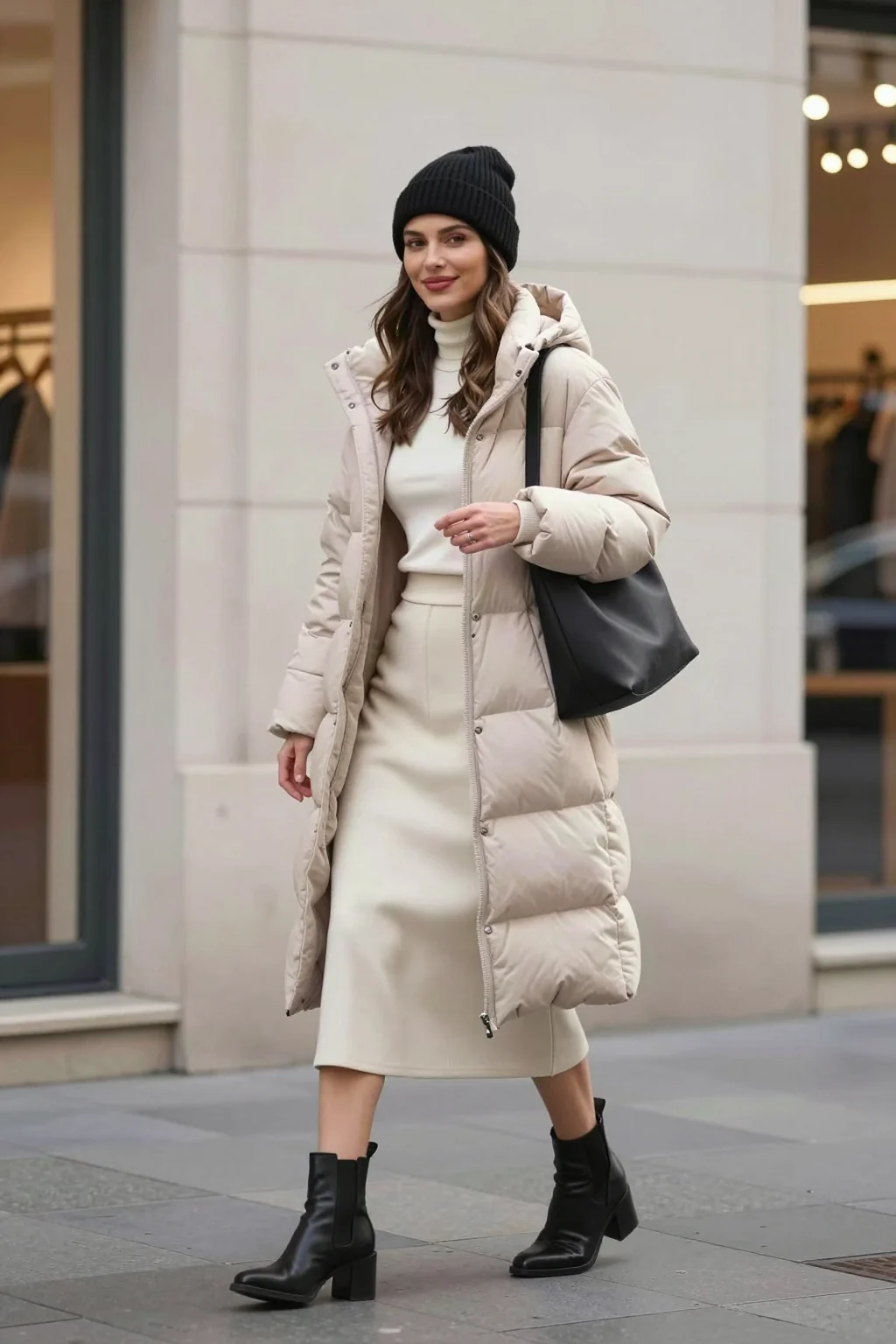
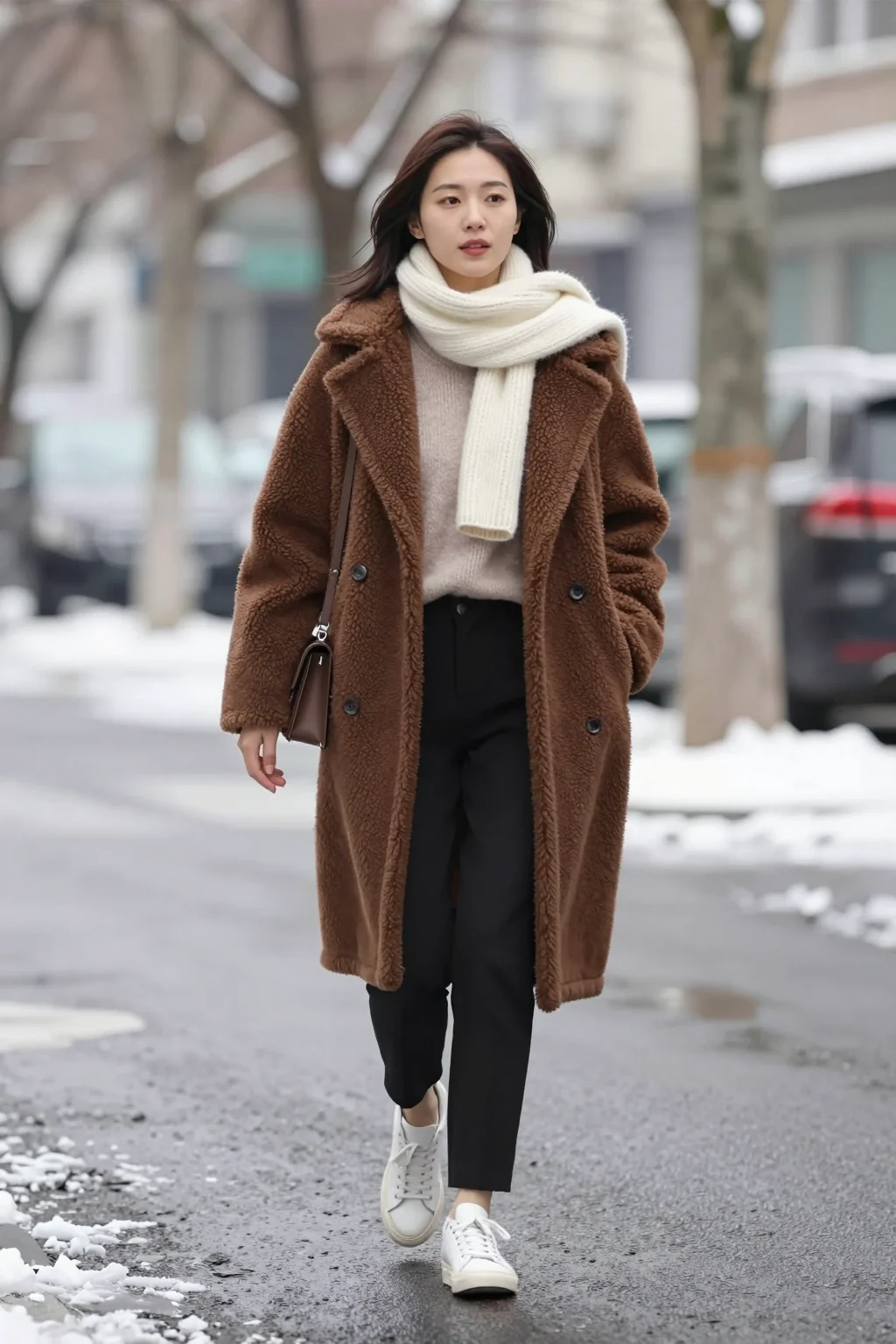
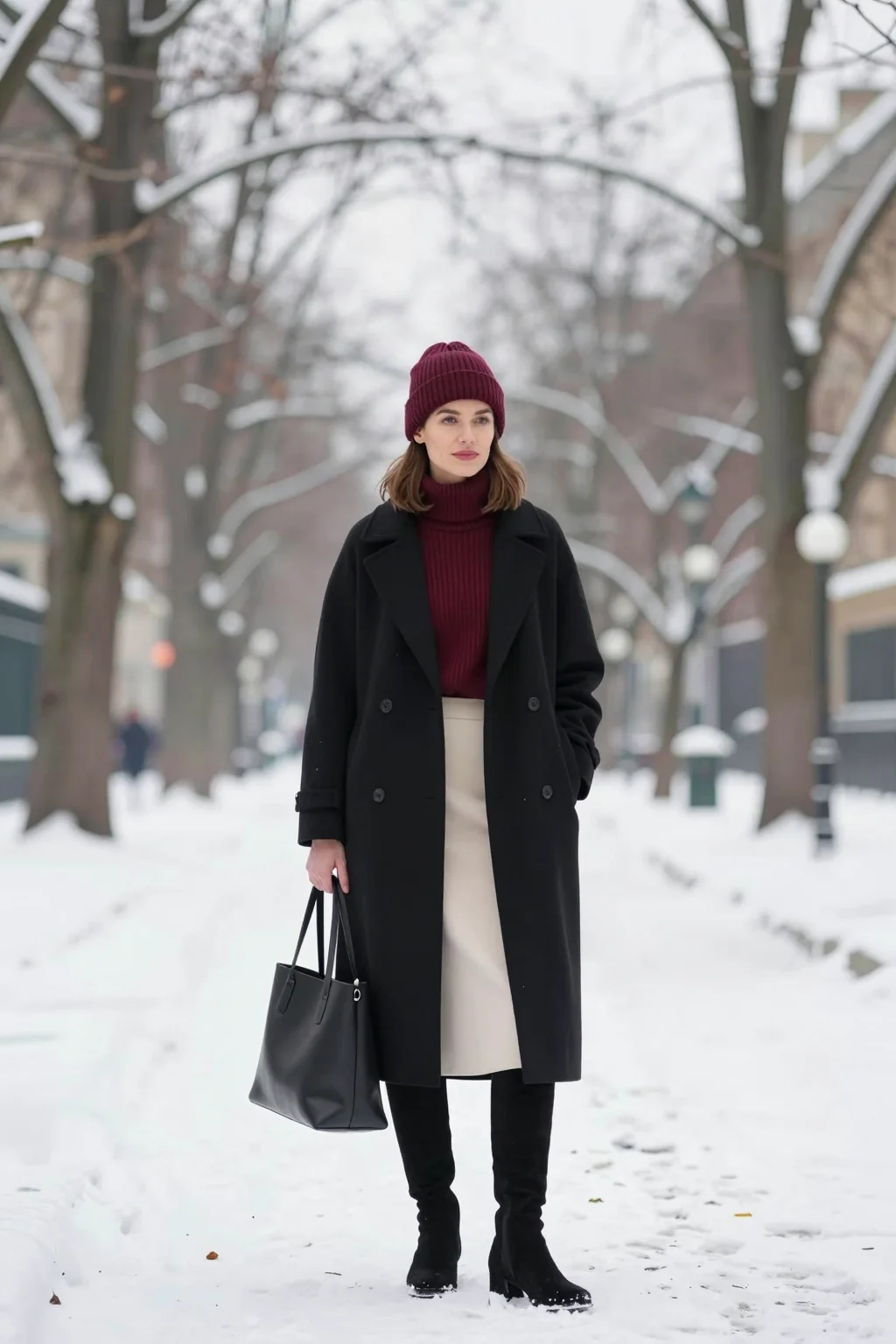
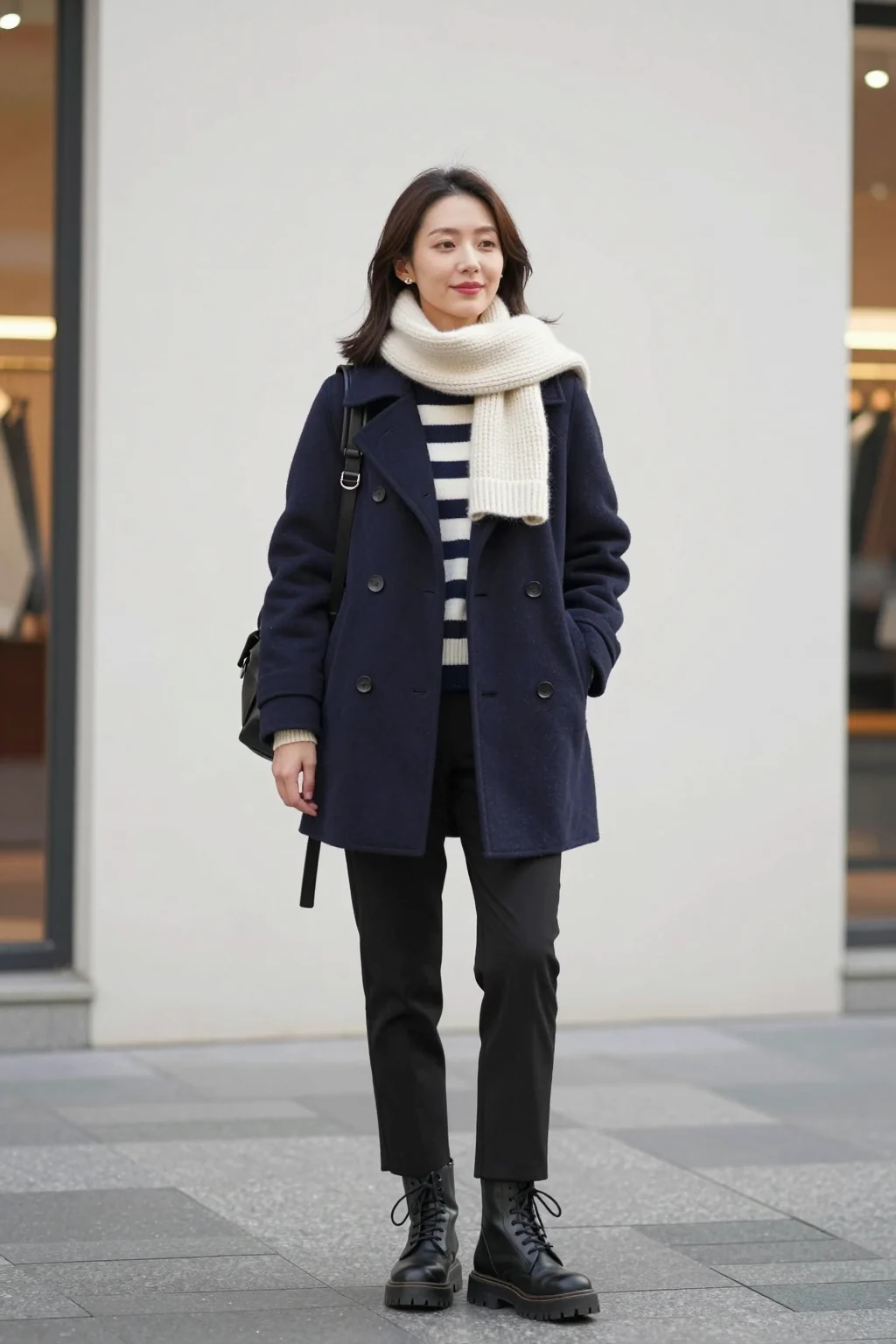
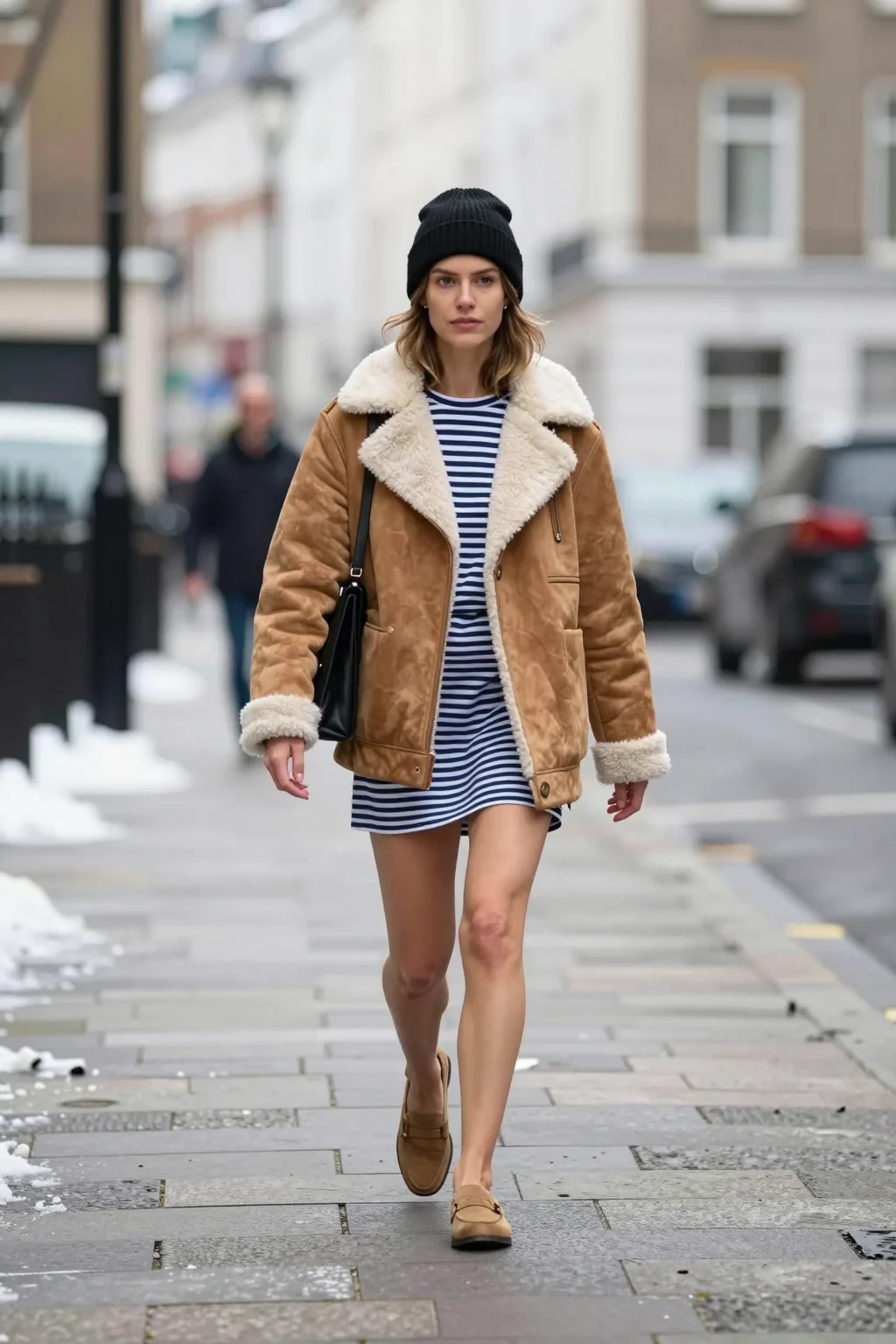
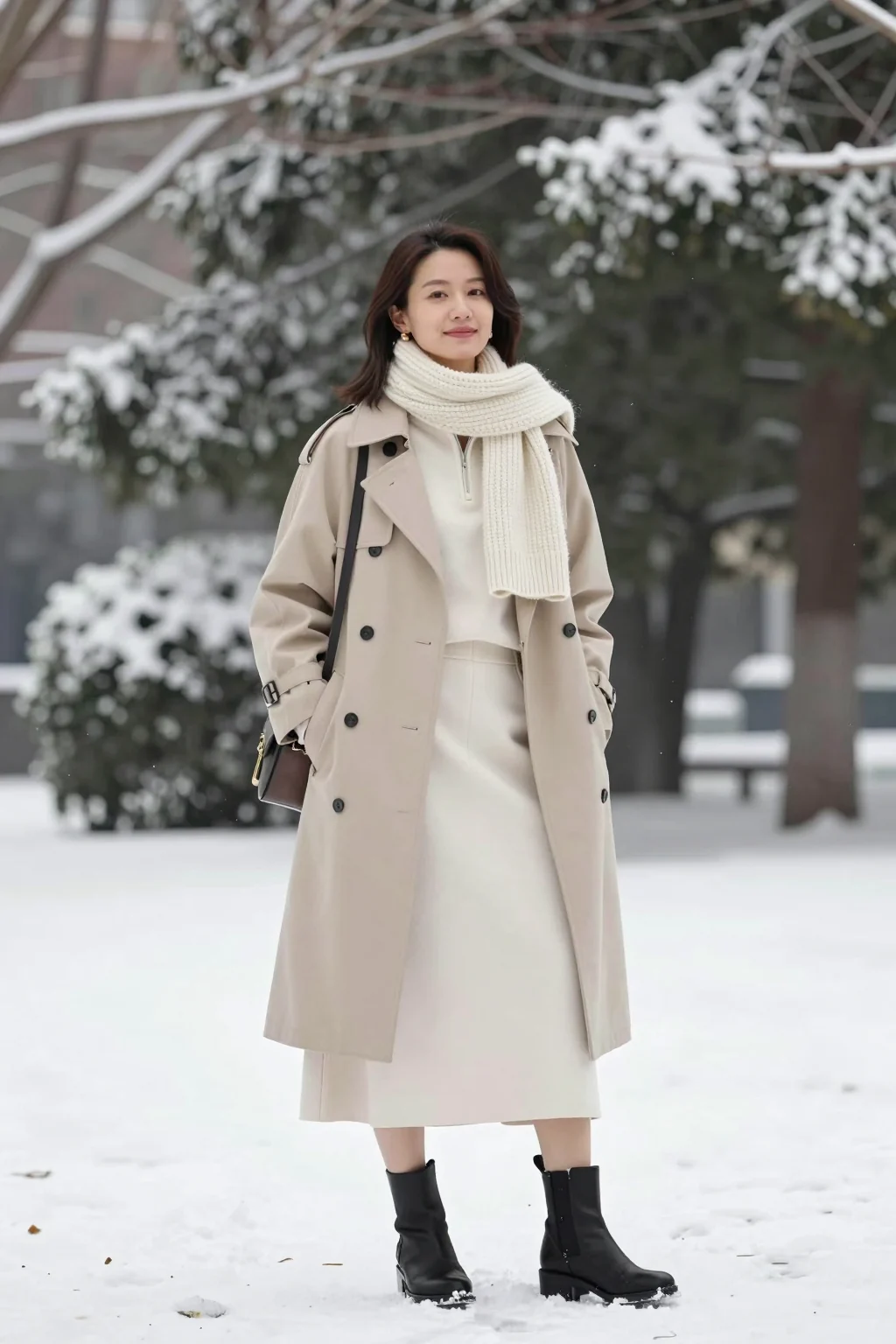
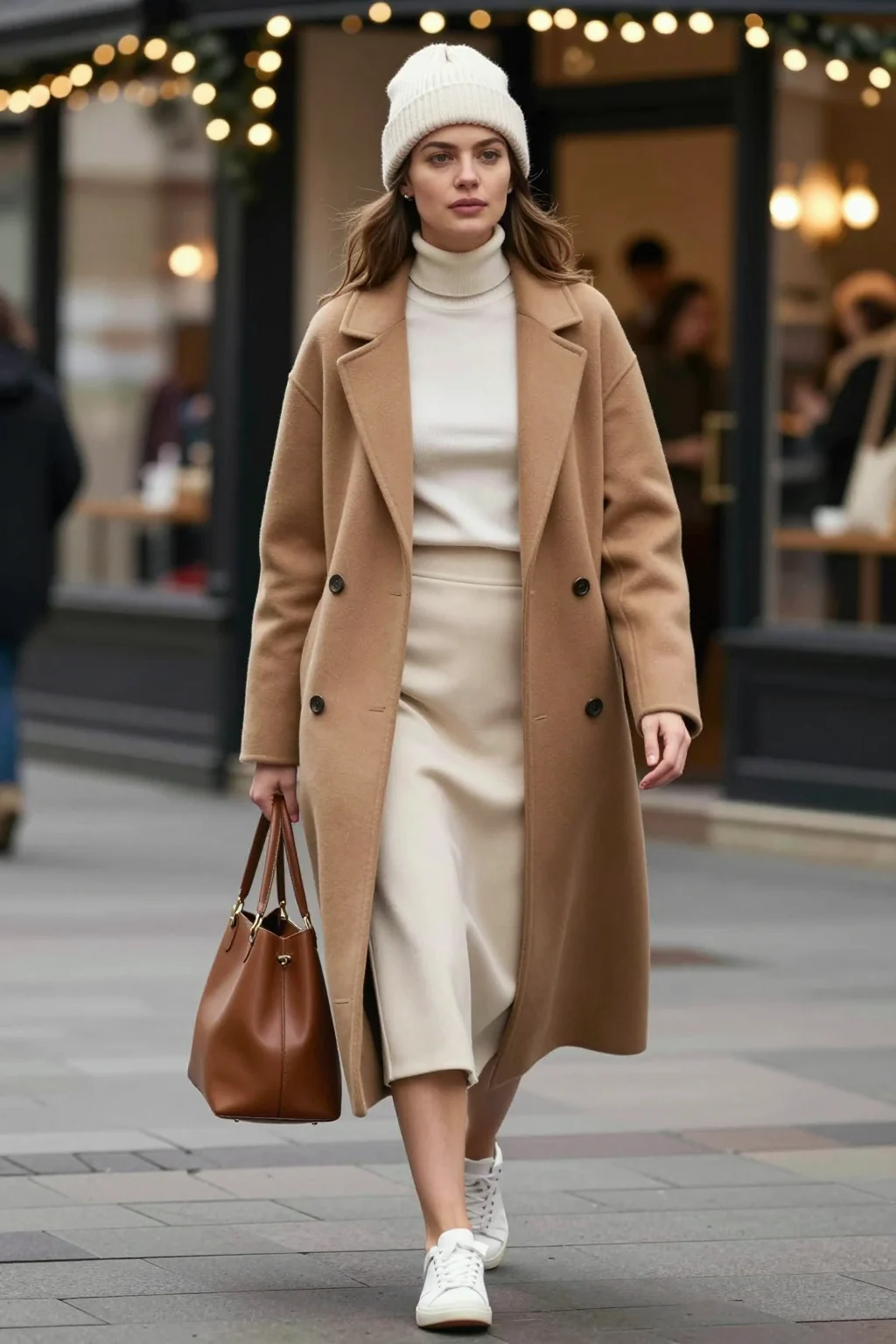
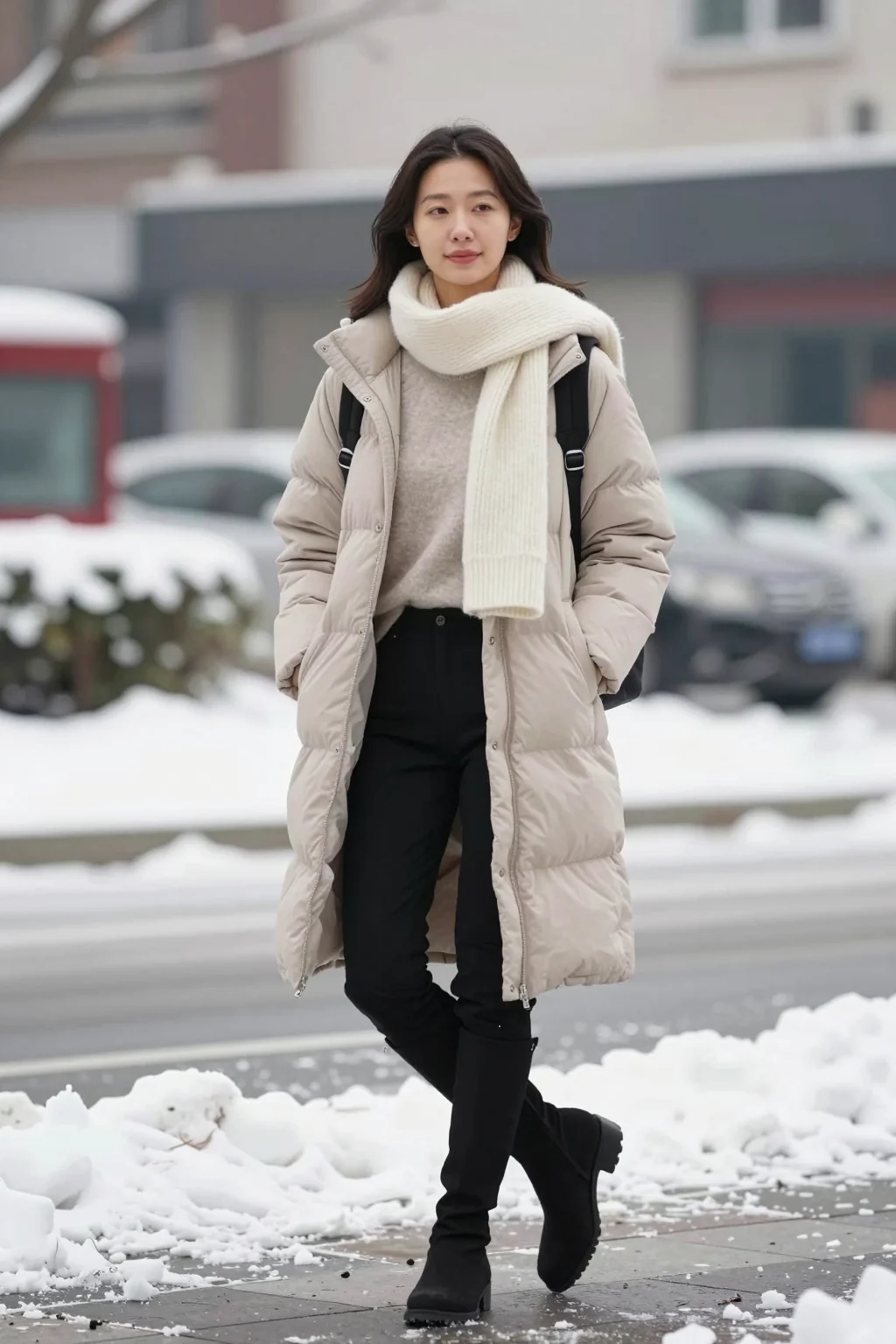
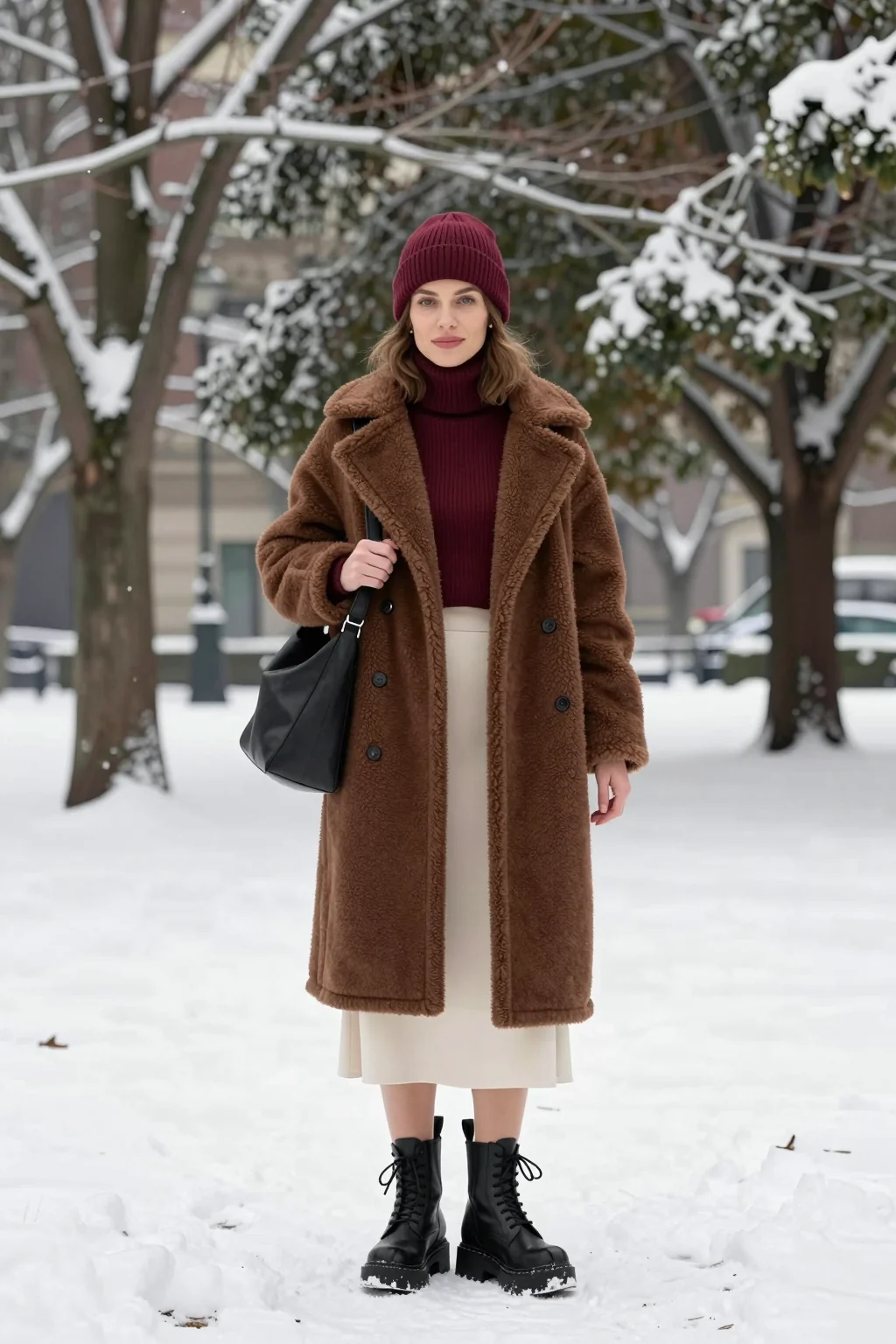
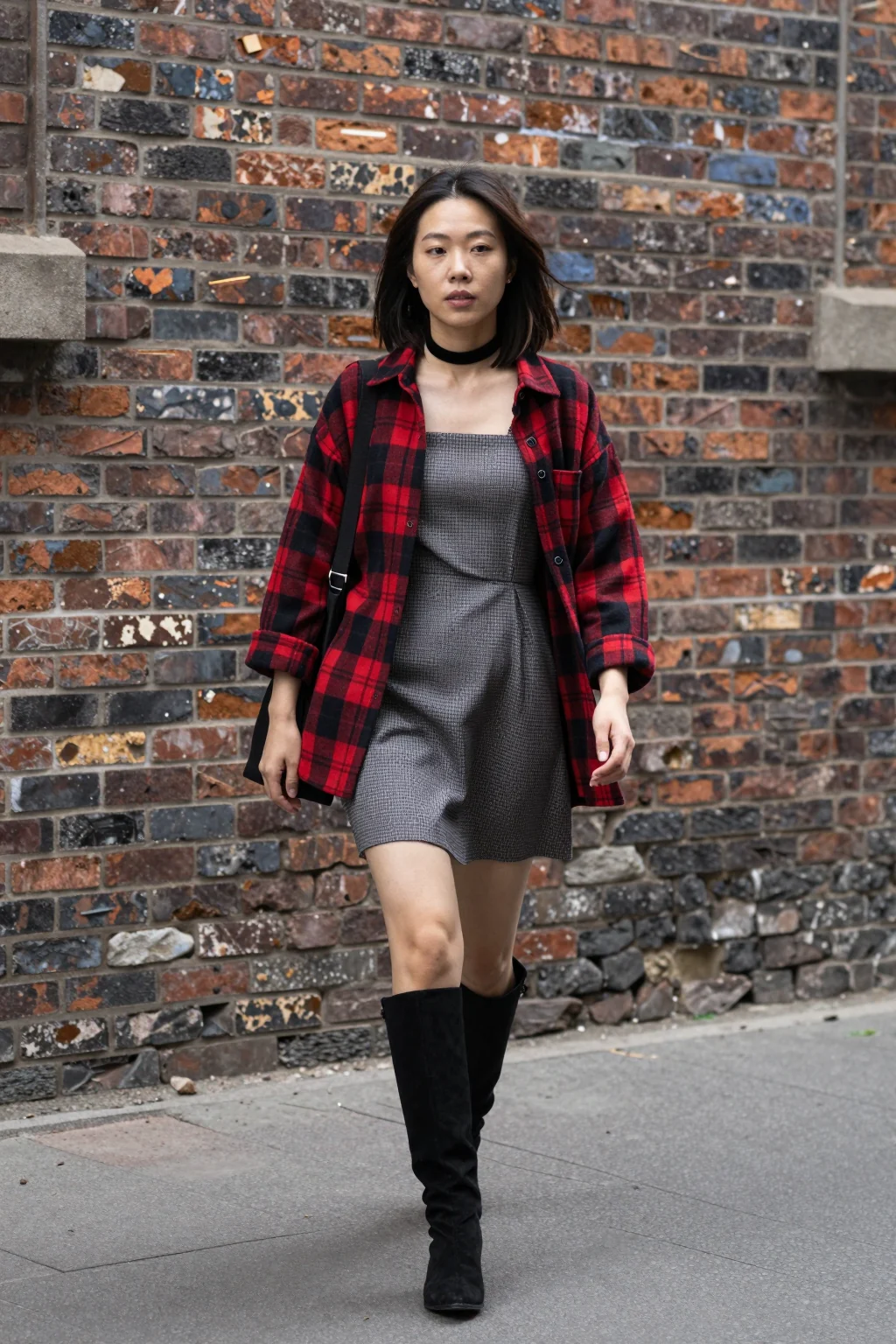
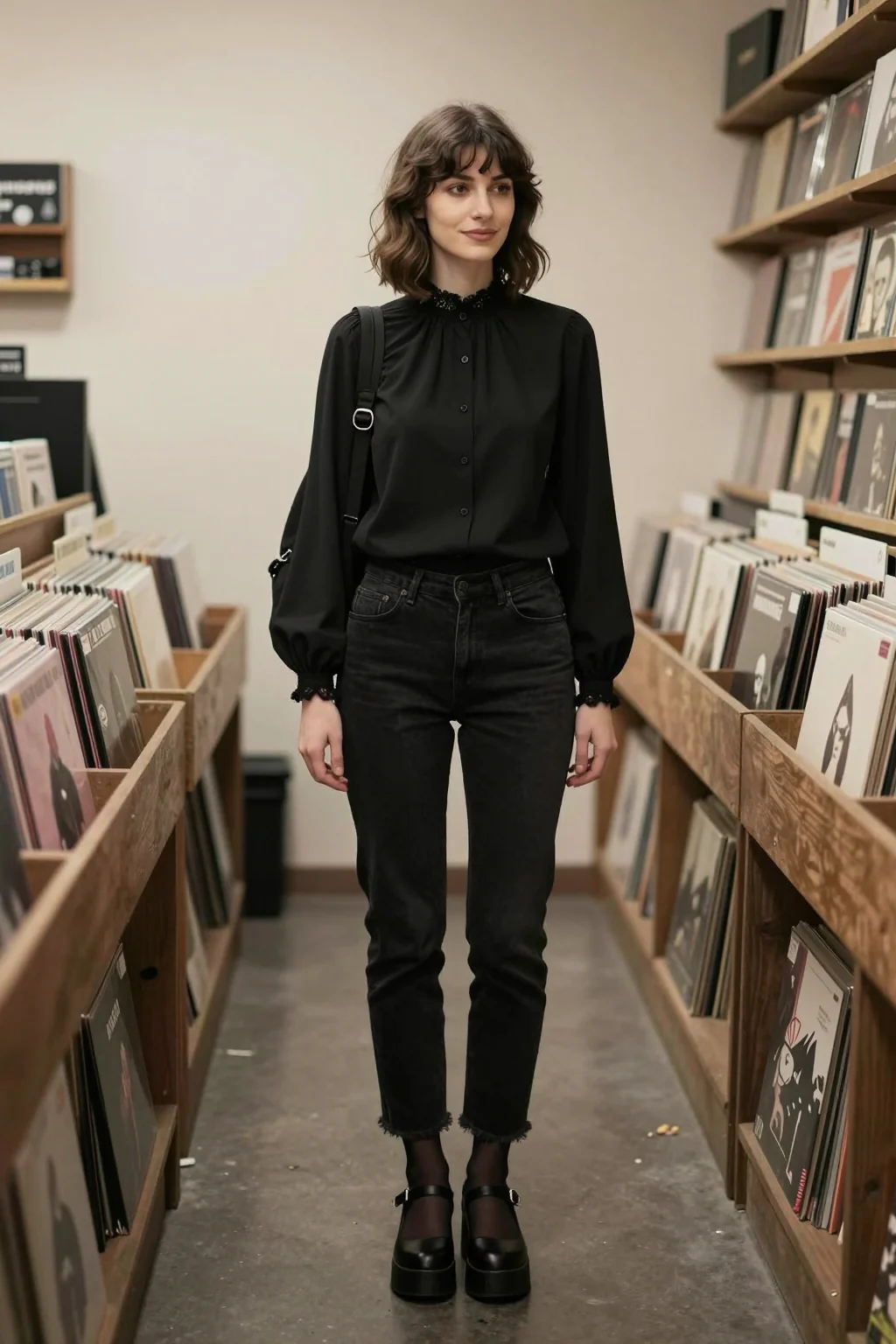
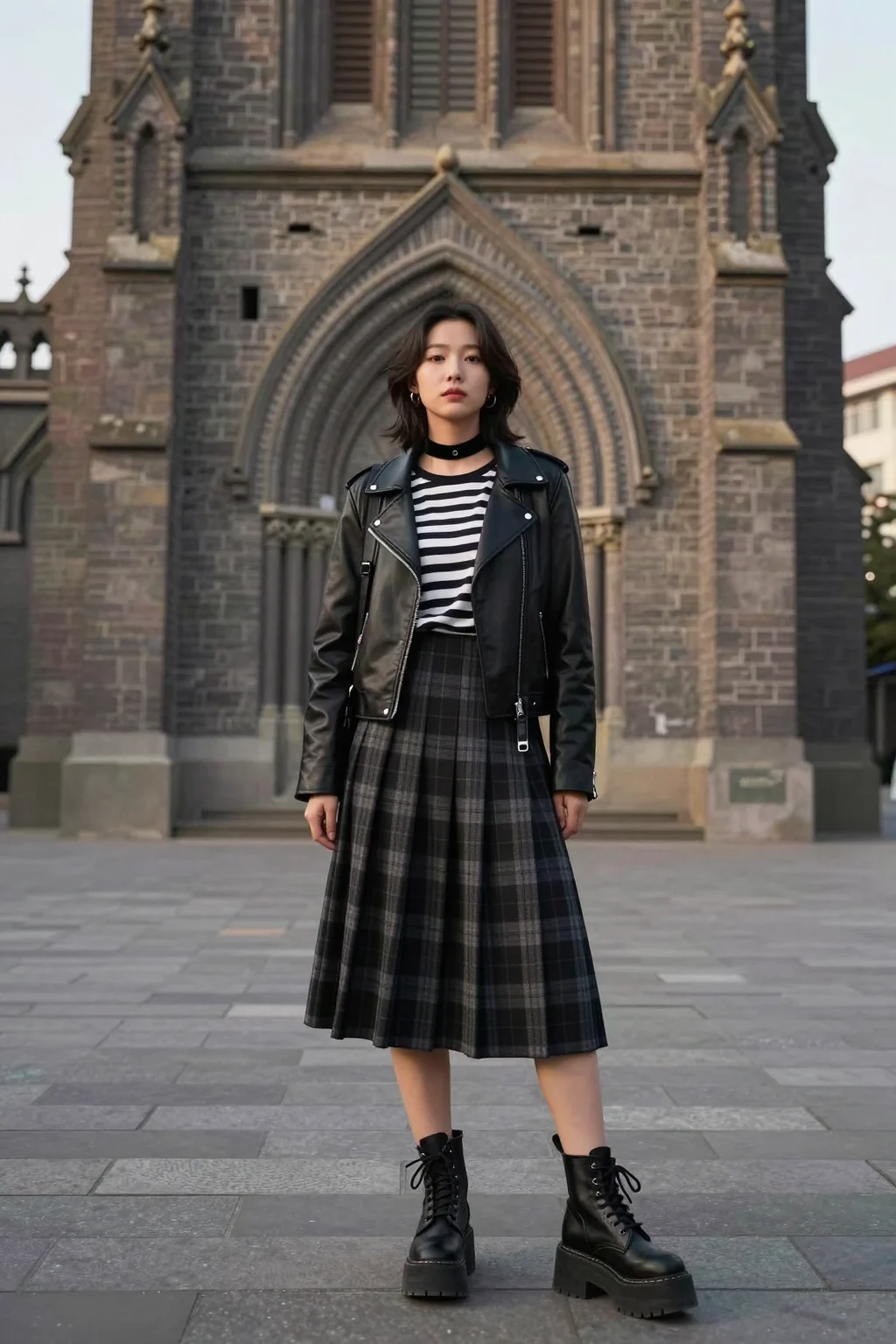
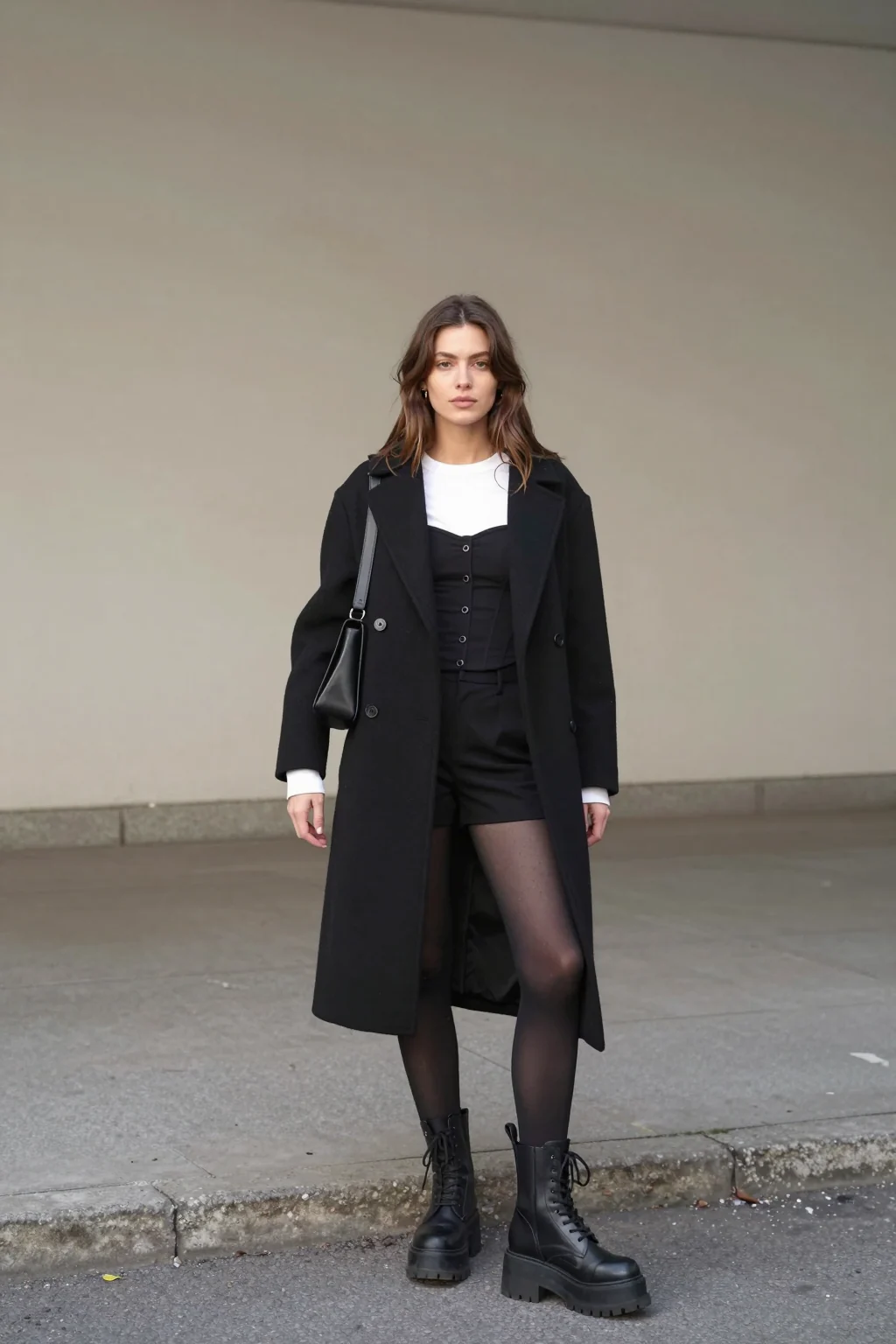
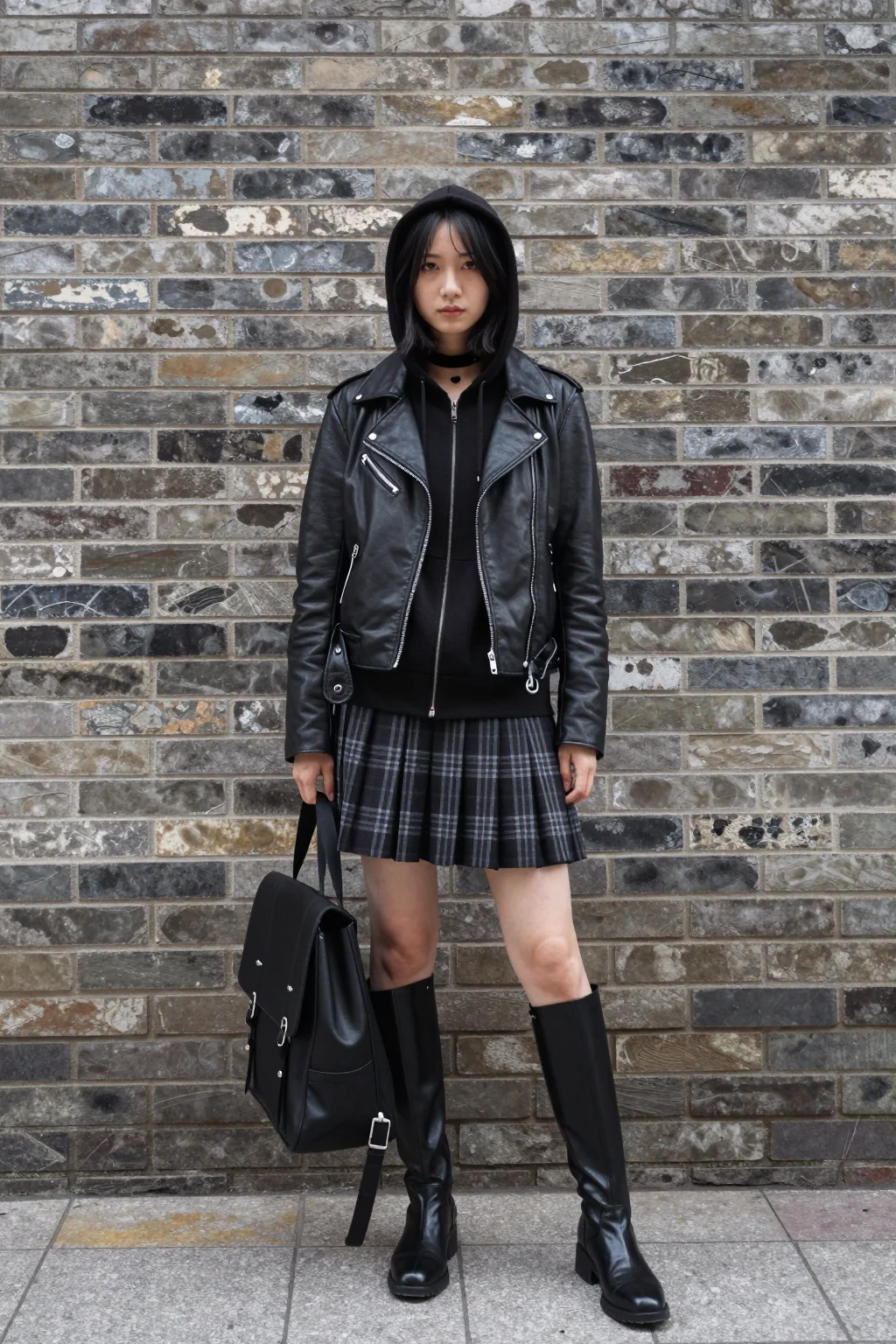
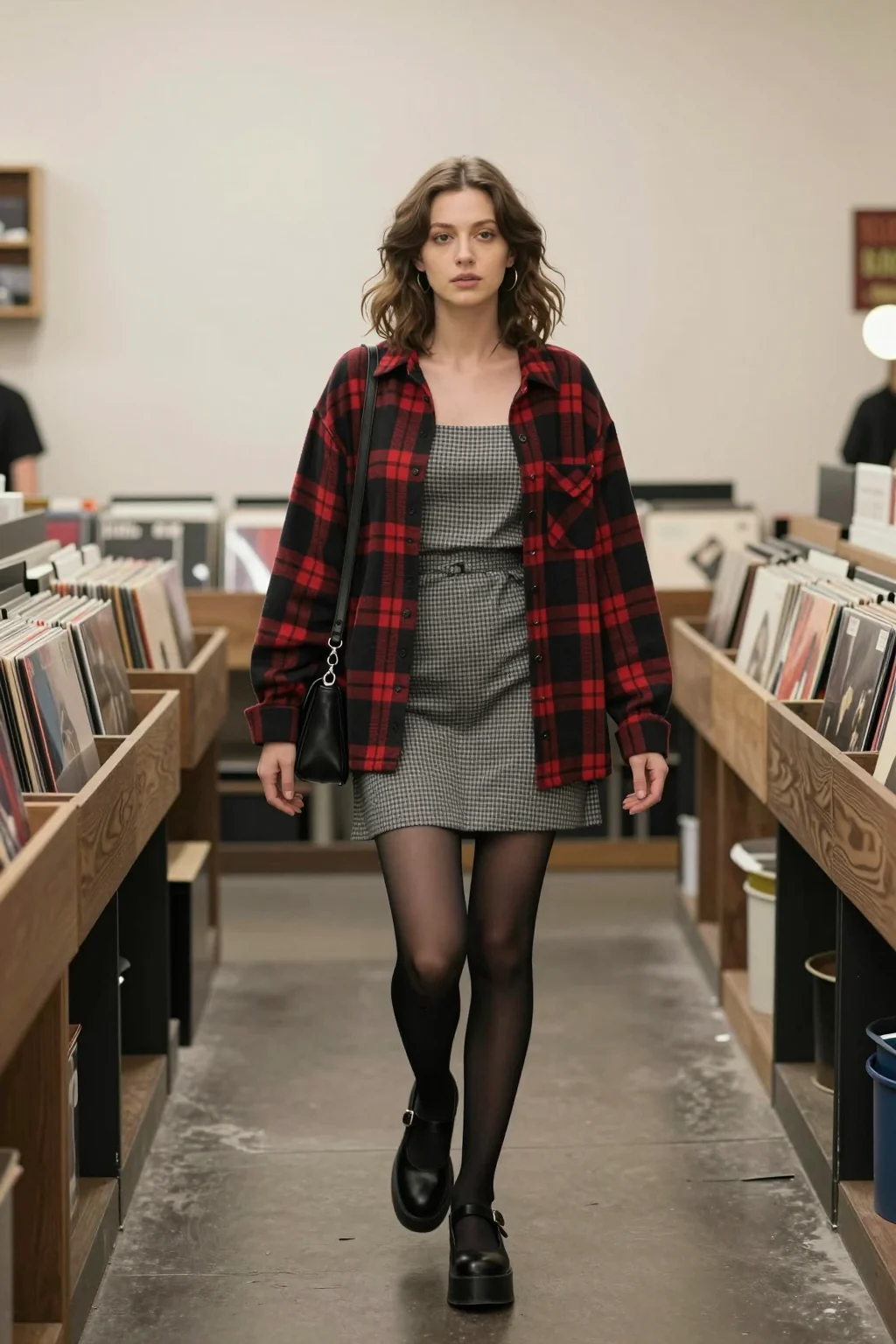
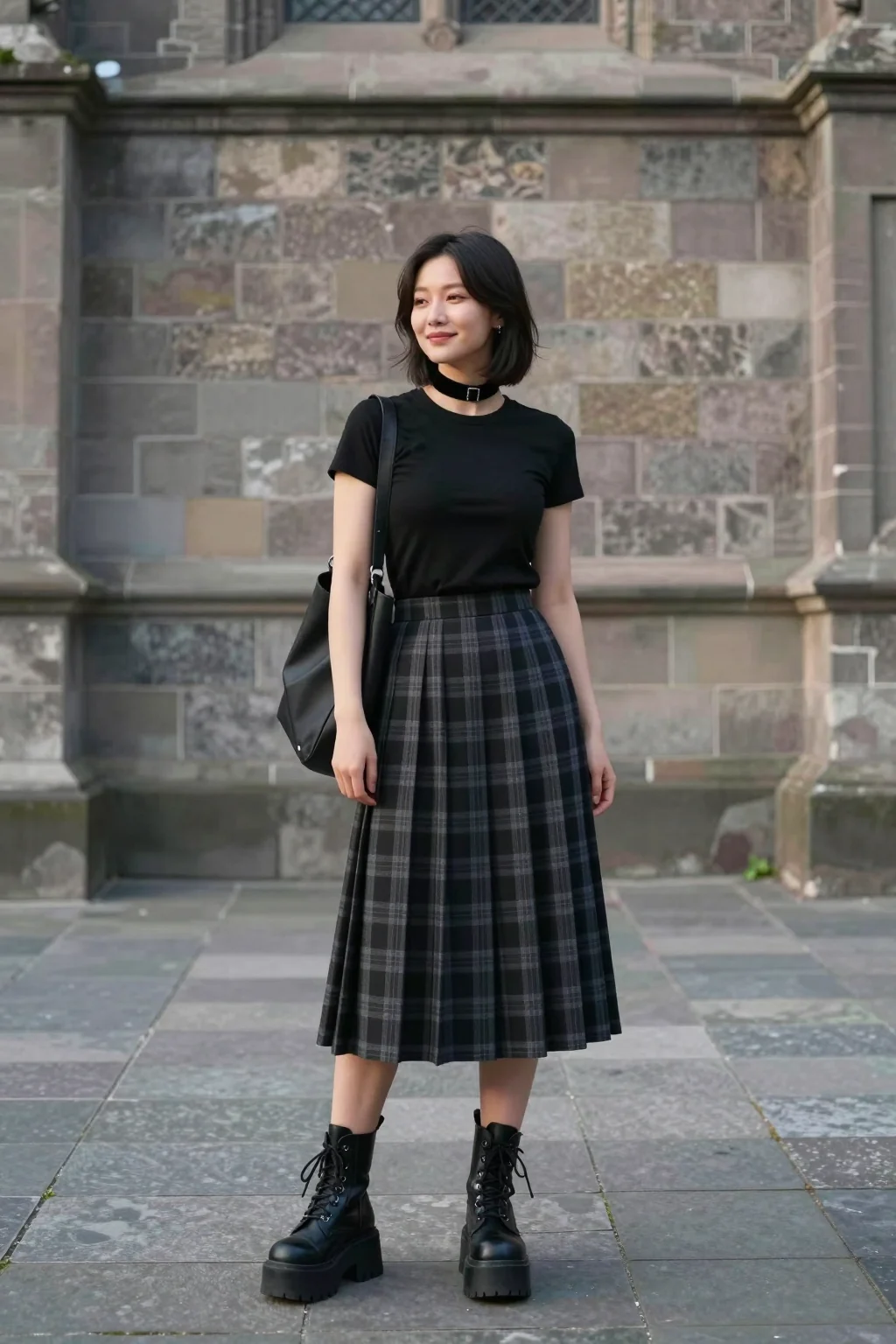
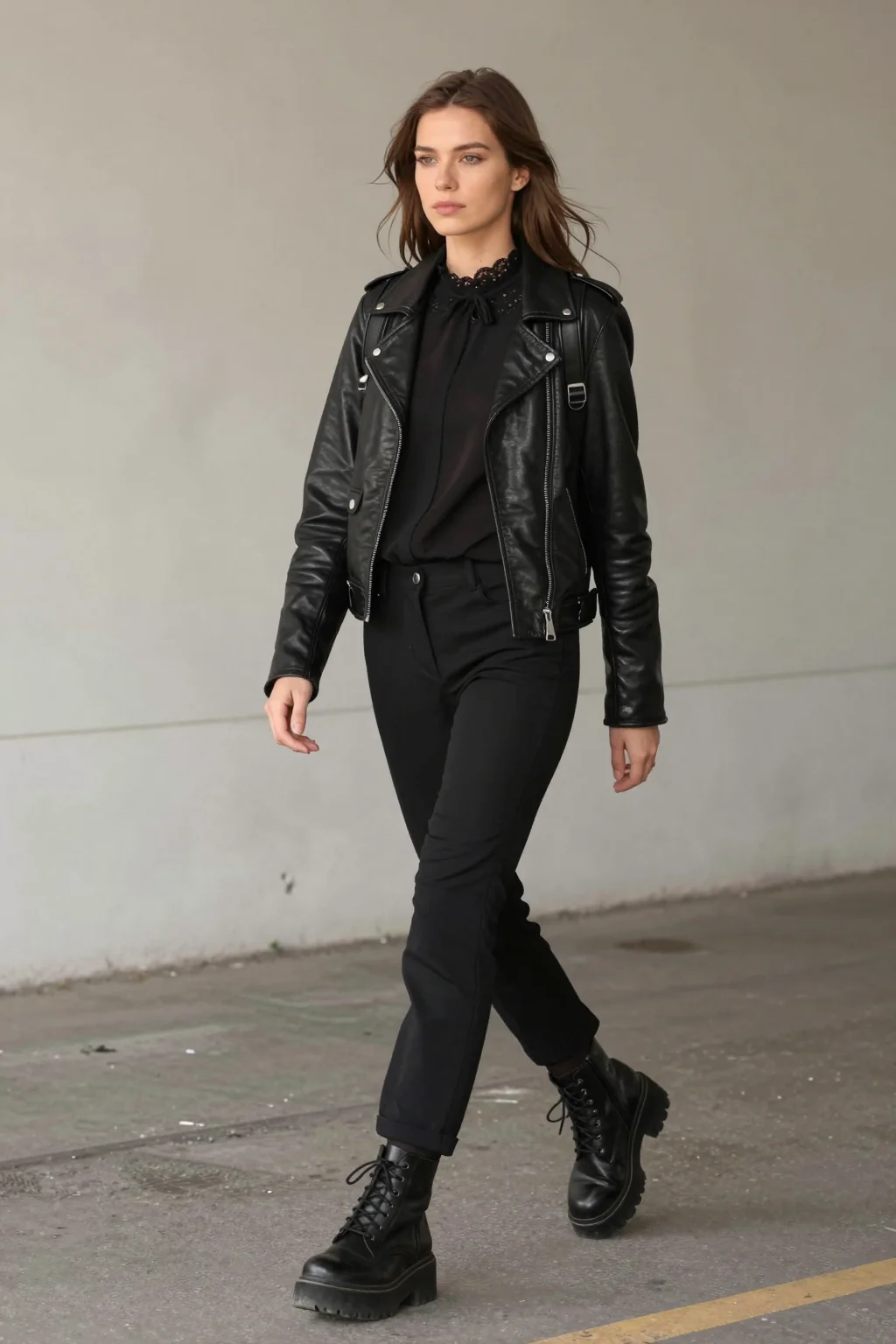
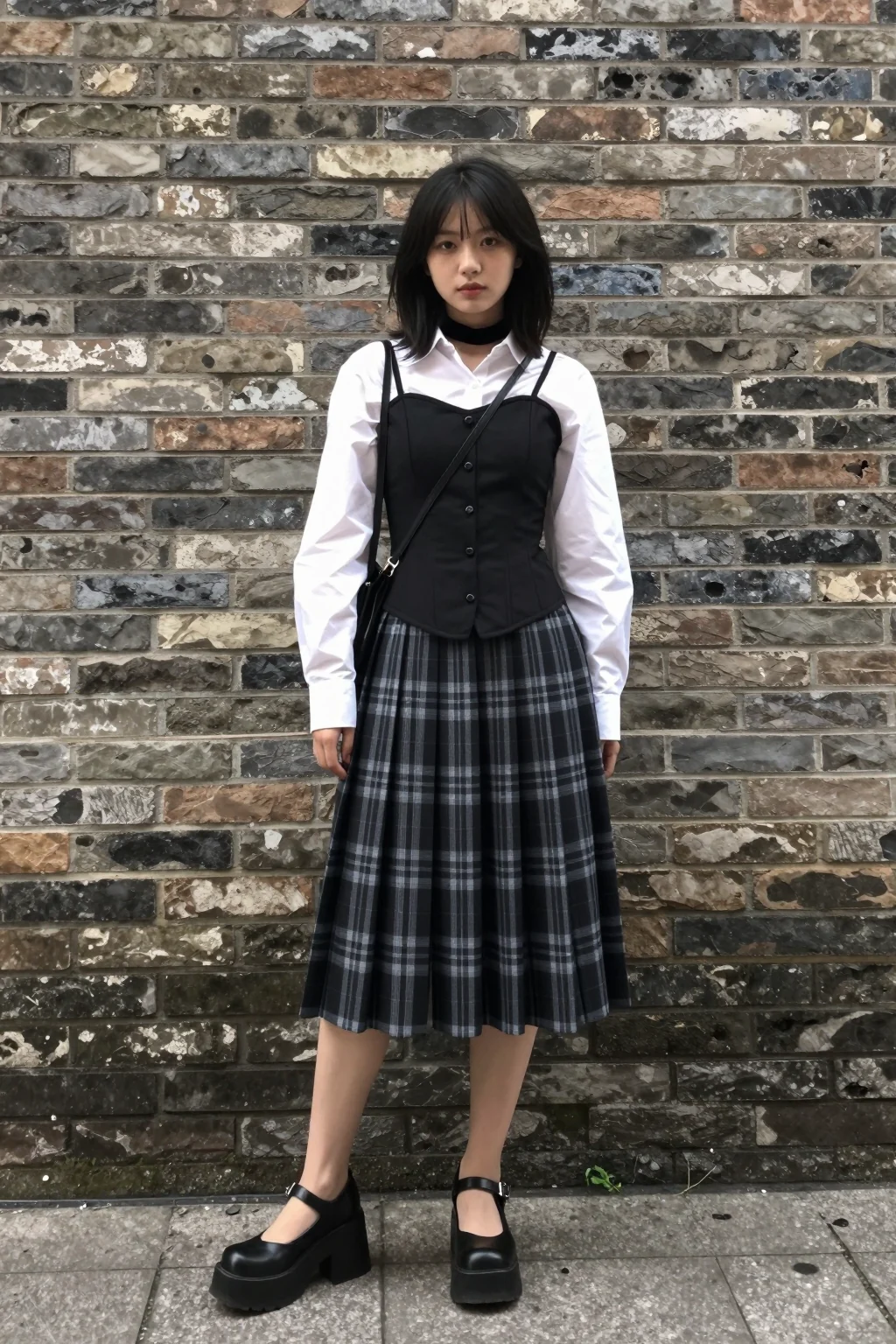
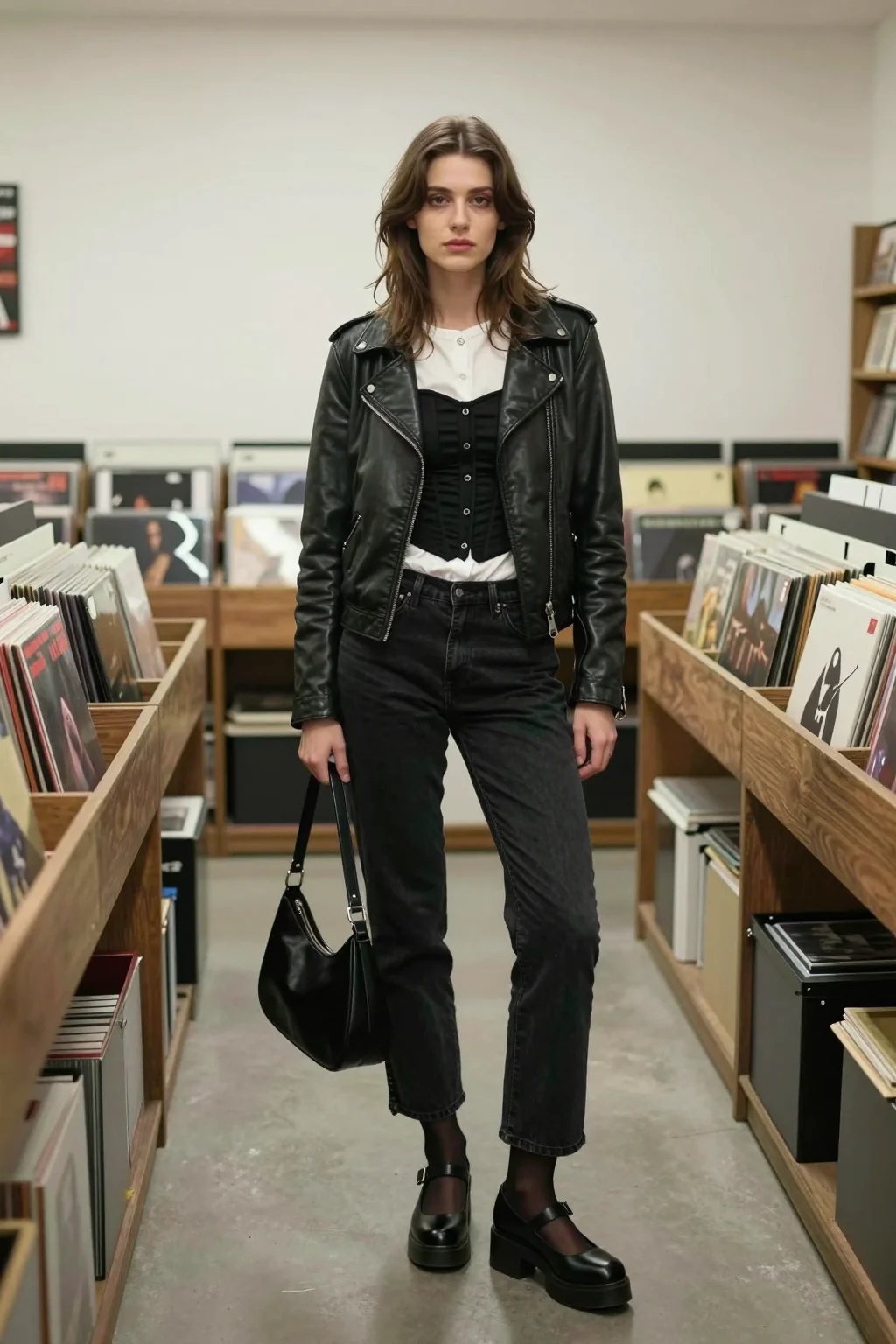
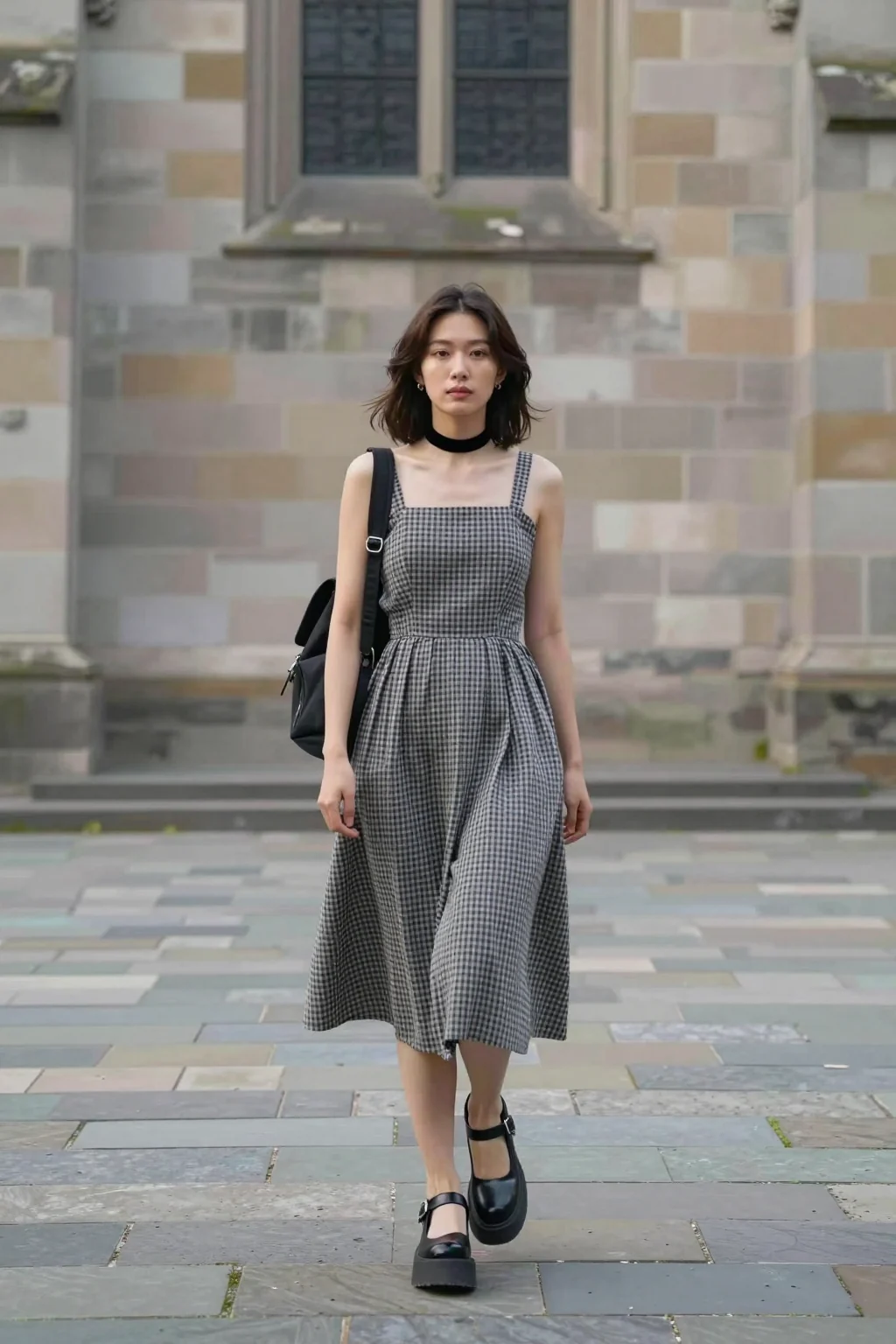
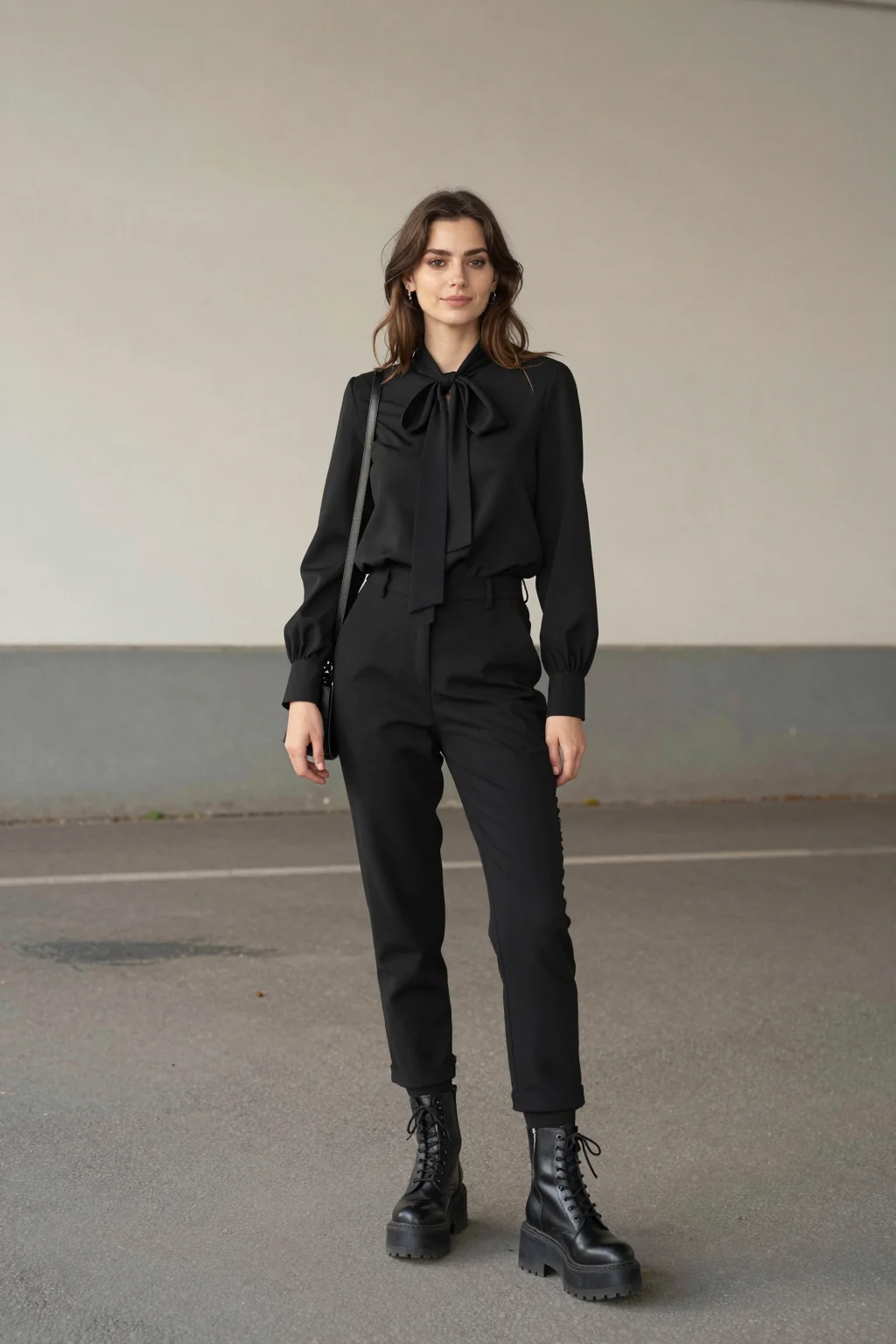
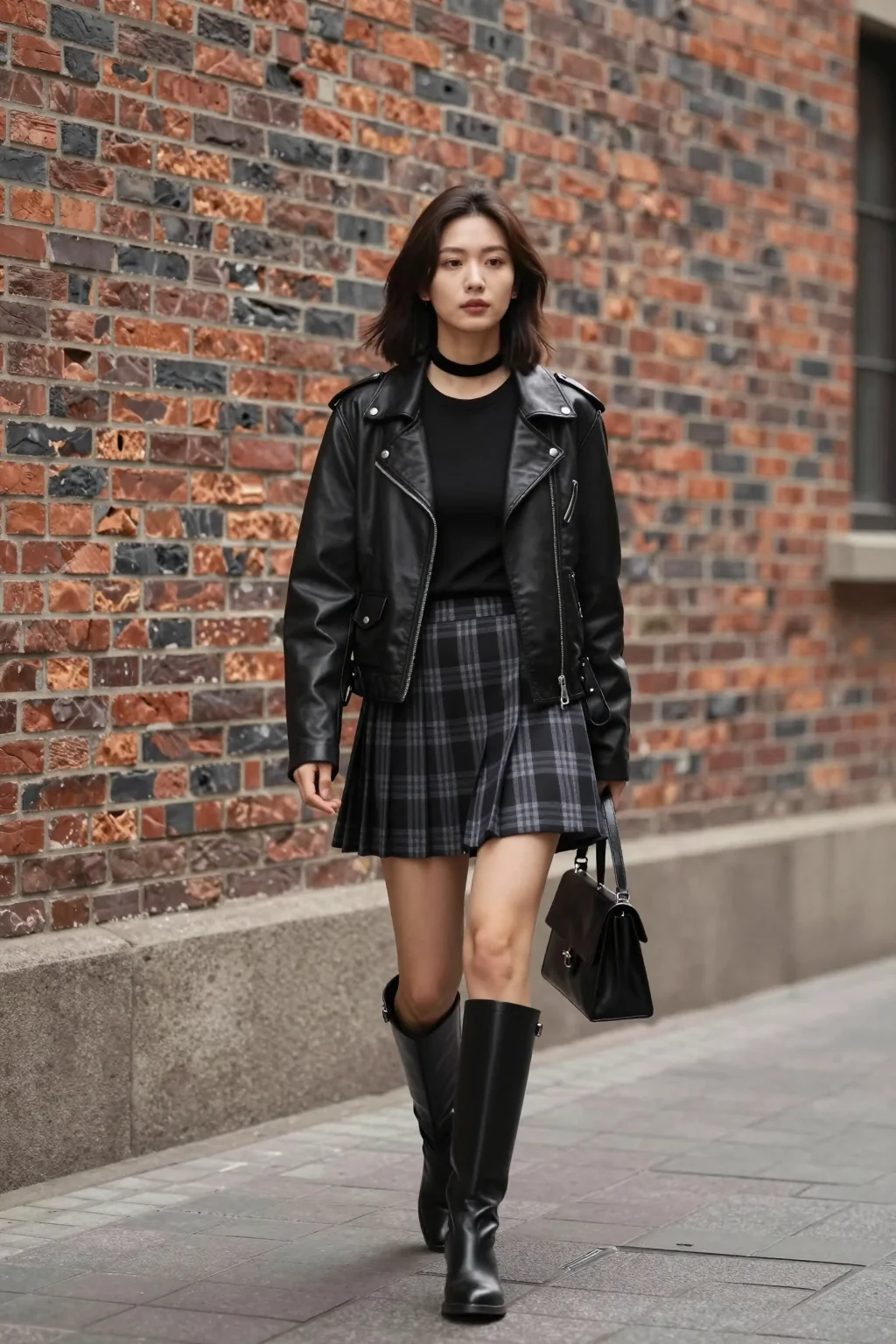
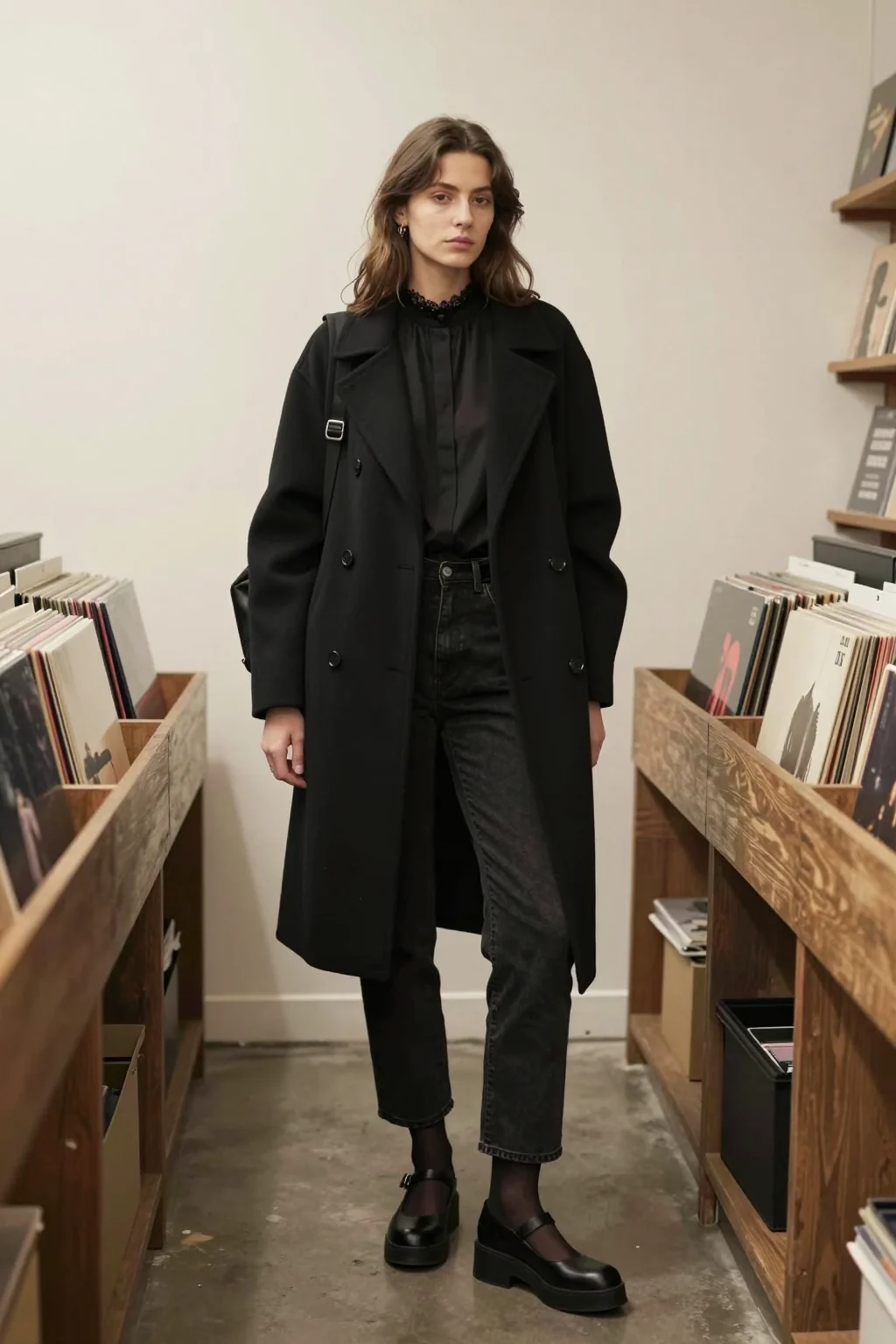
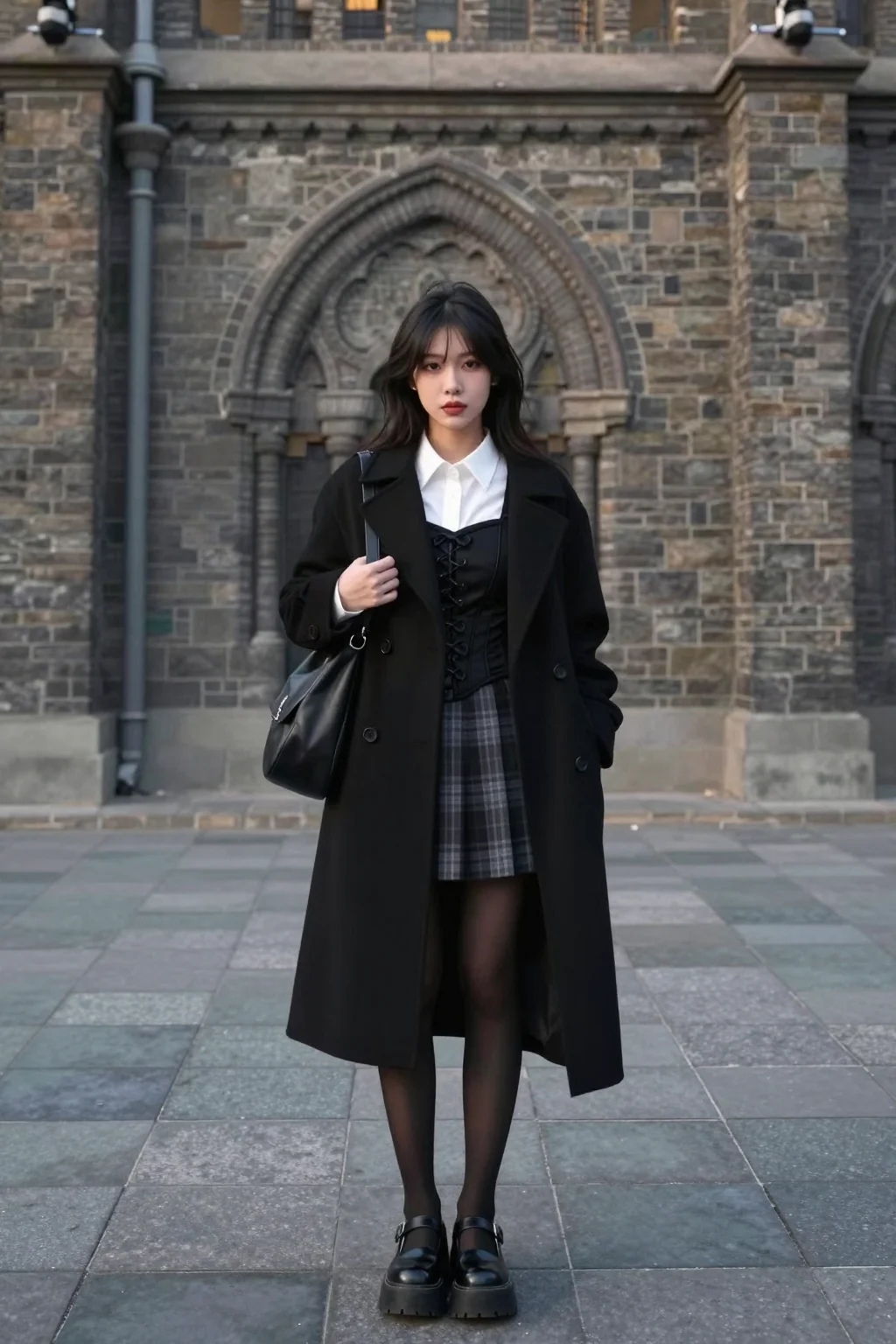
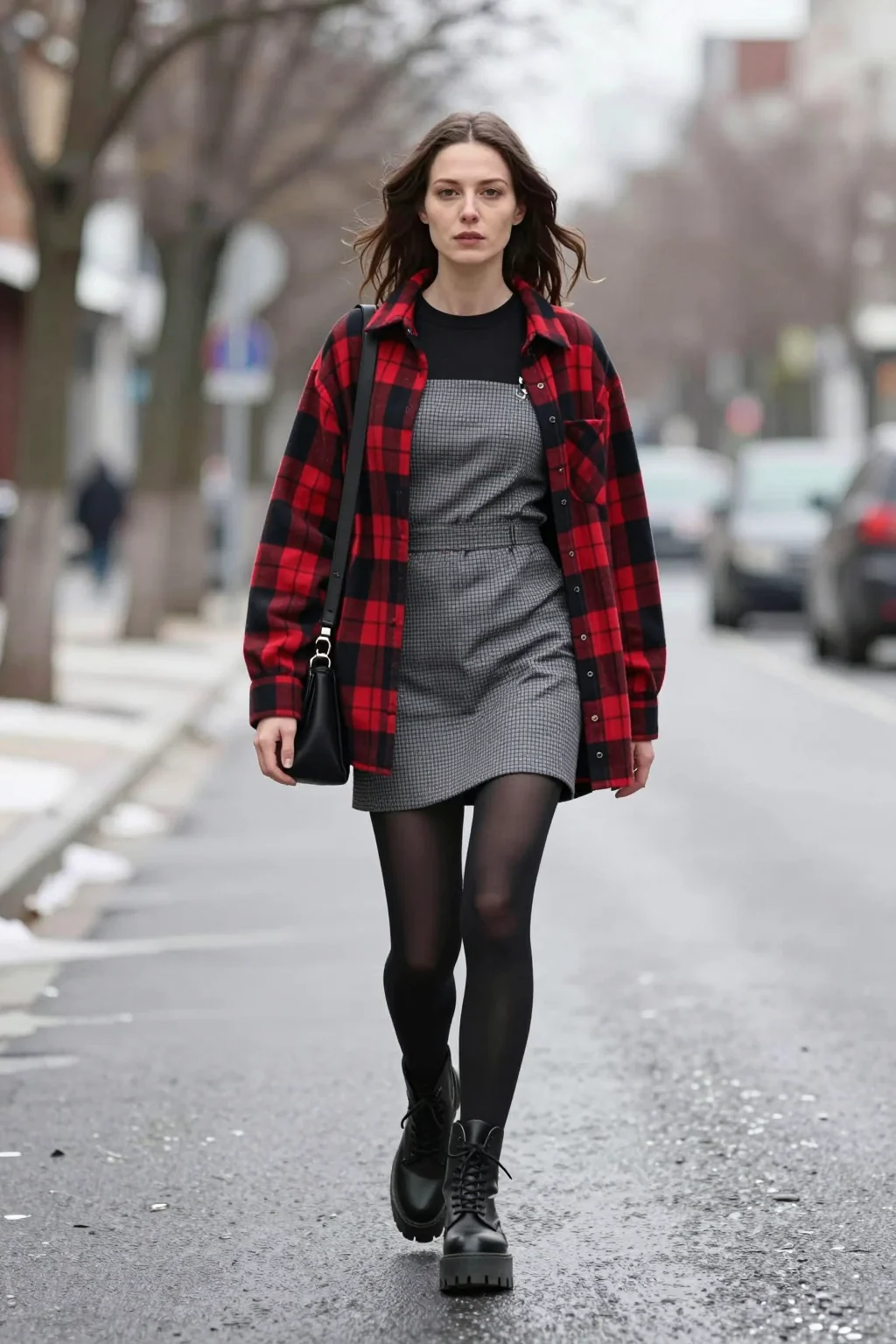
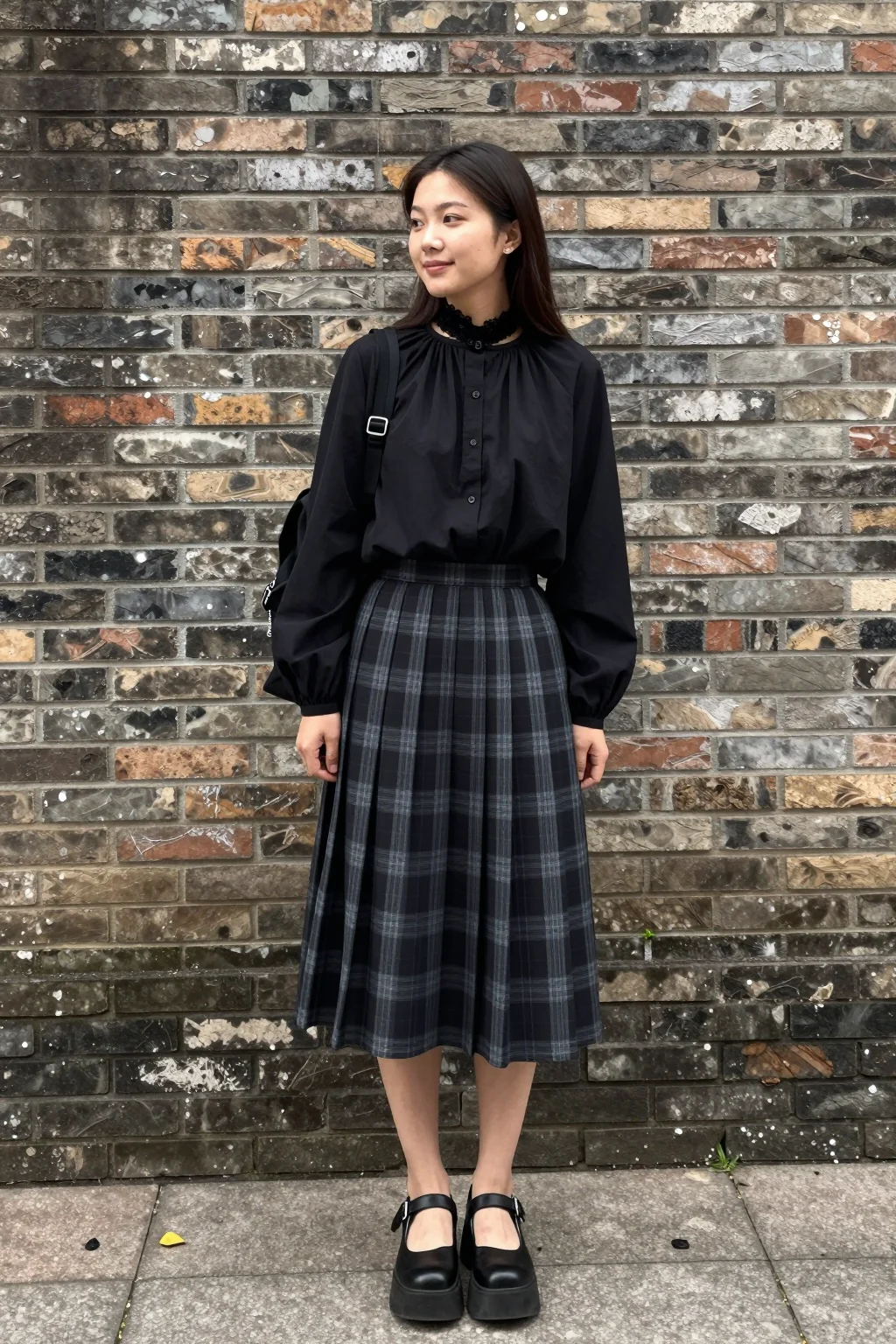
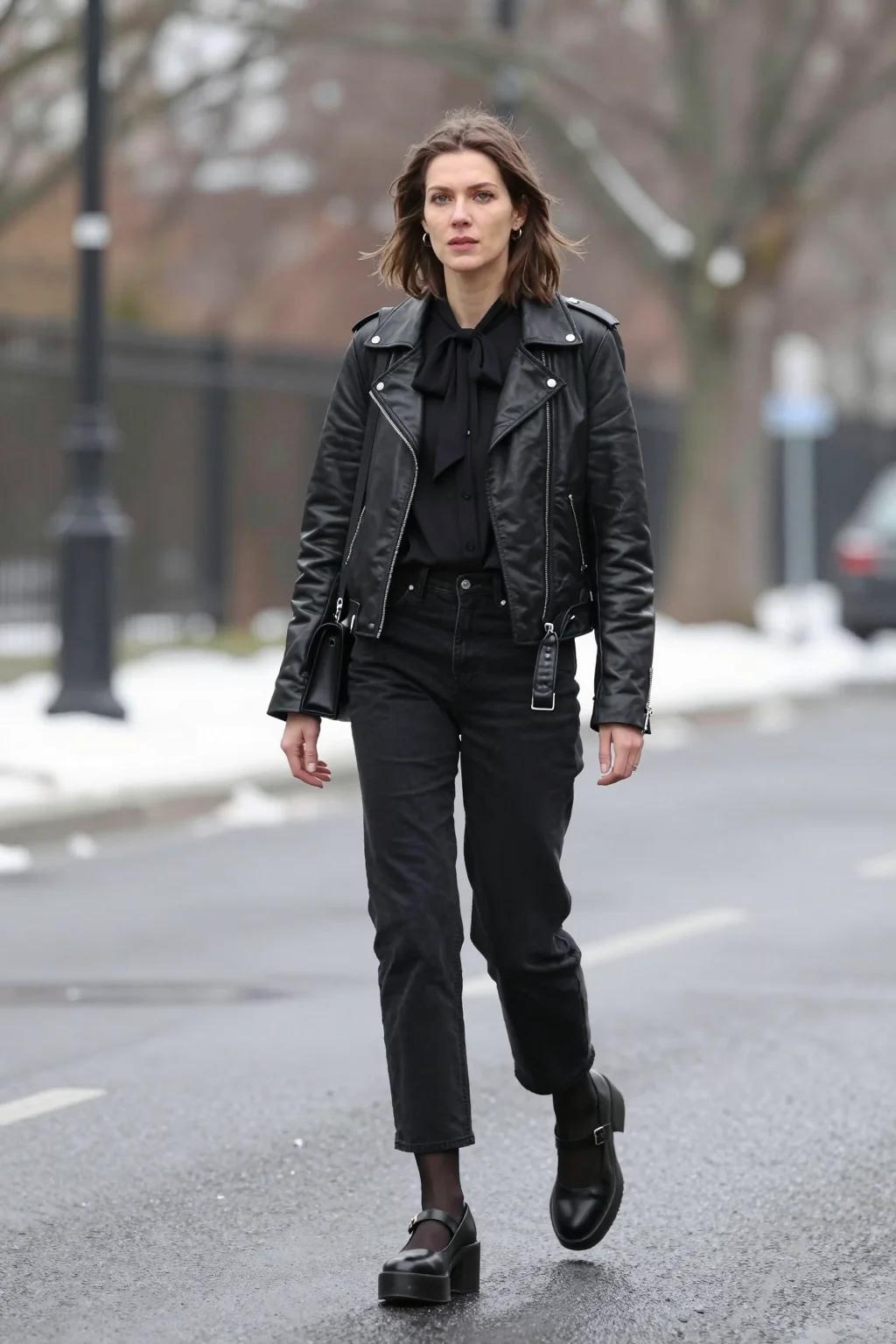
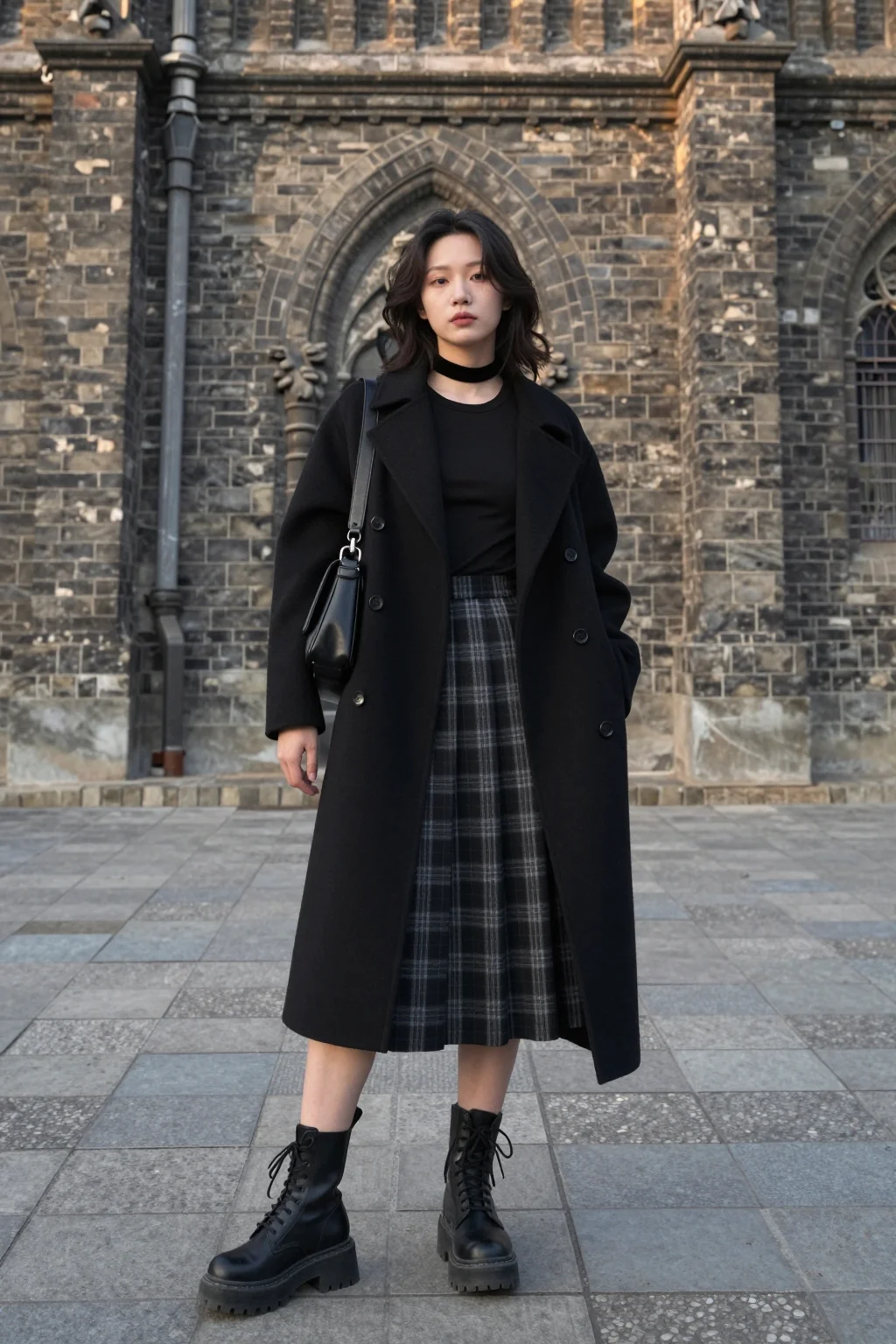
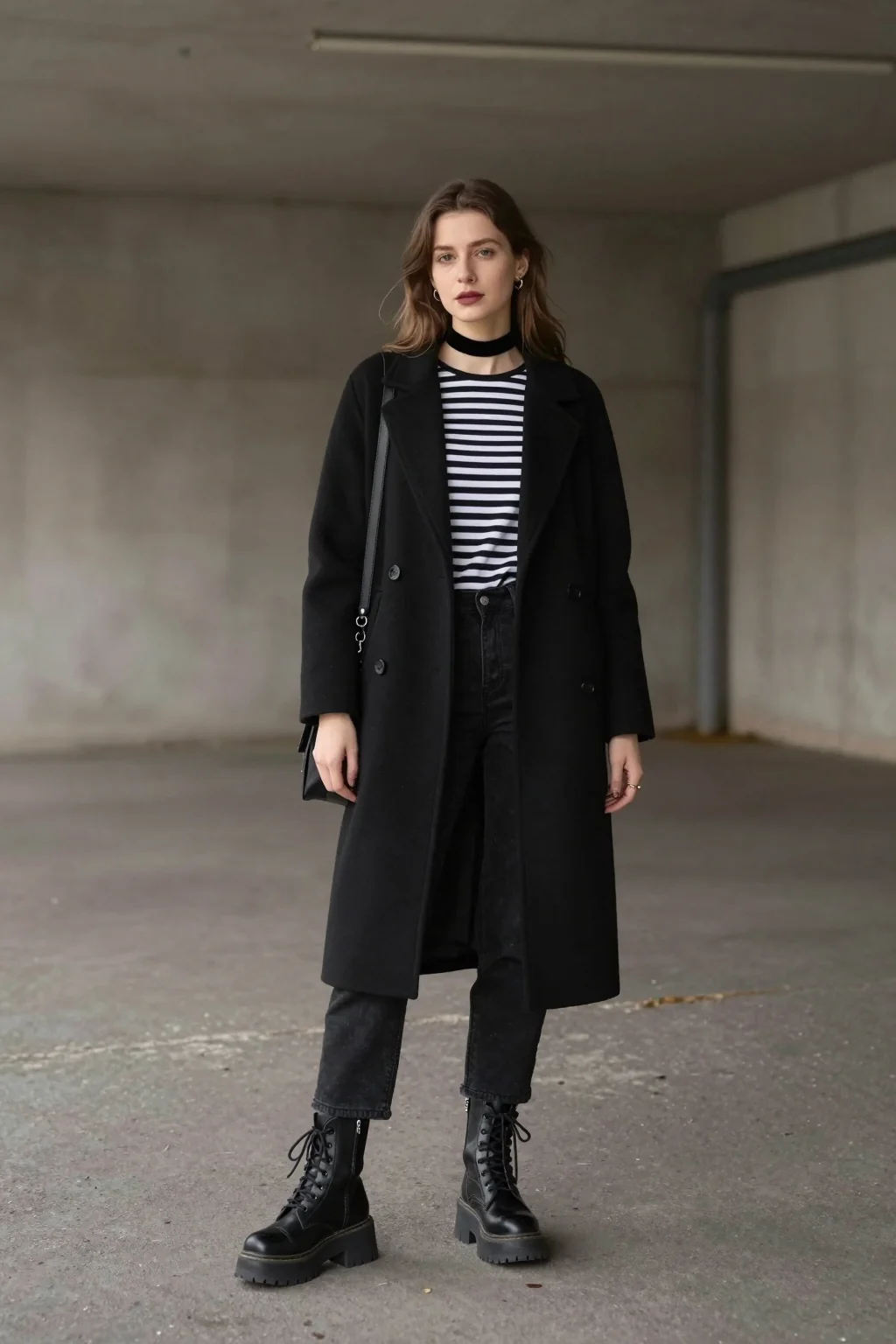
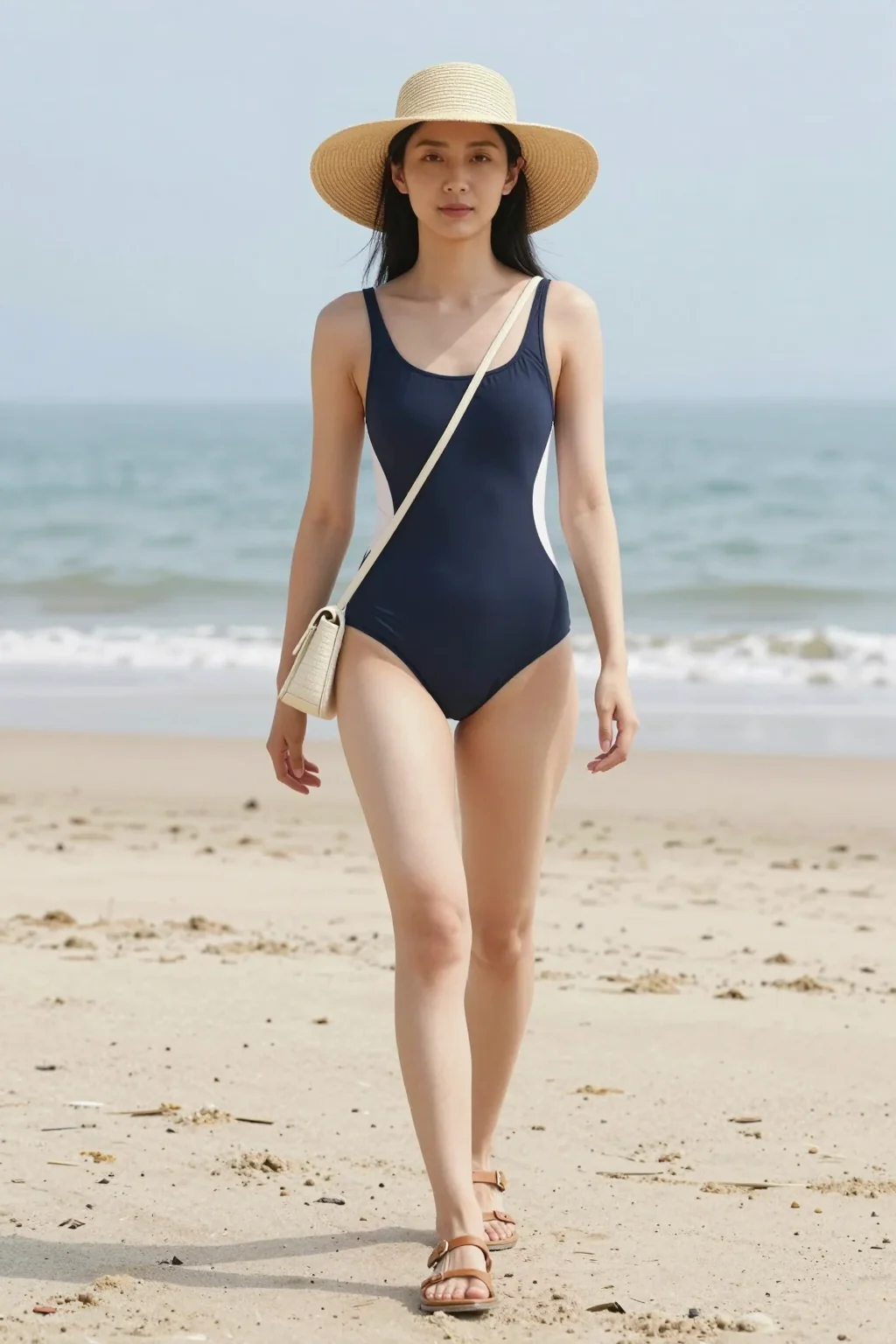
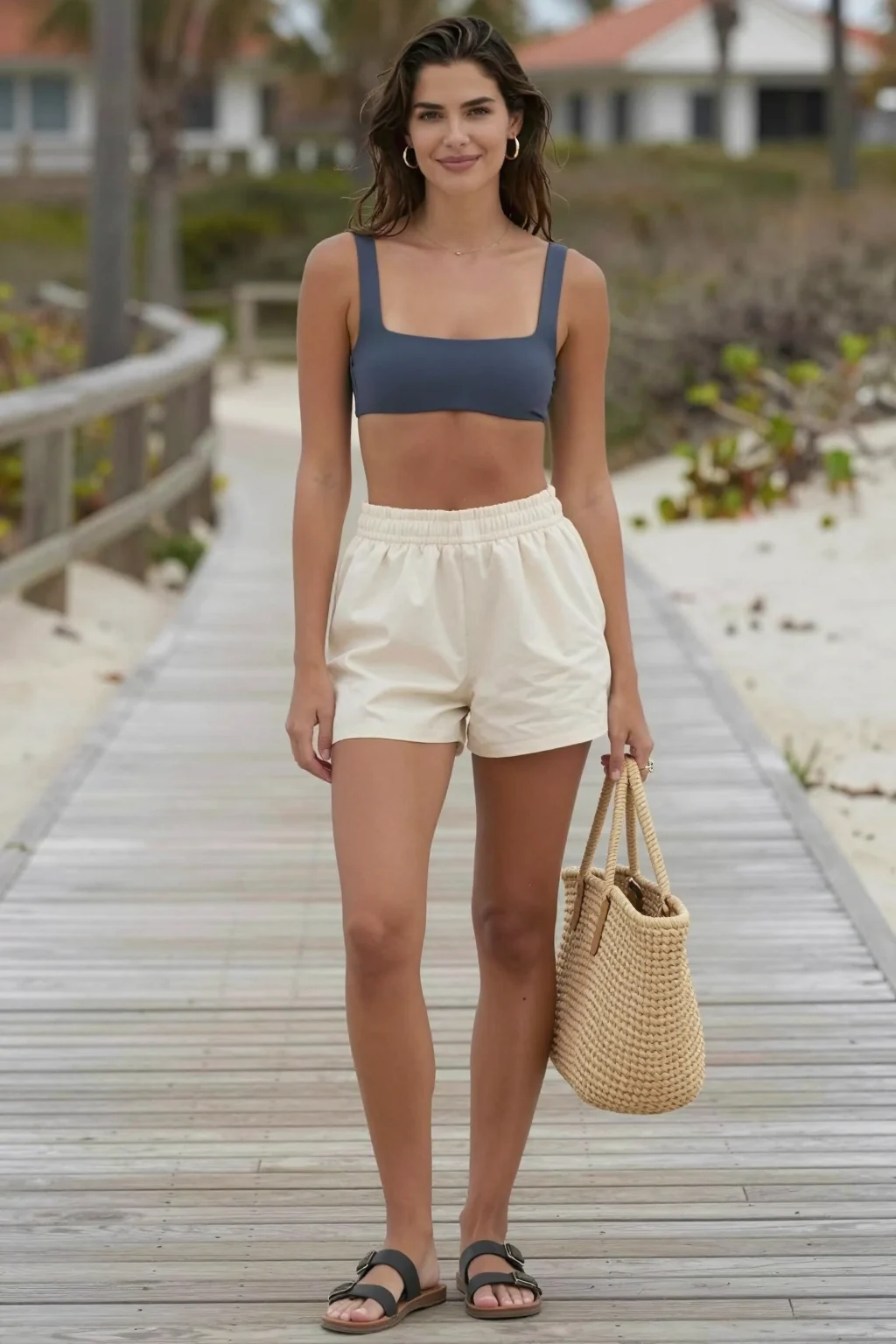
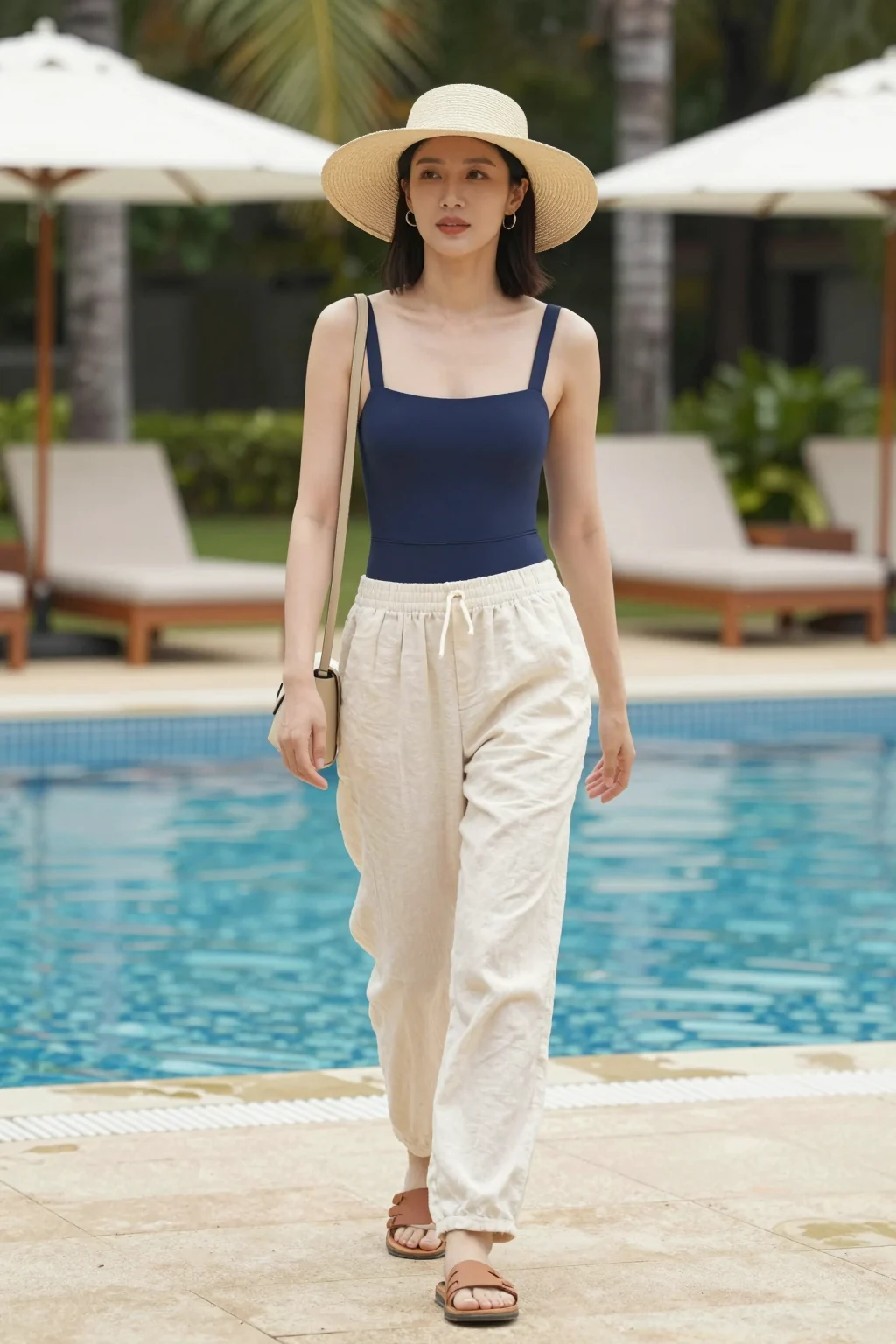
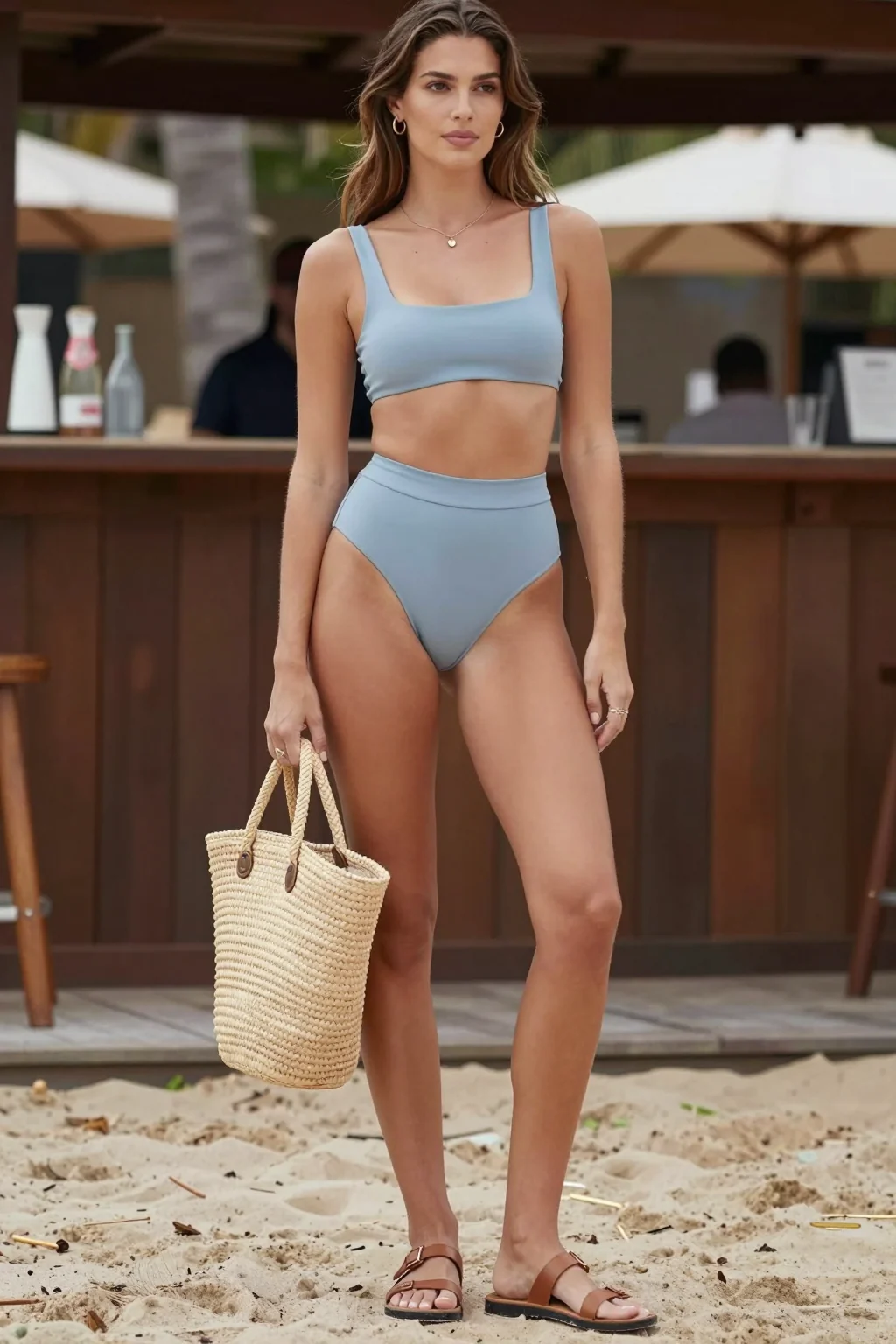
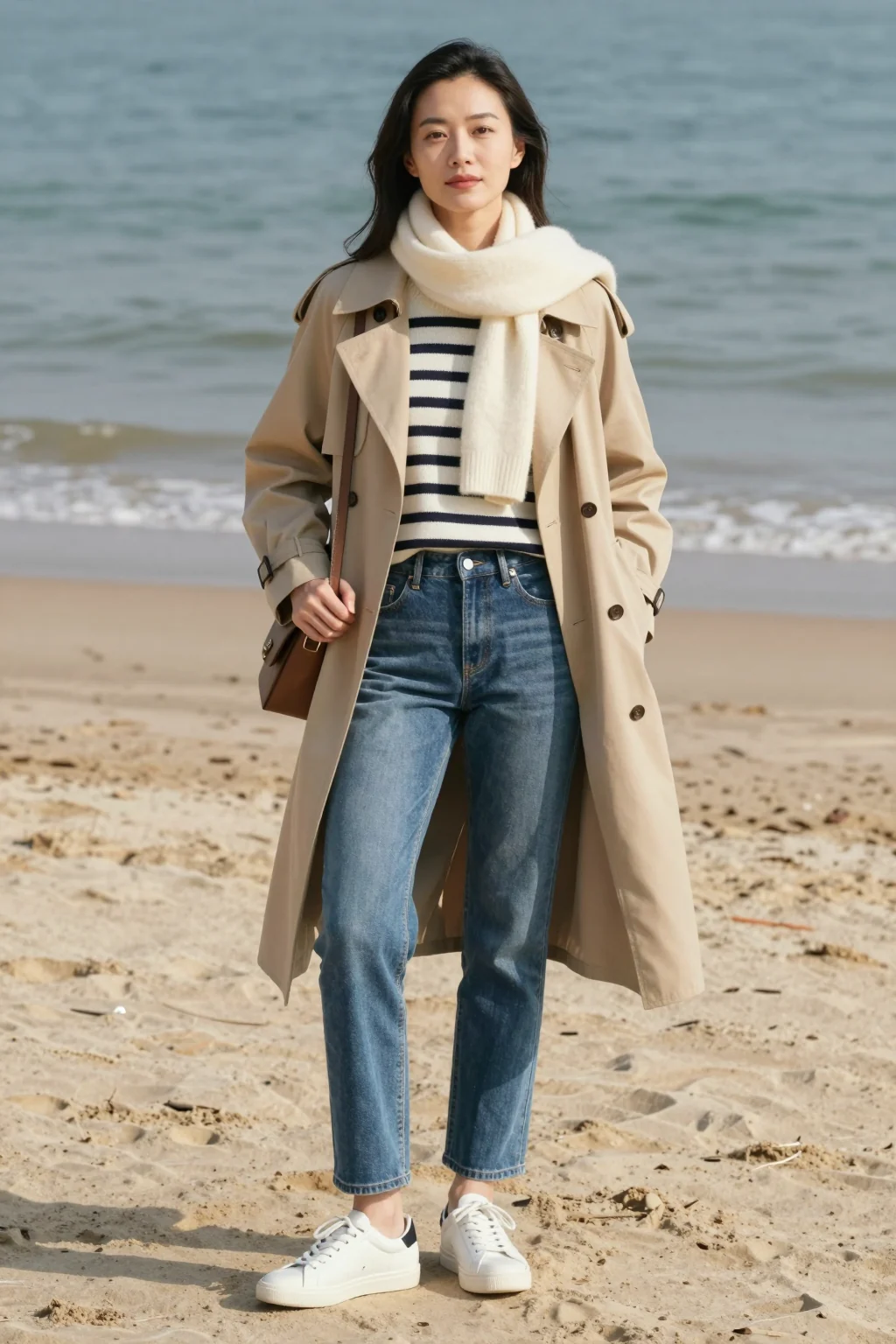
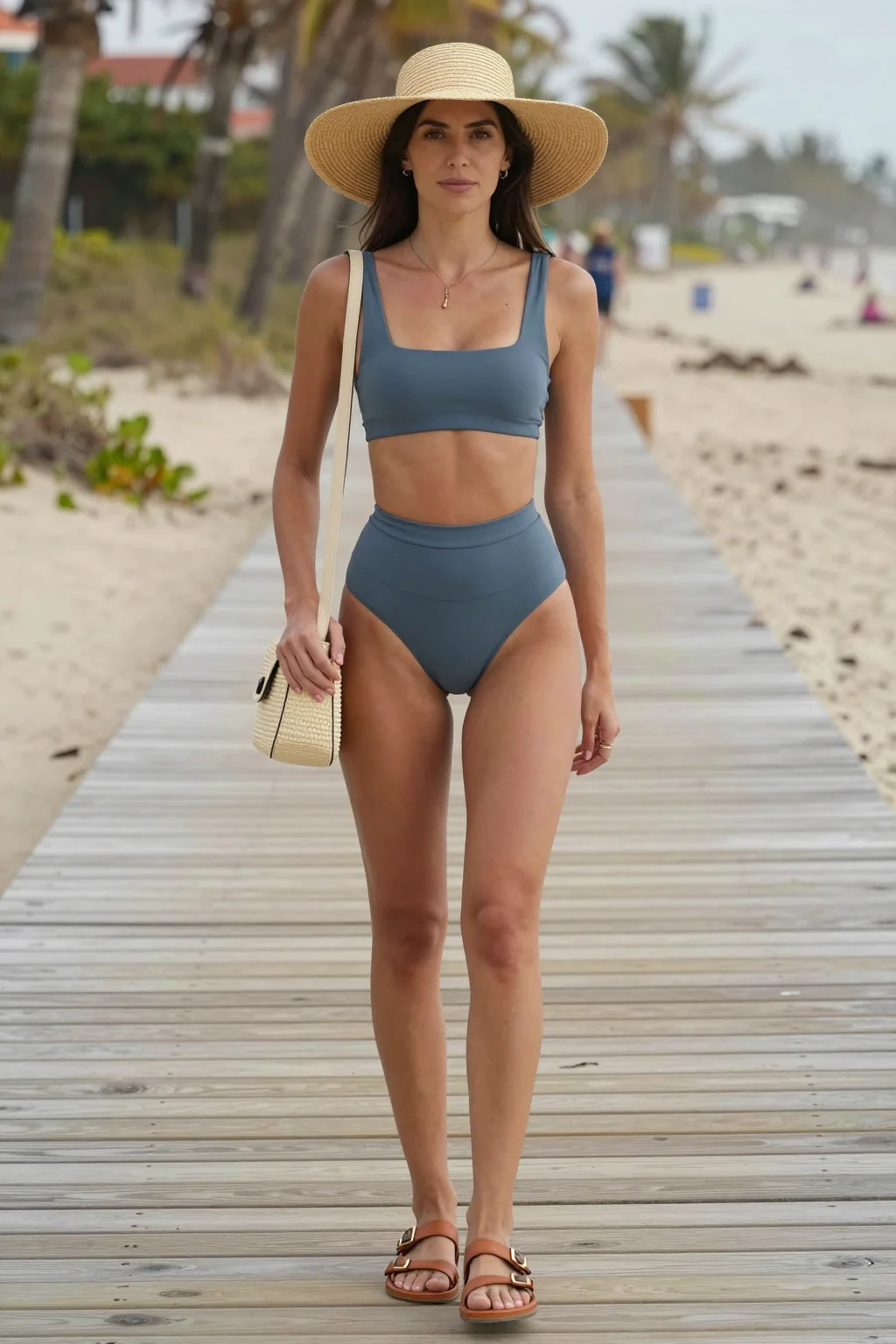
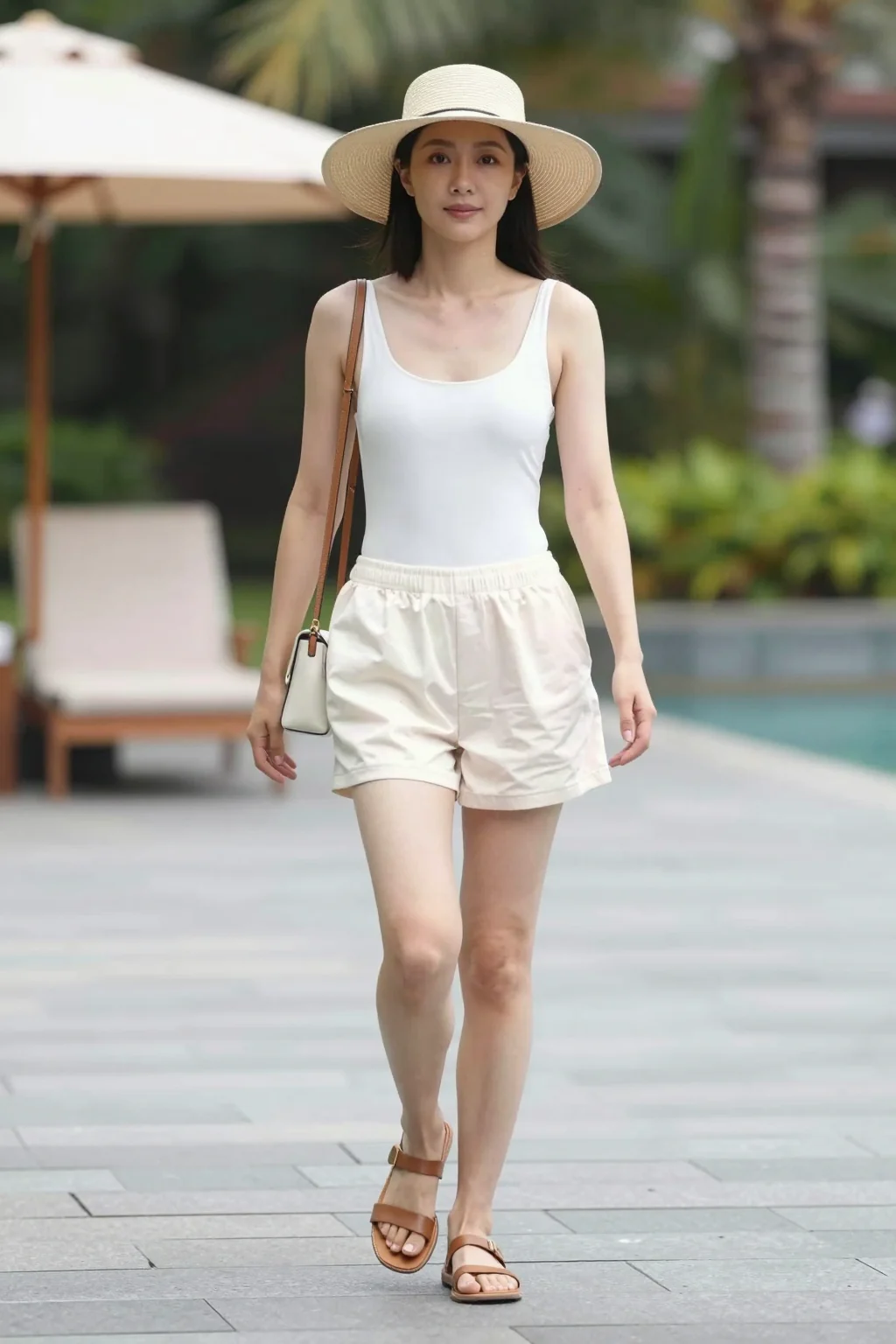
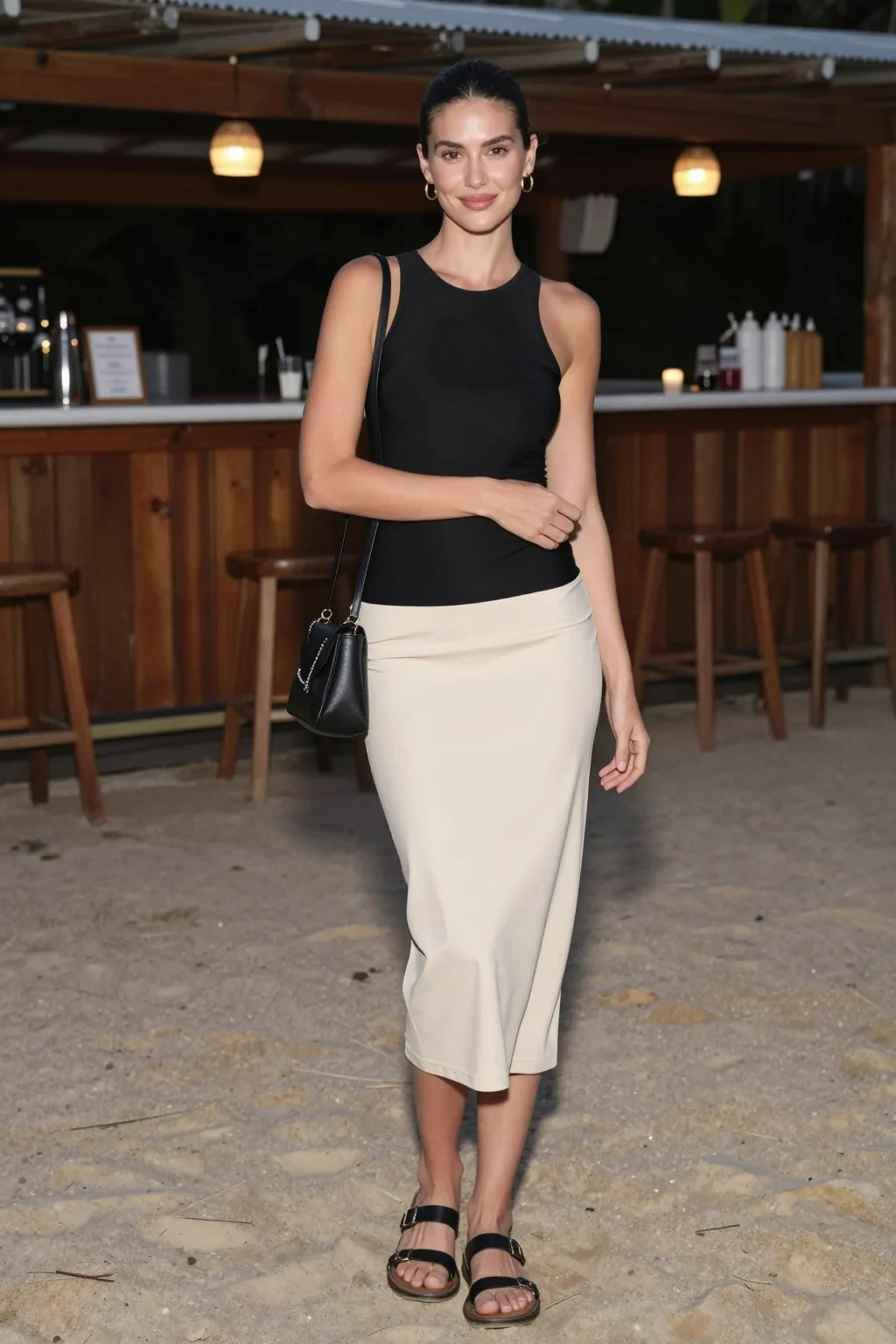
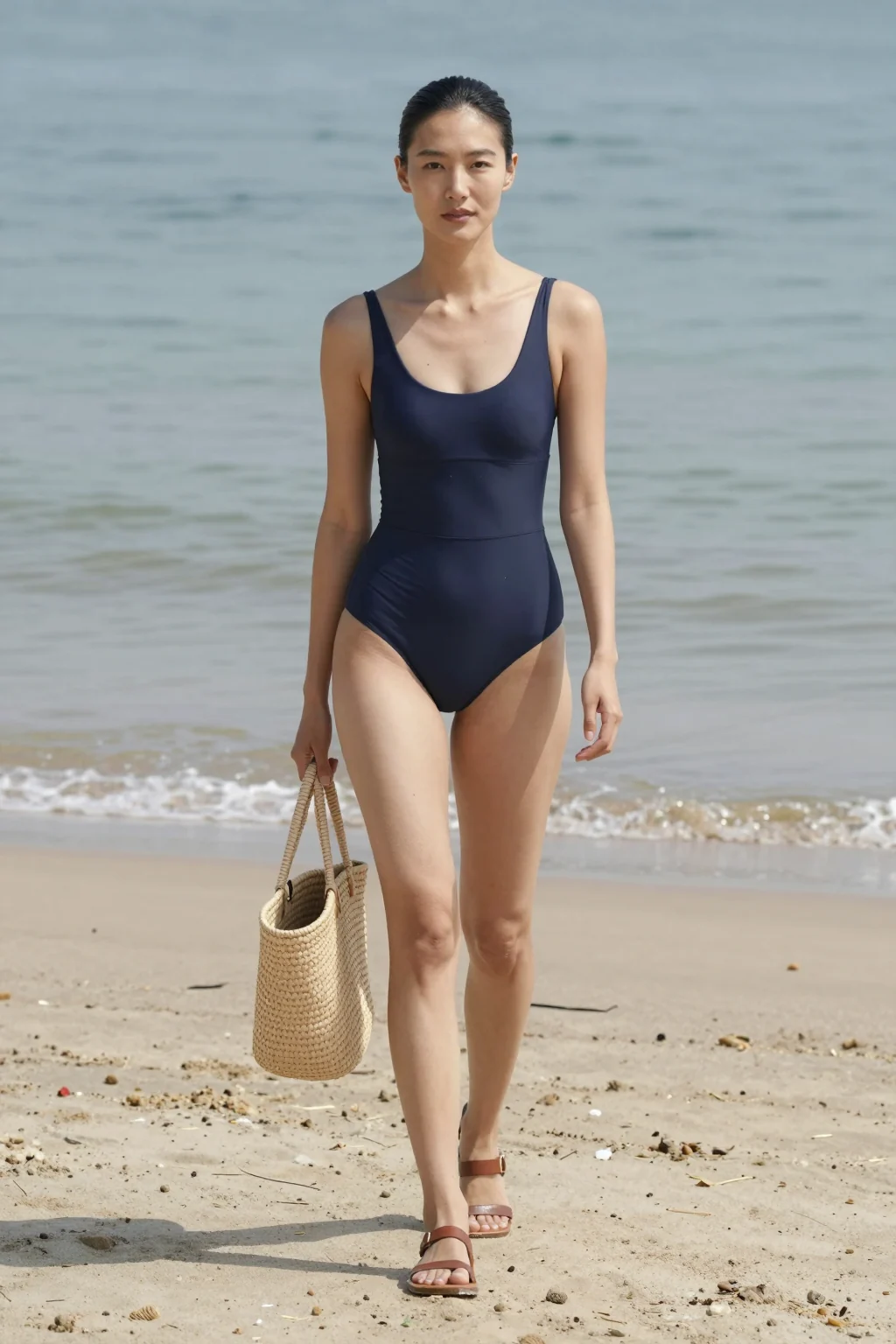
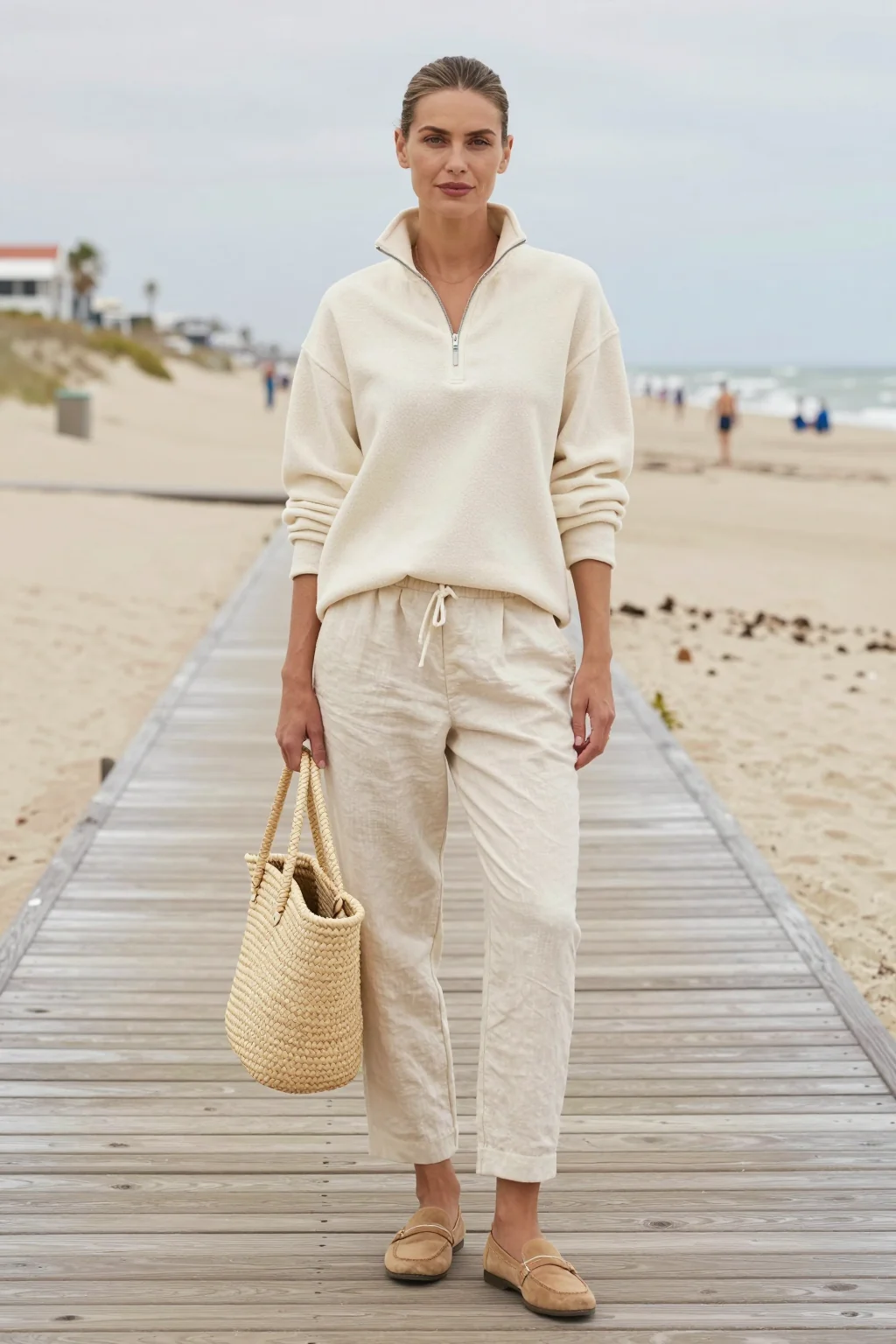
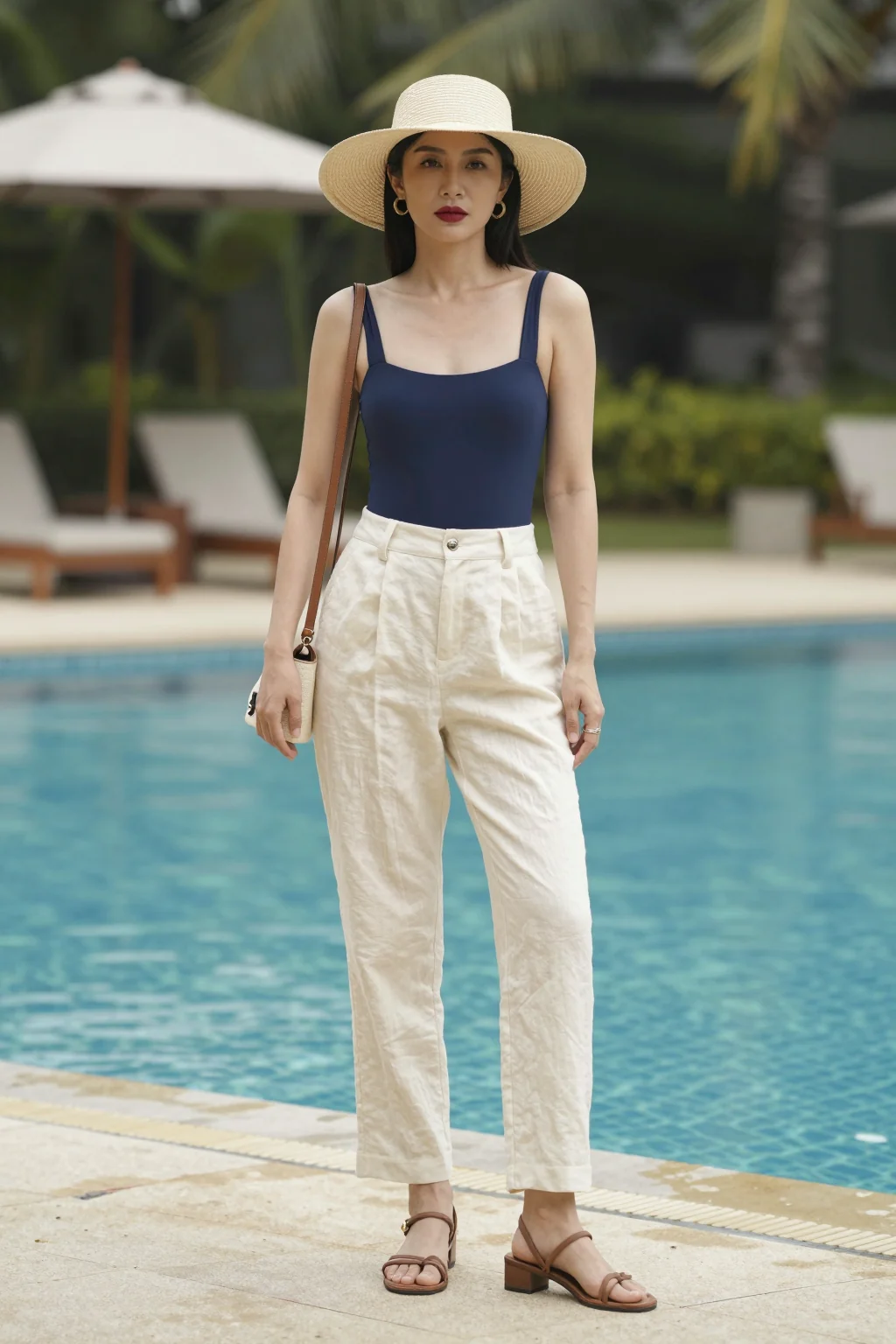
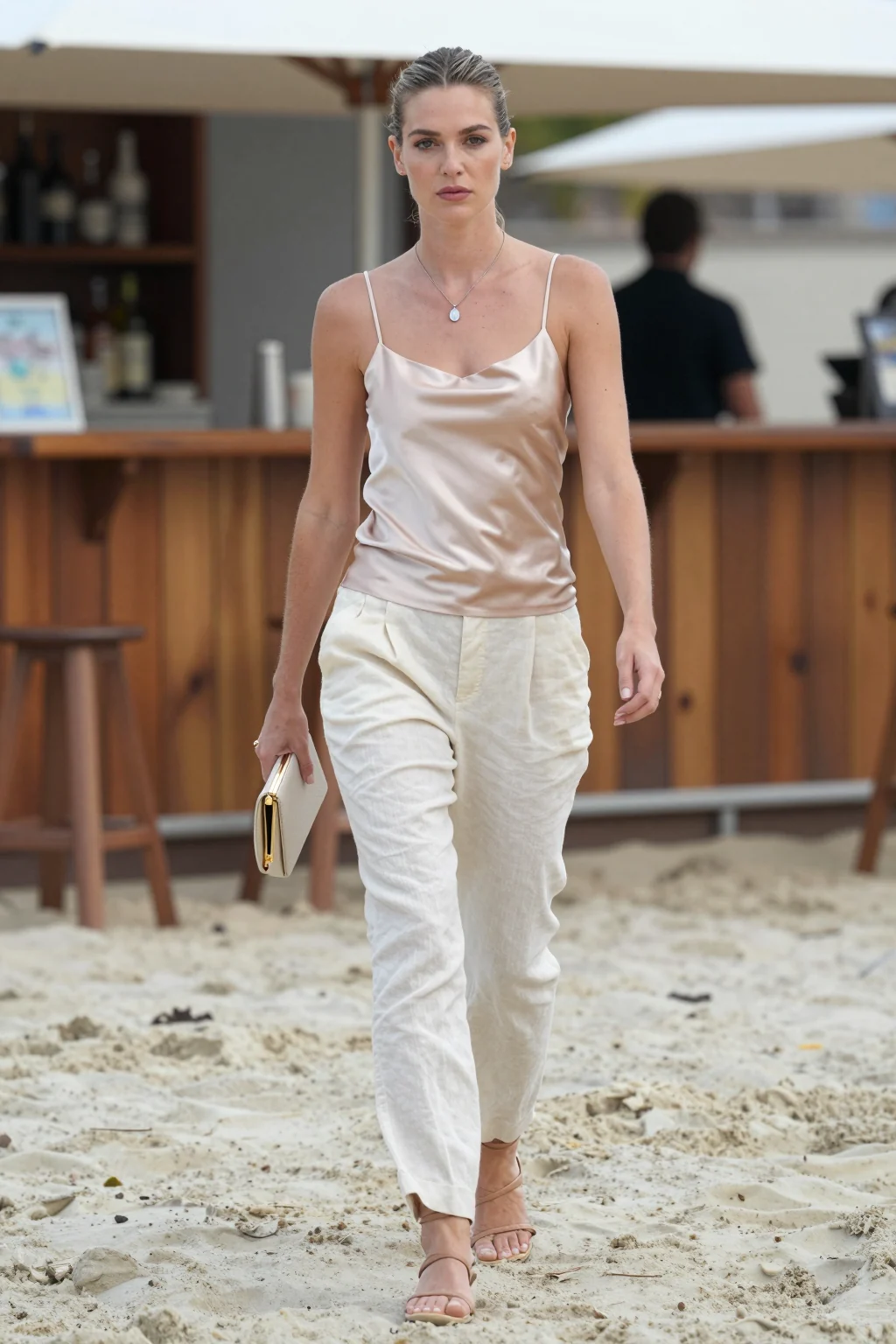
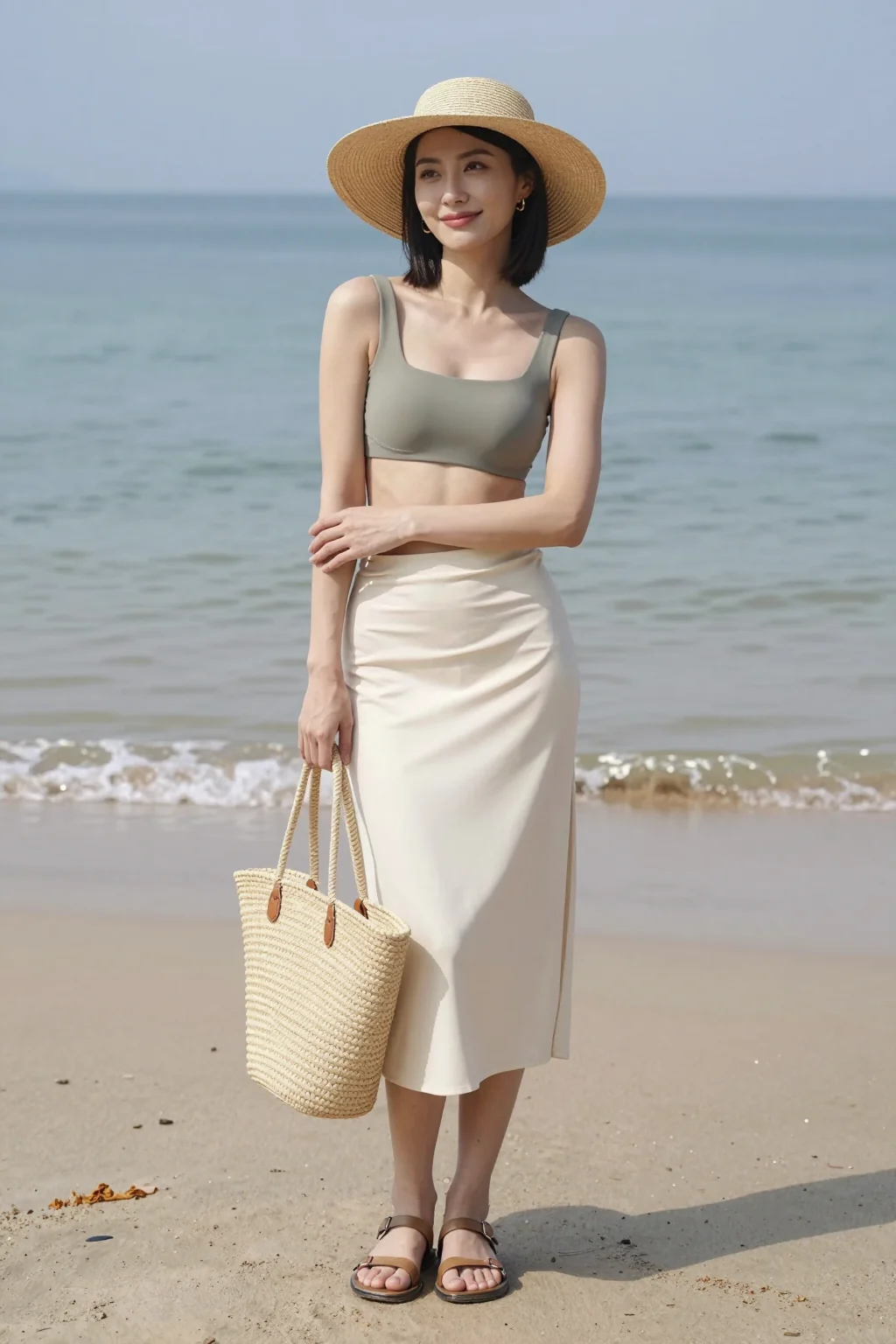
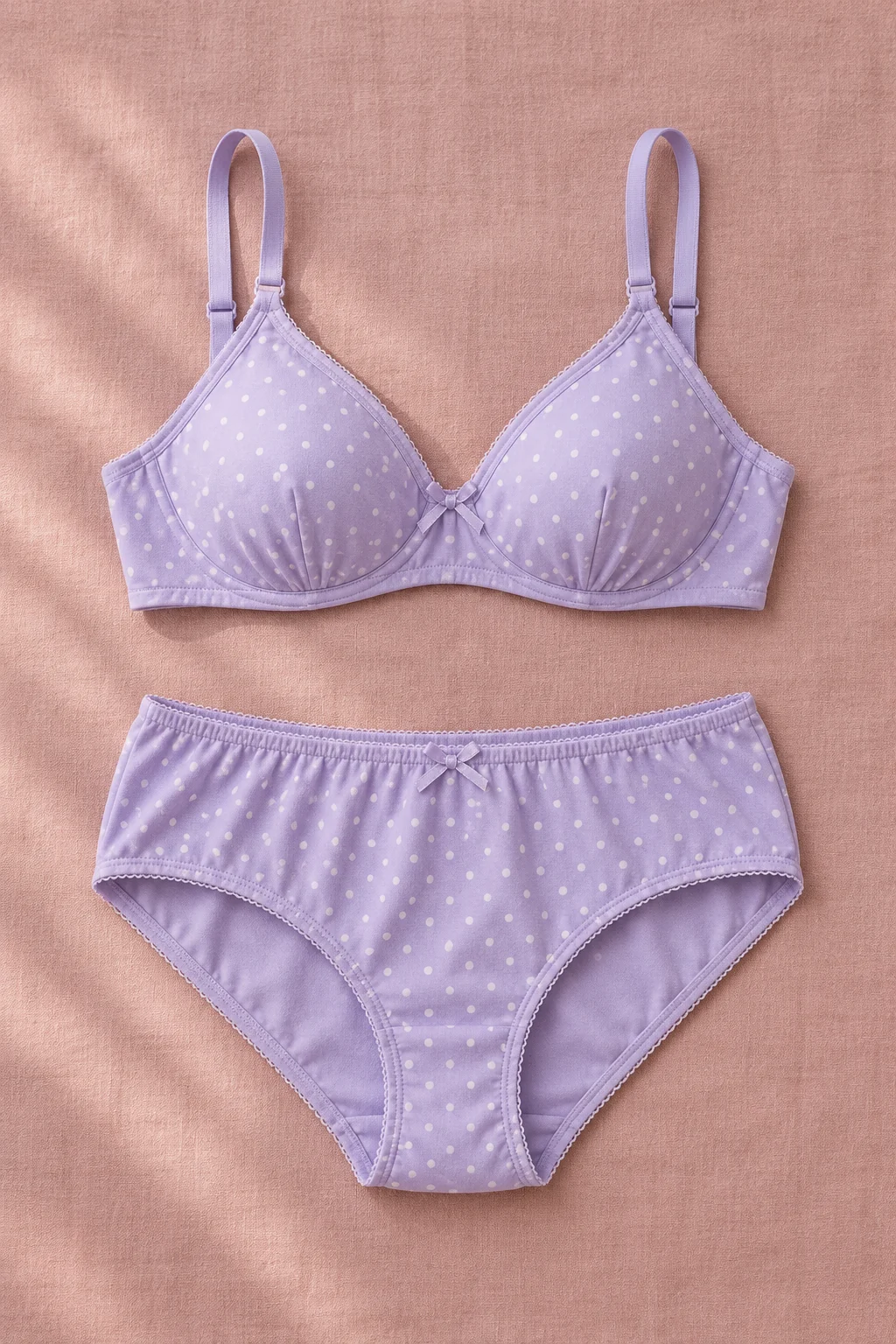
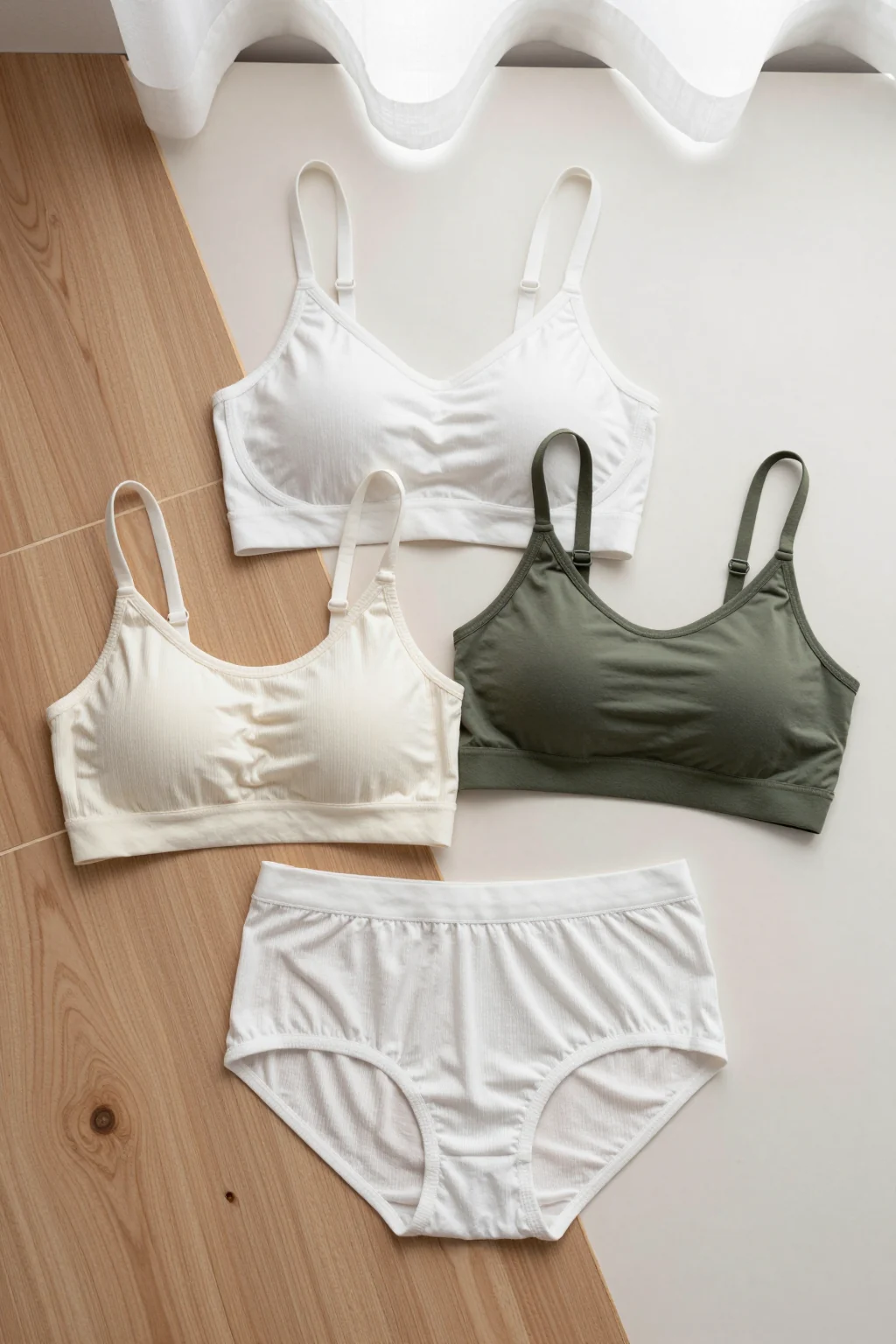
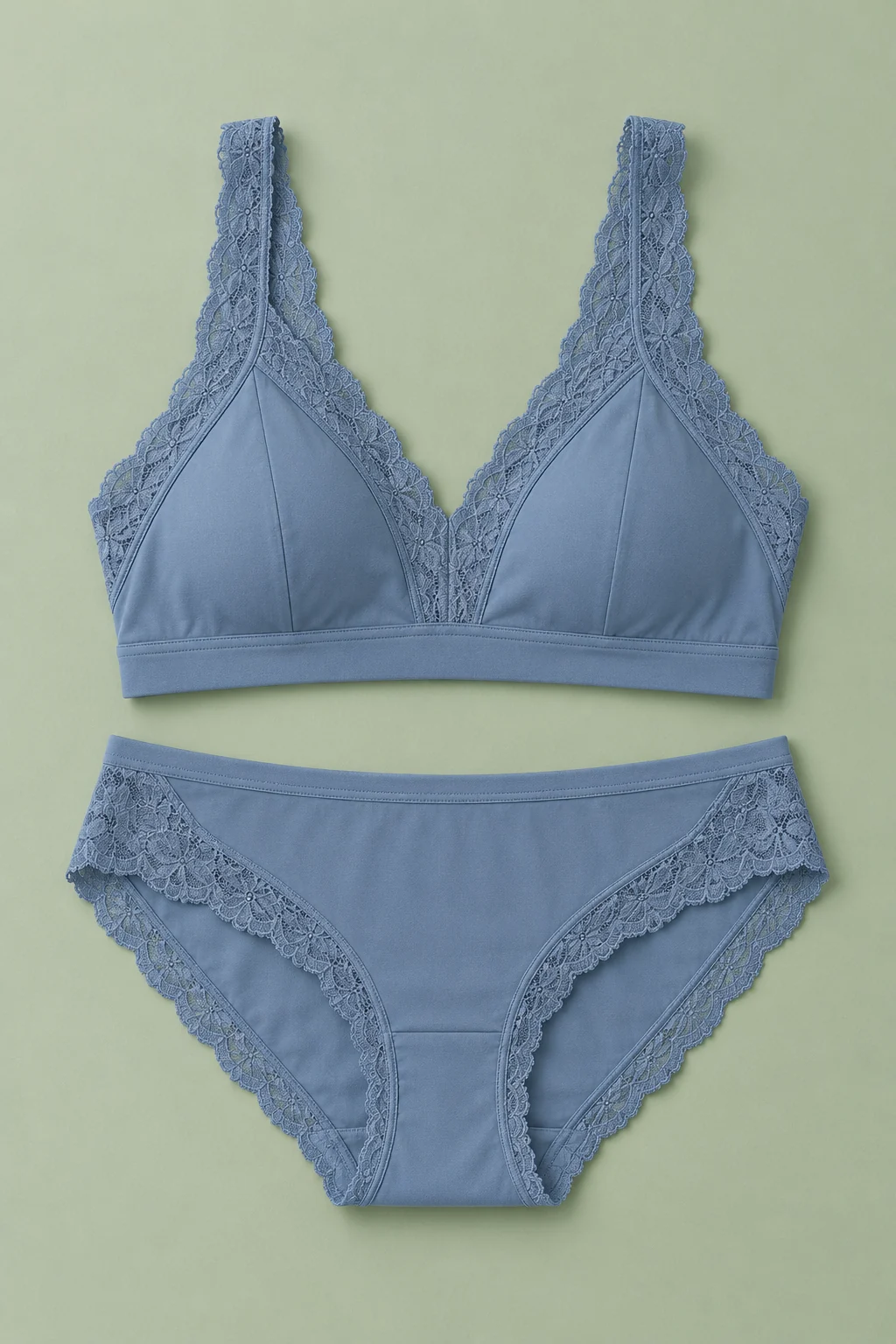
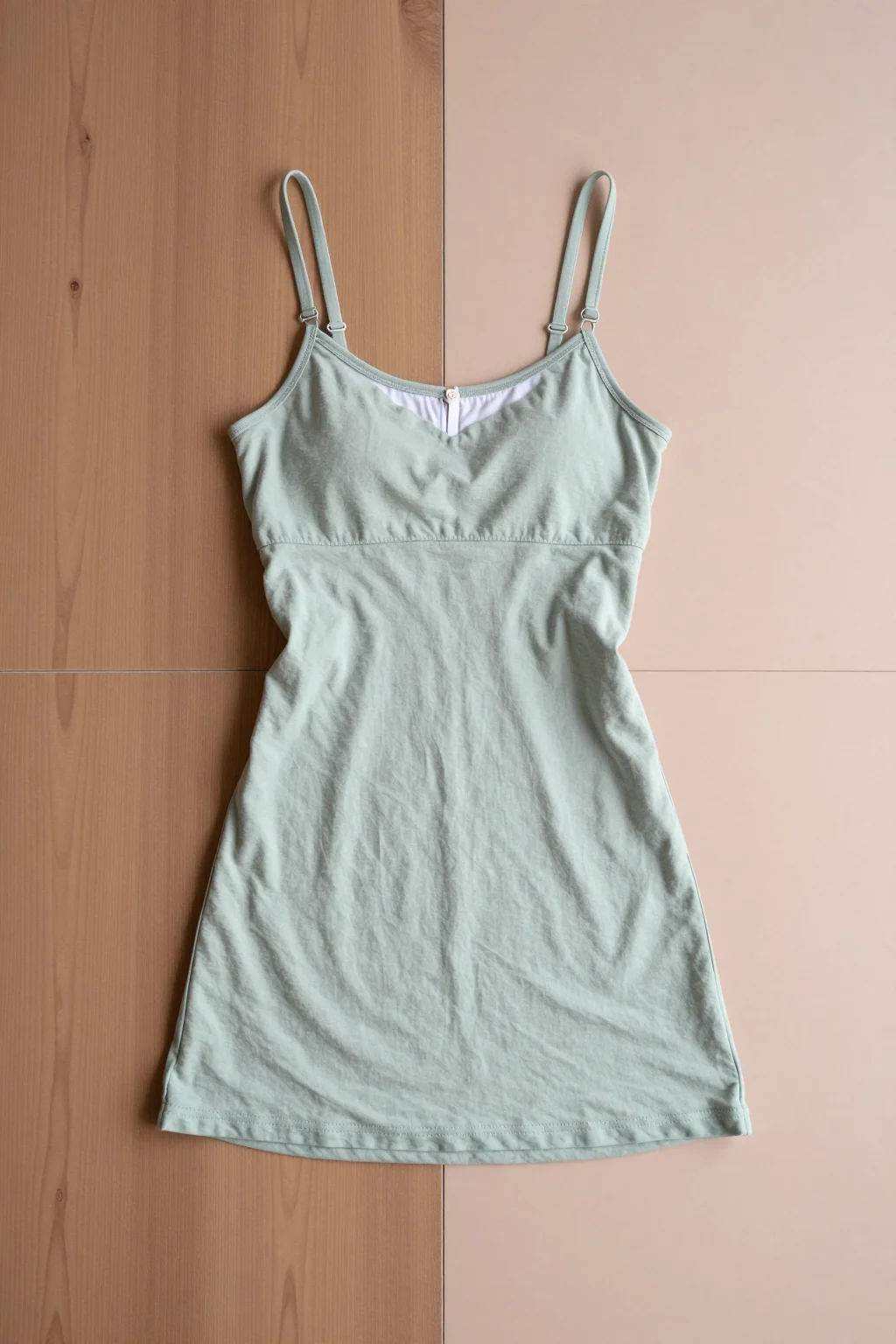
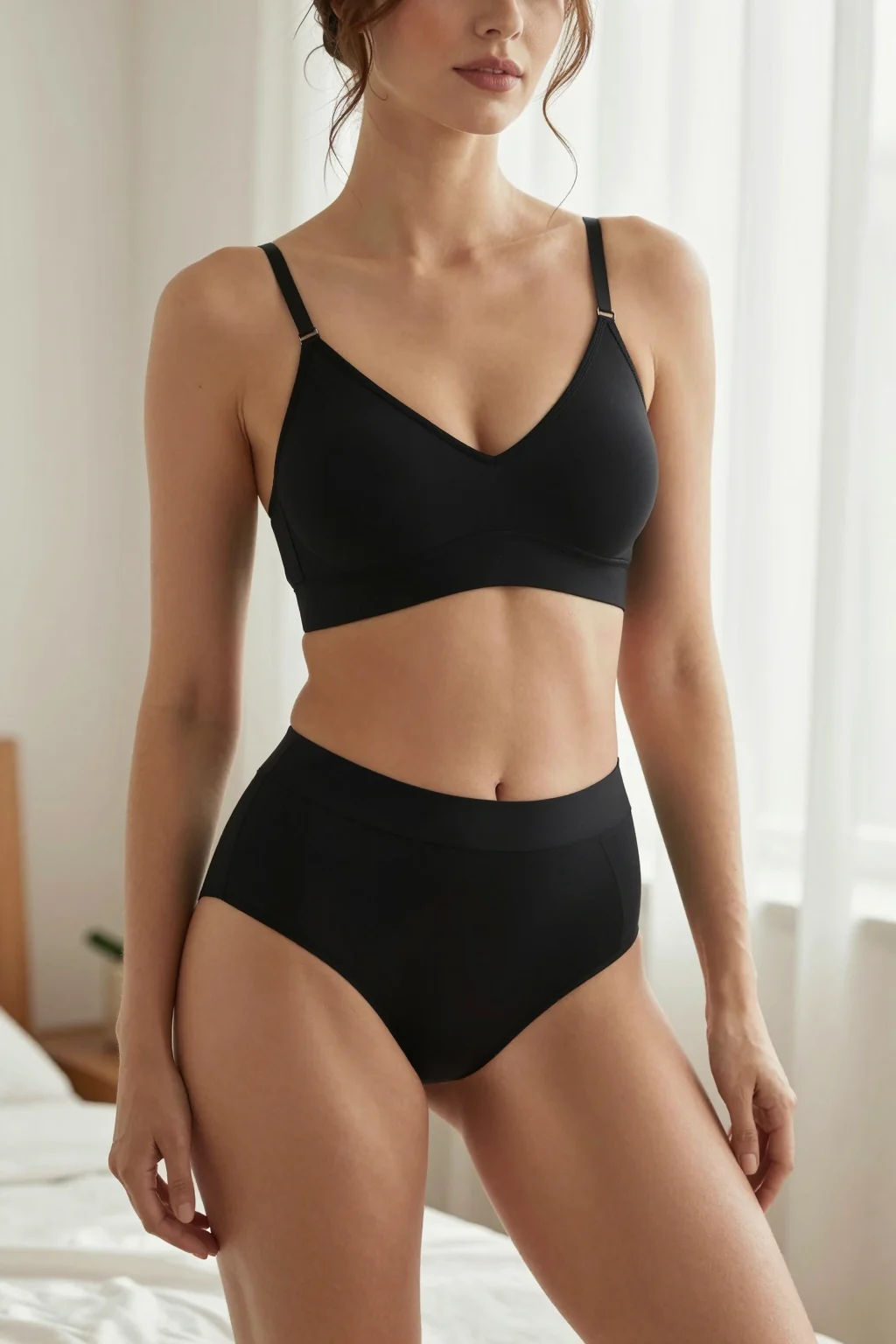
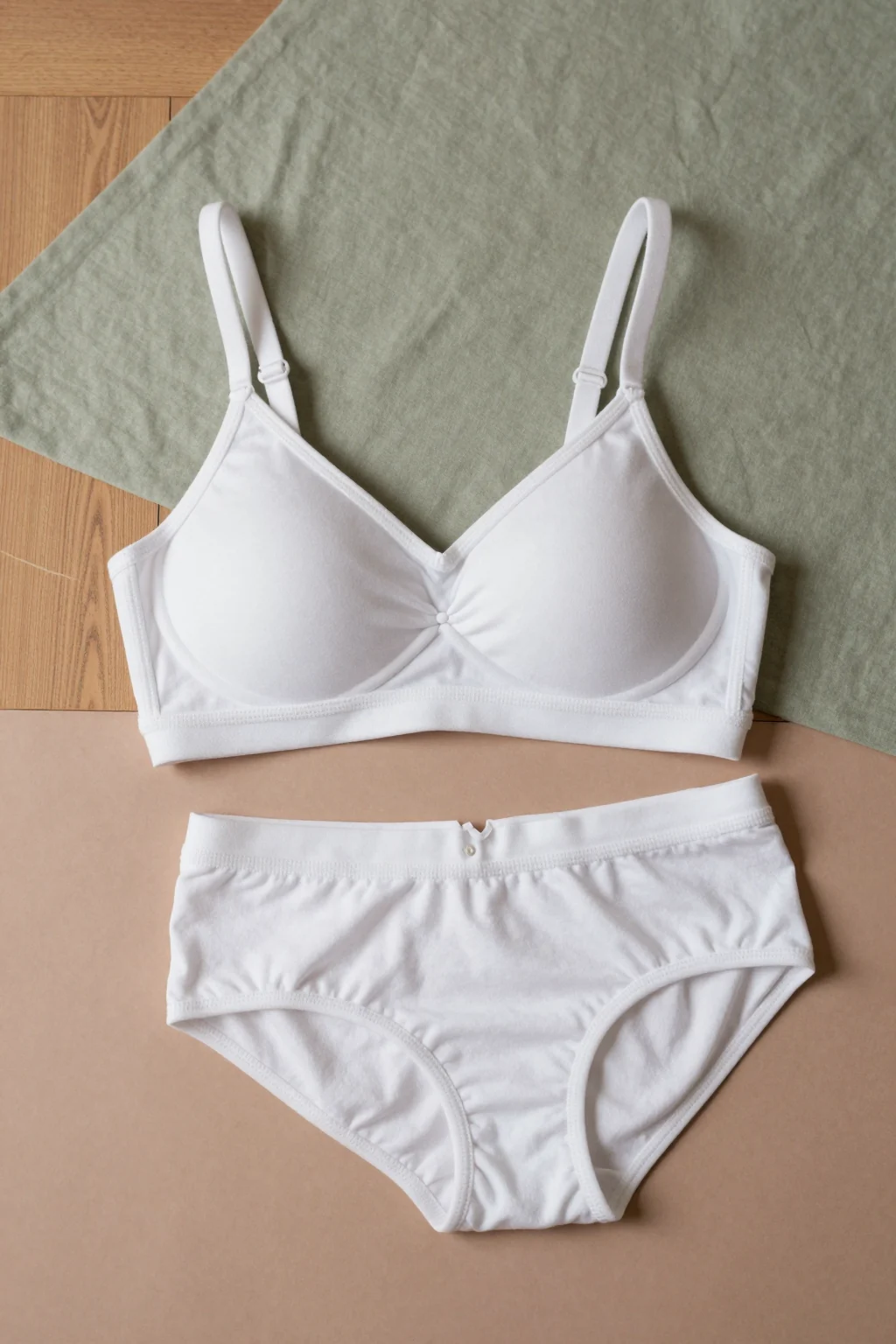
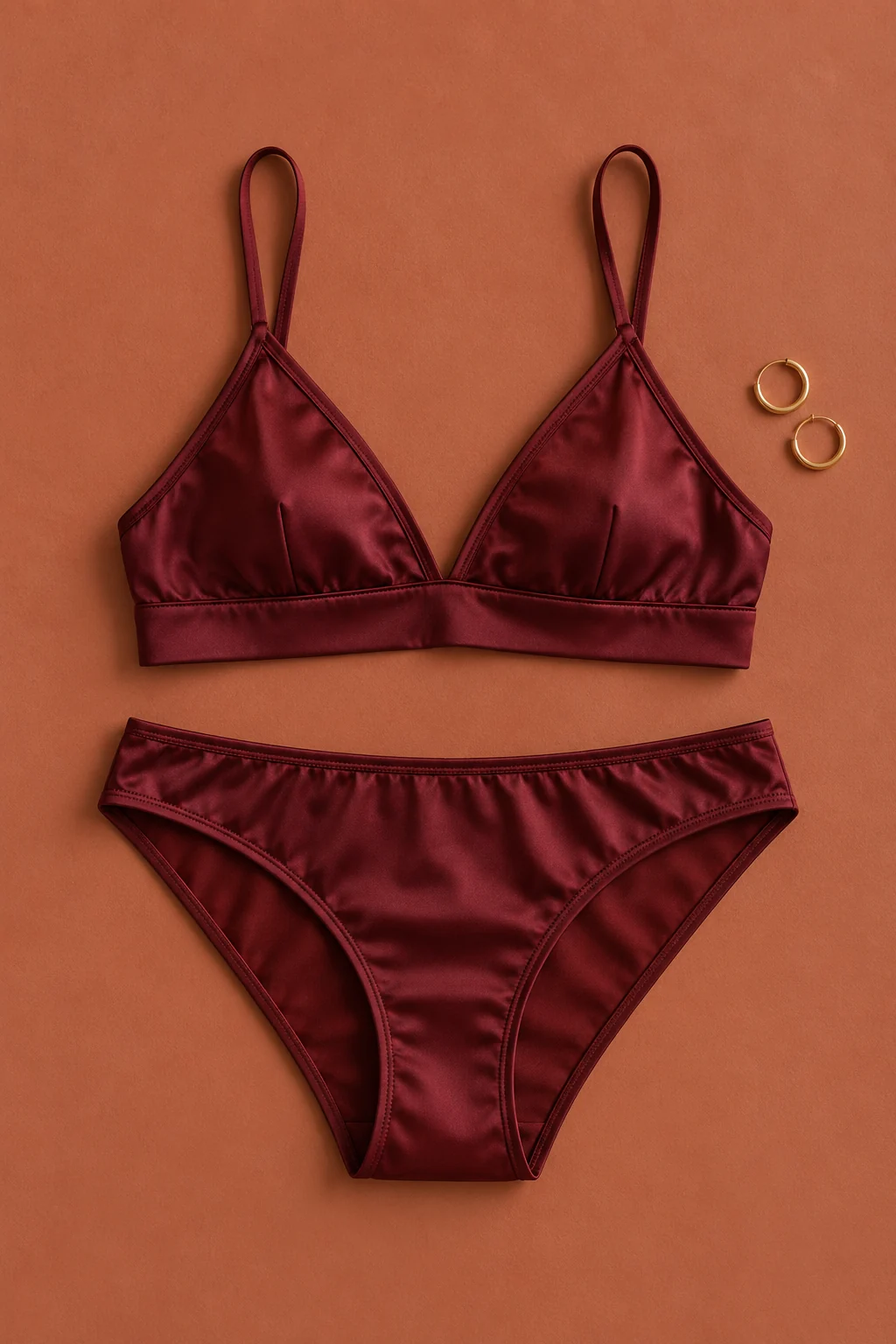
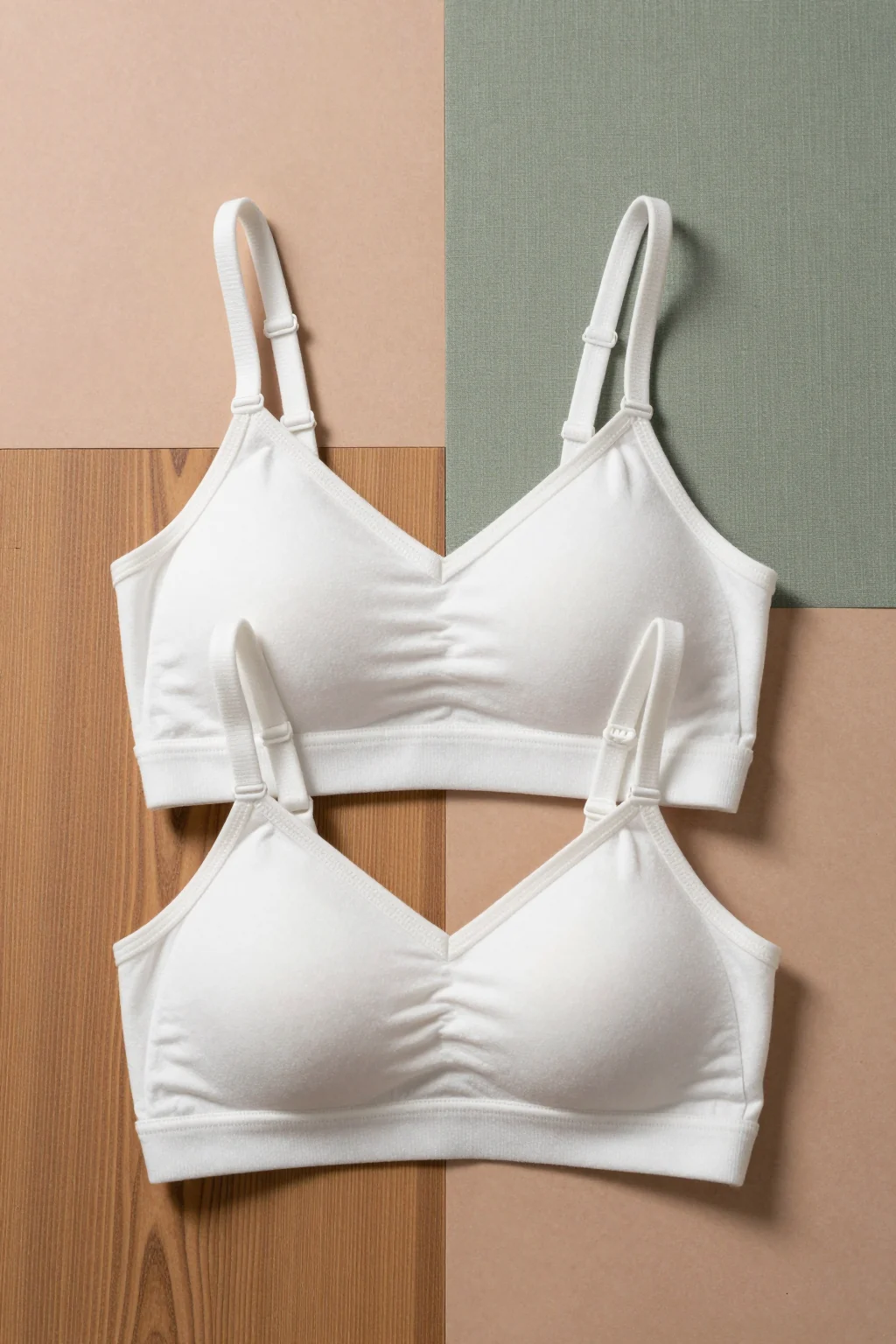
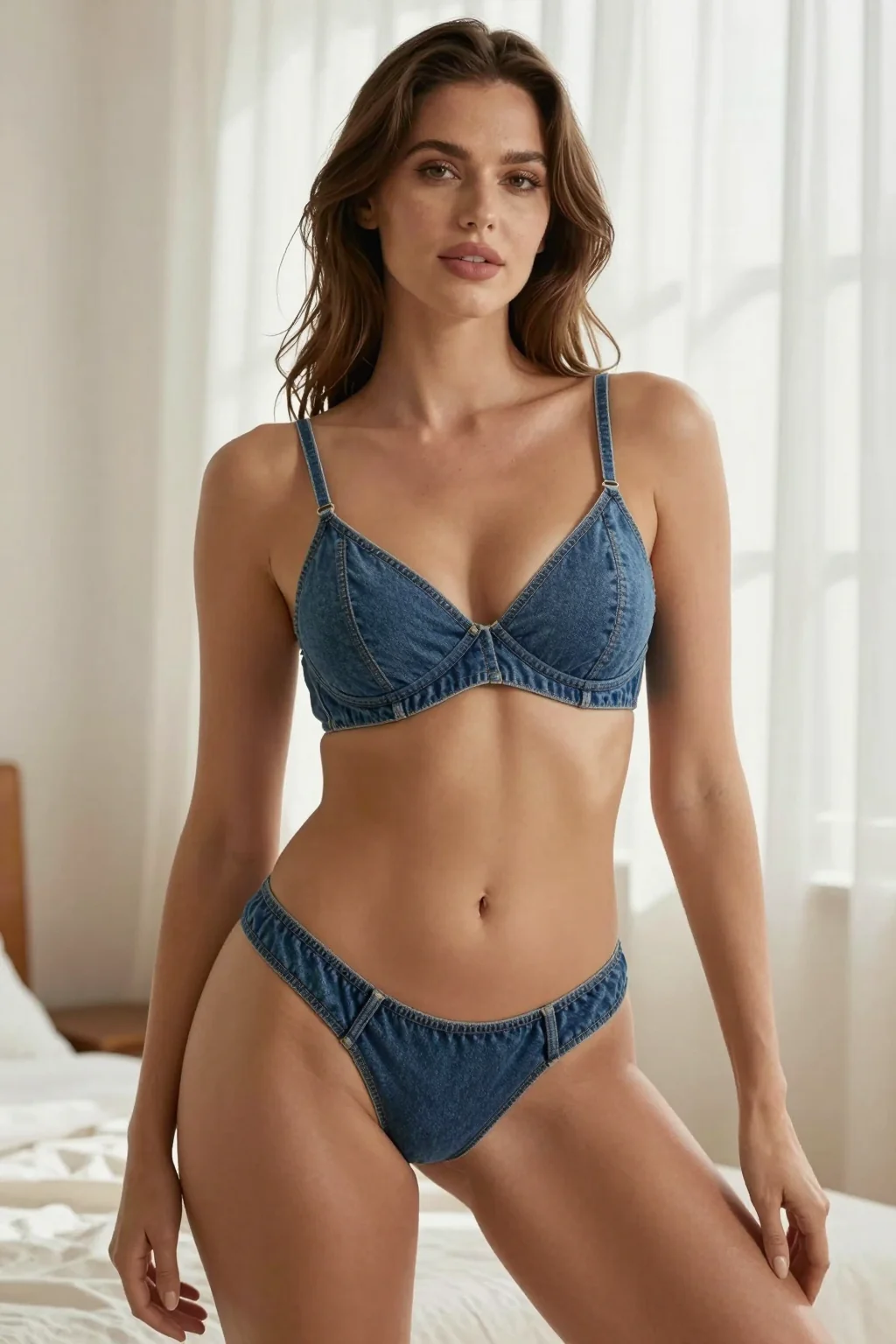
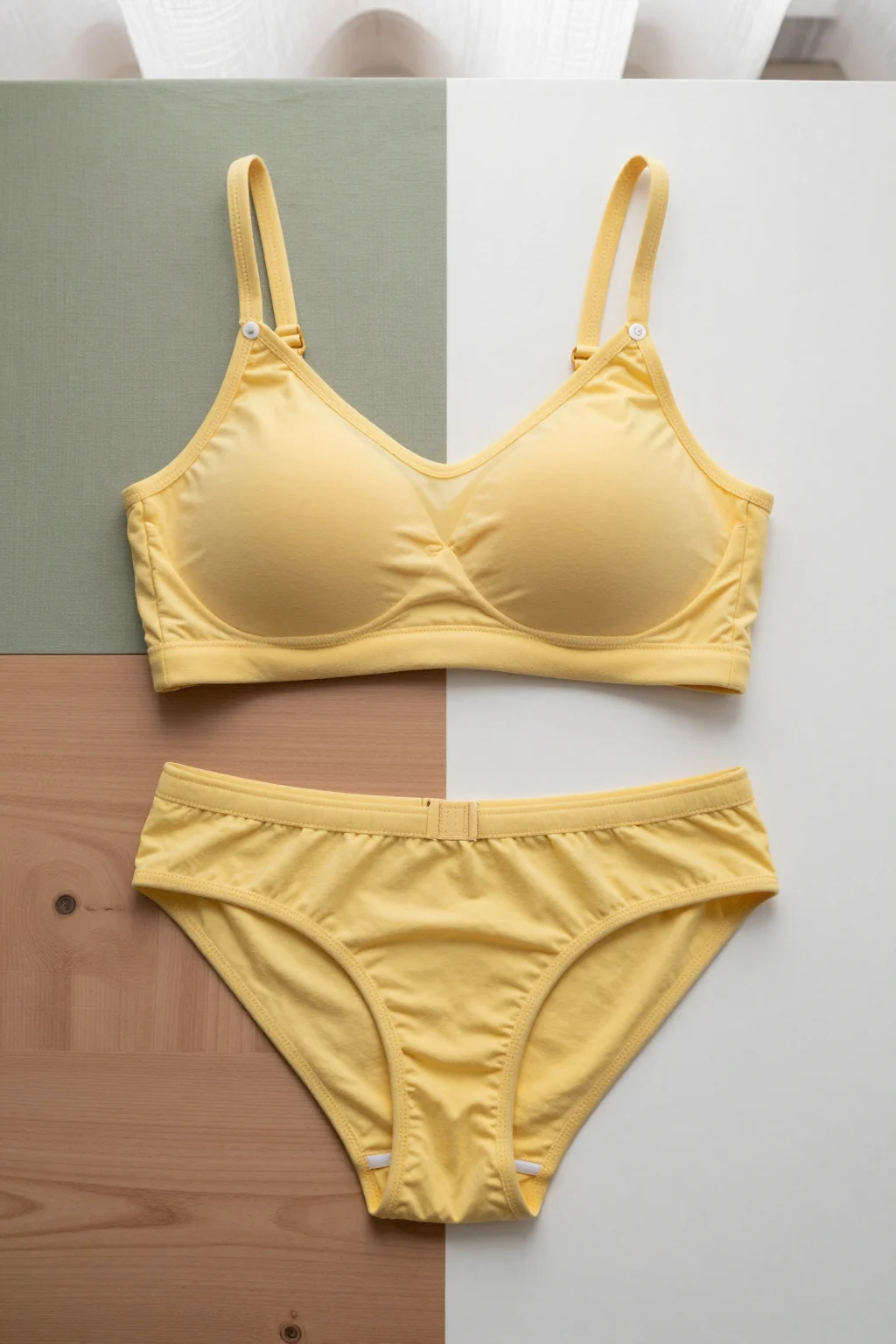
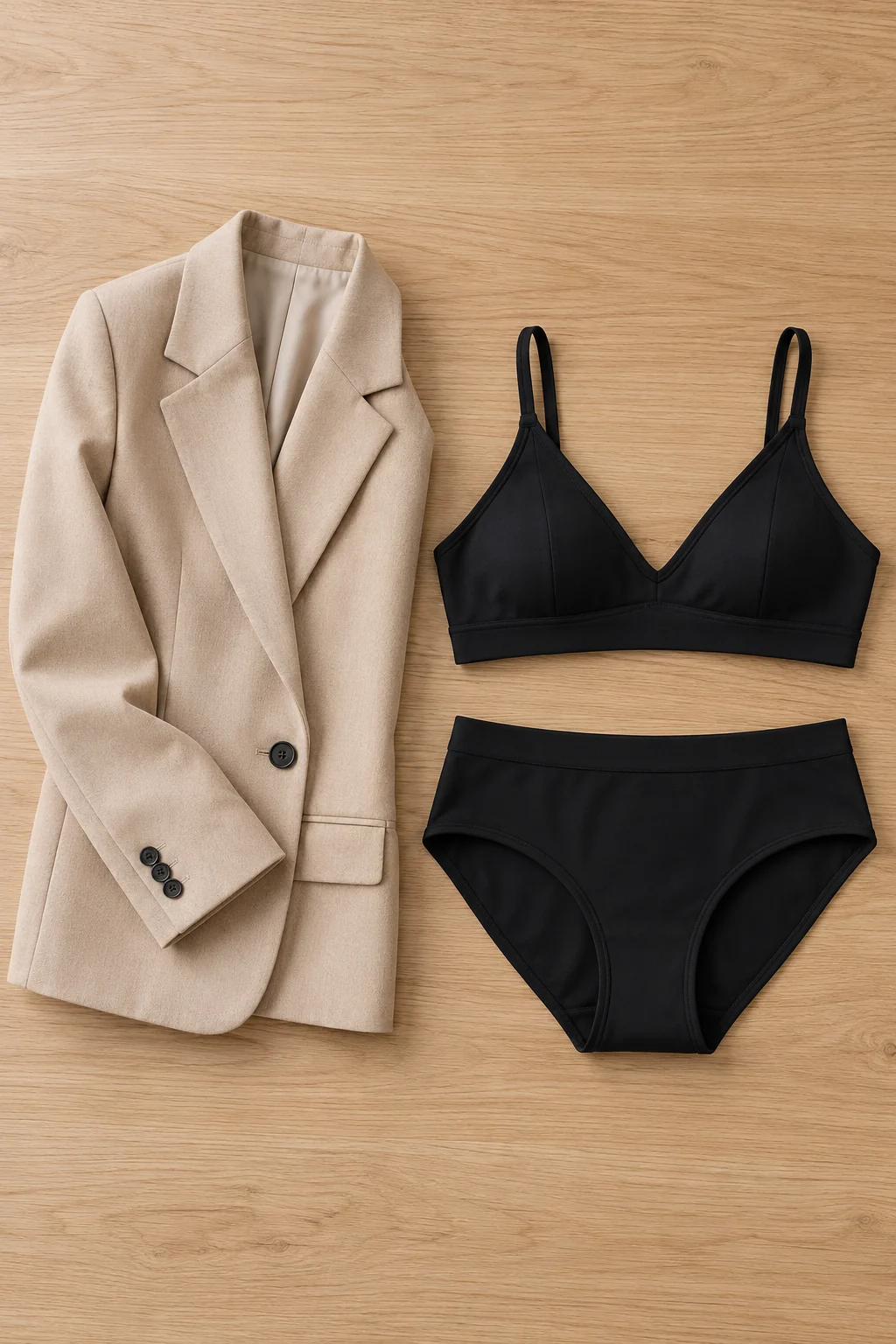
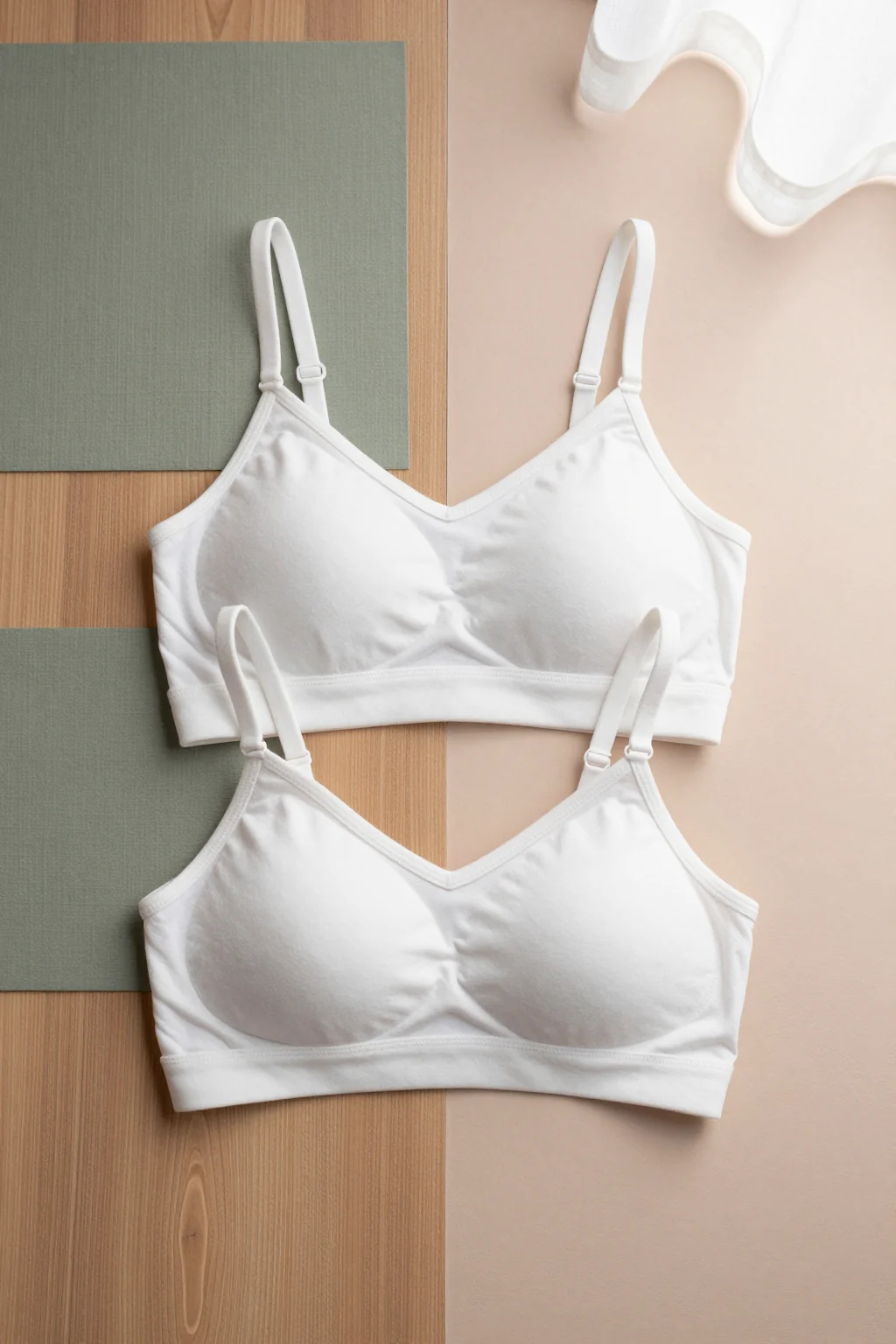
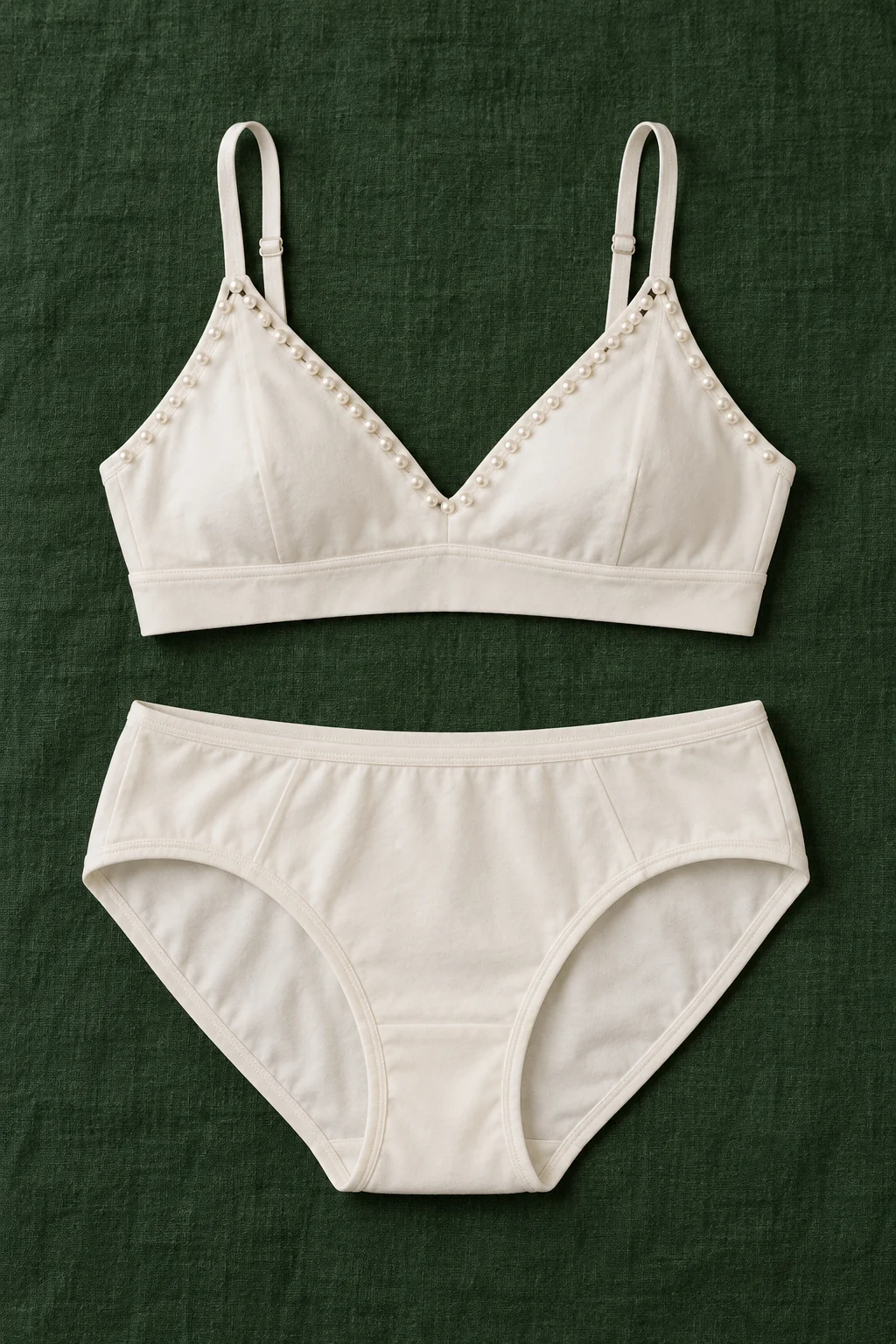
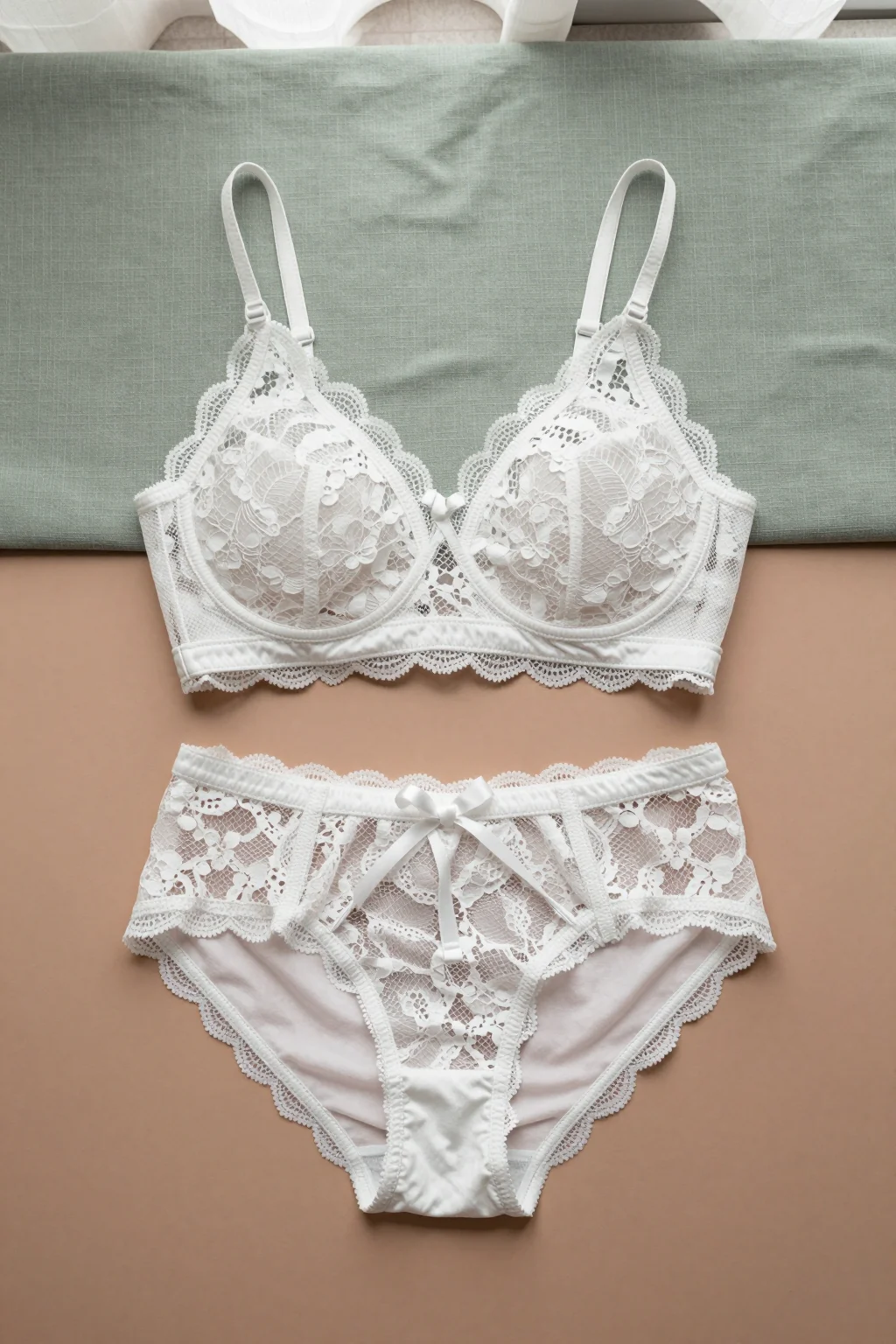
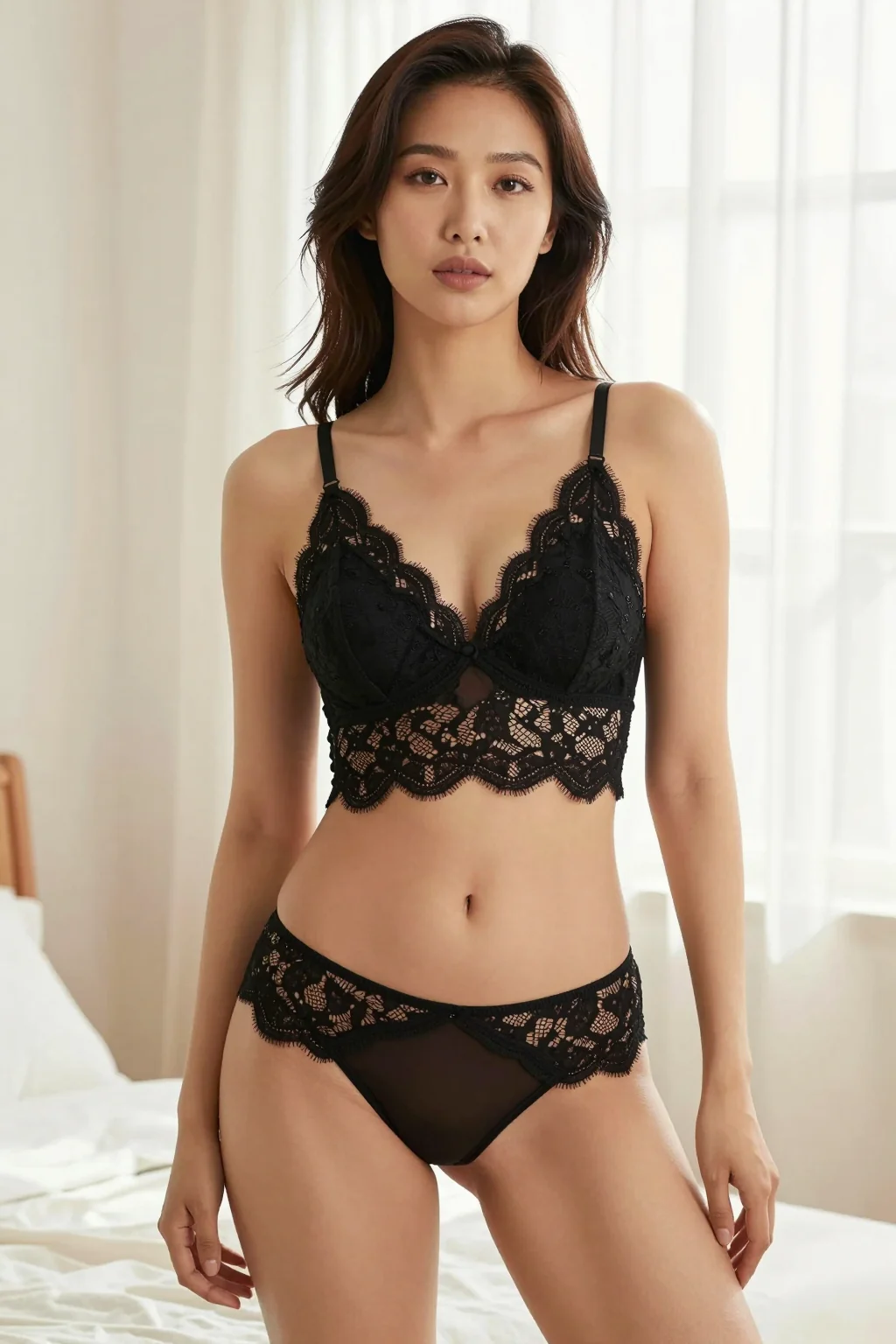
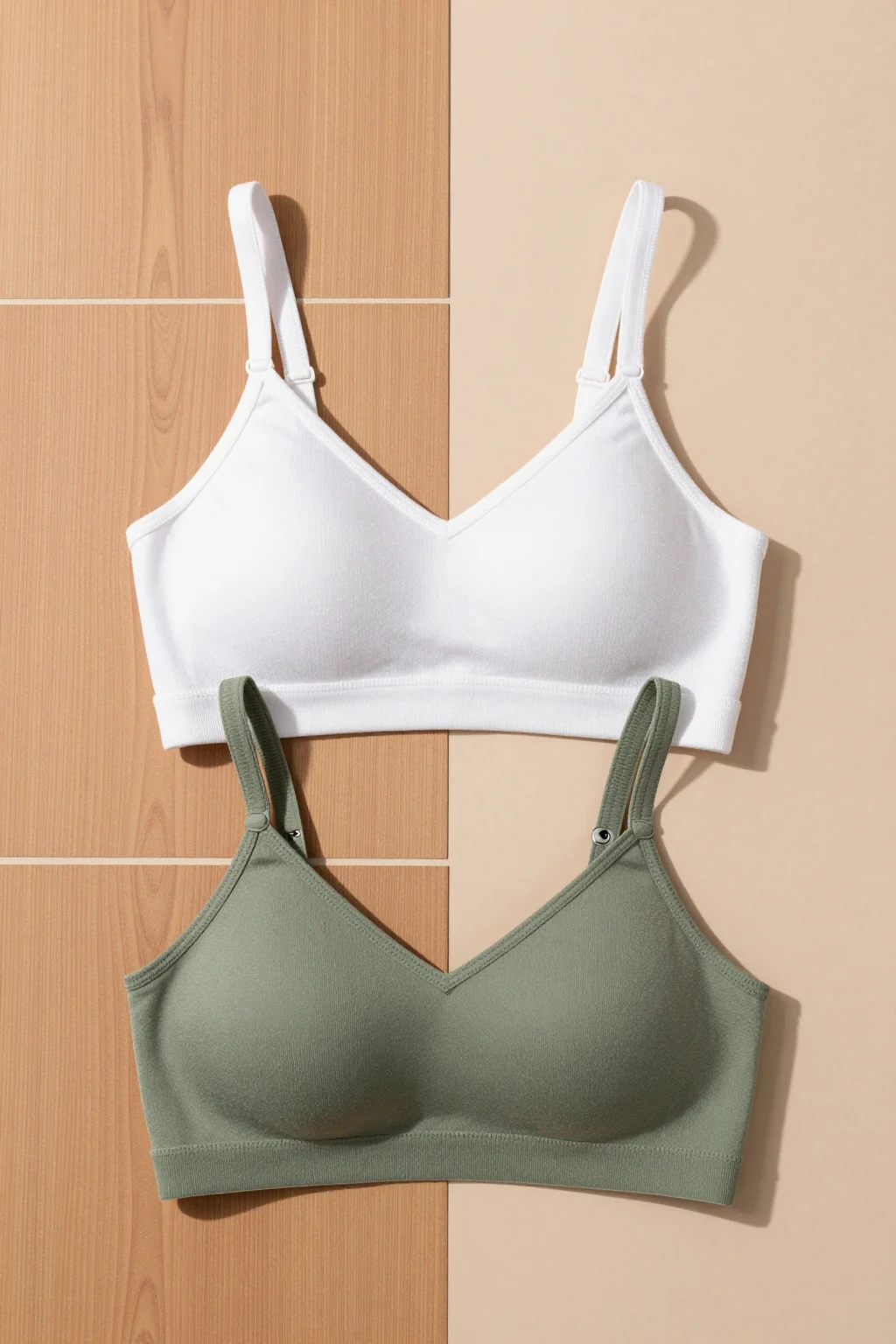
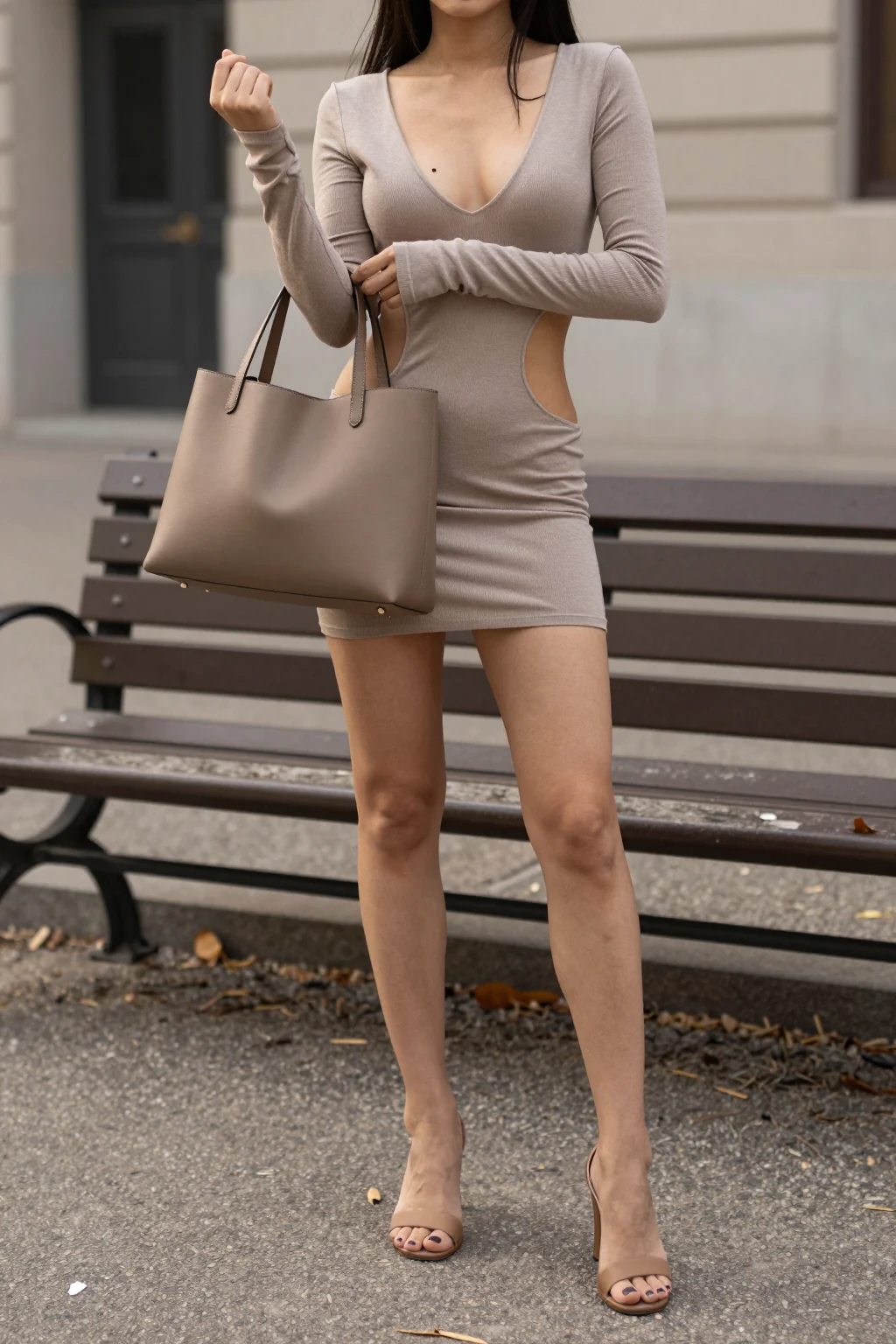
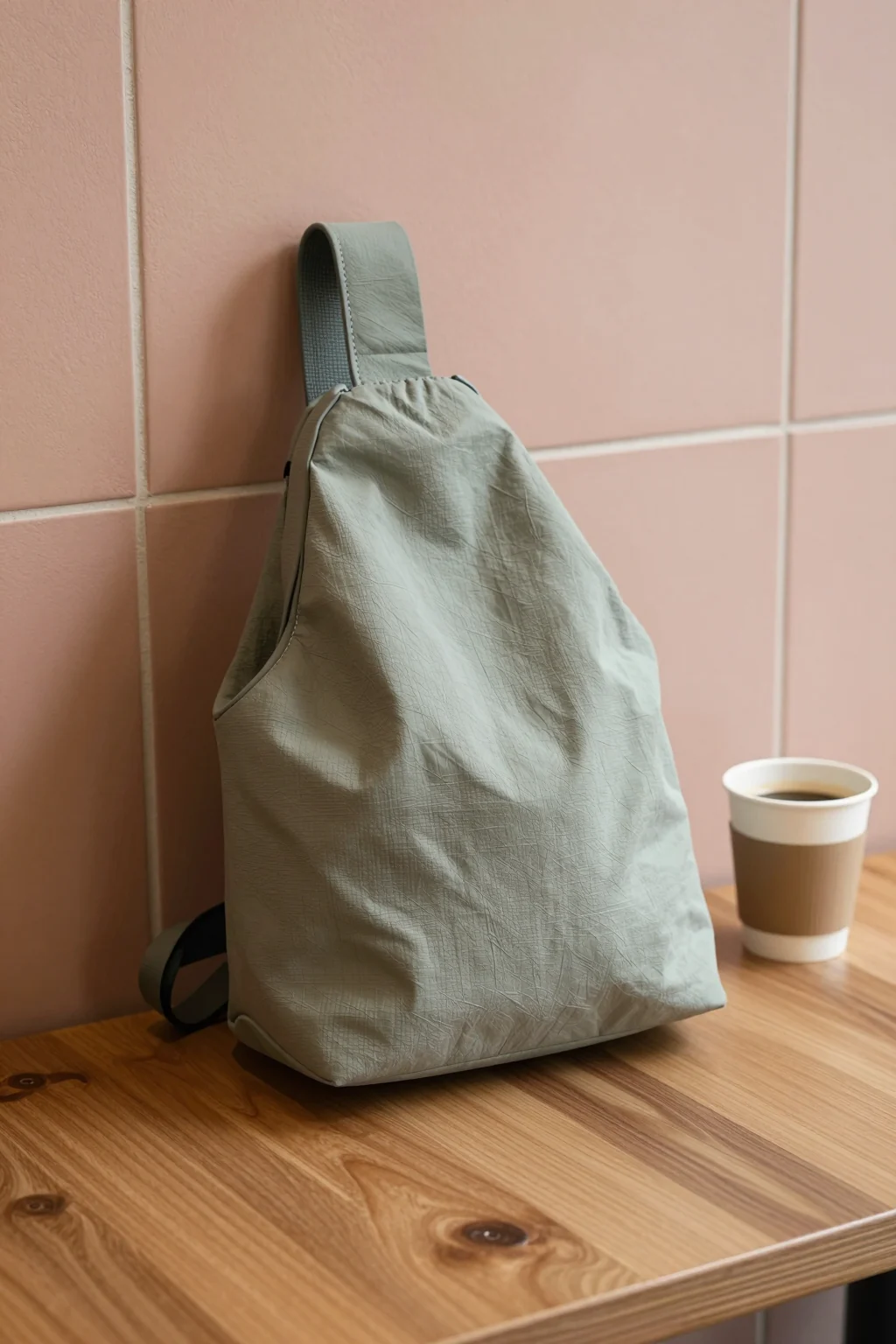
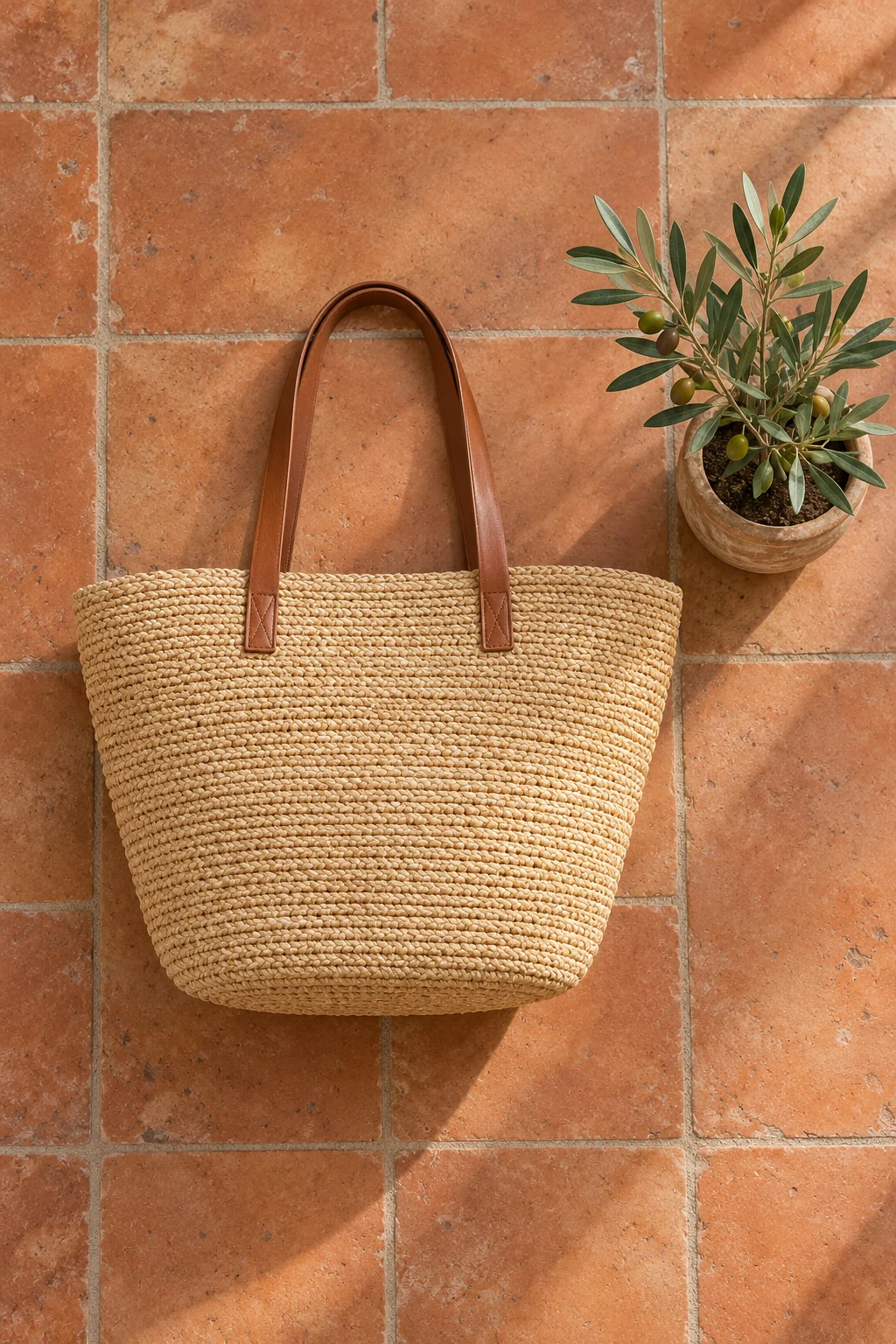
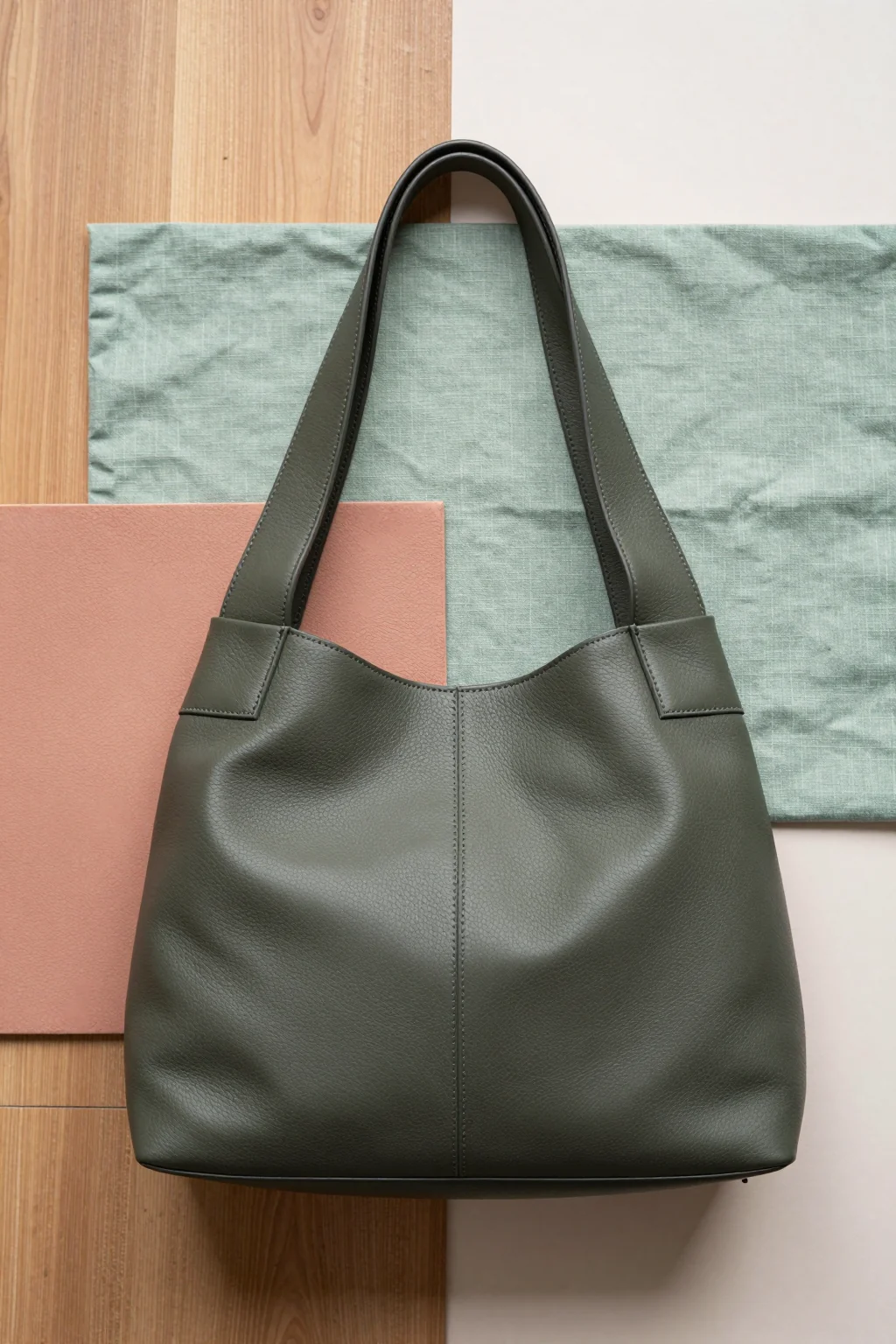
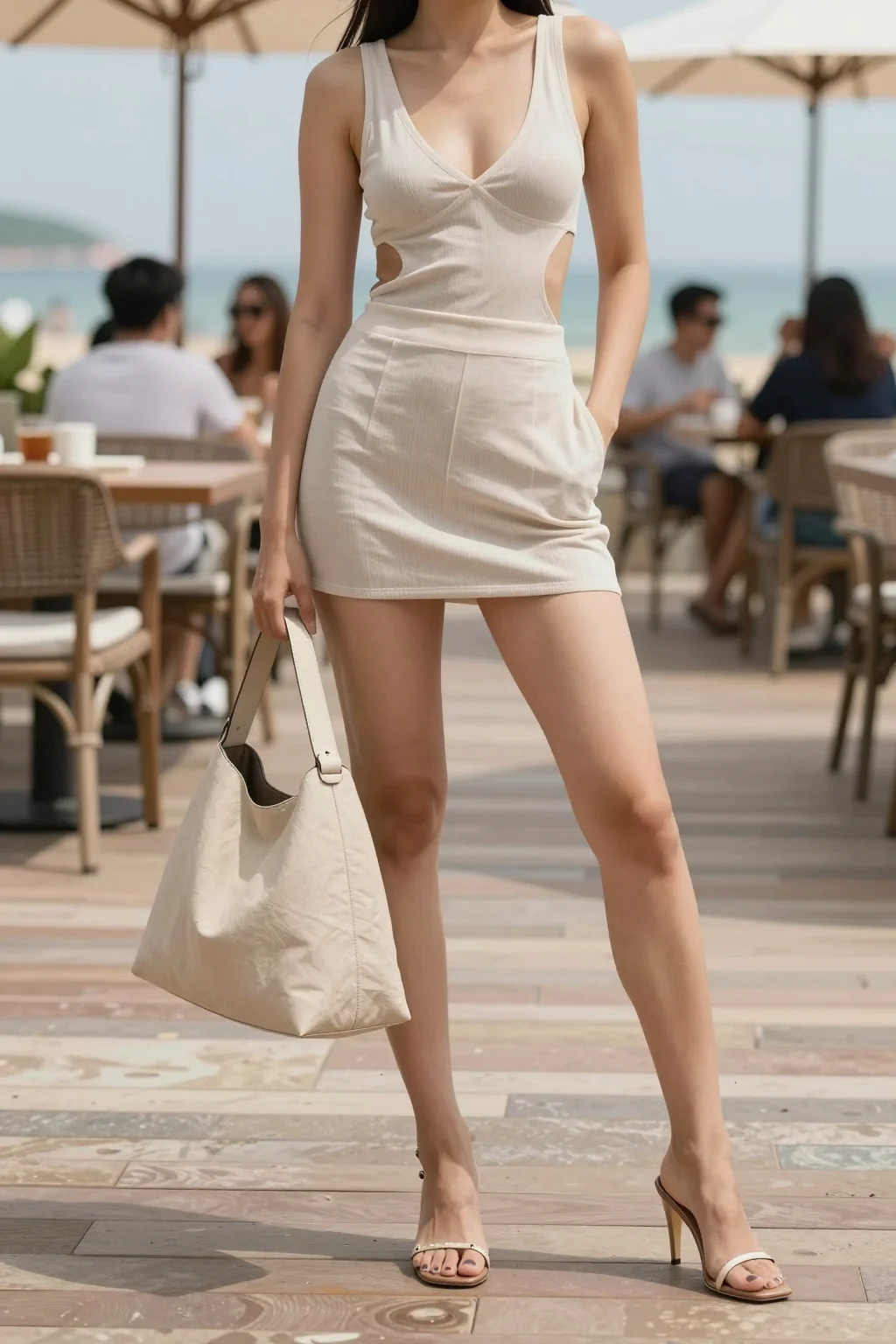
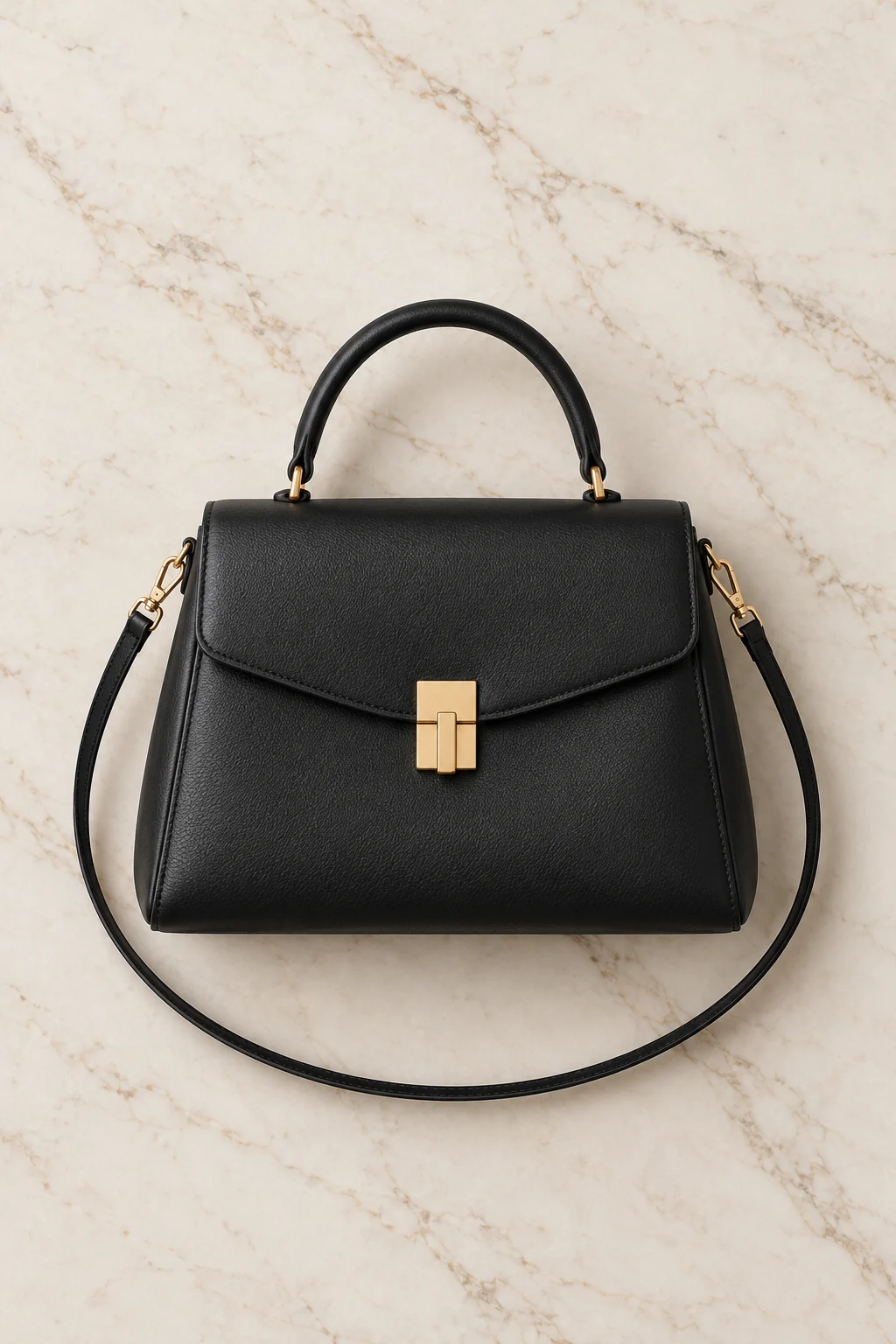
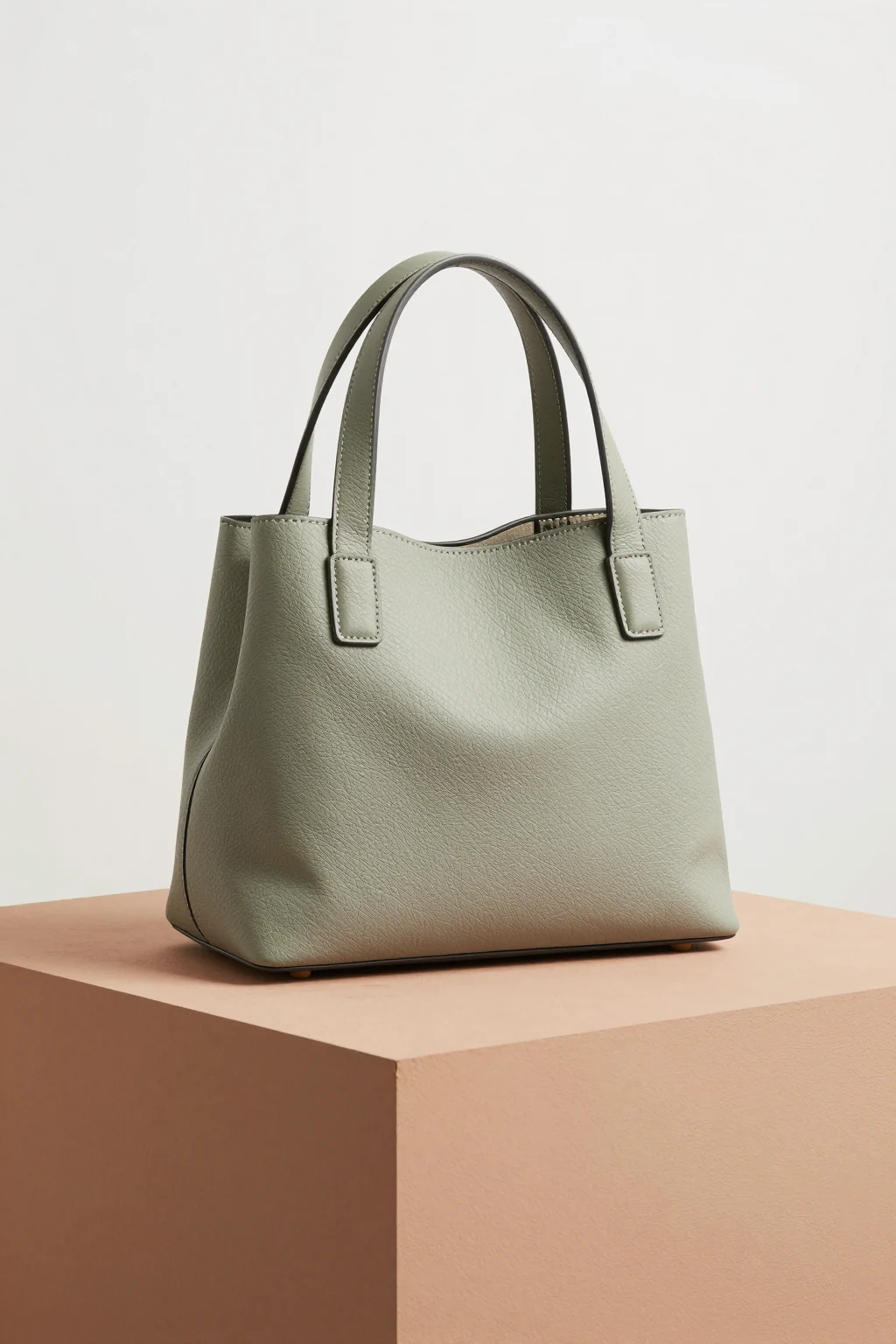
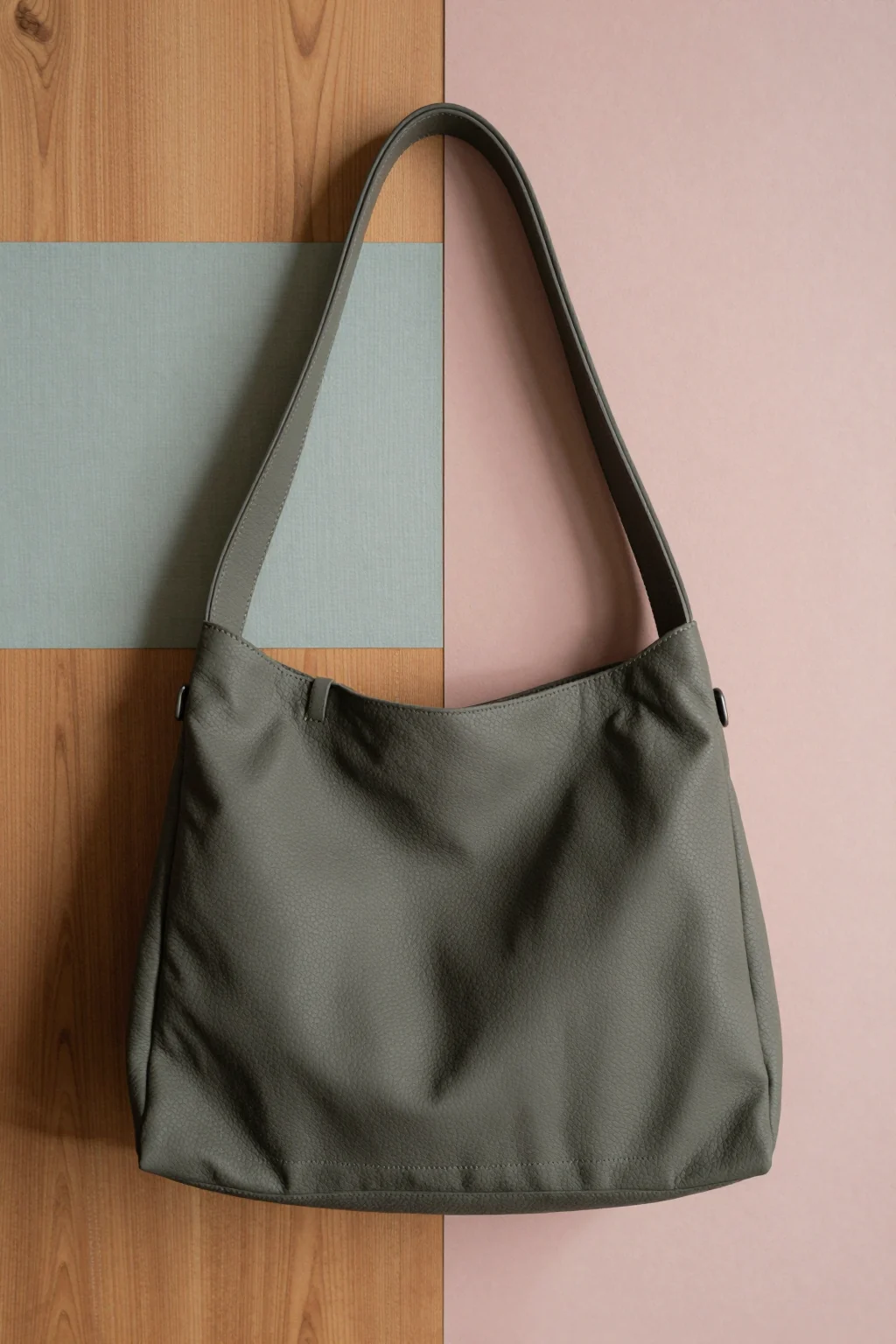
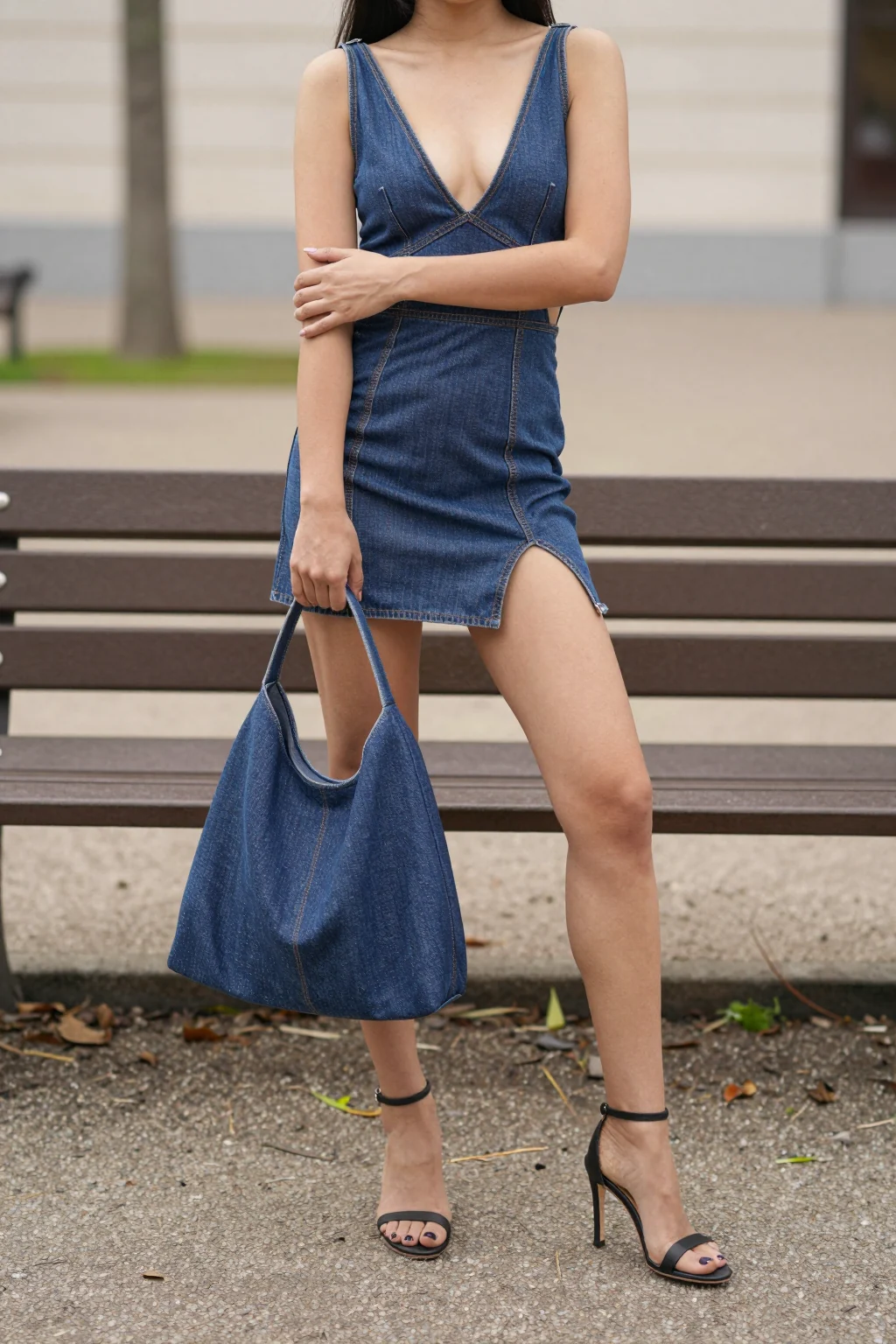
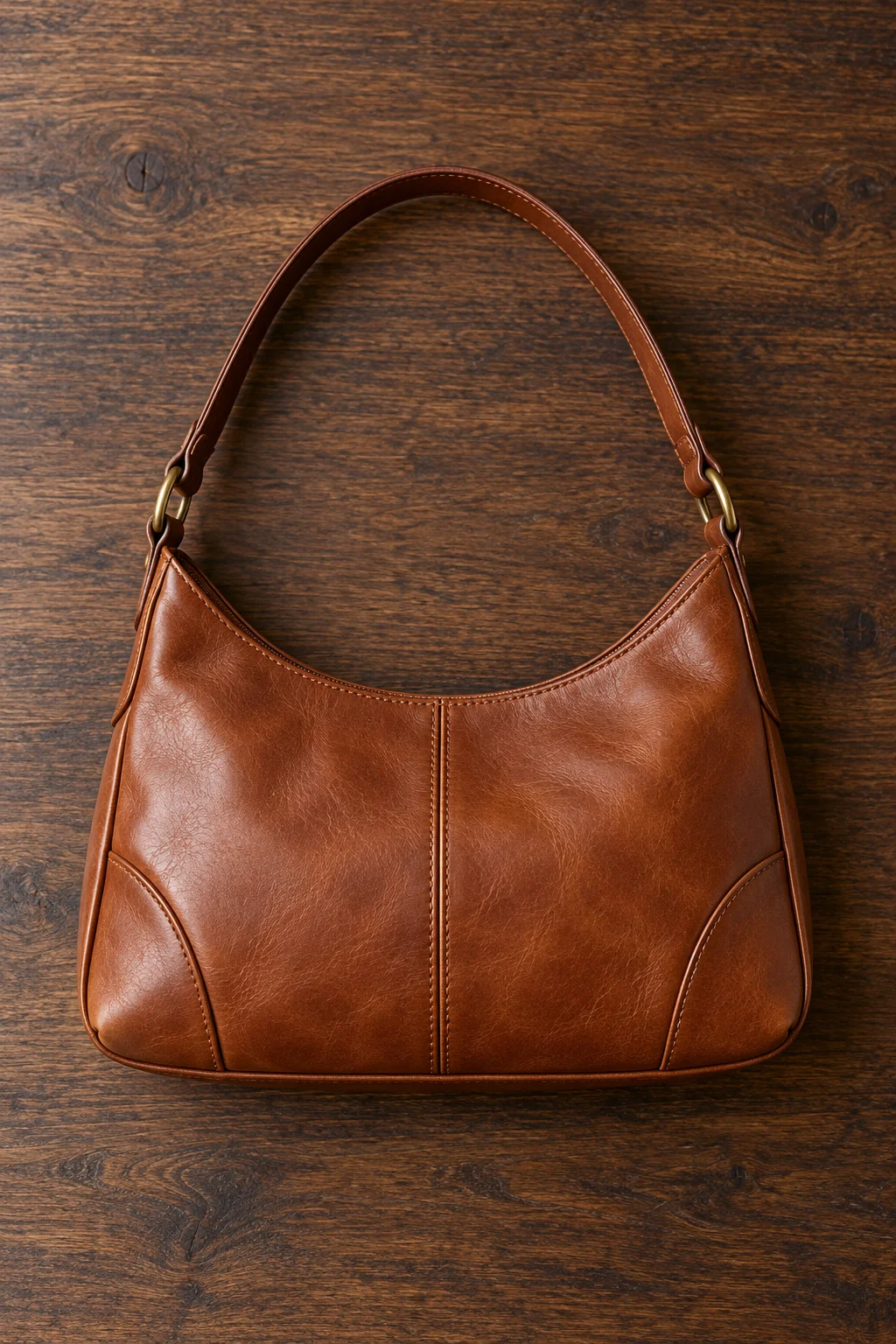
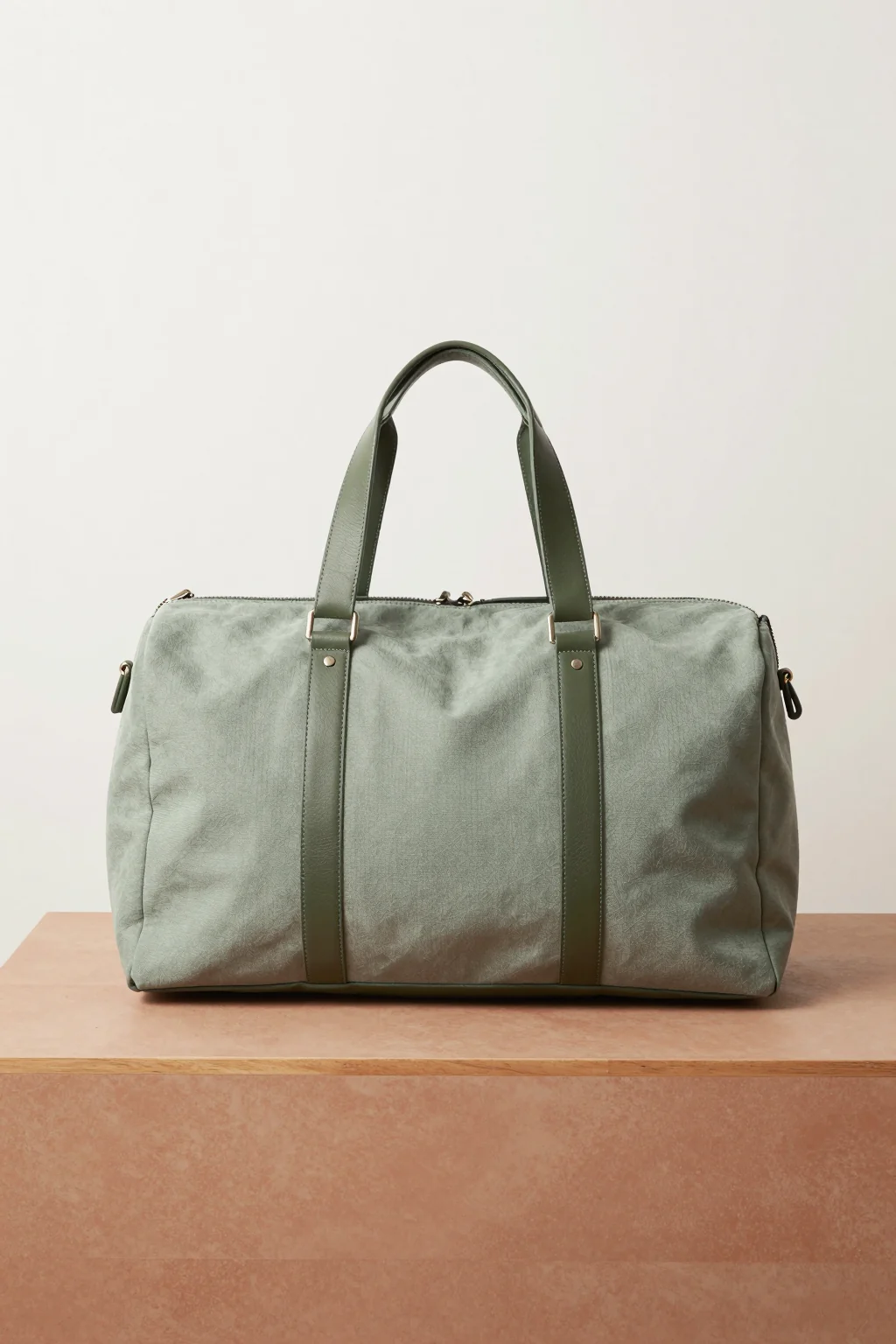
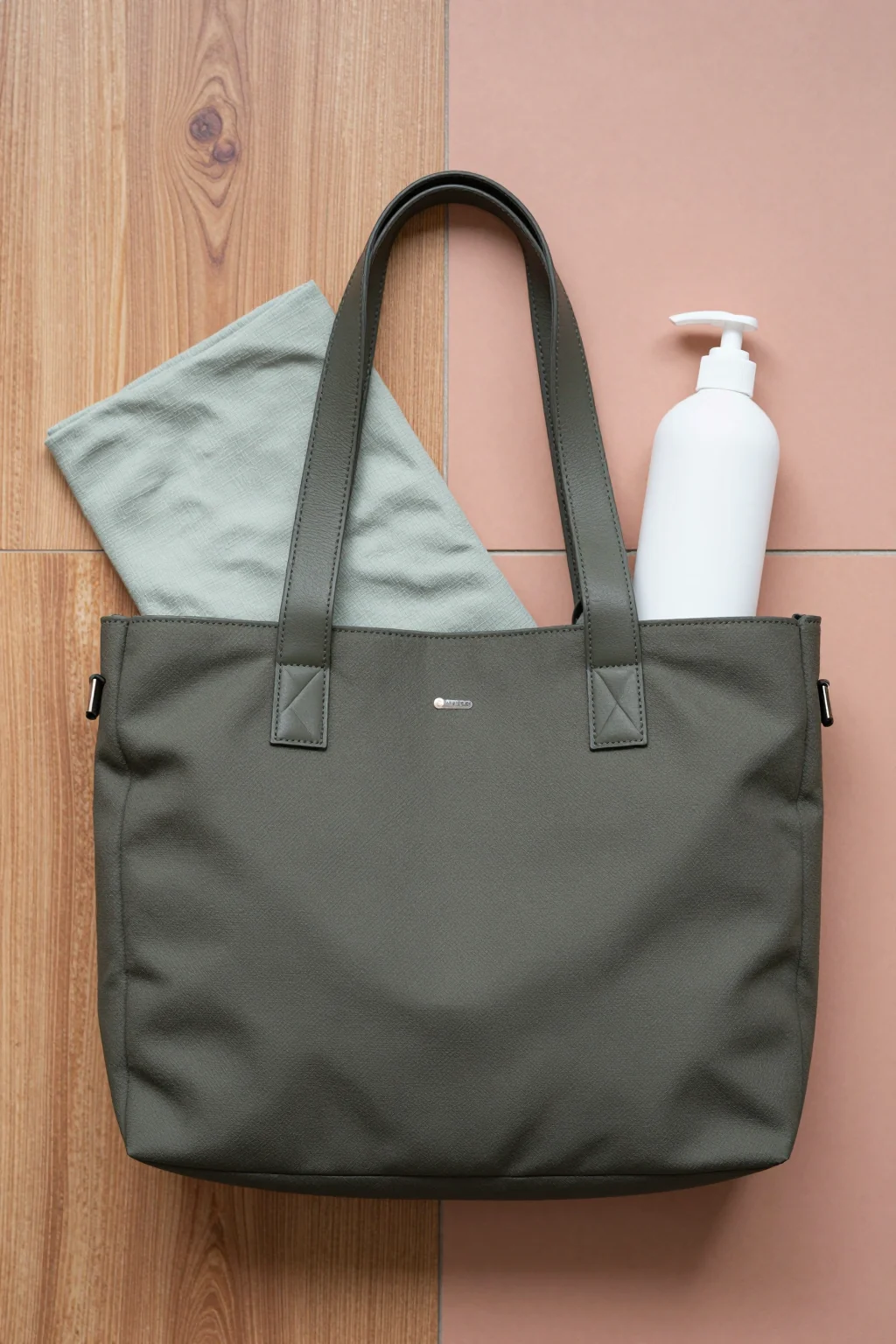
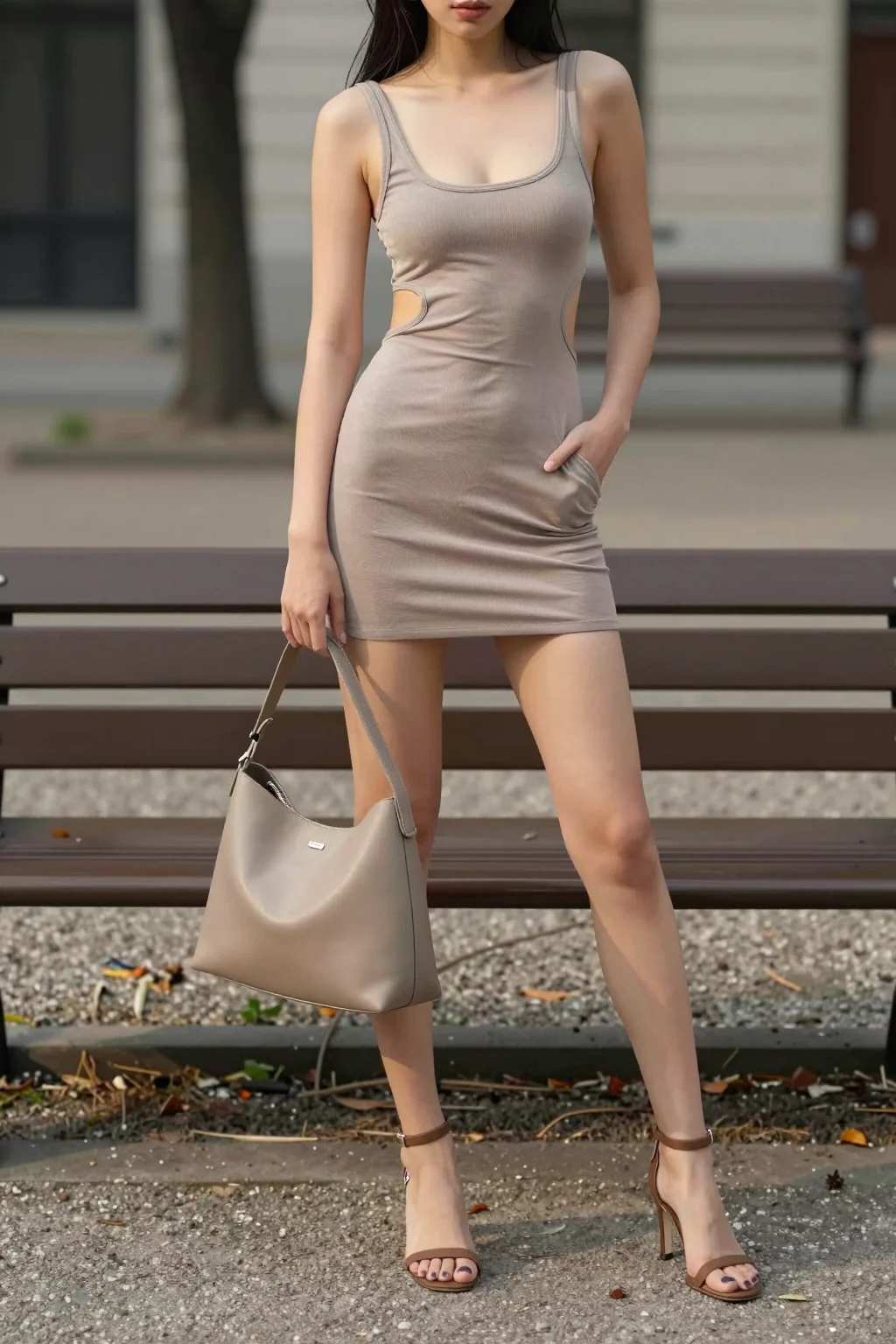
Original generated inspiration. Read the styling and fit considerations.
How to choose, adapt and compare these styles
Choose a direction, then make it your own.
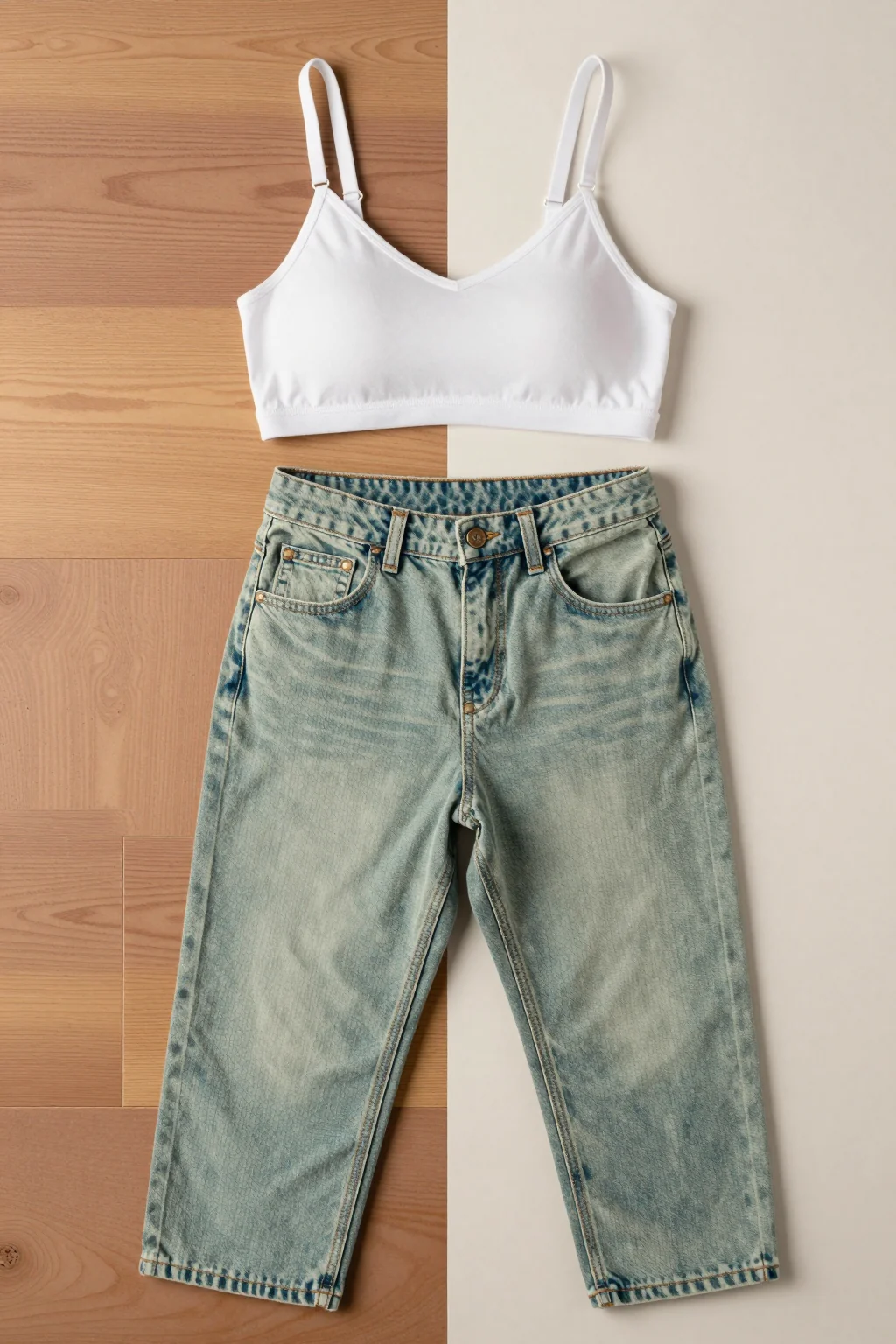
Start with the day you are dressing for. A familiar pair of jeans can belong in a casual outfit, a blazer combination or a streetwear look; the surrounding pieces change the emphasis. These references offer different starting points rather than a single set of rules about what women should wear.
Choose a category to compare its silhouettes. Open a reference to see the whole image, the principal pieces and a specific styling consideration. The first 42 references are outfits; the final three are underwear flatlays for comparing garment construction. Every picture is original generated inspiration, not a real try-on, a product photograph or evidence of a particular fit.
Casual: compare the layers and the hem.
The casual edit includes denim jackets, overshirts, hoodies, a biker-style jacket, a fleece-style layer, knitwear and a skirt combination. You do not need the pictured color to try the idea. Start with a top, bottom and shoe you already own, then add the layer that changes the outline.
Compare an open jacket with a closed one and a loose hem with a partial tuck. Keep the choice that feels right when you sit, reach and walk. An image cannot establish whether a particular fabric will be warm, breathable or comfortable; check the real garment's composition and care label.
Work and smart casual: begin with the setting.
A blazer and wide trousers, a waistcoat over a shirt, a knit with a midi skirt and a coordinated suit offer different levels of structure. Check your workplace or event dress code before treating any one combination as office appropriate. The suit-and-sneakers reference is a relaxed styling option, not a claim that sneakers suit every workplace.
When comparing similar pieces, look at jacket length, sleeve room, trouser rise and the actual finished measurements. Test whether the waistband and fastening remain comfortable when seated. A label such as “wide leg” describes an outline, not a standardized fit across brands.
Evening and occasion: let one detail lead.
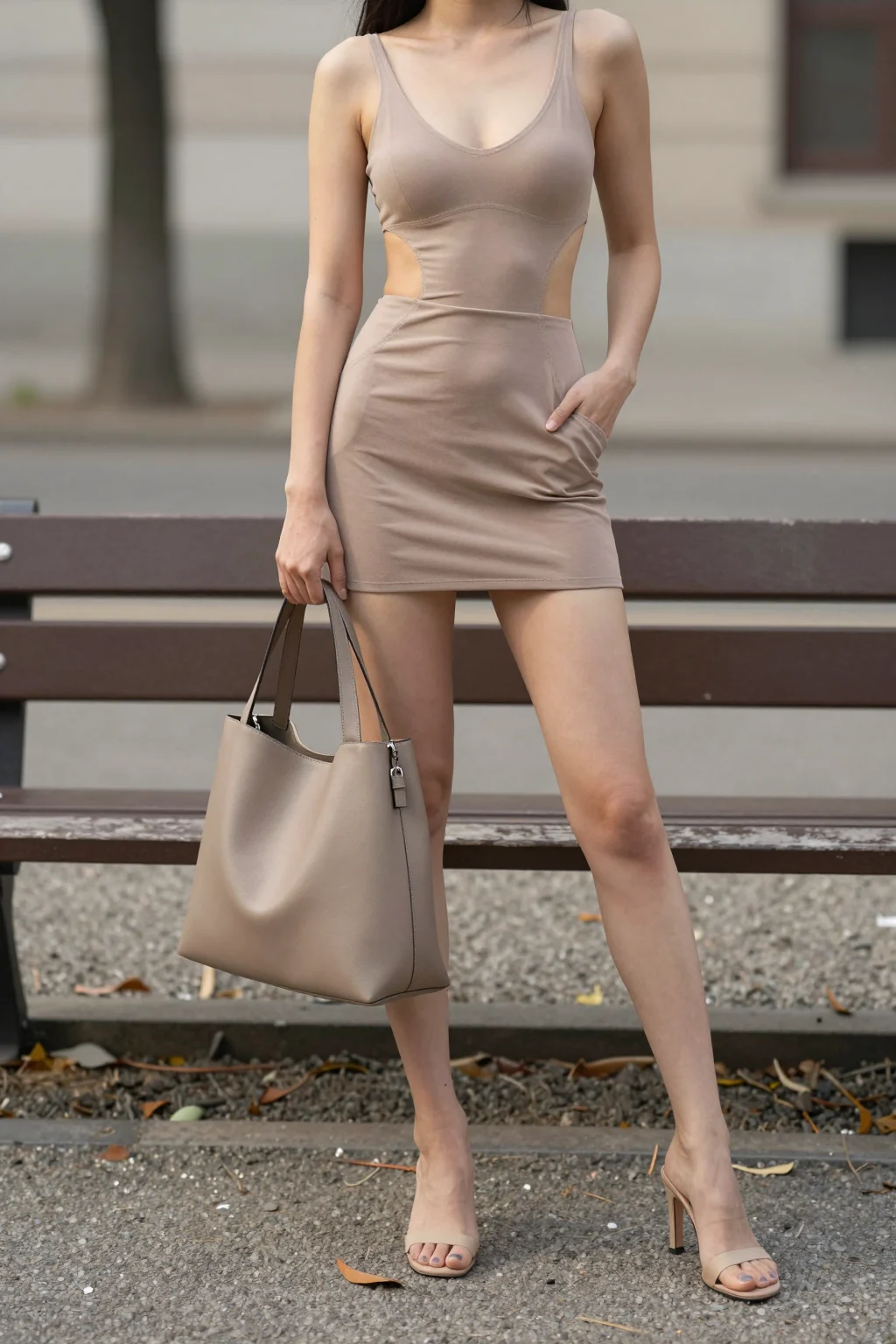
The evening edit includes a square-neck midi, a wrap-style dress, a one-shoulder jumpsuit and separates. A dress is one route; a cami with trousers or a knit with a satin-look skirt offers another. Start with the invitation and venue, then choose the amount of coverage, formality and movement you want.
Compare the hem with the shoes you actually plan to wear. Check fastenings and whether you can sit and move freely. A metallic finish in an illustration does not identify a real material, and an elegant-looking heel is not evidence of comfort or stability. Choose the actual shoe for the walking and standing involved.
Streetwear: use volume deliberately.
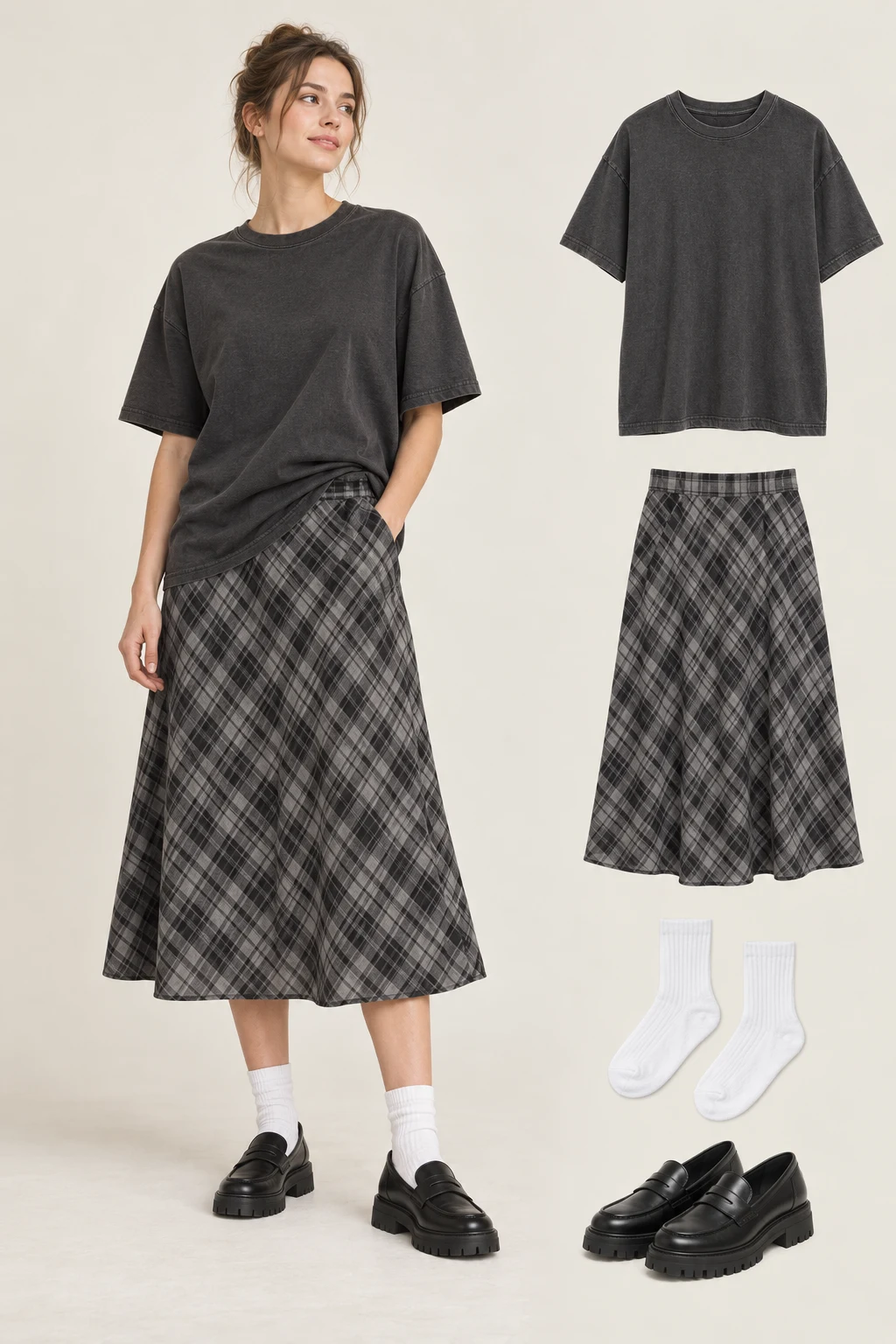
Jerseys, baggy denim, cargo pockets, a varsity-style jacket and track separates change the shape of the outfit. The jersey reference uses an original unbranded design; it does not represent a particular sports team. The oversized tee and plaid skirt offer a different option from trousers.
Compare the overall outline before adding more accessories. With a loose top and loose trousers, check that sleeves and hems let you move comfortably and that fabric does not catch beneath your shoes. The references are styling examples, not recommendations for sports performance.
Seasonal and travel: plan for the actual conditions.
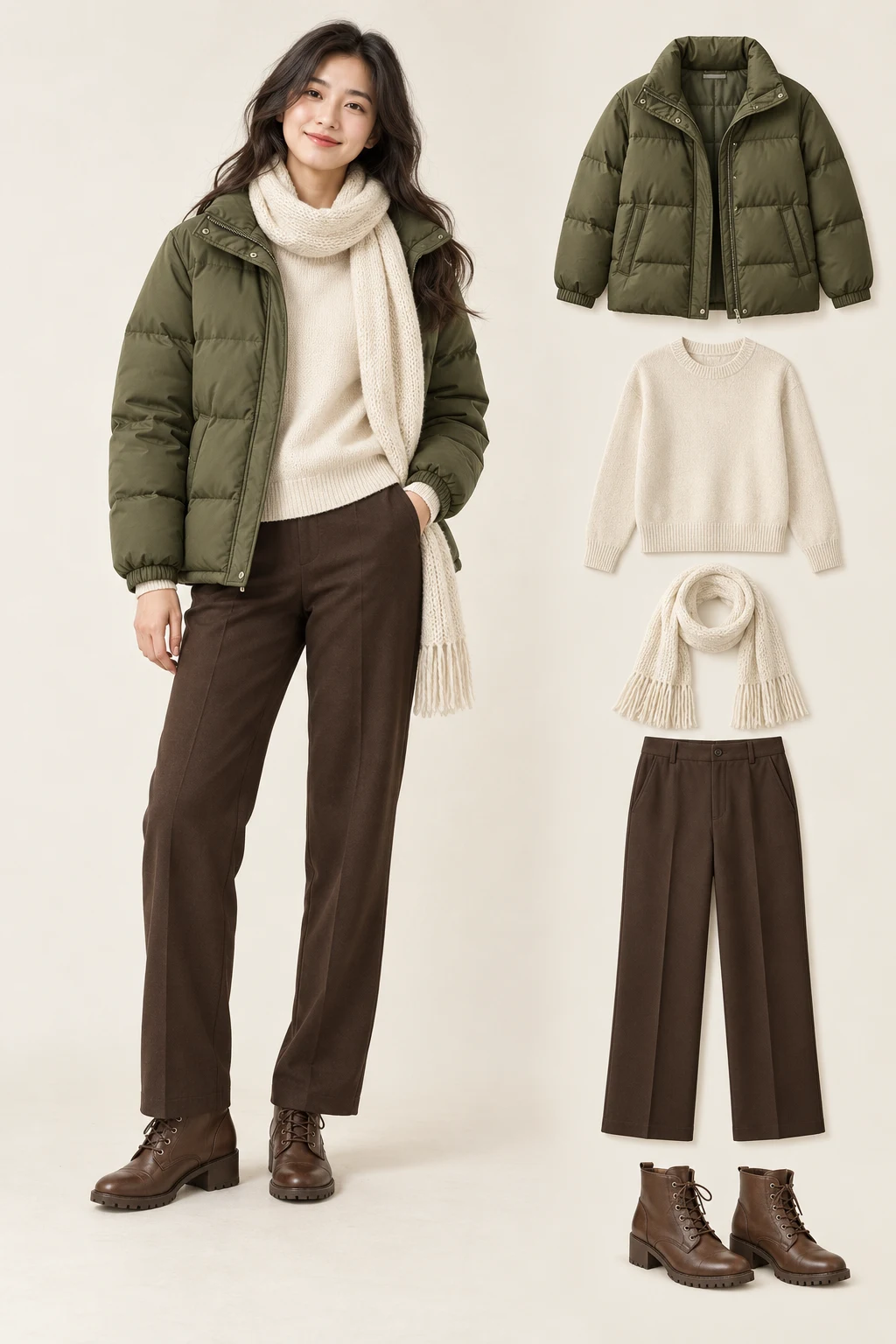
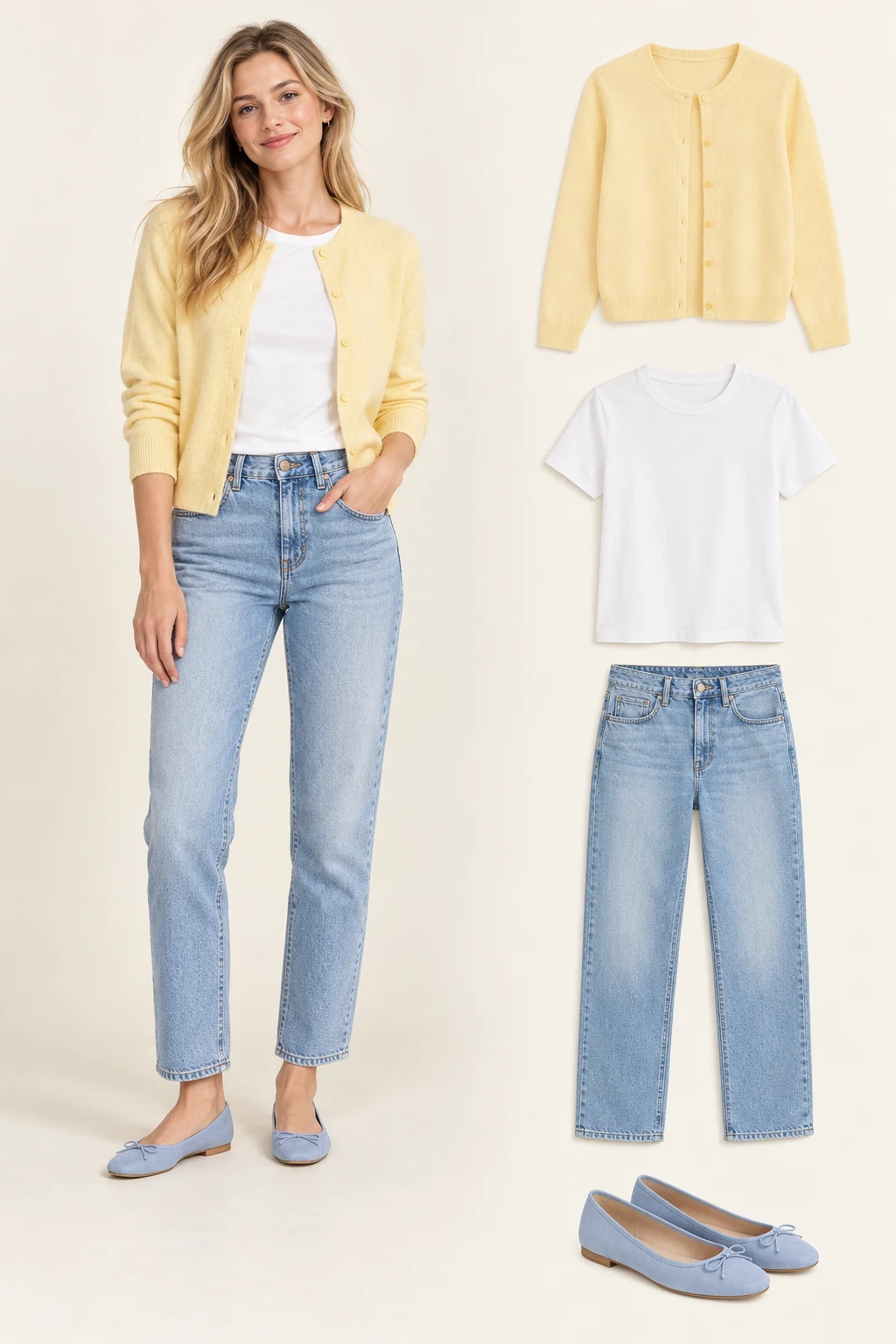
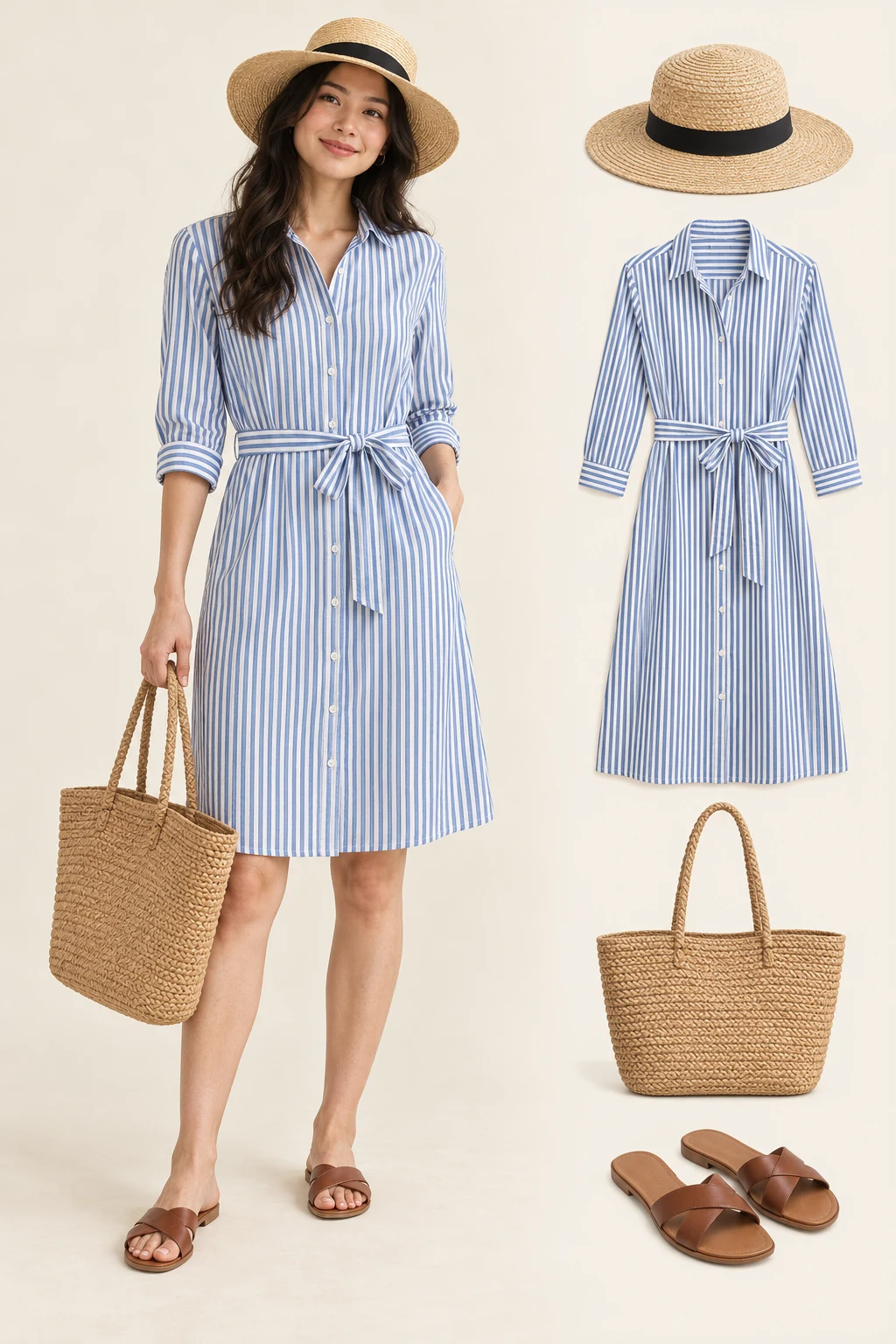
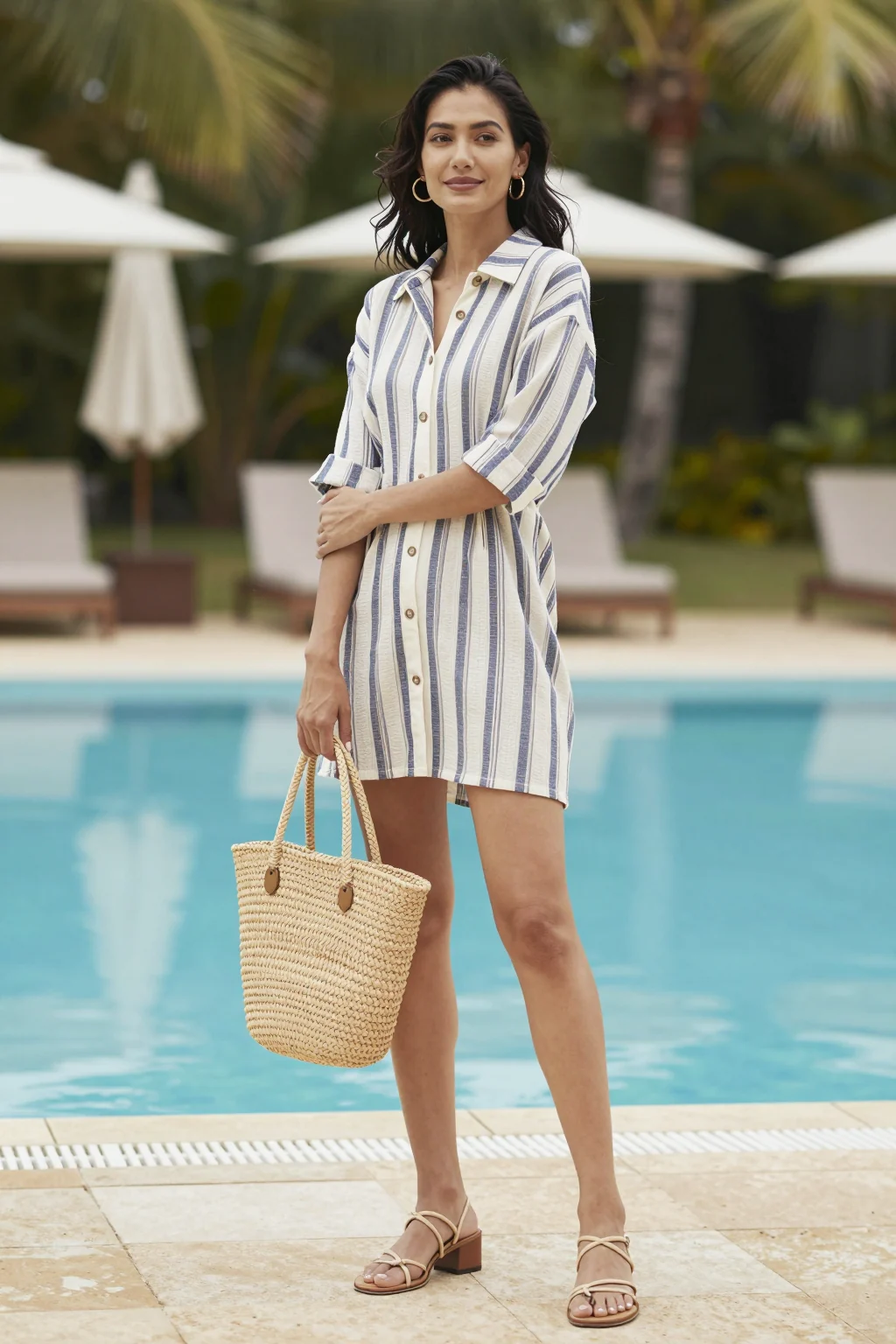
A puffer-style layer, a light cardigan, a shirt dress, airport separates and a trench-style coat solve different dressing needs. Weather, your destination, the journey and available laundry matter more than a season label. A rendered coat does not establish insulation or water resistance, and a pictured hat does not establish UV protection.
For a travel combination, consider removable layers and which shoes and bag you already use comfortably. Check the real garment's care instructions and your carrier's baggage rules. A crossbody or backpack here illustrates a role; its depicted size is not a verified capacity or airline measurement.
Alternative: choose the elements you enjoy.
The darker edit combines plaid, a bow blouse, burgundy and plum knits, a pinafore and black denim with different footwear. These are soft-goth and alternative-inspired combinations rather than an attempt to define every subculture through one uniform.
Choose a motif, texture or color that interests you and build around it. Compare a skirt-and-tights outline with wide trousers, or a plain top with a graphic one. If you add jewelry, a belt or a chain, check the actual fastening and whether it catches on your clothes. The small accessories are style references, not verified metal or material specifications.
Swimwear and underwear: compare the construction.
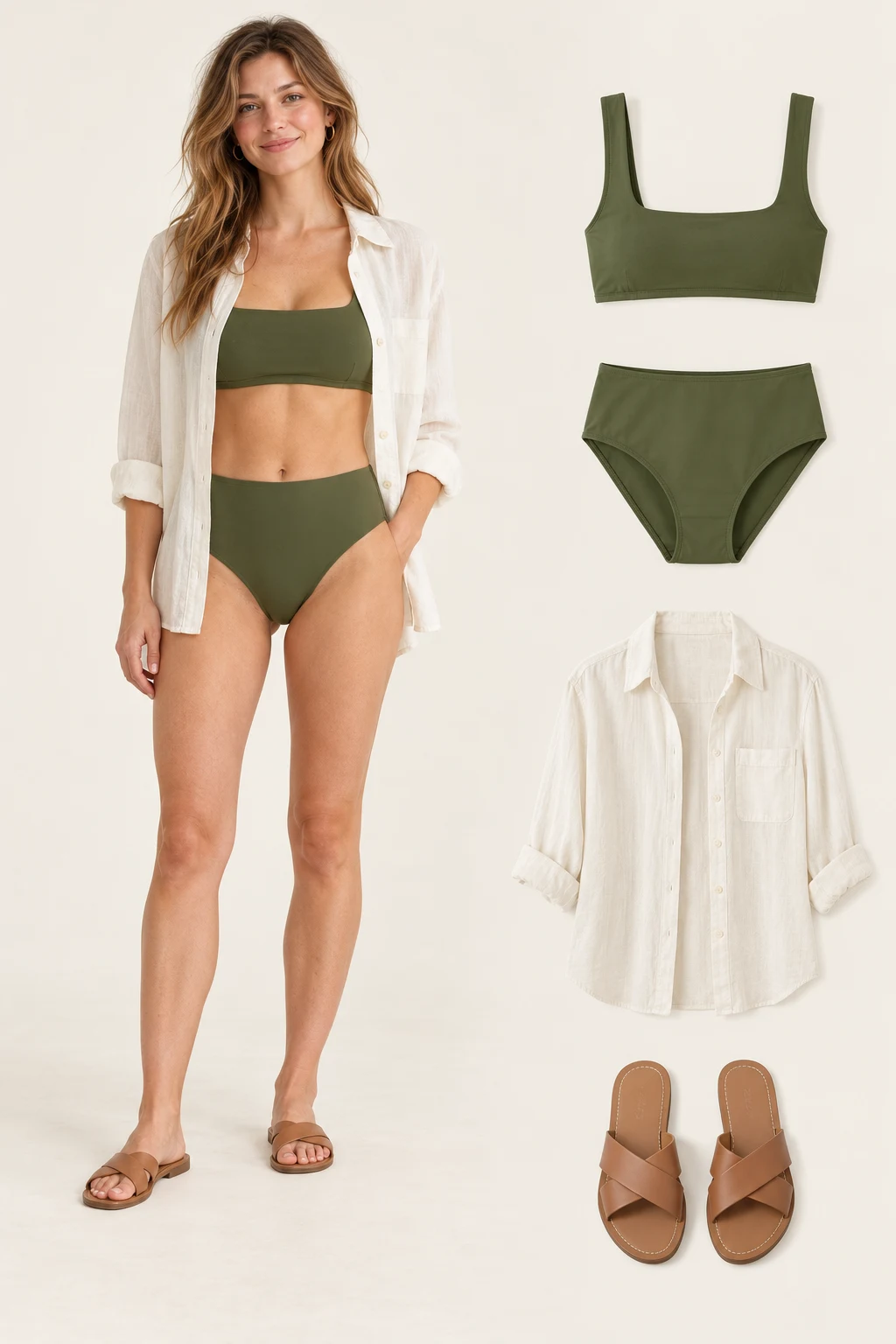
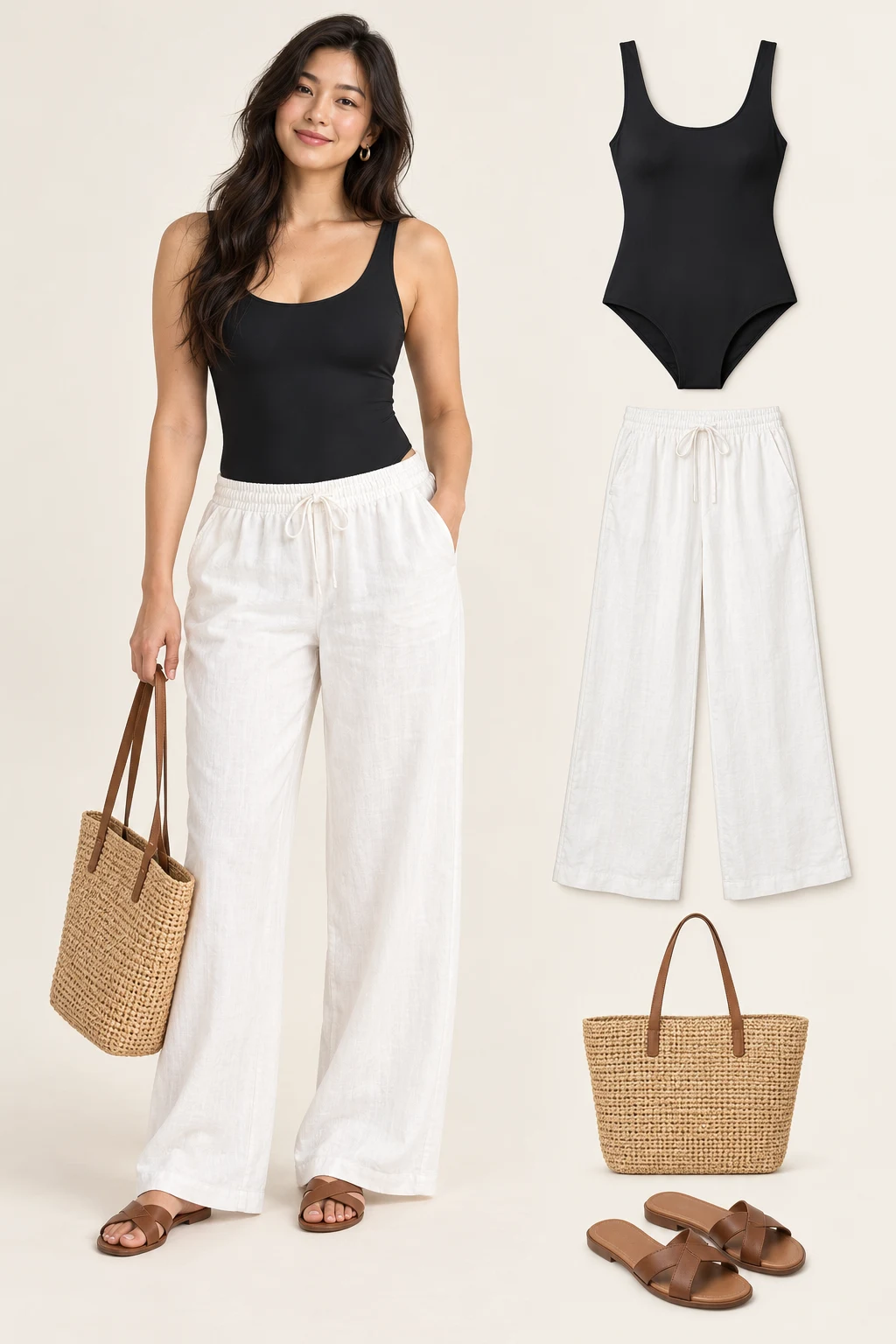
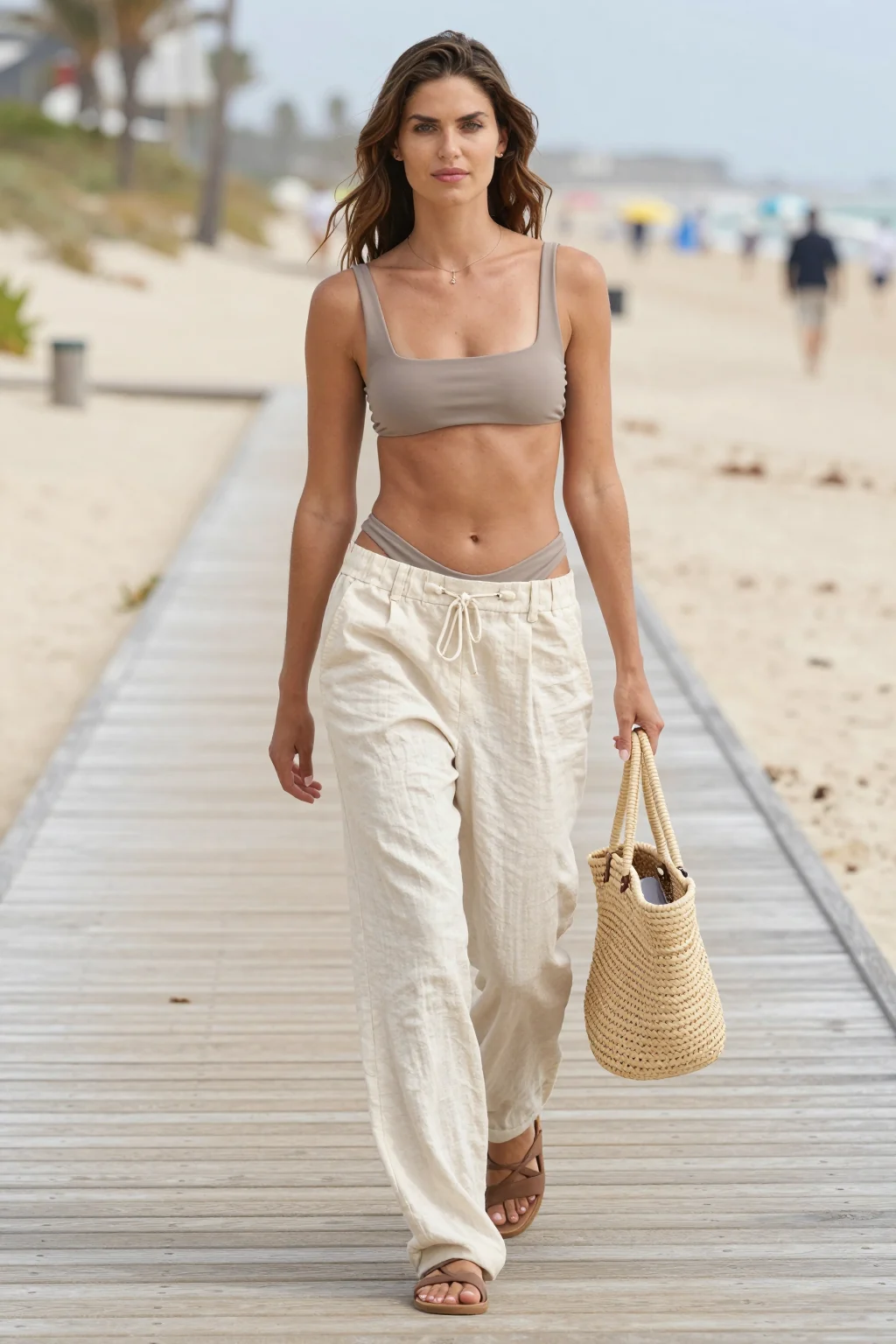
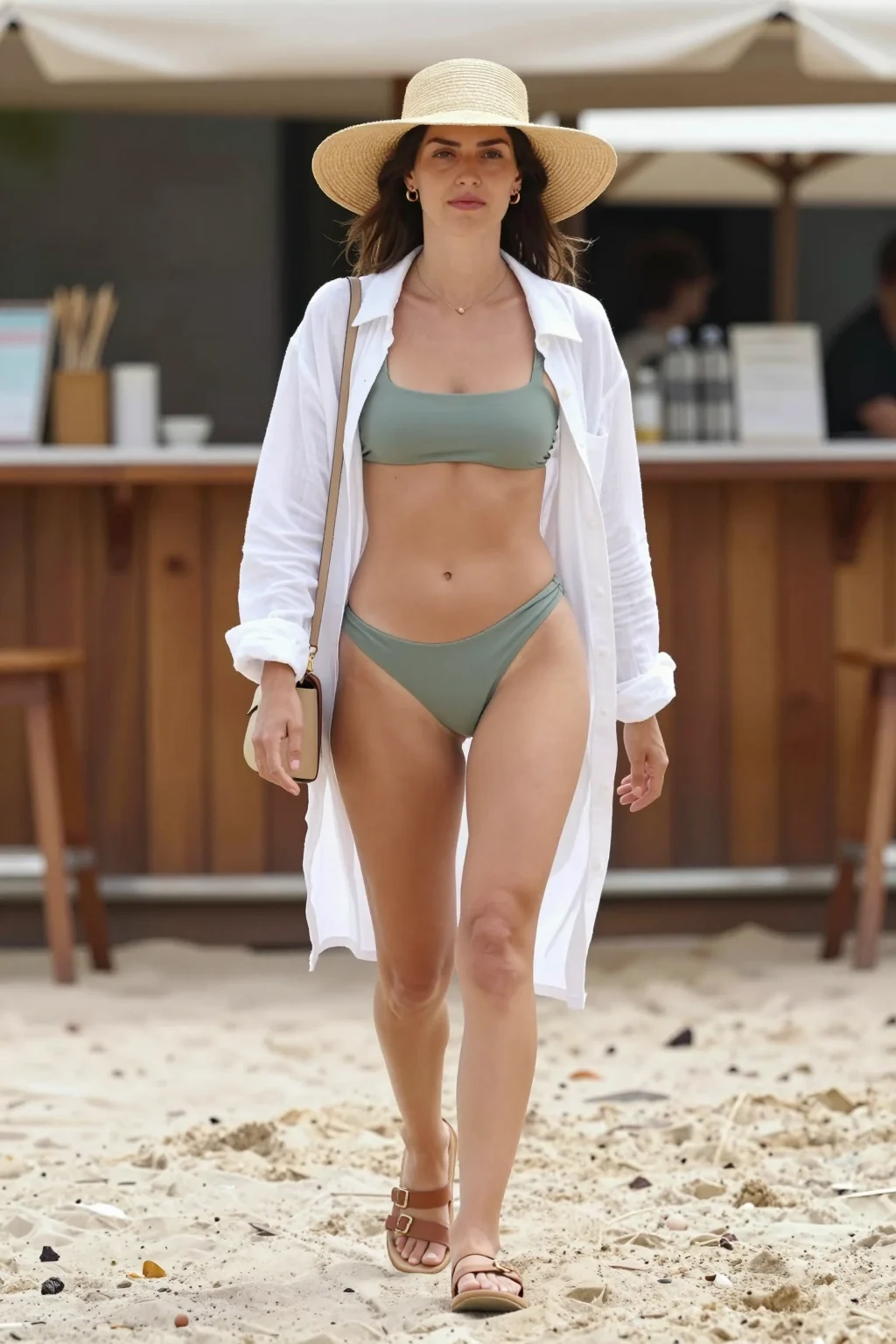
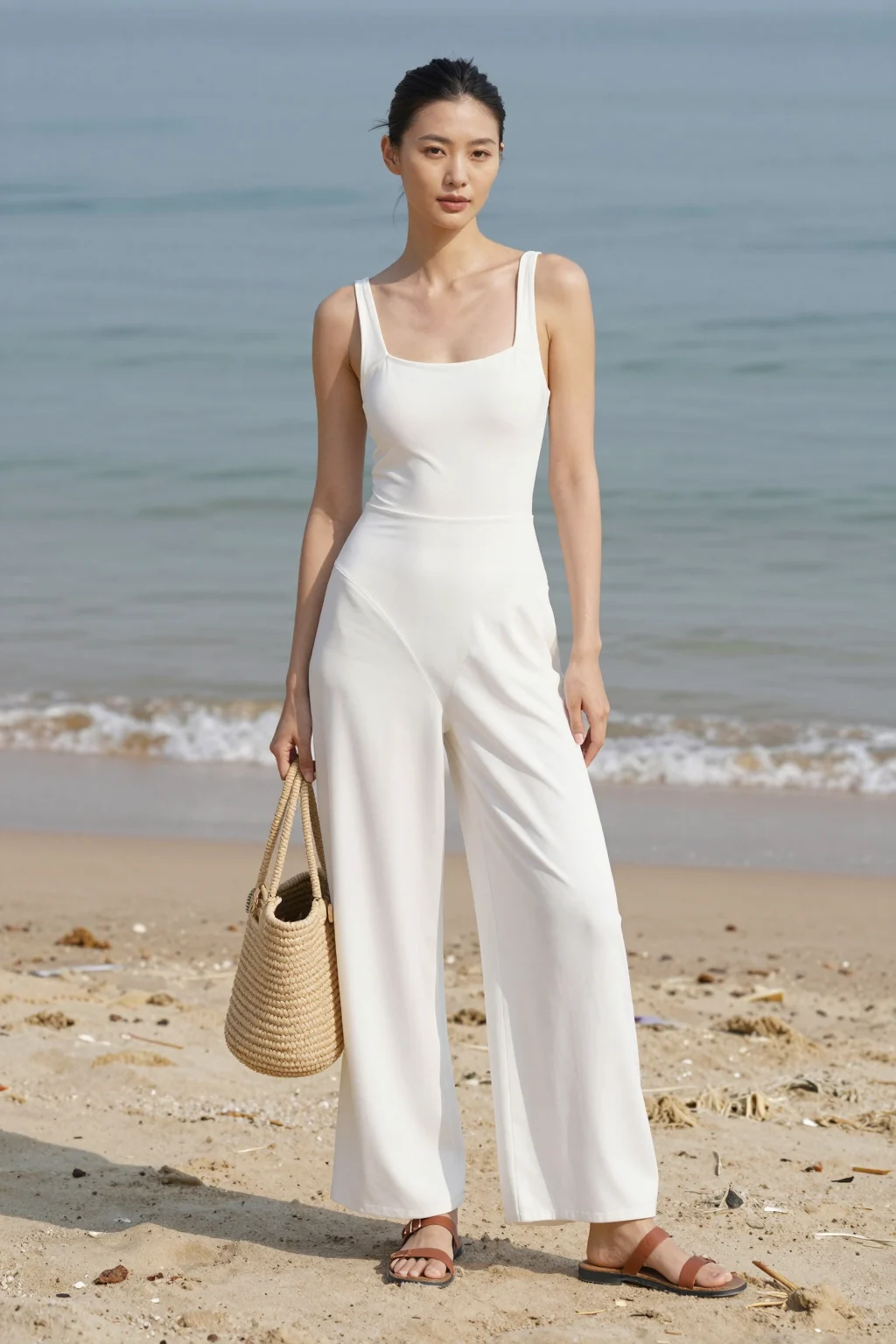
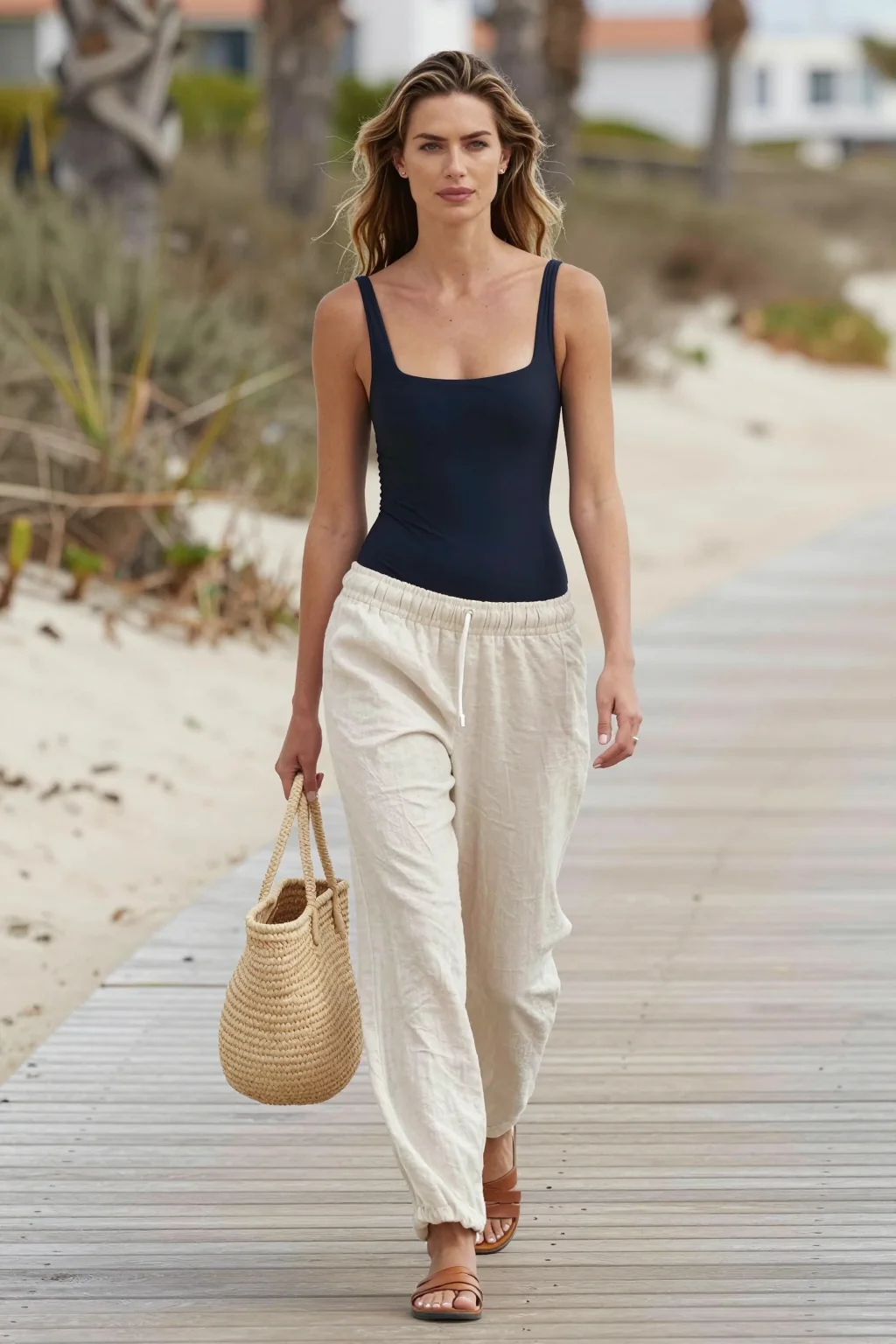
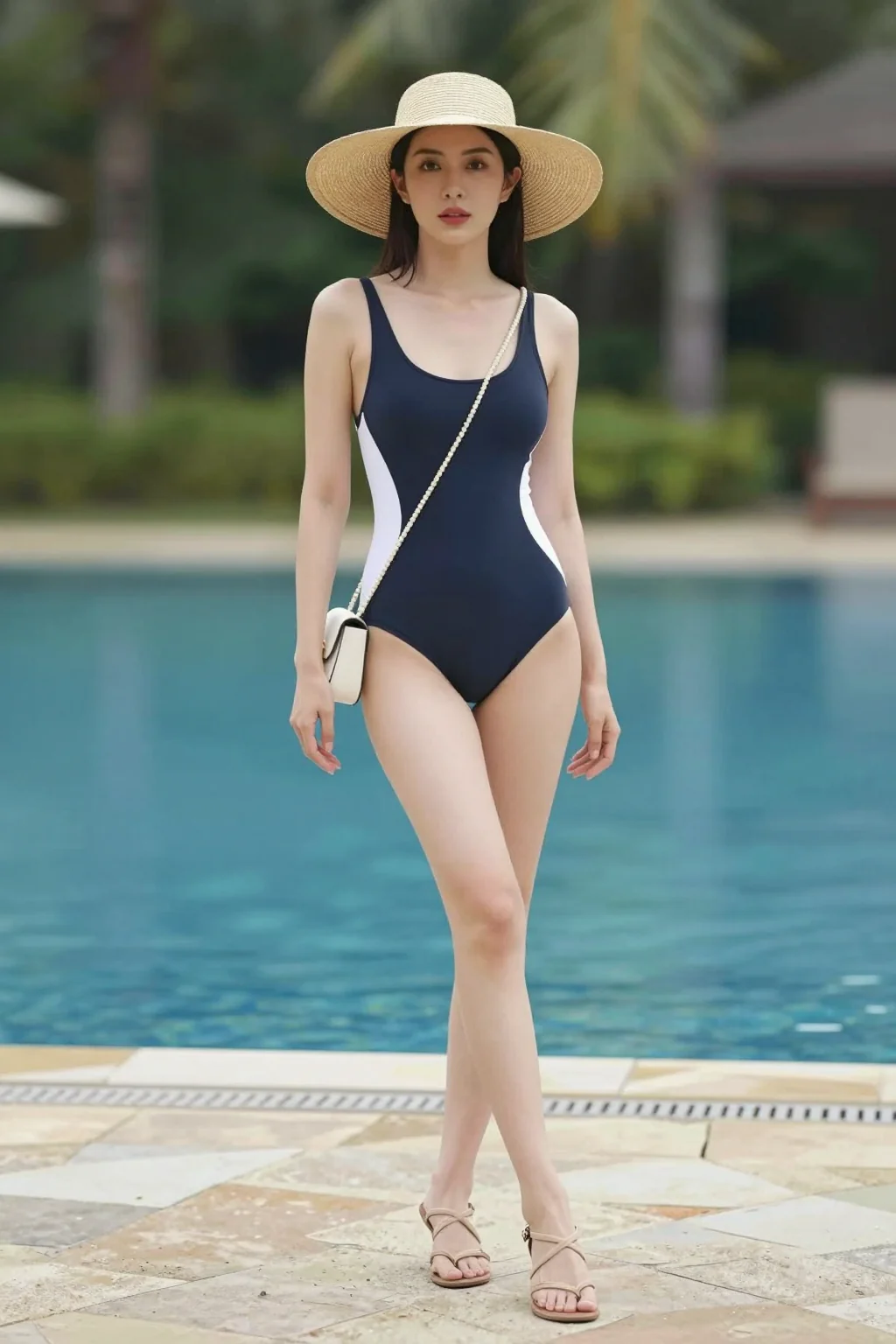
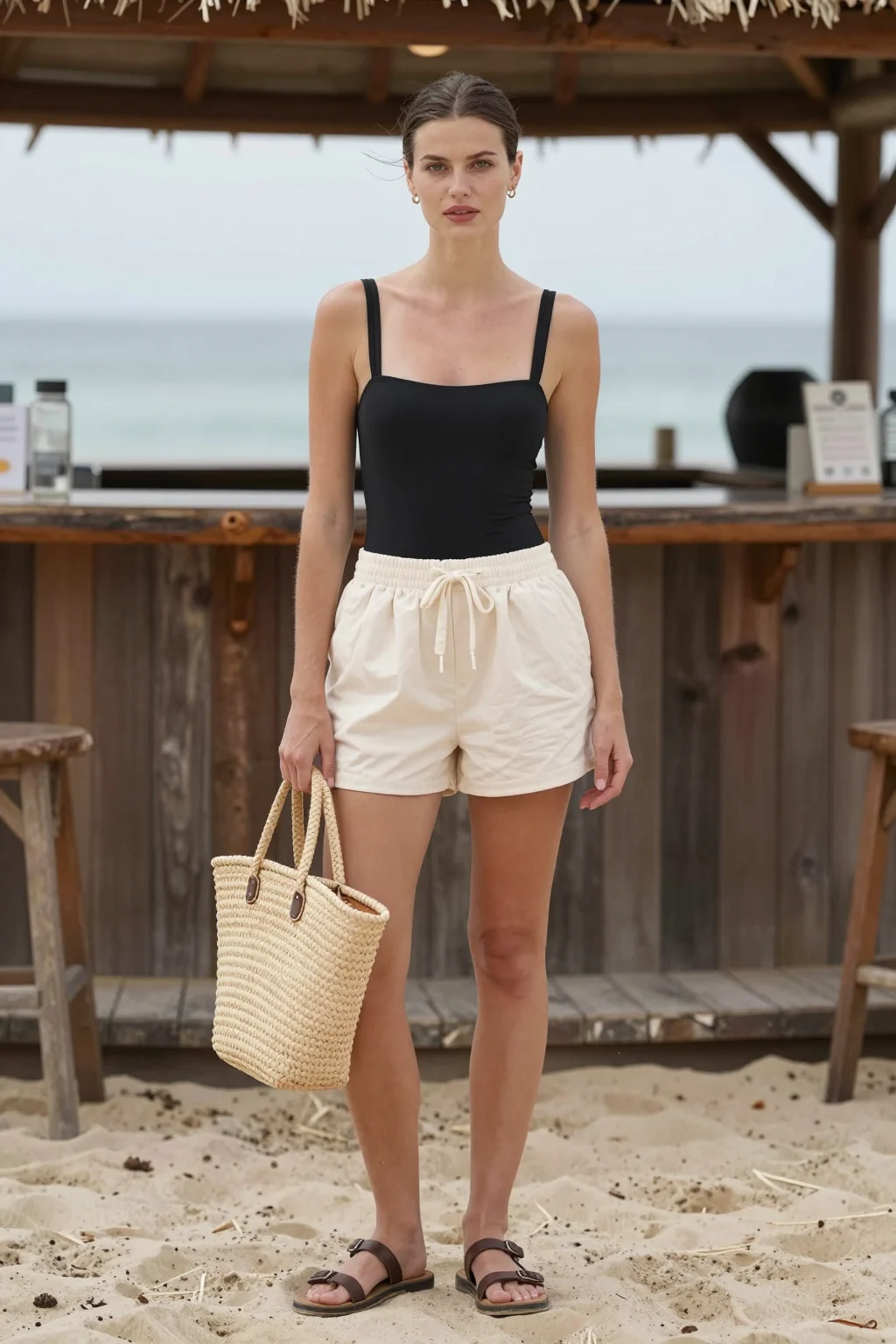
The swim edit shows a one-piece with a shirt and shorts, a bikini with an overshirt, and a one-piece with cover-up trousers. Cover-ups are separate garments; do not assume a shirt or trouser is designed for swimming. Check the swimsuit's actual coverage, lining, fastening and size chart. A two-piece may allow a different size for the top and bottom.
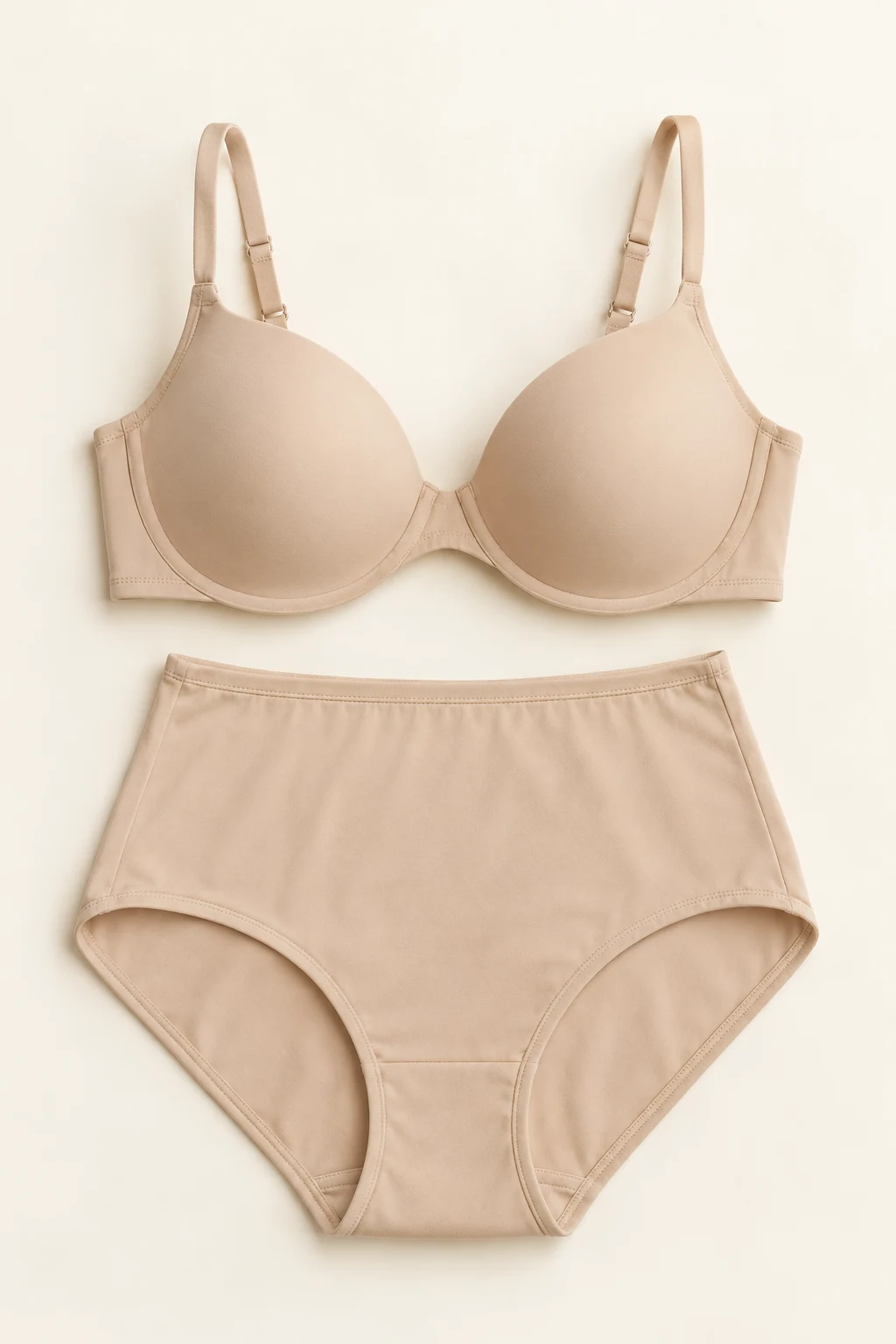
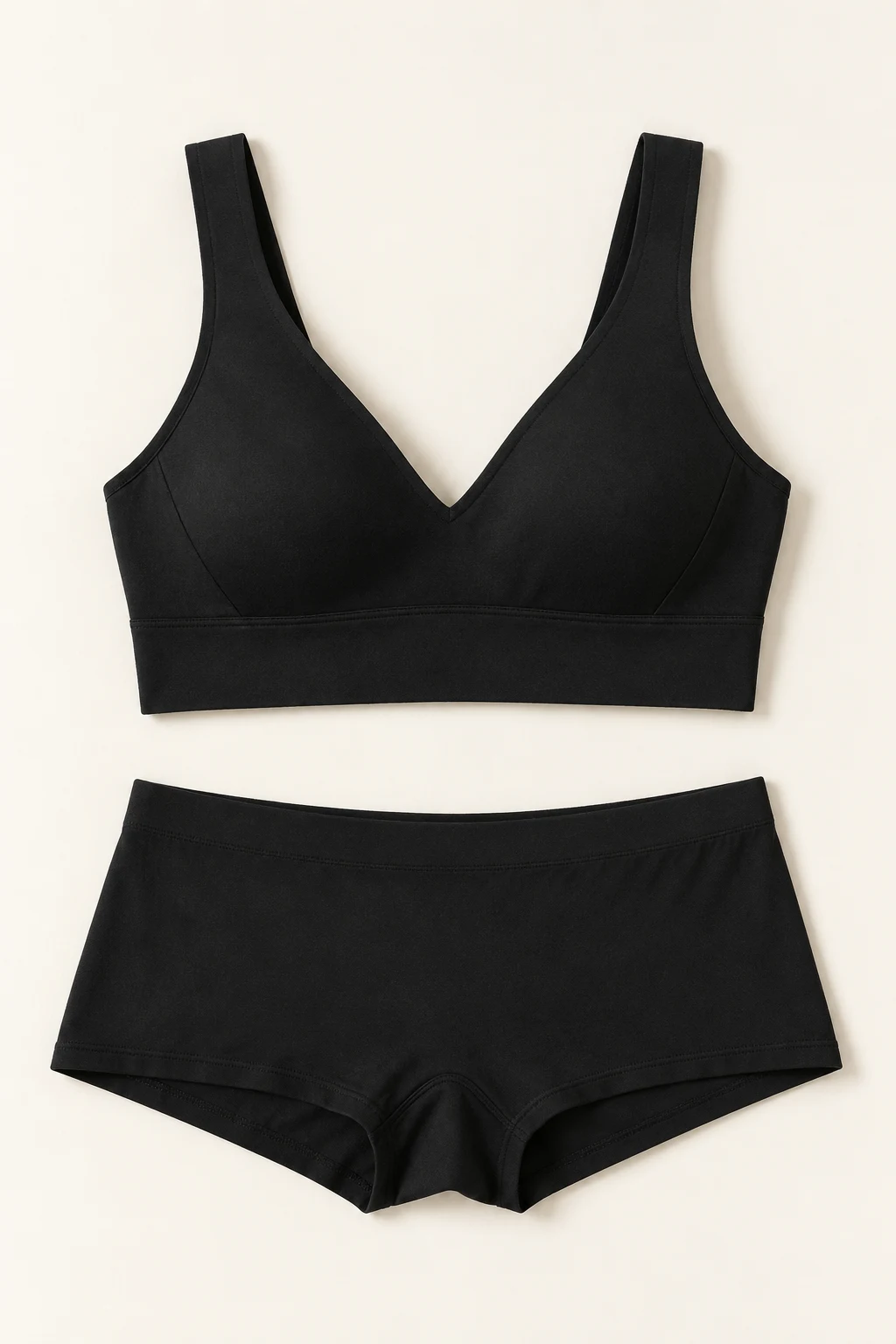
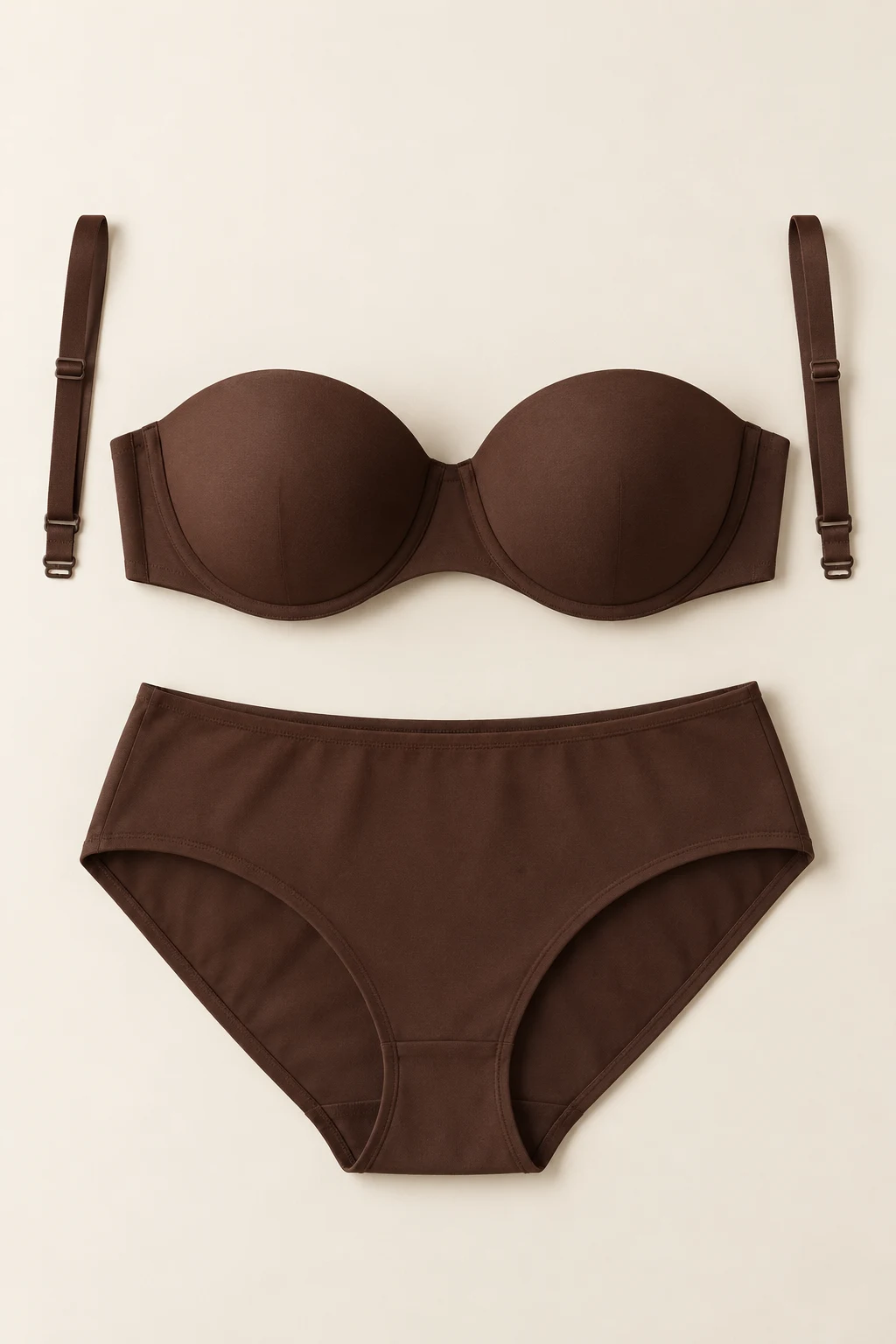
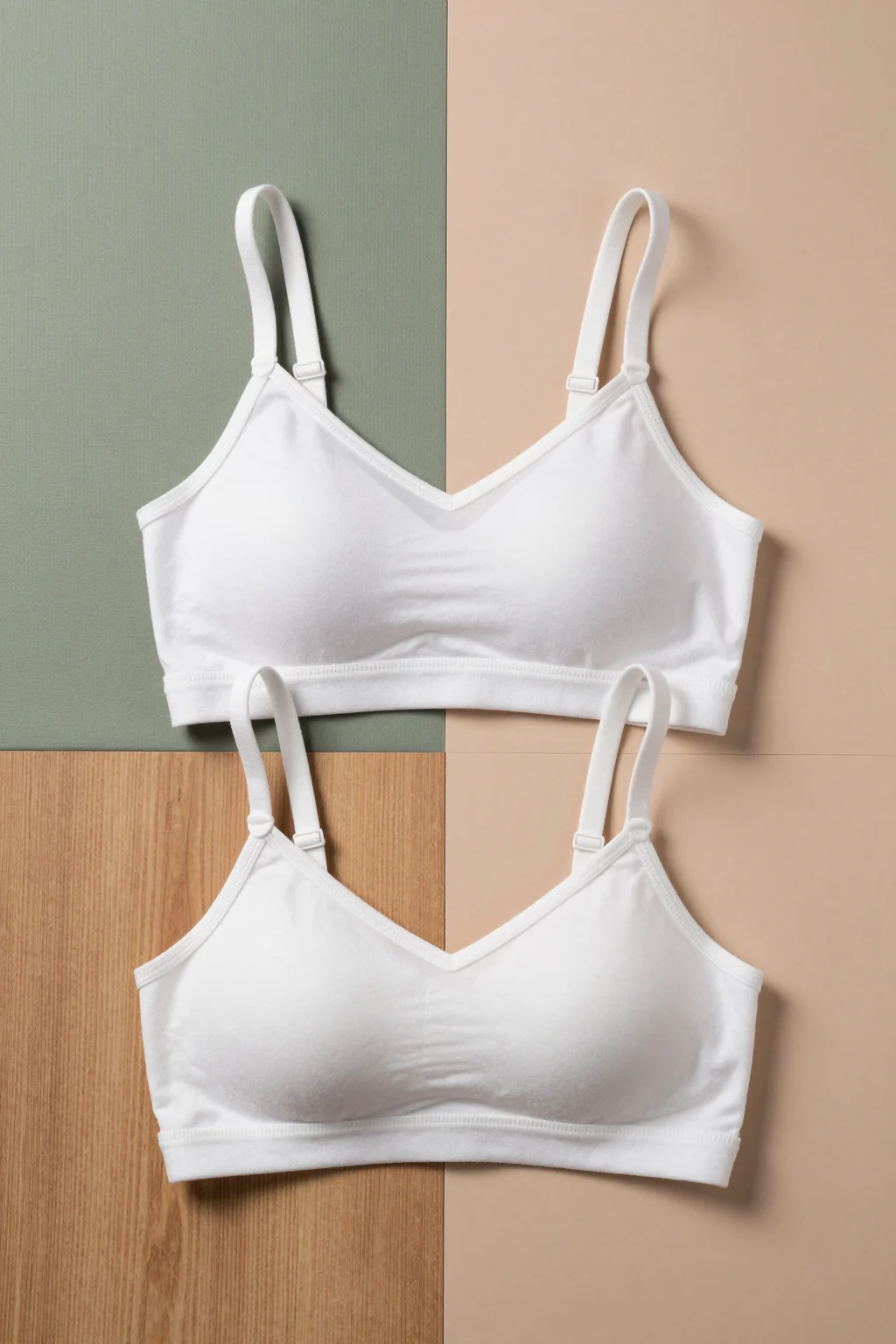
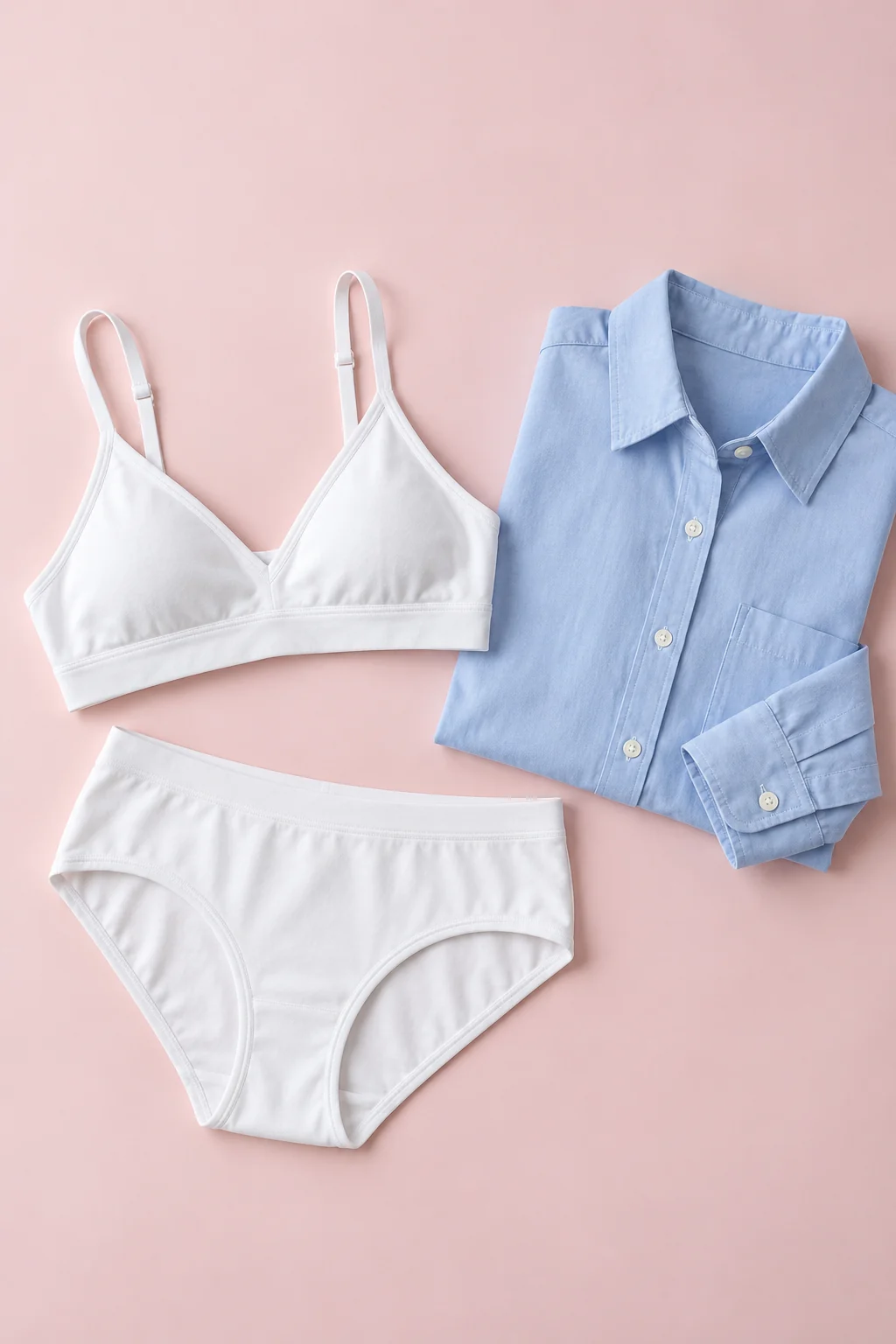
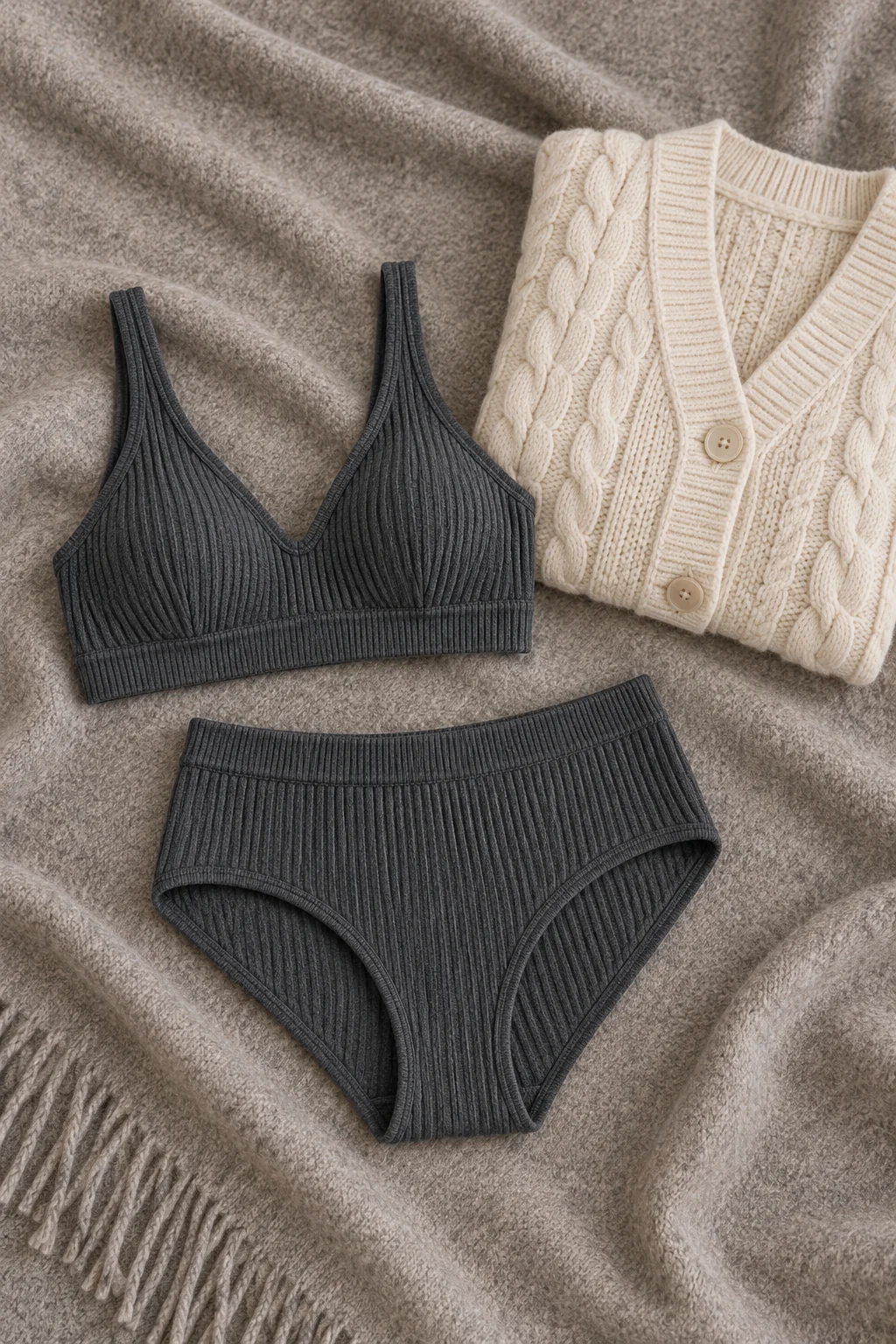
The underwear flatlays show a smooth-cup bra and briefs, a wireless bralette and boyshorts, and a strapless bra with detachable straps. These are distinct constructions, not a ranking of support or a prescription for your body. Compare the real band and cup information, fabric, adjustability and merchant's hygiene and returns terms before choosing. The image cannot prove invisibility beneath clothing, shaping, comfort or personal fit.
Keep the useful pieces.
Before adding something new, identify the role you are missing: a base layer, a different trouser shape, a shoe for a specific occasion or an outer layer for the actual weather. Compare the measurements and care requirements of a real product with clothes you already enjoy. Our six-piece capsule guide explores repeated combinations; the black-loafer guide compares three outfits around one shoe.
Product-role research checked on 23 October 2026 includes UNIQLO's crewneck tee, G.H. Bass's Whitney loafer, and Aerie's bra and swimwear categories. These sources establish real garment categories and examples; none is the exact generated pictured item. They are research references, not the shopping links for these looks. Availability and terms can change.